This product is most effective when used in conjunction with the corresponding double CD.
- You can purchase the book and double CD as a pack (ISBN: 9781444104196)@font-face {
}p.MsoNormal, li.MsoNormal, div.MsoNormal { margin: 0cm 0cm 0.0001pt; font-size: 12pt; font-family: ""Times New Roman""; }div.Section1 { page: Section1; }
- The double CD is also sold separately (ISBN: 9781444104202)Learn Old English (Anglo-Saxon) with this best-selling course from Teach Yourself - the No. 1 brand in language learning. Equally suited to general reader, historian and student of literature, this new edition teaches vocabulary and grammar through original texts, with audio support, traces the roots of modern English words, and explores the Anglo-Saxon cultural context through poems, prose and historical documents.Learn effortlessly with a new easy-to-read page design and interactive features: NOT GOT MUCH TIME?
One-, five- and ten-minute introductions to key principles to get you started.AUTHOR INSIGHTS
Lots of instant help with common problems and quick tips for success, based on the author's many years of experience.GRAMMAR TIPS
Easy-to-follow building blocks to give you a clear understanding.USEFUL VOCABULARY
Easy to find and learn, to build a solid foundation for understanding.TEST YOURSELF
Tests in the book and online to keep track of your progress.EXTEND YOUR KNOWLEDGE
Extra online articles to give you a richer understanding of the culture and history of Anglo-Saxon England.
eBook - ePub
Complete Old English
A Comprehensive Guide to Reading and Understanding Old English, with Original Texts
- 320 pages
- English
- ePUB (mobile friendly)
- Available on iOS & Android
eBook - ePub
Complete Old English
A Comprehensive Guide to Reading and Understanding Old English, with Original Texts
About this book
Information
1
Here Edward was consecrated as king
This unit will cover:
texts
• the coronation of Edward the Confessor as reported in the Anglo-Saxon Chronicle
first steps in reading Old English
• word recognition
• pronunciation
• spelling
vocabulary
• introduction to personal names

Her wæs Eadward gehalgod to cinge
Here Edward was consecrated as king
Here Edward was consecrated as king

The use of English
In 1040 Edward the atheling – prince and heir to the throne – returned to England after twenty-four years of exile on the Continent. Two years later he succeeded to the throne of England and in the following year the Anglo-Saxon Chronicle reports that Edward was consecrated king at Winchester on the first Easter Day with great honour.
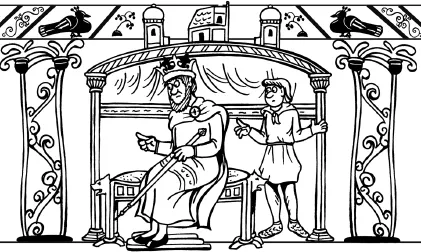
Edward the Confessor, as he came to be called by his successors, ruled a stable and prosperous England for twenty-four years. Yet during his lifetime, the country became subject to a bewildering variety of cultural influences: from Norse and Anglo-Danish to Norman and French. One constant in all this period of change was the large and central role played by the Old English language in the political, literary and spiritual life of the country. Unlike most of Europe at this time, where Latin was the only written language in use, England had developed a considerable literature in the vernacular, and much of its everyday administration was also conducted through the medium of written English.
The C version of the chronicle
It so happened that a new version of the Anglo-Saxon Chronicle was started around the time of Edward’s accession. The Chronicle was a year-by-year record of the nation’s affairs probably begun in the time of king Alfred in the ninth century. The new recension of the 1040s, known as version C, was made perhaps at Abingdon Abbey or at an ecclesiastical centre in Mercia, the Midland region of Anglo-Saxon England. The compiler copied the earlier Chronicle up to his own day and then began entering new records in the annual list of events. By adding his own stories, he was essentially acting as a contemporary observer of political events. The following short Old English text is his own, typically brief, account of the coronation of 1043.
TR 1, 00:20
The year 1043
The year 1043
| 1043 | Her wæs Eadward gehalgod to cinge on Wincestre on forman Easterdæig mid myccelum wyrðscype, and ða wæron Eastron .iii. Nonas Aprelis. Eadsige arcebisceop hine halgade, and toforan eallum þam folce hine wel lærde, and to his agenre neode and ealles folces wel manude. And Stigant preost wæs gebletsad to bisceope to Eastenglum. |
| AD 1043 | Here Edward was consecrated as king at Winchester on the first Easter Day with great honour, and that year Easter fell on the third of the nones of April. Archbishop Eadsige consecrated him, and before all the people instructed him well, and for his own need and that of all the people admonished him well. And the priest, Stigand, was blessed as bishop to the East Angles. |
Insight
The phrase mid myccelum wyrðscype meaning with great honour is much closer to modern English than it might first appear. Remember that the letter ð (called ‘eth’) represents a modern ‘th’ and that sc is modern ‘sh’. The last word is therefore the compound worth-ship, the origin of the modern word worship.
Strategies for reading Old English
(a) The first strategy to employ when tackling a text written in an inflected language like Old English is to mark up (with hyphens or by underlining) the inflections, i.e. all the endings which the language uses to mark grammatical meanings in the text; it is useful also to highlight the root or stem of each word by marking any prefixes. An example of an ending is -e on cing king, a prefix ge- occurs before halgod hallowed, consecrated; in the same word the -od ending corresponds to the modern ending -ed.
(b) Try doing a literal word-for-word translation of the text. This helps to understand the structure of the language.
(c) Next, hear the text read out loud on the recording (or by someone familiar with the language); this will help with comprehension. Many words (e.g. Easterdæig) become instantly recognizable once they are heard and the connections between Old and modern English start to emerge. Using the guide to pronunciation (in the introduction) you can also try reading out loud on your own; it is possible to learn to pronounce the basics of Old English surprisingly quickly. At first, remember that ð, þ represent the modern ‘th’ sound in ‘thorn’. Next, careful attention should be paid to the letter–sound correspondences of æ, g, c, cg and sc.
(d) Start observing the patterns of the language: its frequent meaningful endings, its word order, its typical modes of expression and idioms. When reading texts from the Chronicle for instance, you will soon find that a typical word-order is Here was Edward… Here commanded the king…, Here came Cnut… etc. As you gradually acquire more knowledge of the rules of grammar, this may seem less necessary, but in fact a good habit of observation is always essential: it will strengthen your grasp of the language and enrich your knowledge of the resources of the language.
(e) One further option is to experiment with transcribing the text in a slightly modernized spelling, in order to become familiar with the form and shape of the words. An example would be transcribing Wincestre as Winchestre.
Reading strategies in practice
Taking a sentence at a time, we can apply the above strategies to our text from the Anglo-Saxon Chronicle.
Highlight inflections and prefixes
Her wæs Eadward ge-halg-od to cing-e on Wincestr-e on forma-n Easterdæig mid myccel-um wyrð-scype.
Her wæs Eadward ge-halg-od to cing-e on Wincestr-e on forma-n Easterdæig mid myccel-um wyrð-scype.
Do a literal translation
Here was Edward hallowed to king on Winchester on former Easterday with mick...
Here was Edward hallowed to king on Winchester on former Easterday with mick...
Table of contents
- Cover
- Title Page
- Contents
- Acknowledgements
- Meet the author
- Only got a minute?
- Only got five minutes?
- Only got ten minutes?
- Introduction
- 1 Here Edward was consecrated as king
- 2 A king must hold a kingdom
- 3 Say what I am called
- 4 Here in this year
- 5 About the four seasons
- 6 I saw in a dream
- 7 King Cnut greets his archbishops
- 8 He promised her the land at Orleton
- 9 I seek my brothers, where they are keeping their herds
- 10 These are the bounds of the pasture at Hazelhurst
- 11 Here is declared in this document
- 12 I saw a creature travel on the wave
- 13 And they put him into the waterless well Þa hi hyne feorran gesawon When they saw him from afar (the betrayal of Joseph in the Hexateuch)
- 14 The boy is not here
- 15 I always wanted to convert to the monastic life
- 16 It happened one night
- 17 And bishop Æthelnoth travelled to Rome
- 18 Archbishop Wulfstan greets king Cnut
- 19 How Wynflæd summoned her witnesses
- 20 Act like thegns, and deliver my message to the assembly
- 21 The tide went out
- 22 I was by the shore
- Bibliography
- Test Yourself answers
- Old English–English word index
- Appendices
- Copyright
Trusted by 375,005 students
Access to over 1.5 million titles for a fair monthly price.
Study more efficiently using our study tools.
Frequently asked questions
Yes, you can cancel anytime from the Subscription tab in your account settings on the Perlego website. Your subscription will stay active until the end of your current billing period. Learn how to cancel your subscription
No, books cannot be downloaded as external files, such as PDFs, for use outside of Perlego. However, you can download books within the Perlego app for offline reading on mobile or tablet. Learn how to download books offline
Perlego offers two plans: Essential and Complete
- Essential is ideal for learners and professionals who enjoy exploring a wide range of subjects. Access the Essential Library with 800,000+ trusted titles and best-sellers across business, personal growth, and the humanities. Includes unlimited reading time and Standard Read Aloud voice.
- Complete: Perfect for advanced learners and researchers needing full, unrestricted access. Unlock 1.5M+ books across hundreds of subjects, including academic and specialized titles. The Complete Plan also includes advanced features like Premium Read Aloud and Research Assistant.
We are an online textbook subscription service, where you can get access to an entire online library for less than the price of a single book per month. With over 1.5 million books across 990+ topics, we’ve got you covered! Learn about our mission
Look out for the read-aloud symbol on your next book to see if you can listen to it. The read-aloud tool reads text aloud for you, highlighting the text as it is being read. You can pause it, speed it up and slow it down. Learn more about Read Aloud
Yes! You can use the Perlego app on both iOS and Android devices to read anytime, anywhere — even offline. Perfect for commutes or when you’re on the go.
Please note we cannot support devices running on iOS 13 and Android 7 or earlier. Learn more about using the app
Please note we cannot support devices running on iOS 13 and Android 7 or earlier. Learn more about using the app
Yes, you can access Complete Old English by Mark Atherton in PDF and/or ePUB format, as well as other popular books in Languages & Linguistics & Languages. We have over 1.5 million books available in our catalogue for you to explore.