Traditional approaches to leadership development focus on a small number of individuals at the top. However, in today's world of constant change and decentralized decision-making, organizations need effective leaders at all levels of their organizations. That requires a much broader and deeper pool of leadership talent, and most organizations fall far short of what they need.Leadership at Scale defines a new approach. In it, top experts at McKinsey, the world's number one leadership factory, expose the secrets of how to drive leadership development that reaches the entire organization, adapts to diverse contexts and achieves impact at scale. Grounded in extensive research and the global experience of +25 leadership experts and illustrated with a fictional step-by-step case with numerous real-life examples, this book provides leaders with the systematic and fact-based approach they need to unlock organizational performance through leadership effectiveness.
eBook - ePub
Leadership At Scale
Better leadership, better results
- 320 pages
- English
- ePUB (mobile friendly)
- Available on iOS & Android
eBook - ePub
Leadership At Scale
Better leadership, better results
About this book
Information
PART 1
Leadership defined
1
The foundations: context, skills and mindsets
Why leadership matters | Leadership is manifold, and so is leadership theory: a short review | Summary
‘Anyone can hold the helm when the seas are calm’, said Publilius Syrus over 2,000 years ago. In organizational life today, there are few calm seas, few periods without turmoil. A good captain has the capacity to apply his or her refined judgement in uncertain situations and to encourage others to follow; then to learn from the experience and be ready for the next storm. Leadership matters, and organizations must find and develop that quality in their people to outlast and overcome those stormy seas.
This chapter introduces the foundations of our thinking on leadership and leadership development. First, we illustrate the link between leadership effectiveness and organizational health and performance. Second, we give a brief history of leadership development theories and philosophies. Third, we present our definition of leadership and its implications for organizations and leadership development.
Why leadership matters
We know from our research and our practice that the best-performing organizations transcend others in terms of their leadership. At its best, great leadership can achieve extraordinary results. And at its worst, poor leadership can derail teams, organizations and even nations. The evidence for this has long been intuitive, and visible to the discerning observer: it is possible to feel within minutes of visiting an organization whether it is ill or well (and even ill- or well-led). But this feeling is of little use unless there is data to support the insight and turn it into value-adding and actionable advice.
Anecdotally, there are a multitude of reasons why leadership matters: more clarity about direction, better plans, faster execution, better talent development and so on. These elements fall broadly into both organizational performance and organizational health. When reviewing the importance of leadership, it is therefore important to address both concepts. We will review each in turn.
Leadership drives performance
Leadership effectiveness has a strong correlation with performance directly. Companies with top-quartile leadership outcomes on the McKinsey Organizational Health Index (there will be more on the OHI in the next chapter) have 3.5 times greater average total return to shareholders (TRS) than companies with bottom-quartile leadership outcomes, over a three-year period. When we looked at 14 individual leadership behaviours (more on the specific behaviours in the next chapter), we found that companies with top-quartile results for the leadership behaviour scores have between 1.4 and 7.2 times greater average TRS than companies with bottom-quartile scores, depending on the behaviour being looked at. For example, when looking at the ability of organizations to problem-solve effectively (one of the leadership behaviours we tested), companies in the top quartile on problem solving have a 6.6 times greater average TRS than companies in the bottom quartile on that behaviour.1
Other studies back up these results: organizations performing in the top quartile on overall leadership effectiveness (leadership outcome) outperform bottom-quartile companies by nearly 2 times on EBITDA (earnings before interest, tax, depreciation and amortization).2 Organizations that invest in developing leaders during significant transformations are 2.4 times more likely to hit their performance targets.3 And leaders who have developed a core of self-mastery feel 4 times as prepared to lead amidst change and are 20 times more likely to be satisfied with their leadership performance.4
Leadership matters to health
Leadership matters to organizational health. Organizational health is the ability of an organization to align, execute and renew itself to sustain exceptional performance over time. Organizations with poor health typically face stark challenges, for example: lack of direction, customer losses, low employee morale, loss of talent and lack of innovation. On the other side, organizations with great health are typically performing extremely well, leading in their industry, gaining share in the market, attracting great talent and working with engaged, motivated employees.
At McKinsey & Company we measure organizational health with the Organizational Health Index (OHI), a metric based on nine outcomes (which measure perceptions of effectiveness), and 37 management practices (which measure frequency of each practice) (See Figure 1.1).
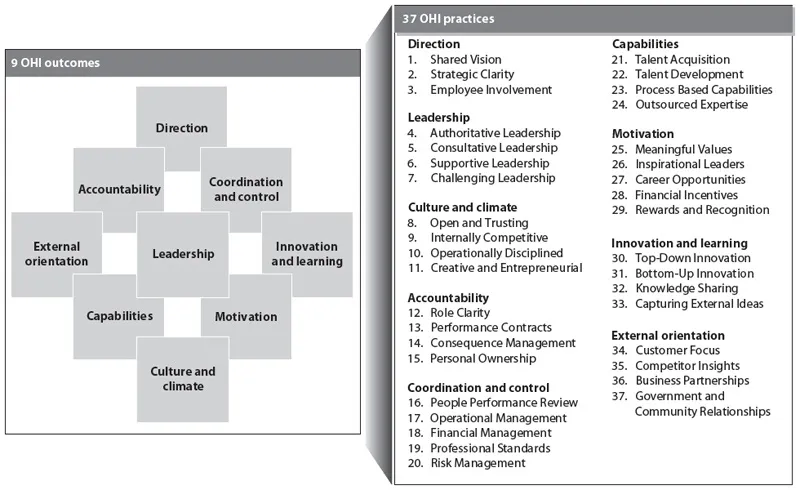
FIGURE 1.1 Organizational health is defined through nine outcomes, driven by 37 management practices
For more than fifteen years, we have compiled over 1 billion data points from more than 5 million respondents across more than 1,700 organizations. These organizations are spread out globally in over 90 countries, with all regions almost equally represented. Our research in the past decade shows that the OHI score of an organization is a strong predictor of shareholder returns. Organizations with high OHI scores tend to produce high levels of shareholder returns in the three years subsequent to the measurement of the OHI score.
The effectiveness of leaders in an organization strongly correlates with the OHI score of that organization. The R2 is 0.78, meaning that the leadership outcome explains almost 80 per cent of the variance in the overall health scores – see Figure 1.2.
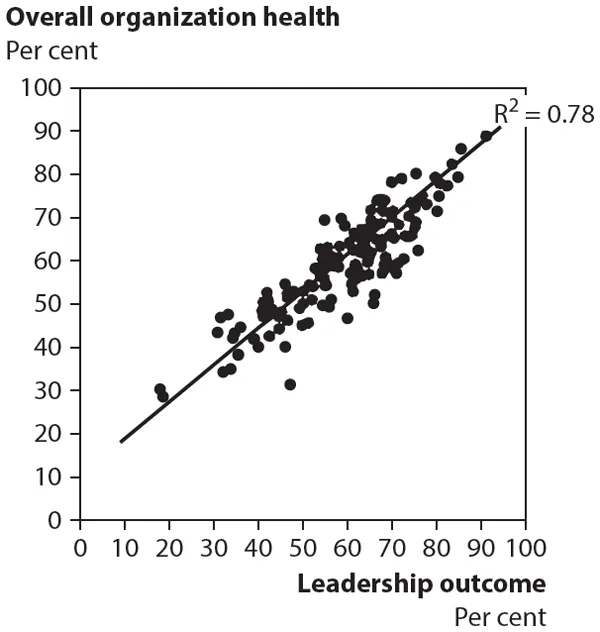
FIGURE 1.2 Overall organizational health
There is a significant difference between the likelihood that companies with a specific leadership level have top-quartile overall health: it is virtually impossible to have top-quartile health if leadership effectiveness is in the fourth quartile or third quartile, while only 27 per cent of companies with second-quartile leadership effectiveness have top-quartile health. This number jumps to 65 per cent for top-quartile companies in terms of leadership for exceeding the 25 per cent proportion of top-quartile health companies, conferring a 240 per cent advantage (see Figure 1.3). Leadership is thus clearly a key component of organizational health.
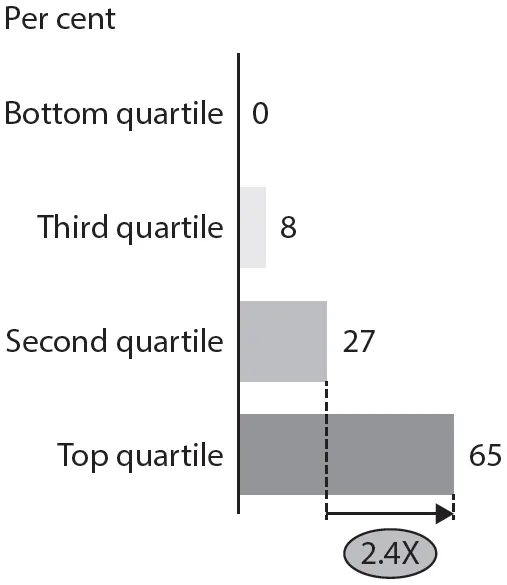
FIGURE 1.3 Likelihood that companies with specified leadership level have top-quartile overall health
Hence we have seen that leadership effectiveness is a clear driver of overall organizational performance and health. So, what leadership behaviours are the best, under what circumstances, and how can organizations develop these behaviours at scale? This is the subject of the following chapters. Before we address these questions, it is important to understand the different leadership theories that exist, as well as how we define leadership and the implications this definition has on leadership development.
Leadership is manifold and so is leadership theory: a short review
What makes a good leader? Ask any five experts what makes a good leader, and chances are you will get six answers: Aspiration. Inspiration. Imagination. Creativity. Authenticity. Integrity. Perhaps anything goes. It's now time for a reality check. There's good news, and there's bad. The bad news: we don't have a one-word answer. The good news: we have found the stepping-stones that empower organizations to develop leadership that is more effective, right across the organization.
Leadership has been a subject of investigation since the dawn of democracy in ancient Greece. Some 2,500 years ago, Plato's Republic sparked a furious debate among the citizens of Athens. His rigorous rules for the selection and education of the guardians of the ideal state were as controversial then as they are today. Overnight, leadership had become the talk of the town.
Today, colleges and universities in the US alone offer hundreds of degree programmes in leadership. Amazon lists more than 60,000 book results on the topic.5 In 2016 the word ‘leadership’ was mentioned in US news headlines more than 25,000 times,6 up from just a few hundred in the 1990s. Once again, leadership is the talk of the town.
In an effort to bring some measure of order to this rich discussion, we have identified five principal schools of leadership. While this breakdown is obviously a simplification, we believe it is an instructive one.
• Traits-based leadership. According to this theory, leaders are born, not made. Proponents of innate leadership believe that immutable personality traits, such as intelligence or character, determine an individual's leadership effectiveness and performance. One of the more popular versions of this school of thought is the ‘Great Man Theory’, developed by the Scottish scholar Thomas Carlyle in the Victorian era. Carlyle was convinced that the history of the world was ‘the biography of great men’ (he does not include women). It may well be that some individuals are more inclined to lead (and lead well) than others; but the limitation of this theory lies in its determinism: unless you are born a great leader, you never will become one.
• Behavioural leadership. This theory is based on the assumption that leadership is action rather than character. Leaders become leaders not by birth, but by the power of the behaviour they display. Rooted in nineteenth century behavioural psychology, this theory postulates that effective leadership is defined by a set of ideal behaviours. For instance, a strong leader may be someone who develops a compelling vision, acts courageously and takes decisions quickly. The drawback of this theory is its assumption that the same set of behaviours is optimal in all circumstances. But in a concrete business situation, some abstractly defined ‘ideal behaviour’, whatever it may be, could prove irrelevant or even detrimental to the leader's intent. It is hard to refute the idea that all leadership involves interaction and exchange between people, and therefore that all leadership is about behaviours; however, there is no one-size-fits all model, and behaviours have to be apt and appropriate in order to be effective.
• Situational leadership. According to this theory, great leadership arises only in response to specific situations. Its followers are convinced that different real-life situations call for different traits or behaviours in a leader; they deny that leadership is based on any single optimal psychographic profile or set of ideal behaviours. This theory draws on empirical research suggesting that someone who is a leader in one situation might not necessarily fill this role in others. Situational theories of leadership enjoy great popularity in practice. Their main drawback is their assumption that leaders can adjust their style according to the situation – that when circumstances or teams change, leaders can easily change their behaviours accordingly. In reality, even the finest leaders may have a hard time adapting to a changing environment or new types of challenges.7
• Functional leadership. This theory construes leadership as a combination of specific skills that help groups of individuals become effective as a team. These skills enable the leader to perform essential functions, such as monitoring, organizing, coaching, motivating and intervening. Proponents of functional leadership consider both behavioural and situational factors, suggesting that leaders should devise their courses of action in light of the specific requirements of a given organizational unit. The limitation of this theory is twofold. First, many of its opponents regard it as overly simplistic, since it reduces leadership to a technique or set of techniques. Secondly, real-life leaders often find it difficult to match the right approach to the right needs, to inflect their style to suit the needs of different groups, or both. In this respect, functional leadership theories resemble situational leadership theories.8
• Psychological leadership. This type of theory recognizes the fact that the path to great leadership is riddled with obstacles, and that many leaders feel they are less effective than they believe they could and should be. In response, the proponents of psychological leadership argue that leaders must accomplish self-mastery by exploring the driving forces of ineffective leadership behaviour and tackling their inner resistance to change. Critics of psychological leadership theory note that it relies on inference and interpretation rather than observation and measurement, and that it may be dangerous in the wrong hands. Because it uses introspection and self-examination, psychological leadership development requires practitioners with deep psychological expertise and experience.
In addition to these schools where ideas on leadership have coalesced, there has been a substantial body of work from numerous different angles. There is a great deal of literature from individual (often successful) leaders, ...
Table of contents
- Cover
- Title
- Dedication
- Contents
- Acknowledgements
- Introduction: Leadership that really drives performance
- Part 1: Leadership defined
- Part 2: Our approach in practice
- Part 3: Frequently Asked Questions
- Appendix 1: Situational leadership – a note on method
- Appendix 2: The critical enablers – skills and mindsets
- Appendix 3: Boosting individual learning and performance
- About the Authors
- Contributor biographies
- References
Trusted by 375,005 students
Access to over 1.5 million titles for a fair monthly price.
Study more efficiently using our study tools.
Frequently asked questions
Yes, you can cancel anytime from the Subscription tab in your account settings on the Perlego website. Your subscription will stay active until the end of your current billing period. Learn how to cancel your subscription
No, books cannot be downloaded as external files, such as PDFs, for use outside of Perlego. However, you can download books within the Perlego app for offline reading on mobile or tablet. Learn how to download books offline
Perlego offers two plans: Essential and Complete
- Essential is ideal for learners and professionals who enjoy exploring a wide range of subjects. Access the Essential Library with 800,000+ trusted titles and best-sellers across business, personal growth, and the humanities. Includes unlimited reading time and Standard Read Aloud voice.
- Complete: Perfect for advanced learners and researchers needing full, unrestricted access. Unlock 1.5M+ books across hundreds of subjects, including academic and specialized titles. The Complete Plan also includes advanced features like Premium Read Aloud and Research Assistant.
We are an online textbook subscription service, where you can get access to an entire online library for less than the price of a single book per month. With over 1.5 million books across 990+ topics, we’ve got you covered! Learn about our mission
Look out for the read-aloud symbol on your next book to see if you can listen to it. The read-aloud tool reads text aloud for you, highlighting the text as it is being read. You can pause it, speed it up and slow it down. Learn more about Read Aloud
Yes! You can use the Perlego app on both iOS and Android devices to read anytime, anywhere — even offline. Perfect for commutes or when you’re on the go.
Please note we cannot support devices running on iOS 13 and Android 7 or earlier. Learn more about using the app
Please note we cannot support devices running on iOS 13 and Android 7 or earlier. Learn more about using the app
Yes, you can access Leadership At Scale by Claudio Feser,Michael Rennie,Nicolai Chen Nielsen in PDF and/or ePUB format, as well as other popular books in Business & Business Strategy. We have over 1.5 million books available in our catalogue for you to explore.