Getting to the top in Business is never straightforward, especially as a woman. This powerful collection of stories reveals how the world's leading women in business have overcome some of life's biggest challenges to reach the top of their professions. This is a book written for every current and aspiring leader, revealing the things that leaders rarely talk about; the behind the scenes struggles.The women in these stories are powerful, internationally diverse and have impressive leadership accomplishments. They were brought together through one unifying experience: they have all completed the Harvard Business School Women on Boards program, a course that has turned into a movement. Today there are over 130 members of the WomenExecs on Boards network, from 17 countries. This is the network where organisations go to find educated, prepared, qualified and diverse women for corporate board seats.After reading this book you will be inspired to lead and make a difference for others whether it's running a company or leading a division, team, project, community event or your family and home. You will discover that you already have all you need to succeed when it gets hard, to never give up, and how to keep going through life's difficult and sometimes terrible challenges. These women want you to know that you are not alone, and that you can lean on the strength of those who have gone before you, keep leading and keep getting back up again.
eBook - ePub
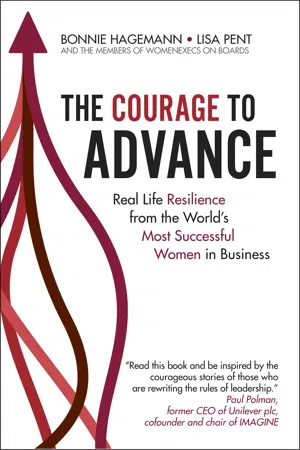
The Courage to Advance
Real life resilience from the world's most successful women in business
- 224 pages
- English
- ePUB (mobile friendly)
- Available on iOS & Android
eBook - ePub
The Courage to Advance
Real life resilience from the world's most successful women in business
About this book
Information
Chapter 1
Courage
“The credit belongs to the man who is actually in the arena, [ … ] who spends himself in a worthy cause; who at the best knows in the end the triumph of high achievement, and who at the worst, if he fails, at least fails while daring greatly, so that his place shall never be with those cold and timid souls who neither know victory nor defeat.”
—Theodore Roosevelt
THE FOLLOWING STORIES HAVE AN underlying theme of courage: the mental or moral strength to venture, persevere, and withstand danger, fear, or difficulty.1 Former 3M CEO George Buckley once said:
Leaders make unpleasant decisions. They often face unpalatable choices. … Norm Coleman, our local senator (R-Minn.), asked me if it was right to bail out the automotive companies. I said it’s not about good choices and bad choices but making choices that are bad or worse. I wish we weren’t rewarding people for what they have done. But leaders had to choose between the unpalatable and the unthinkable. The unpalatable is supporting the banks. The unthinkable is the collapse of the banking system. Leaders aren’t given the choice between dandelions and roses. It might be dandelions and chickweed. They are forced to make choices with too little time and too little information. It requires courage and a strong stomach. I might be forced to make a decision in five seconds, which will then be studied for months by a team of 40 lawyers. The job that leaders have is difficult, and there are increasingly few people capable of doing it.2
Leadership requires courage, and it is not for the weak or the thin-skinned. Those who make their way up the leadership pipeline often do so by stepping out and stepping up. They take risks; they fail; they get up; they fail; they get up, and then they succeed.
In the stories that follow, you will read about leaders who immigrated to the United States, who bet their business on a deal, who blew the whistle on corruption, and many more who stood strong in the face of great adversity.
| |
| Surviving and Leading Through Extreme Circumstances |
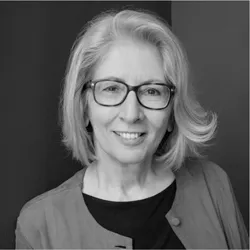 | SANIYE GÜLSER CORAT Director at UNESCO Location: Greater Paris, France |
MY HIGHEST ACHIEVEMENTS
1.First woman to successfully lead an Asian Development Bank (ADB) project-preparatory mission to design a $50 million income-generation project for veterans, mine victims, and women in Cambodia during a period in Cambodia’s history when Khmer Rouge was still active in the countryside (1996–97). This was the first ADB loan project for Cambodia of this magnitude and scope.
2.First woman and first social scientist selected as a member of an international panel of experts by the World Bank to oversee the four-year process of drafting the Bangladesh National Water Policy and Management Plan (1999–2003). This was the first water policy in the world to integrate gender equality considerations.
3.First director for gender equality at UNESCO to make gender equality one of two global priorities of the organization in 2007; achieved gender parity in decision making (starting from 9 percent in 2004); established several flagship programs in education, the sciences, and media. Most recently, published two reports on artificial intelligence and gender equality that sparked a global conversation on gender bias in frontier technologies.
STUMBLING BLOCKS OR STEPPING-STONES
Interviewed by over 600 media outlets after commissioning the latest research, I’d Blush If I Could,1 and the winner of the 2020 Women in Tech Global Leadership award, Saniye Gülser Corat is touching the world for gender equality. She is the epitome of an independent French woman who is beautifully comfortable with both her femininity and her power; but she isn’t actually French, although she speaks the language fluently, along with English and Turkish. She grew up in Istanbul, Turkey, where she stayed until she attained her undergraduate degree in business administration and political science from Boğaziçi University. After that, Gülser spent a year studying European affairs at the College of Europe in Bruges, Belgium, and then moved to Ottawa, Ontario, Canada, to complete both a master’s degree and a doctorate in political science from Carleton University.
Gülser’s doctoral thesis was on rural development, and her studies took her to the Ivory Coast and Cameroon, in West Africa, to do her field research. She w as studying political economy and learning from various villages, where she gathered information about the different forms of organization for agricultural production. And this is where her life took on a deeper purpose. During the process, she noticed that as she conducted her research, she always ended up talking to men. Officially perplexed, she finally inquired where the women were in these villages. They said that the women were working in the field and the men were the ones with the time to meet with her. Surprised by the statement, Gülser started to look at how labor was divided between men and women.
After her university studies, Gülser started her own international development consulting company, ECI Consulting, Inc. Her efforts bore fruit as she built the company, established a broad funding base, managing investments of over $50 million, forming and leading teams of over 150 international staff. The work influenced strategic decisions in international development and funding and provided innovative solutions to development issues around the world. As she led her company, Gülser became culturally fluent, eventually living and working in over 30 countries and on all continents. After her initial awakening to gender inequality, she made sure that there was an analysis of the gender relations included in every project. The work was often difficult, and while many assignments were dangerous, the one in Cambodia took the most out of her as a person and as a leader.
In 1997, she was leading a project-preparatory mission for the Asian Development Bank in Cambodia. While no longer in power, the Marxist leader Pol Pot and his brutal Khmer Rouge regime were still around. The country was emerging from a horrific time under his leadership during which their history was destroyed, their educated class executed, and their citizens starved and overworked. The country was in ruins. The Asian Development Bank wanted to give a $50 million loan to Cambodia to use for employment for people who were veterans. As the team leader, Gülser’s mandate was to create a project that provided employment opportunities for three groups of people: the military veterans, the people with disabilities, and the women.
She and her team were to set up shop in a well-protected area in the capital city of Phnom Penh. They also had their own private guards, because Pol Pot and Khmer Rouge were still active outside of the city. To add to the complications, the country had practically no infrastructure. She was supposed to set up an office with one Cambodian young man, who was acting as her interpreter, because she didn’t speak Khmer, the language of the country. Everything had to be imported. They had to negotiate with businesses to get a generator so they could have electricity in the office for the computers for her team. The computers had to be approved by the government. She had to build everything from absolute scratch. And, to top it off, there was no trust in the country: under Khmer Rouge, the people had to give each other up to survive, and as a result no one trusted anyone. She would negotiate to buy a generator and then the next week spend hours convincing a business owner to sell her the same generator he had already agreed to sell her the week before.
Traveling with her team to different regions, Gülser was a prime target for Pol Pot, so they had to go in government vehicles with security, and she had to travel in disguise. Due to the intense circumstances, her team became more needy than others she had worked with, so she also had to find the extra strength to lead them. They had to live together as a team, and to stay safe they had to move living quarters several times during her eight months in the country. It was very exhausting, both emotionally and physically.
Fortunately, Gülser has a very supportive spouse and partner in Tom Corat, who was a rock and a comfort throughout. He didn’t live there with her, but they had an arranged call every three days for 15 to 20 minutes, and it was during these calls that she could let her guard down, often venting and in tears. He would tell her that she could quit and come home. That was a comfort, and it would somehow give her the strength to keep going. She also found a friend and confidant in the young man who was her interpreter.
The work was very important, because this was the first time any development agency or multilateral bank was going to give a special loan to Cambodia. She was the representative of the bank, and they were providing incomes that many people needed and relied on. They were also reestablishing infrastructure by setting up business incubators and educating the citizens.
When she felt like giving up, she would hear the words of her father, who taught her to aspire to a higher purpose than herself. His words solidified when a very poor Cambodian woman walked up to her with her three stark-naked kids in tow and explained that she had walked for 800 miles because she was told that the ministry would help her if she could get there. As she stood before the woman, she realized that if she didn’t do this, no one would, so she pressed on. In terms of risk and reward, Cambodia was at the top of Gülser’s list for both. It was one of the most difficult and continuously dangerous situations of her career. It took everything she had for eight long months where the days were long, the nights were longer, and where she slept with one eye open.
While successful as a business venture, the work itself began to wear her down. She worked in the poorest countries with people who had absolutely nothing. She wanted to help, and although her work contributed to each country and constituency group, the impact seemed small. Unable to fix or compartmentalize the often horrific living conditions she saw, Gülser began to internalize her stress. She became sick when she returned home from her trips and later began to get sick while still on the trips, ultimately having to be carried off an airplane on a stretcher. It was too much. She needed to make an impact in a different way.
When a position opened for the director of gender equality at UNESCO, Gülser applied. This is a specialized agency within the United Nations system established in 1945, in Europe, after the Second World War, with the objective to make sure that there was never another. Among 2,000 candidates, she made the final cut and was offered the position. She closed her business and took an influential seat on a global platform.
UNESCO’s charge is to educate and create cultural dialogue in hopes that it will assist in positive progress and communication, and avoid future wars. At this writing, it is supported by 193 member states (countries) and is based in Paris, France. During her time there, Gülser championed programs and initiatives that promote gender equality. For the next 16 years, she was very influential in making gender equality one of two global priorities for UNESCO, convincing all 195 of the member states involved at the time to vote in consensus on the issue. Today, Gülser is stepping into new opportunities, including serving on corporate boards, where she will continue what has turned into her life’s mission to advance the state of gender equality throughout the world.
WORDS OF WISDOM FROM GÜLSER TO YOU
•Stay focused and true to your personal values and principles. Nothing is worth selling your soul for.
•We need women who get...
Table of contents
- Cover
- Praise for The Courage to Advance
- Title Page
- Contents
- ACKNOWLEDGMENTS
- DEDICATION
- FOREWORD
- PREFACE: LEADERSHIP GETS REAL
- CHAPTER 1: COURAGE
- CHAPTER 2: RESILIENCY
- CHAPTER 3: ADAPTABILITY
- CHAPTER 4: SENSEMAKING
- CHAPTER 5: VULNERABILITY
- CONCLUSION
- Copyright
Trusted by 375,005 students
Access to over 1.5 million titles for a fair monthly price.
Study more efficiently using our study tools.
Frequently asked questions
Yes, you can cancel anytime from the Subscription tab in your account settings on the Perlego website. Your subscription will stay active until the end of your current billing period. Learn how to cancel your subscription
No, books cannot be downloaded as external files, such as PDFs, for use outside of Perlego. However, you can download books within the Perlego app for offline reading on mobile or tablet. Learn how to download books offline
Perlego offers two plans: Essential and Complete
- Essential is ideal for learners and professionals who enjoy exploring a wide range of subjects. Access the Essential Library with 800,000+ trusted titles and best-sellers across business, personal growth, and the humanities. Includes unlimited reading time and Standard Read Aloud voice.
- Complete: Perfect for advanced learners and researchers needing full, unrestricted access. Unlock 1.5M+ books across hundreds of subjects, including academic and specialized titles. The Complete Plan also includes advanced features like Premium Read Aloud and Research Assistant.
We are an online textbook subscription service, where you can get access to an entire online library for less than the price of a single book per month. With over 1.5 million books across 990+ topics, we’ve got you covered! Learn about our mission
Look out for the read-aloud symbol on your next book to see if you can listen to it. The read-aloud tool reads text aloud for you, highlighting the text as it is being read. You can pause it, speed it up and slow it down. Learn more about Read Aloud
Yes! You can use the Perlego app on both iOS and Android devices to read anytime, anywhere — even offline. Perfect for commutes or when you’re on the go.
Please note we cannot support devices running on iOS 13 and Android 7 or earlier. Learn more about using the app
Please note we cannot support devices running on iOS 13 and Android 7 or earlier. Learn more about using the app
Yes, you can access The Courage to Advance by Bonnie Hagemann, John Maketa, Simon Vetter,Lisa Pent,Women Execs on Boards in PDF and/or ePUB format, as well as other popular books in Business & Business Biographies. We have over 1.5 million books available in our catalogue for you to explore.