From personal influencing skills and positive psychology to handling relationships and communication, you're about to discover the simple truth about success 'John Lees has re-written the rules on everything you thought you knew about successful self-projection, networking and effective communication' From the Foreword by Sarah Willingham of BBC's Dragons' Den This is a book about getting noticed, but not a conventional book. It doesn't tell you to sell yourself, get out there, impress with power dressing or to have an elevator speech. Getting noticed doesn't have to mean over-selling. Over the course of this book, you will discover exciting research, positive psychology and advice from a range of experts that will help you make an authentic impact. By stepping just to the edge of your comfort zone, you will learn to project yourself onto the world of work. From personal influencing skills to presentations, this book decodes success for people who hate the idea of selling themselves. You'll rethink networking, learn how to talk about yourself in ways that others find easy to hear - and also directly influence what people say about you. You'll discover how you can project yourself in writing without looking as if you're pushing too hard, and learn to engage people in a way that sparks curiosity and leads to interesting offers.Written for both introverts and extroverts, THE SUCCESS CODE shows you how to find an authentic voice even if your style is naturally self-effacing. You'll learn to get your name 'front of mind' by making sure the right messages about you come across even when you're not in the room. This is your game plan for getting noticed. Are you ready? 'A pragmatic and insightful guide to building reputation and impact that anyone can learn from' Penny de Valk, Managing Director, Penna Talent Practice 'If you would rather climb the stairs than get in the lift to do an elevator pitch, then buy this book' Dr Carole Pemberton, Coaching to Solutions, Executive coach and author 'Packed with helpful facts, insightful quotes and practical tips' Ian Nicholas, Chief HR Officer, REED Specialist Recruitment Ltd 'A great resource in aiding your development' Gordon McFarland - HR Director - Global Professional Services 'Full of practical advice and tips and will help you find your voice and achieve success in an authentic way' Zoe Shackle, HR Director AMC Networks International
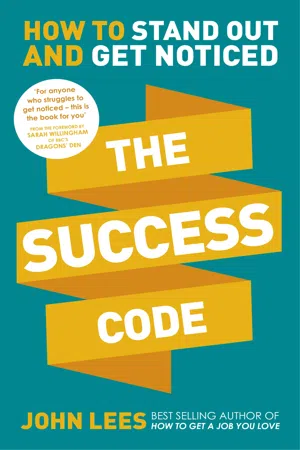
- 240 pages
- English
- ePUB (mobile friendly)
- Available on iOS & Android
eBook - ePub
About this book
Information
Topic
Personal DevelopmentSubtopic
Careers1
The power of self-projection
This chapter helps you to:
• Understand that loud self-promotion is not the only way to get noticed
• See the difference between selling and communicating
• Understand why it’s often hard to talk about yourself
• Explore why introverts and extroverts operate very differently
• See that self-projection is not just for extroverts, but a vital part of getting results
What is self-projection?
This question may be running through your mind right now, especially if you’re the kind of reader this book was written for. This guide serves as an antidote to the bookshelves of material out there that teach you how to be a smooth networker and a great self-publicist. Perhaps you’re the type that finds any chance to talk about yourself like pushing against an open door – a welcome chance to ‘wow’, to make people smile and feel engaged? More likely, you find it hard work; for some it’s a nightmare.
Imposing your personality on others is a trend that permeates modern society. Psychologist Tomas Chamorro-Premuzic writes in Confidence: Overcoming Low Self-Esteem, Insecurity, and Self-Doubt about a long-term survey of US college students. In the 1950s, 12 per cent described themselves as ‘an important person’; by the 1980s no less than 80 per cent made the same claim. Other studies point to the rise of digital narcissism, including extensive disclosure of personal information and the ever-present ‘selfie’. In 2010 researchers at Western Illinois University looked at students who use Facebook, identifying such traits as ‘self-absorption, vanity, superiority, and exhibitionistic tendencies’ and a ‘willingness to manipulate and take advantage of others’.
This book is about self-projection. That isn’t the same as self-promotion, which is about wanting to impose yourself on other people. To be clear about the behaviours we are discussing:
1 Self-promotion is the action of promoting or publicizing yourself or your activities, explicitly, often with some force.
2 Self-assertion in its most negative sense is about asserting your superiority; in its most positive sense it is about vocalizing your rights, claims and opinions.
3 Narcissism, according to the Oxford English Dictionary, is ‘a grandiose view of one’s own talents and a craving for admiration’. This self-regarding behaviour is often about attracting empty praise and avoiding objective feedback.
4 Other kinds of egotistical self-centred behaviours are easy to spot – believing that the world is all about you and it’s not worth listening to anyone else, or putting your own interests first.
5 Self-projection is something very different.
You will find the word ‘projection’ used differently elsewhere. Psychologists talk about projection as an unconscious transfer of desires or impulses to another person, as in ‘it’s your fault I had to shout at you’. In this book I am using ‘self-projection’ in a slightly unconventional but very literal way – like an image projected onto a screen. The screen is the community of people you want to share information with. What you project is what you decide to show on that screen.
Think of the different ways in which you project yourself. This might be in great detail (for example, in a CV), or whatever pops out of your mouth at a party when someone says ‘now tell me about yourself…’ (see Chapter 3 for the pros and cons of the Elevator Pitch). It could be in everyday conversation. How much of what you say is remembered? What will others say about you when you’re not around? My working definition of self-projection is: how you help others understand and remember important things about you.
Why self-promotion doesn’t have to be the norm
Pushing yourself forward in a ‘me-first’ style seems widespread and has acquired an air of social acceptability. In her book Quiet: The Power of Introverts in a World That Can’t Stop Talking Susan Cain reports that during the 1920s people were invited to believe that success and better health could be obtained simply by acquiring charm and avoiding an inferiority complex. Cain argues that society has a ‘cultural bias towards extroverts’ and ‘nowadays we tend to think that becoming more extroverted not only makes us more successful but also makes us better people’. She shows how in US colleges, outgoing, assertive behaviours are reinforced through praise; students feel they will receive lower marks if they do not impose their personalities in a group setting.
This creates huge tensions for individuals from cultures that see such behaviour as crass or rude. Studies by psychologist Robert McCrae show that personality types are not distributed evenly across the world – a much lower rate of extroversion is found in East Asia compared to Western countries. Japanese and Chinese students attending Western business schools can find that their quieter manner is misunderstood in team discussions. Their comparatively gentle approach arises from a concern not to embarrass or outshine other people; an uninformed observer might see it as a lack of enthusiasm or assertiveness.
Cain outlines the value that introverts bring to a range of contexts and roles, arguing that thoughtfulness is a helpful and undervalued component of business decision-making. Many writers today share her notion of the ambivert – someone in the middle ground between extrovert and introvert. Some psychologists argue that a large part of the population occupies this space, and recent writing offers a range of strategies to help quiet and mid-zone people rethink the way they interact with the world – and to find an operating style that both feels true to who they are and gets them the results they’re looking for.
Party animals vs. wallflowers
Some people are naturally comfortable with self-projecting; others need to work at it. Where you sit on the extrovert/introvert scale depends on the starter kit you’ve been given from the gene pool. Extroverts generally love company, introverts less so. Introverts prefer to think then speak after they have processed what they are going to say; extroverts often say ‘I don’t know what I am thinking until I have explained it to someone else’.
Rather than risk inadequate definitions, I’m turning to a trusted friend who understands psychometric testing better than anyone I know. Business psychologist Stuart Robertson is author of the Quintax personality questionnaire (sr-associates.com).
Introversion and extroversion
In my personal view, introversion–extroversion is a broad domain in personality which includes a number of components influencing how we act and interact with people and situations. Each component has a ‘polarity’ with roughly opposite behaviours at each end. For example, being relatively friendly and relaxed about approaching people (extrovert pole) has its opposite in being more independent, and less energized by social contact, even a little aloof (introvert pole). Extroverts are more interested in making and maintaining social contacts; introverts prefer self-reliance.
We might think about where people derive energy – extroverts do so from the outer world of action and social connection, introverts from the inner world of reflection and ideas. When it comes to risk-taking and adventurousness, extroverts often have a ‘do-think-do’ cycle where introverts may adopt a more cautious ‘think-do-think’ cycle. Extroverts tend towards spontaneity, liveliness and even an impulsive approach to decisions while introverts take a more prudent, thoughtful approach.
Different levels of comfort with self-disclosure are also evident. Extroverts are often more open with others about their feelings, introverts more private and selective about who they share with, and how much information they feel comfortable imparting and receiving.
We may show broadly introverted or extroverted styles – or a balance between the two, sometimes in apparently contradictory ways. For example, an adventurous person may turn out to be relatively self-reliant and less sociable. Or an outgoing person seems risk-averse in action, perhaps shy in less familiar social settings. Other examples include the serious academic who inspires admiration through unexpected humour, and the shy actor.
While they permeate our whole approach to people and things, extroversion and introversion rarely exist in pure or consistent forms. They are not simply about whether one likes social contact. They help condition what we feel is the most appropriate and desirable way to behave, moment by moment in the world.
In a climate where introversion is sometimes seen as a form of weakness, you need to remember that both extroversion and introversion have their strengths. It’s also important to note that shyness and introversion are not the same thing.
‘Shyness is the fear of social disapproval or humiliation, while introversion is a preference for environments that are not overstimulating. Shyness is inherently painful; introversion is not.’
Susan Cain
I’m happy to talk about any subject except myself
Some people are relatively good in social situations, but hate talking about themselves. What makes people react so differently to the same context? Shyness, self-esteem, and confidence are important factors. You may find it easier to talk about a product, service or idea than talk about yourself. Actors often say they can speak the words of a playwright with great confidence, but some find it hard to appear in public ‘out of role’, as themselves. So this difficulty appears to be partly about the role you occupy, and partly about subject matter – the things you have to talk about.
Legitimate solutions come from two angles. One is about thinking, the other about behaving (see ‘thinking and behaving’ in Chapter 2). Thinking differently can be about standing back from yourself and acquiring objectivity. It can be about reframing (for example, operating as if you’re doing things on someone else’s behalf). It can also be about taking the focus away from yourself and your anxieties. These are some of the strategies you’ll discover in this book.
Behavioural change is also powerful; don’t underestimate the power of experimentation. You can get better at self-projection even if you’re relatively shy – repeated exposure to situations where you need to talk about yourself makes the process feel easier and more natural.
How ‘selling yourself’ gets in the way
As you will read in the pages ahead, one thing that goes wrong for people trying to make an impact is starting with the idea that they should be selling themselves. As Chapter 3 explains, it’s the dominant message in most advice about networking and personal branding. And it’s completely wrong.
Most people dislike being on the receiving end of a sales process. You immediately associate it with cold selling – the telephone interruption when you’re at home relaxing, or the fundraiser who blocks your path with a cheery but determined expression. When buying something you’re more open to a salesperson who finds out about your needs rather than one who tells you what you want – building curiosity rather than pushing a sale. Average sales training is about communication; excellent sales training is about asking questions.
If you feel you’re being sold to, you sense that you’re the second most important person in a conversation. You feel under unwelcome pressure. It’s okay to be sold to when you’ve given your permission and you can choose the setting. For example, nobody likes being sold to in a social context. Research in 2012 from ExactTarget showed that only 4 per cent of social media users in the US would look at Facebook to find a promotional deal, even from companies that have been given permission to send them offers. It stands to reason that you’re going to be more resistant to being pitched at when you’re enjoying yourself – so meeting someone at a party who insists on explaining the benefits of his services is a big turn-off.
‘Overtly selling yourself is just embarrassing for you and embarrassing for the person listening to you. People put up all kinds of barriers if they feel they’re being sold to. Many professionals are developing a completely different approach to selling – sometimes described as a feminine approach – more listening, less broadcasting. I encourage people to learn to talk about what they’ve done with confidence but also with dignity.’
Kate Howl...
Table of contents
- Cover
- Title
- Contents
- Praise for The Success Code
- Foreword
- About the Author
- Acknowledgements
- Dedication
- How to get the most from this book
- 1 The power of self-projection
- 2 The way you communicate shapes your world
- 3 A new take on personal branding
- 4 What people say about you when you’re not in the room
- 5 Face time
- 6 Take the focus off yourself
- 7 Authentic impact
- 8 New rules for networking
- 9 Soft connecting
- 10 The Zone System
- 11 Projecting yourself on paper and online
- 12 Easier, more impactful, presentations
- 13 Managing the way your boss and others see you at work
- 14 Projecting into the job market
- 15 Start the easy way and get results
- Appendix
- Copyright
Trusted by 375,005 students
Access to over 1.5 million titles for a fair monthly price.
Study more efficiently using our study tools.
Frequently asked questions
Yes, you can cancel anytime from the Subscription tab in your account settings on the Perlego website. Your subscription will stay active until the end of your current billing period. Learn how to cancel your subscription
No, books cannot be downloaded as external files, such as PDFs, for use outside of Perlego. However, you can download books within the Perlego app for offline reading on mobile or tablet. Learn how to download books offline
Perlego offers two plans: Essential and Complete
- Essential is ideal for learners and professionals who enjoy exploring a wide range of subjects. Access the Essential Library with 800,000+ trusted titles and best-sellers across business, personal growth, and the humanities. Includes unlimited reading time and Standard Read Aloud voice.
- Complete: Perfect for advanced learners and researchers needing full, unrestricted access. Unlock 1.5M+ books across hundreds of subjects, including academic and specialized titles. The Complete Plan also includes advanced features like Premium Read Aloud and Research Assistant.
We are an online textbook subscription service, where you can get access to an entire online library for less than the price of a single book per month. With over 1.5 million books across 990+ topics, we’ve got you covered! Learn about our mission
Look out for the read-aloud symbol on your next book to see if you can listen to it. The read-aloud tool reads text aloud for you, highlighting the text as it is being read. You can pause it, speed it up and slow it down. Learn more about Read Aloud
Yes! You can use the Perlego app on both iOS and Android devices to read anytime, anywhere — even offline. Perfect for commutes or when you’re on the go.
Please note we cannot support devices running on iOS 13 and Android 7 or earlier. Learn more about using the app
Please note we cannot support devices running on iOS 13 and Android 7 or earlier. Learn more about using the app
Yes, you can access The Success Code by John Lees in PDF and/or ePUB format, as well as other popular books in Personal Development & Careers. We have over 1.5 million books available in our catalogue for you to explore.