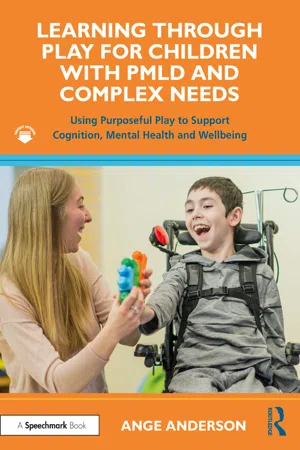
We know that there is a cognitive gulf between humans and animals and yet animals, particularly during their early years, naturally involve themselves in play. Some animal researchers say that the types of play they enjoy prepare them for later in life, for hunting, for survival, for burning off energy or strengthening social bonds. There are many entertaining Youtube videos of animals at play. If animals require to play to make sense of their world it stands to reason that humans do too. Play is how animals and humans, especially their young ones, are designed to learn.
As part of an INCA (International Review of Curriculum and Assessment), Bertram and Pascal (2002) reviewed the early years curriculum including the pedagogical and assessment approaches of 20 different countries across the world. Despite differences in the specific curriculum models of those countries, there was a strong consensus on the importance of play in the early years. Many of the students that I have taught in special schools, regardless of their chronological age, have a cognitive age of less than three years of age which suggests that they are at the early years stage of learning. They may remain at that stage all of their lives. Stephen et al. (2003) in their research review for Scotland into meeting the needs of children from birth to age three state that ‘a subject or knowledge-based curriculum does not meet the needs of children less than three years of age’. It makes sense to me that all students with a low cognitive age learn best through play.
Scottish MP Beatrice Wishart said in 2021 “By learning together through play children develop the skills needed for trickier tasks and are better prepared to shine in areas of numeracy and literacy”. Whitbread et al. (2017) suggested that studies of play with objects in the development of mathematical abilities have shown positive results. I know that in our school we could not have taught maths as well without the use of Boo Zoo and Numicon (both play-based approaches to numeracy – see Appendix 1 for more information). Play must be present before any meaningful learning in the classroom can take place (Tait 1972). I have found that teaching through play is a successful way of engaging reluctant learners in education.
An appropriate education
We need to bear in mind what we wish our students with PMLD and SLD to learn. What is an appropriate education? Here, I shall mention just two of the play therapies – Dough Disco™ and Magic Therapy™ that were used at the school I was head of (there are others further on in the book). They both offered students the opportunity to develop their gross and fine motor skills; increase their self-efficacy, self-esteem, group interaction and interpersonal skills; increase their attention and perception; develop their motor planning skills and develop their cognitive skills. They are both play-based approaches to learning and students enjoyed the activities (see Appendix 1 for more information and the resource chapter for policies you may wish to copy). Both approaches are certainly more appropriate and fun than asking a child who has fine motor skill problems to trace over words or copy write. Particularly when holding any implement may be difficult for them. I have supported students in the past with facilitated learning where I have supported their wrist to enable them to touch an iPad or BigKeys keyboard (go to https://www.Bigkeys.com for more information) if they have intimated that they want the ‘write’, that is, not the same as putting a piece of paper in front of them and doing hand over hand mark making. By all means have a table set up with paper and markers for students to choose to go to but please do not force them. You will do more harm than good. Think instead of the strength needed to squeeze and roll dough then manipulate it into sausage shapes. The more our students practice through play the stronger and more controlled their arms, hands and fingers become. That is more helpful to them than trying to mimic a mainstream education. A child with fine motor skill issues may have the ability to eye point and this may be the avenue of communication that needs pursuing. I feel that these approaches are what special schools can excel in.
The right to play
If we look at Article 31 of the United Nations, it states that every child has the right to relax, play and take part in a wide range of cultural and artistic activities. What does the right to play look like for a child with PMLD or with multiple disabilities, sensory processing disorder or visual and auditory impairments?
Through working in special schools, I am constantly reminded that I can never fully appreciate what another human being feels or understands, and every single child should be given the opportunities to play that we all have. Sometimes we need to adapt those opportunities so that they are more easily accessible. The ability to put block on top of block may be affected by the limitations in upper limb movement and control, visual impairment or hearing loss and not cognitive ability. Although it is claimed that all children begin to play weeks after they are born (Parten 1932 – see Appendix 2). I think we may need to intensify scaffolding support and for much longer periods for those born with sensory, physical impairments or sensory processing disorders so that they have equal opportunities to develop play skills. Assistive technology can also help. How do we know when a student with PMLD has had enough of play? In much the same way as we would know a baby has. They may turn their head away, close their eyes, cry or make noises of discontent. It is then time to reduce the stimulation and give them time to recharge. Do not put them off by making it seem like work. Always maintain a playful approach. You will then be in tune with their cognitive level of understanding.
Developmental delay
Tröster and Bambring (1994) suggested that blindness, especially in the early years of life, leads to severe restrictions on having natural experiences in the world. He added that these restrictions reduce the potential for cognitive and social learning in blind infants and pre-schoolers and could be reflected in developmental delays in play behaviour. I believe this is also true for those born with severe or profound learning difficulties. As it is difficult to assess cognitive ability in someone with multi-sensory impairments then we have to be mindful that sometimes it could be motor difficulties that delay or prevent the acquisition of complex functional play rather than cognitive ability. It stands to reason then that children with special needs will usually have delays in play. Children's early play begins with indiscriminate actions on objects – picking up and dropping, banging and/or mouthing all objects. They move on to taking objects apart and later begin to put them back together again, putting them in and out of containers. Children with special needs have information processing difficulties and so we need to query whether enough time has been given for them to get the desired response to them pushing an object off their wheelchair table – top due to motor problems. What we also have to be mindful of is a person's ability to develop learned helplessness – because a student's late response is ignored or missed. Then being looked after becomes the priority and is an easier option if their attempts at communication have ended in frustration.
If play is an activity for learning, then interventions in play might be useful to help children learn life skills. Delays in play progression may compromise assessment and intervention planning for these children. Vygotsky regarded play as “an adaptive mechanism promoting cognitive growth” (Rubin et al. 1983) but to assist some of our students to play we may actually need self-adaptive mechanisms of technology. If children cannot learn by the way we teach, then we need to change the way we teach. If children cannot learn to play through traditional methods, then during this 4th Industrial revolution that we are going through technology could provide the answer and support.
Assessment of play
There are a variety of frameworks in the UK for assessing students with severe or profound and multiple learning difficulties. These include Routes for Learning (RfL) and Quest for learning as well as the Engagement Model. There are also frameworks which focus on early childhood development such as the early years foundation stage profile and the early years development journal. As they relate to early childhood development these frameworks provide ideas for activities that lend themselves to a playful approach to learning. All of these frameworks can be found easily online. Our school used RfL and B Squared, which is an assessment package that schools can buy into. For more information go to https://www.bsquared.co.uk. All schools should have a planning, assessment and recording system in place so that student's achievements and progress can be reported accurately to parents.
Many play assessment instruments and frameworks are also available around the world (Liffer et al. 2011) and distinctions between their uses and purposes should be considered. They vary in terms of the age range of interest and the levels of specificity for developments in play against which children are evaluated. Play Wales, for instance, has a framework for quality assessment about the delivery of play but I found that it did not cater for children with special needs. Appendix 2 in this book provides examples of different theories on the development of play and these different theories along with the cognitive ages of students should be considered when selecting a play assessment for use. Learning to play is the precursor to learning to learn. We need to understand how a child learns to play.
How we learn
German educator Friedrich Froebel pioneered the play approach to learning way back in 1837. The term kindergarten was invented by him. Sir Frederick Bartlett (1886–1969) introduced schemata into the world of education and psychology. Goffman (1974) would call them frameworks. To my mind, schemas or frameworks are basically like computer programmes in the brain that can be accessed quickly to understand a specific event or situation. They are a bank of thought processes from our experiences that have been saved and stored for future use to make sense of our world. We all use schemas. If you are visiting a restaurant, you have a schema that you have in your brain for what to expect in a restaurant. You adapt this schema as your experiences of restaurants change so that the schema is up to date.
Piaget's theory of cognitive development (see Appendix 2) provided an important dimension to our understanding of how children develop and learn and grow their schemas. You may have observed some students with special needs constantly repeat an action as if to make sense of the world around them and find out how things work. This can be interpreted as schematic. Schematic actions help the brain develop and aids cognition. Schemas are formed initially in early childhood. As a lot of students with learning differences are at an early cognitive stage they can remain within a particular schema for a very long time until they feel confident. If the schema they have learnt is a negative schema it takes a lot of unlearning. Virtual reality (VR) can support this to great effect.
I have seen students with autism repeat an activity time and time again. I have also seen the results of a student with autism who took apart the school vacuum cleaner in order to make sense of how it worked. It was a pity he could not put it back together and the school caretaker learned to keep the cupboard locked after that. The caretaker also ended up locking the door to the utility room when the same student became fascinated with the school washing machine. When I became headteacher of a brand new school I had learnt to ensure that these rooms had locks or coded door access. All of us never stop learning and adapting our own schemas.
Many of our students require repeated schematic actions to help their brain develop and override any fright/fight/freeze/appease state in the brain. In the same way that we need to understand our students individual sensory profiles, we need to understand which play schemas interest them the most so that we can support them and help them to modify any maladaptive schemas.
Marvin Minsky, the world famous computer scientist, reintroduced the schema and framework construct into psychology in the 1970s as he attempted to give computers artificial intelligence. During the 1970s Chris Athey, principal lecturer in education at the Roehampton Institute, set up the Froebel Early Education research project. Details of the project and its findings can be found in her book (Athey 1990). The book introduced us to schemas of play. Educational writers concerned with play have since come up with the nine most common play schemas (repeatable behaviours) seen during play.
It is very important to encourage the progression of schemas in order to support student's development. In a special school or classroom, we do not teach to the majority, but we cater for individual differences. It is only by observing these individual differences that we can support students. All staff need to be trained in the observation of students play schemas. Observations will inform planning and aid progression.
Different play schemas we can observe
- Trajectory schema is when students like discovering how things move. A child with a trajectory schema may seem to run around a lot and like to climb and jump off things. They may signal that they wish to be pushed high on a swing. They may like to push things off from their work tray (if they have one attached to their wheelchair) to see what happens. They may also like to play with running water and could flood the school toilets if left unattended. If this schema is not understood and supported students could throw larger items, such as a chair, and possibly hurt other students. The schema is all about the fascination with movement. Supporting the need for this schema could involve giving students the opportunity to have a session of basketball first thing in the morning. As well as supporting a student in the development of schema you are also supporting other sensory developments such as proprioception. Special school staff are adept at understanding the needs of students and all staff must be given the confidence, through regular appraisal and CPD to feel able to make these suggestions so that we avoid unwanted behaviours that generally happen because a student has formed a maladaptive schema as a result of the schema not being properly directed.
- Transporting schema is when students repeatedly carry things around with them and may repeatedly bring you things. We found with a certain student that we had to empty his pockets when he left Lego club room as he enjoyed hoarding things in his pockets and carrying them back to the classroom to continue the play. A garden area where they can sort and transport fir cones, sticks and leaves might encourage them to develop this schema, and nobody minds losing a few fir cones. In one school that I worked at one of our students supported the caretaker at the end of each afternoon with collecting up toys from the playground and returning them to the right classroom. This helped him to find a purpose for his transporting schema.
- Enclosing schema is when a student constructs fences and barricades for themselves or toys. We have found that some of our students like to make dens or go into a classroom den to relieve their stress. Many of our students with this schema respond well to a TEACCH workstation when they have specific tasks to complete as this is a more enclosed space than a wide open classroom with no boundar...