This new work explores the growth of information and communication technologies with an emphasis on cyber-physical systems and security management of these systems. This volume discusses and analyzes the various effective practical applications of CPS, which involves the integration of the physical process with embedded computation and network monitoring along with feedback loops from physical systems.
The authors identify the best set of applications and discuss the drawbacks of existing systems. The book provides a broad outlook on the applications of cyber-physical systems along with case studies and examples in healthcare, automotive electronics, industrial automation, environment monitoring, agriculture, and applications in civil and mechanical sectors. Topics include using an energy management system in smart grids, implementing an intelligent traffic management system, warehouse tracking and monitoring, medical cyber-physical systems security, remote healthcare monitoring, and more.
Smart grids are electric grids that utilize advanced technologies of monitoring, control, and communication to supply reliable and secure energy, improve the efficiency of the system, and provide flexibility to the prosumers. The beginning of the smart grid era and the development in modern infrastructures of metering, communication, and energy storage have revolutionized the power grid. Smart grids are developed with complex physical networks and cyber systems thus enabling smart grids for the Internet of Energy (IoE). IoE is the cloud where sources of power generation and loads of power consumption are embedded with intelligence. Modern electric power grids are integrated with sensors used to provide measurements. The sensor measurements and the complex applications of various sensors cause a need for Cyber-Physical System (CPS). CPS is a class of systems that integrates physical process, computation, and networking. The CPS model of the smart grid helps in modeling and simulation for evaluation of the system performance and characteristics. The CPS model of the smart grid must enable the smart grid to be robust, allow future extensions, and compatible with web service technologies. The power generation sources and loads such as smart buildings are the physical layers, the sensors used for measurements form the cyber-physical integration and the data storage and processing using IOE forms the cyber layer of the smart grid. The CPS model of the smart grid helps in the integration of intelligent devices and allied information and communication technologies for robust and reliable operation in smart grids. In the smart grid paradigm, the energy management system has a vital role to increase the efficiency and reliability of the system. This chapter presents a CPS model for smart grid and the challenges associated with the development of the CPS model. In addition, this chapter describes the energy management system model of the smart grid.
1.1 INTRODUCTION
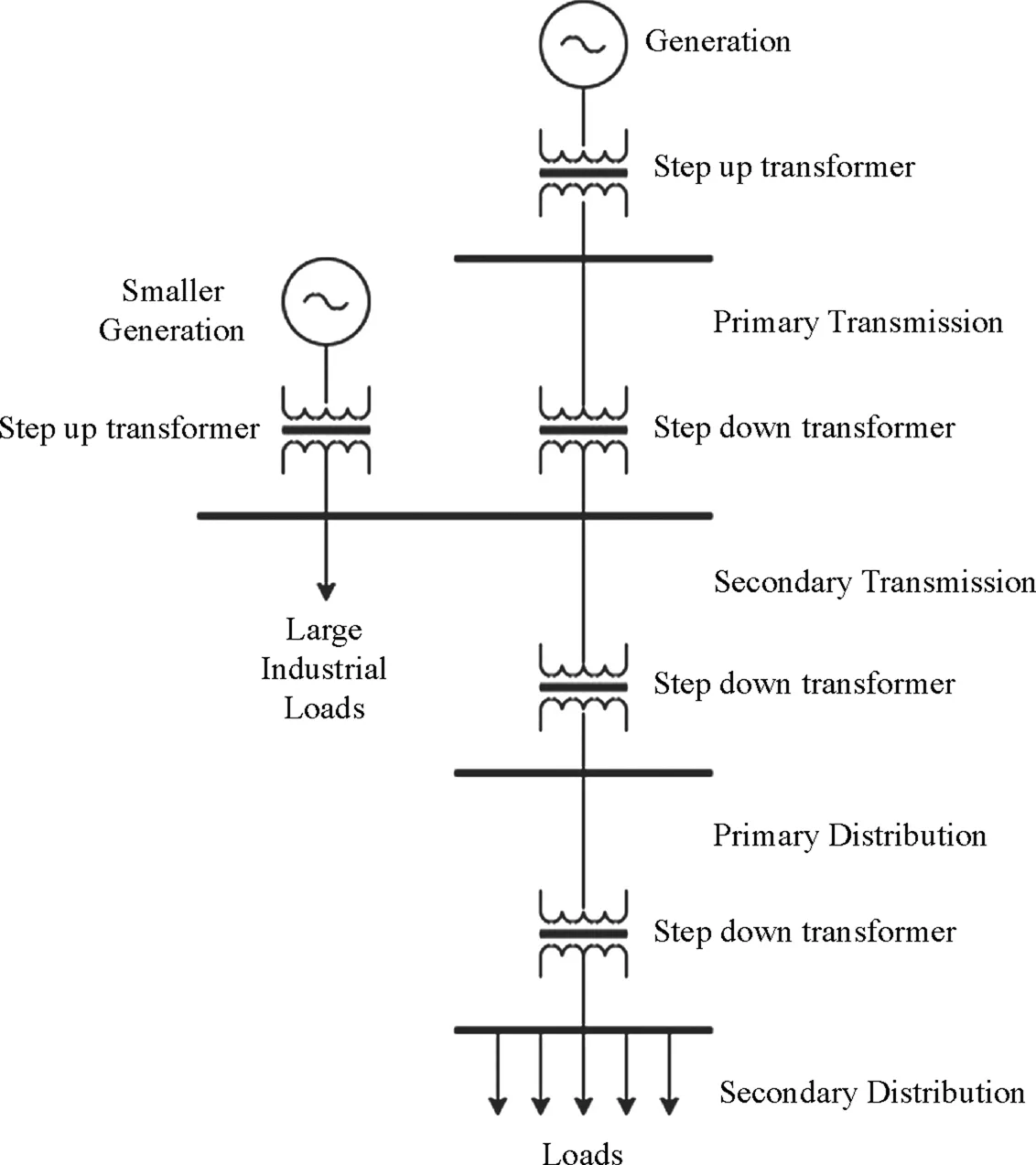
The complex interactive network was the first research carried by the Electrical Power Research Institute (EPRI) in 1998 for developing a complete automated reliable grid, which is the first prototype of smart grid.1 The smart grid concept was widely accepted for the future development of power network after the proposal of Intelli-Grid in 2002.2,3 In 2005, the European Smart-Grids Technology Platform was founded which launched a report with concepts and framework for the European smart grid in 2006.4 This report was further modified by the U.S. Department of Energy to support a reliable and sustainable energy supply in the report “The Smart Grid” in 2007. The main challenge for many countries is to develop a smart city with socio-economic and environmental benefits, improving electricity usage in smarter way to conserve energy. There is an increase in the demand for electric supply and load patterns becoming complex in nature in recent years challenging the power grid network. To address these challenges, power engineers and researchers have proposed the concept of the CPS approach for the power system network. The combination of cyber-physical system and power system network together known as Cyber-Physical Energy Systems (CPES) is based on the measurements from the sensors through which the decision to execute the control in the distributed network is achieved. The major challenge in CPES occurs in the integration of cyber and physical components in the system. In the CPES for a unified operation of cyber and physical layer components, all events happening and decisions taken must be communicated between cyber and physical layer components, thereby increasing the capability of the system to address the issues. The development of smart sensors and their integration in the electric grid ensures the availability of original and dependable data at the control centers. The original trustworthy data help in increase of accuracy to solve problems and apply control for various applications. In the present electric grid, more amount of renewable energy is penetrated, which is not been reliably handled due to the intermittency in renewable energy availability. This challenge leads to the concept of a smart grid with improved infrastructures for communication and doing various computations in the conventional grid. The present applications of the smart grid are without an underlying framework which results in isolation and are difficult to integrate and future expansion. With the help of a reference model of CPES, the smart grid can be developed in a better way. The CPES reference model must handle large scale and long-term scenario of smart grid. The CPES model must be a generic model that describes the characteristics of the smart grid scenario with technologies and standards for smart grids. The main aim of power engineers is to design an efficient algorithm which is capable of running in real time in the grid. Another challenge to the power engineers is the unprecedented volume of data measured using the Phasor Measurement Unit (PMU) which has to be aggregated and processed based on the requirement. The coordination between the decentralized resources is the major part in the real-time operation of the grid. The communication network used in the grid must be advanced to handle the coordinated operation of the grid. The infrastructure comprises of communication network and middleware comprising the software for processing data and deployment of control. The structure of the traditional power network is shown in Figure 1.1. In this chapter, a survey of research in cyber-physical energy systems is presented with an overview of CPS. The aim of this chapter is to help power engineers and researchers to gain insights into the CPS approach to power grids.
1.2 SMART GRID
Smart grid (SG) is a widely used term with various definitions. The definition of SG is to integrate and enable Information and Communications Technology (ICT) and advanced technology with power network to make the power system efficient, economical, and sustainable. In the United States, SG refers to transforming the electric industry from centralized, producer-controlled network to consumer interactive. In Europe, SG refers to the participation and integration of all societies in European countries. In China, SG refers to a physical network based approach to ensure security, reliability, and sustainability. In IEEE Grid Vision 2050, the requirement of SG is to operate and control the entire power system comprising of all present and future technologies.
FIGURE1.1 Structure of conventional power system.
The need of flexible, portable, safe, and secure power supply use through SG demands a reconsidering in the interaction between physical power system, the cyber systems, and users. The challenges involved in SGs are the intermittency in a renewable generation which affects power quality and stability of the system. In power demand peak, average demand plays a vital role, reduction of peak demand increases the capacity of supply without the addition of new generation units. In SGs due to the utilization of distributed generation, losses in power can be decreased by avoiding the long-distance transmission lines. The usage of smart meters, advanced sensors, and ICT helps in improving the efficiency of SGs. To achieve all the above advantages, the SGs must have the following features:
Distributed control
Prediction of load in advance
Forecasting of renewable generation
Reduction of peak demand
Energy storage system
The solution for these issues and challenges is the CPS paradigm, which uses a systematic way to solve the issues and challenges.
1.3 CYBER–PHYSICAL SYSTEM
The U.S. National Science Foundation coined the term CPS in 2006 to describe a complex, multidisciplinary, next-generation system integrating embedded technologies in the physical world. In the United States, CPS is the integration of embedded systems and physical components, while in Europe it is the communication between cloud and human, while in china it focuses on intelligence in sensing, processing, and control. The progress in CPS is significant in the last few years and has miles to achieve its complete potential. The development is quick in sensing, analyzing, synthesizing, modeling, and control in fields of engineering and science. CPSs bring engineering and computer science together to deal with the issues and challenges. The technological challenges in bringing the two fields together are:
Design: To achieve continuous integration, communication, and computation design is a vital infrastructure. Standard architectures and design tools are required to support the system needs. Architectures and techniques should ensure confidentiality, integrity, data availability, and protection of assets.
Science and engineering: Integration of cyber and physical components requires fast sensing, faster processing and quick control and has to be accurate. Fast and efficient processing of large volumes of data must be present to make decisions and control actions. The centralized control which is used traditionally does not have the speed and hence distributed control is required. Data sensing, data processing and control are the main factors involved.
1.3.1 GENERALIZED CPS MODEL
The physical layer consists of the devices which are needed to monitor and control through CPS. The physical layer consists of devices such as generators, transformers, loads, and measuring devices. The multi-input-multi-output (MIMO) CPS model is represented as,
(1.1)
(1.2)
where, A is the state matrix, B is the input matrix, C is the output matrix, x(t) is the state vector, u(t) is the input vector, y(t) is the output vector.
The control is achieved using input vector which is given by,
(1.3)
where, K is the connection between cyber layer control and physical layer sensors.
1.4 SMART GRID—A CPS APPROACH
SG is the integration of physical components of the power grid network and the cyber layer to achieve the characteristics of CPS. In SG, real and virtual systems are integrated where events in physical systems are communicated as input to CPS control centers and simulated to analyze the performance of the physical system. The dynamic cooperation between physical and cyber systems is achieved through communication channels. The parallel computation and distributed data help to make the decisions through CPS layers. The CPS will adapt, organize, and learn by itself and hence, it can respond for fault, attack, and emergency in SG making SG to be secure and reliable. The challenges in the CPS aspect of the SG are system is time-critical, components work together to achieve stability, regulation of voltage and frequency, and fast response subject to uncertainties and disturbances. In SG, CPS is used to reduce redundancy and improve the stability of SG. The main functions of CPS in SG are:
Dependability
Reliability
Predictability
Sustainability
Security
Interoperability
Many researches are carried to address th...
Table of contents
Cover Page
Half-Title Page
Title Page
Copyright Page
Table of Contents
Contributors
Abbreviations
Preface
1. Energy Management System in Smart Grids: A Cyber-Physical System Approach
2. An Intelligent Traffic Management System
3. Real-Time Monitoring and Tracking of Intrusions in Warehouses Using Video Analytics Techniques
4. Internet of Things: Applications, Vulnerabilities, and the Need for Cyber Resilience
5. Medical Cyber-Physical Systems Security
6. Secure Data Aggregation Using Cyber-Physical Systems for Environment Monitoring
7. RTLS: An Introduction
8. Data Analytics and Its Applications in Cyber-Physical Systems
9. Dual-Axis Solar Tracking and Monitoring of Solar Panel Using Internet of Things
10. Demystifying Next-Generation Cyber-Physical Healthcare Systems
11. A Novel Cyber-Security Approach for Nodal Authentication in IoT Using Dual VPN Tunneling
12. Role of Detection Techniques in Mobile Communication for Enhancing the Performance of Remote Health Monitoring
13. Deep Learning in Agriculture as a Computer Vision System
14. Deep Learning: Healthcare
15. Infrastructure Health Monitoring Using Signal Processing Based on an Industry 4.0 System
Index
Trusted by 375,005 students
Access to over 1.5 million titles for a fair monthly price.
Study more efficiently using our study tools.
Frequently asked questions
Yes, you can cancel anytime from the Subscription tab in your account settings on the Perlego website. Your subscription will stay active until the end of your current billing period. Learn how to cancel your subscription
No, books cannot be downloaded as external files, such as PDFs, for use outside of Perlego. However, you can download books within the Perlego app for offline reading on mobile or tablet. Learn how to download books offline
Perlego offers two plans: Essential and Complete
Essential is ideal for learners and professionals who enjoy exploring a wide range of subjects. Access the Essential Library with 800,000+ trusted titles and best-sellers across business, personal growth, and the humanities. Includes unlimited reading time and Standard Read Aloud voice.
Complete: Perfect for advanced learners and researchers needing full, unrestricted access. Unlock 1.5M+ books across hundreds of subjects, including academic and specialized titles. The Complete Plan also includes advanced features like Premium Read Aloud and Research Assistant.
Both plans are available with monthly, semester, or annual billing cycles.
We are an online textbook subscription service, where you can get access to an entire online library for less than the price of a single book per month. With over 1.5 million books across 990+ topics, we’ve got you covered! Learn about our mission
Look out for the read-aloud symbol on your next book to see if you can listen to it. The read-aloud tool reads text aloud for you, highlighting the text as it is being read. You can pause it, speed it up and slow it down. Learn more about Read Aloud
Yes! You can use the Perlego app on both iOS and Android devices to read anytime, anywhere — even offline. Perfect for commutes or when you’re on the go. Please note we cannot support devices running on iOS 13 and Android 7 or earlier. Learn more about using the app
Yes, you can access Cyber-Physical Systems and Industry 4.0 by Dinesh Goyal,Shanmugam Balamurugan,Karthikrajan Senthilnathan,Iyswarya Annapoorani,Mohammad Israr in PDF and/or ePUB format, as well as other popular books in Computer Science & Computer Science General. We have over 1.5 million books available in our catalogue for you to explore.