- English
- ePUB (mobile friendly)
- Available on iOS & Android
Practical Equine Dermatology
About this book
A practical and comprehensive reference for equine dermatology cases
The newly revised Second Edition of Practical Equine Dermatology delivers a thorough exploration of common dermatological conditions affecting horses whilst also drawing attention to rarer conditions.
The book offers detailed advice on treatments and products currently available on the veterinary market in a problem-oriented layout that provides a practical approach to quick and efficient diagnosis. Clinical presentations, diagnostic features, and disorder management for each described condition are presented in an easy-to-digest bullet-point format supported by concise references and recommendations for further reading.
An ideal quick reference for veterinary practitioners on the key points of equine skin conditions, this new edition also includes:
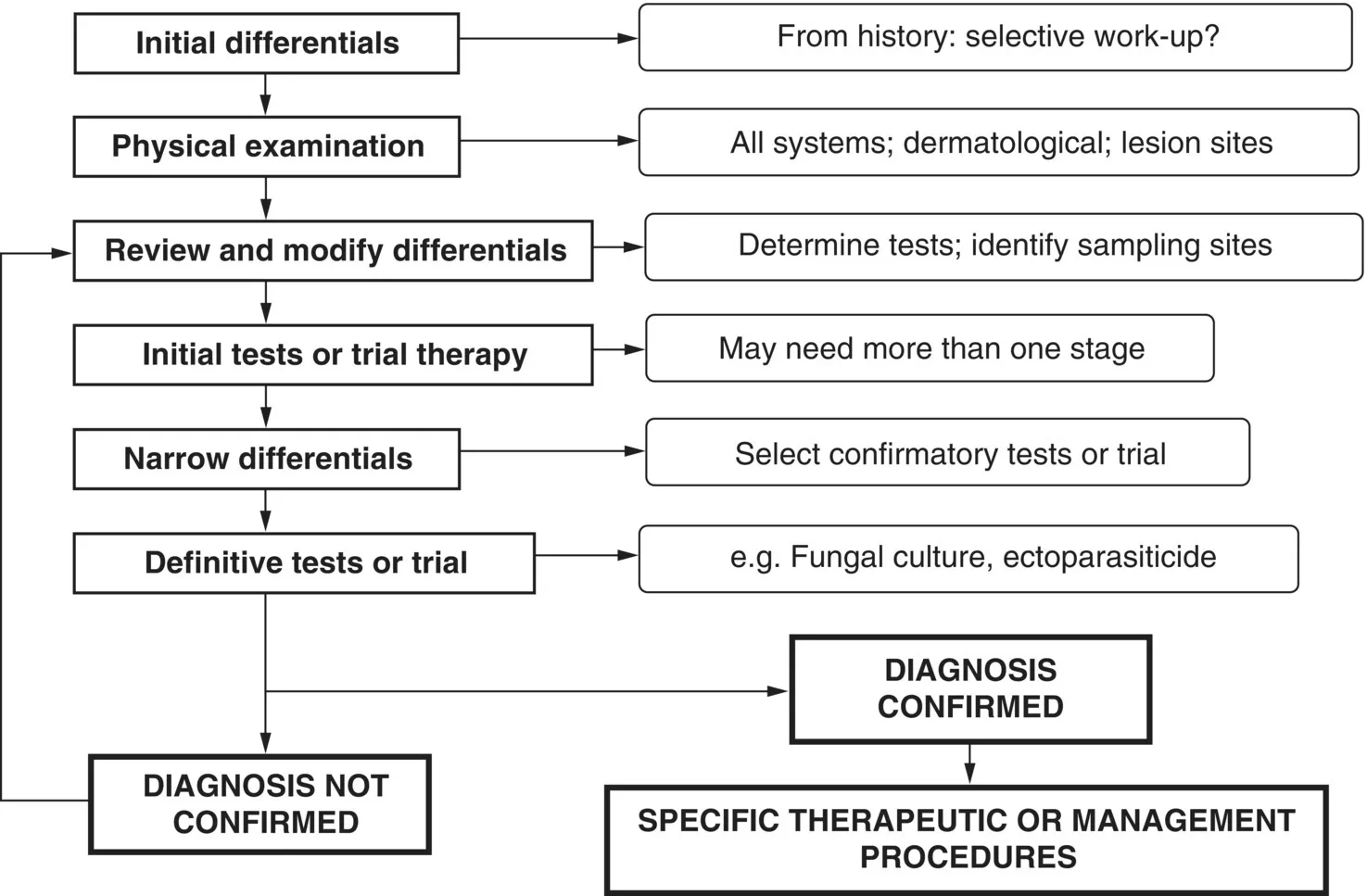
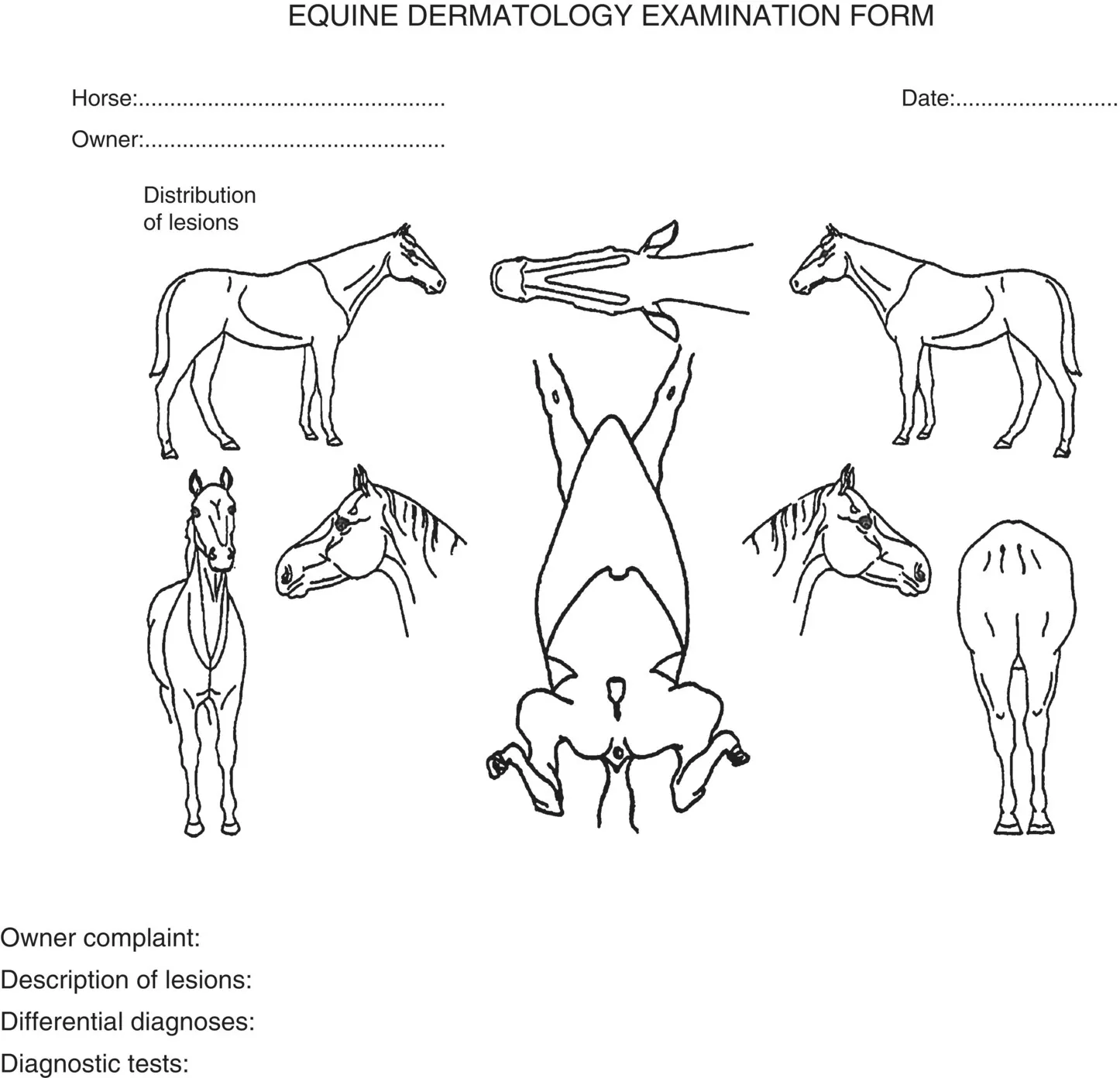
- A thorough introduction to the diagnostic approach, including taking an accurate history, the clinical examination, and diagnostic tests.
- Comprehensive exploration of pruritus, including contagious conditions, such as ectoparasites and helminth infestation, and non-contagious conditions, such as insect attack and atopic dermatitis.
- Practical discussion of crusting and scaling, including primary seborrhoea and infectious causes, such as superficial fungal infections and environmental factors.
- In-depth examination of ulcers and erosions, nodules and swellings, coat problems, and pigmentary disorders.
Perfect for any practising veterinarian seeing equine cases in first opinion practice, Practical Equine Dermatology will also be of use to veterinary students with an interest in equine veterinary medicine.
Frequently asked questions
- Essential is ideal for learners and professionals who enjoy exploring a wide range of subjects. Access the Essential Library with 800,000+ trusted titles and best-sellers across business, personal growth, and the humanities. Includes unlimited reading time and Standard Read Aloud voice.
- Complete: Perfect for advanced learners and researchers needing full, unrestricted access. Unlock 1.4M+ books across hundreds of subjects, including academic and specialized titles. The Complete Plan also includes advanced features like Premium Read Aloud and Research Assistant.
Please note we cannot support devices running on iOS 13 and Android 7 or earlier. Learn more about using the app.
Information
1
The diagnostic approach
TAKING THE HISTORY
- Breed, age, sex, origin:
- Consider these aspects carefully; in many conditions, these simple data will have an important impact on your diagnostic considerations.
- History of skin problems in related animals.
- Type of husbandry and use:
- Length of time owned.
- Use ā competitions, general riding, breeding, racing.
- Feeding regimen.
- Periods spent in stable or at pasture.
- Type of stable and bedding ā stable hygiene, contamination.
- Conditions in paddocks ā mature meadow pasture or new grass ley, proximity of water, trees.
- Seasonal changes in management.
- Routine health care procedures ā vaccination, deworming.
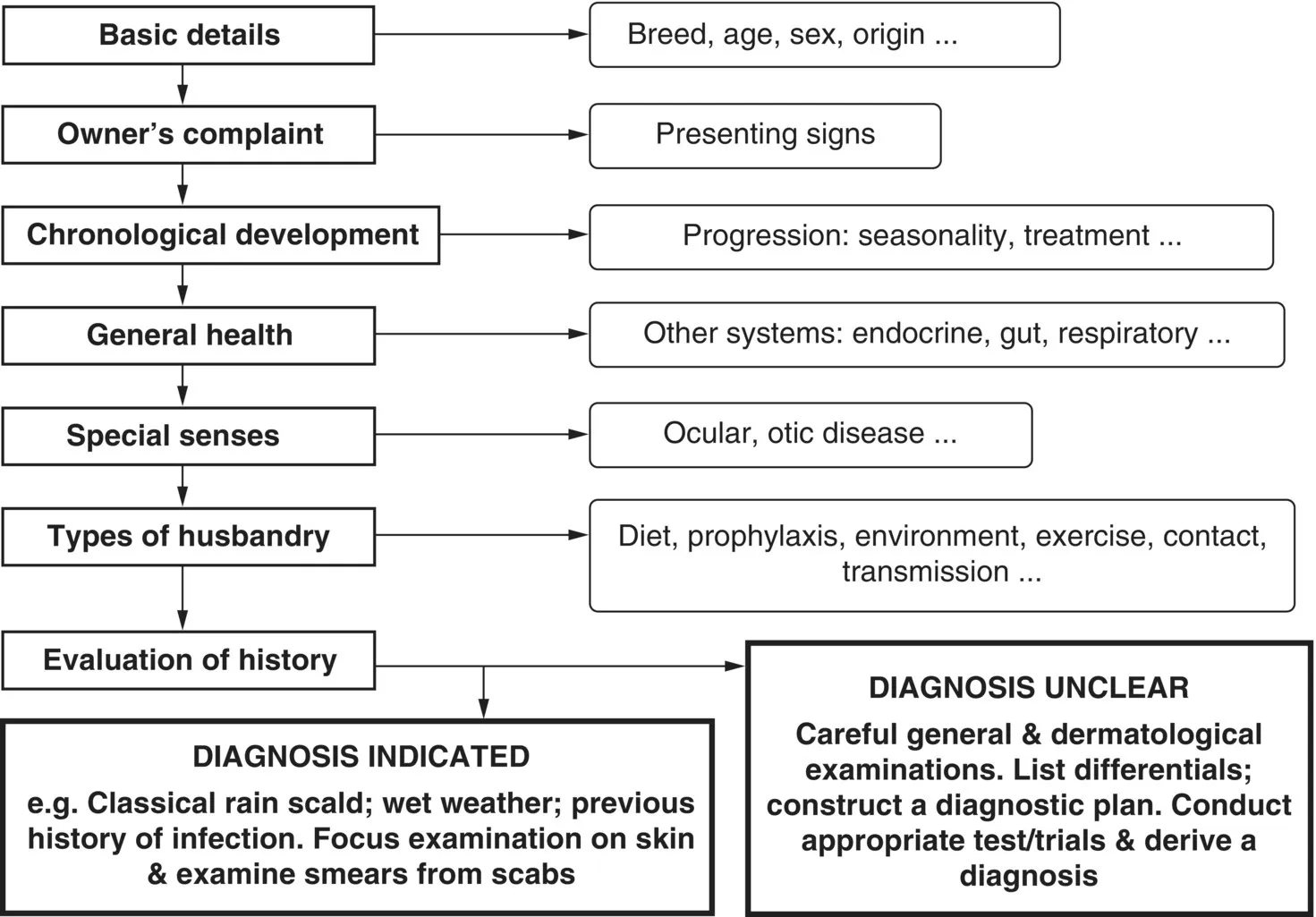
Figure 1.1 Taking the history. Components and the sequence of the history taking process. Analysis of the history should enable the clinician to construct an initial list of differential diagnoses that may help to focus the clinical examination along particular diagnostic lines. It may enable the diagnostic process to be abbreviated where a likely diagnosis is indicated, or it may point towards the need for a more detailed approach. - Grooming procedures ā sharing of grooming kit, tack, grooms.
- Equipment used in contact with horse ā boots, bandages, saddle cloths, rugs.
- Contact with other horses, other species ā opportunities for disease transmission.
- History of the current problem.
- First signs, progression, response to treatment and management changes.
- Seasonal effects.
- Previous episodes of disease.
- Results of any diagnostic tests.
- Current or recent therapy ā includes questions about use of overātheācounter and nonāveterinary products.
- Evidence of transmission ā lesions in other horses, other species, humans.
- General health ā concurrent or previous conditions.

CLINICAL EXAMINATION

DIAGNOSTIC TESTS
- Pruritic
- Crusting and scaling
- Ulcerative and erosive
- Nodular or swollen
- Alopecia/hair coat changes
- Pigmentary disorders
Hair plucks
- Choose fresh, unmedicated lesions.
- For suspected dermatophytosis, where cultures are required, first lightly clean the areas to be sampled with 70% alcohol (to r...
Table of contents
- Cover
- Table of Contents
- Title Page
- Copyright Page
- Preface to the second edition
- Acknowledgements
- Disclaimer
- 1 The diagnostic approach
- 2 Pruritus
- 3 Crusting and Scaling
- 4 Ulcers and Erosions
- 5 Papules, Nodules, and Masses
- 6 Coat Problems
- 7 Pigmentary Disorders
- 8 Therapy in Equine Dermatology
- Index
- End User License Agreement