'A thoroughly entertaining and absorbing little publication, set out in an accessible and easy-to-read style' - The Bookbag Why are geese in a gaggle? Are crows really murderous? And what makes lions so proud? Collective nouns are one of the most charming oddities of the English language, often with seemingly bizarre connections to the groups they identify. But have you ever stopped to wonder where these peculiar terms actually came from? Most of those found in this book have their origins in the Medieval Books of Courtesy, among the earliest works to be published in this country. Despite originating as a form of social etiquette reserved for the gentry, many of these collective nouns have survived to become a curious feature of today's everyday language. This absorbing book tells the stories of these evocative phrases, many of which have stood the test of time and are still in use today. Entertaining, informative and fascinating, An Unkindness of Ravens is perfect for any history or language buff.
- English
- ePUB (mobile friendly)
- Available on iOS & Android
eBook - ePub
About this book
Information
Topic
Personal DevelopmentSubtopic
LinguisticsCHAPTER 1
PEOPLE
A FIGHTING OF BEGGARS
Modern users of this group name might be forgiven for assuming it has its roots in the rowdiness of medieval beggars, scrapping over a coin thrown by an uncharacteristically benevolent lord. But in his assessment of the phrase in his 1909 book Proper Terms, John Hodgkin tells us he thinks its listing as ‘a fyting’ in fifteenth-century texts offers a different source. The word fyton in Middle English meant mendacious or lying, which suggests the phrase came from the tendency of beggars to tell tall tales in the hope of obtaining alms.
Medieval England made no state provision for the destitute or homeless, who made up around twenty per cent of the country’s population. The physically and mentally disabled, the blind, the deaf, the sick and the aged were left to fend for themselves with only the charity of the Church to support them. The truly needy often went without, while the canny fraudster made off with their share of the funds. Since the 1370s, London’s law courts have dealt with cases of beggars who faked illness or infirmity in order to get the hand-outs afforded to those in real need. One court document records the case of two men who tried to gain charity by posing as merchants who had been robbed of everything and had their tongues cut out by their assailants. When it was revealed that in fact their tongues were perfectly intact and they had made the whole thing up, they were put in the stocks for three days. It’s easy to see how ‘a lying of beggars’ might have taken root in the public consciousness.
A RASCAL OF BOYS
When this phrase for a group of boys was written down in fifteenth-century manuscripts, the word rascal was used in the same way that we use rabble or mob today. It referred not to an individual ruffian, but to a noisy, boisterous and trouble-making gang. It was also distinctly classist; sixteenth-century scholar Sir Thomas Smith describes Englishmen below the rank of Esquire as being divided into the subcategories of Gentlemen, Yeomen and Rascals in his 1560s book De Republica Anglorum: the Maner of Gouernement or Policie of the Realme of England. Rascals were at the bottom of the pile, hence the traditional children’s rhyme: ‘I’m the king of the castle, get down you dirty rascal.’
John Dryden’s poetic political satire of 1681, Absalom and Achitophel, uses the word in this context:
Let Friendships holy
Band some Names assure,
Some their own Worth,
and some let Scorn secure.
Nor shall the Rascal
Rabble here have Place,
Whom Kings no Titles gave,
and God no Grace.
Randall Cotgrave’s A French and English Dictionary (1650) gives his definition of the word peautraille (meaning rabble) as, ‘scrapings or offals of skins; and hence, a rascall, or base crue of scoundrells’. This image of rascals as the offal of society was reflected in the use of the term to describe vermin in the huntsman’s vernacular. Young deer too small to be considered worth the effort of the hunt were also referred to as rascals.
Another, more sympathetic, collective noun appears in some of the lists for boys: ‘a blush of boys’, from the tendency of young boys to flush with colour when being caned, the usual punishment for being a little rascal.
AN INCREDULITY OF CUCKOLDS
This must be the least likely of the collective nouns describing people to have been used in everyday medieval life. The idea of a group of husbands getting together to discuss their cheating wives seems unlikely even now, let alone in the fifteenth century. The fact that it appears in several of the early manuscripts shows how much of a game the invention of such terms had become by the mid 1400s, when the early highly formal hunting terms had given rise to an increasing number of wittier ones. What makes it especially fascinating to the modern mind is the light it sheds on male attitudes towards female sexuality and morality in the Middle Ages. This imaginary support group of husbands is incredulous to discover that their wives have been unfaithful to them. It’s not a fury of cuckolds, or a weeping or a shamefulness, they’re not in despair – they’re either in denial or they’re in the dark. The ideal wife was of course loyal and true, but sexual desire was acknowledged with more honesty in the Middle Ages than it has been in more recent times, especially when compared with the Victorian values that so often skew our sense of how things were perceived in the past. Several of Chaucer’s Canterbury Tales, for example, dramatize adultery in a way that is more entertaining than judgemental. In ‘The Miller’s Tale’ the husband seems aware of the risks of taking a wife much younger than himself:
For she was wild and young,
and he was old,
And deemed himself as
like to be a cuckold.
The word cuckold is in fact linked to incredulity, in the sense of being unaware. It comes from the habit of the female cuckoo bird putting her eggs into other birds’ nests, so a bird raising a chick that is not its own (or a man who finds himself raising another man’s child) is called a cuckold.
A GAGGLE OF GOSSIPS
Gossip was rife in the Middle Ages for three reasons. First, privacy was hard to come by even in large homes since the grand hall was used by all family members and noble men and women were rarely out of the earshot of servants. There was also relatively little going on by way of passing the time compared to today. Finally, there were a lot more rules governing acceptable behaviour, so the kind of misdemeanours that would barely raise an eyebrow nowadays would have seemed scandalous to the medieval mind. This latter point meant that gossip could also be very damaging, and the besmirching of innocent reputations was such a problem that both borough and manorial courts tried to punish gossips with warnings and fines. Gossip was also a way of obtaining power in the Middle Ages, especially for women, to whom other means of exerting their influence were unavailable. Within court, rumours about who was in and who out of royal favour could subtly shift the balance of power, and in an age in which complete loyalty was paramount, rumours of allegiances elsewhere could be enough to see a nobleman stripped of his privileges.
A group of gossips has been described as a gaggle since the early fifteenth century at least, and the term appears in the Harley Manuscript and others. As with geese, the gaggle is an allusion to the sound made by those exchanging tittle-tattle.
James Lipton, in his 1993 book An Exaltation of Larks, offers ‘a dish of gossips’ and also ‘a peek of gossip columnists’ as a couple of modern variants.
♦ ♦ ♦
A HERD OF HARLOTS
The word harlot first appeared in print at the start of the thirteenth century and was then defined as a man of no fixed occupation, a vagabond or beggar. But a few years into the century it began to be used as a derogatory word for a certain kind of young woman. Prostitution was rife in medieval Britain and town records from the 1500s show that most towns and cities had at least one known brothel, some of which were publically owned. Thirteenth-century theologian St Thomas Aquinas wrote: ‘If prostitution were to be suppressed, careless lusts would overthrow society.’ But while they were an accepted part of life and often served the rich alongside the poor, prostitutes were regarded as part of the servile underclass. The Elizabethan sumptuary laws – intended to enforce social hierarchies by controlling how much money the people were allowed to spend on everything from food and wine to furniture and clothing – were strict when it came to the accepted apparel for prostitutes. They were expected to wear a coloured sash or striped hood to mark them out from respectable women and their right to ply their trade was restricted to certain streets or districts. Inevitably, though, as cities grew and spread, prostitutes would target those areas where they knew business would be best, congregating around public baths, popular taverns and universities. Calling a group of them ‘a herd’, as one might a group of livestock, was a way of labelling their lowliness.
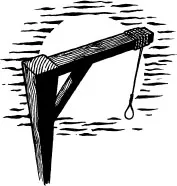
A DAMNING OF JURORS
Appearing in The Book of St Albans as ‘a dampnyng of jourrouris’, this collective noun offers a window onto a pivotal part of British history. When King John signed the Magna Carta in 1215, he enshrined in law many of the precepts by which we still live today, including the right to a trial by jury. In his essay on the subject in 1852, pre-eminent American legal theorist Lysander Spooner translates the crucial clause as: ‘No free man shall be captured or imprisoned or disseised of his freehold or of his liberties, or of his free customs, or be outlawed or exiled or in any way destroyed, nor will we proceed against him by force or proceed against him by arms, but by the lawful judgment of his peers or by the law of the land.’
Before the thirteenth century the old feudal system of justice prevailed, under which anyone accused of a crime could be charged, tried and sentenced by the lord of the manor and his staff. Later justices were appointed to attend courts of assizes, quarterly court sessions where visiting judges were responsible for sentencing. Even with the advent of trial by jury, the judge still had a large role to play in determining the outcome of a trial and the jury would take their lead from him. A ‘damning’ verdict was one that found the plaintiff guilty of the crimes they were charged with. The word comes from the Old French word dampner, from the Latin damnāre, meaning to injure or condemn, and in the God-fearing Middle Ages, it implied that your crimes made you worthy of eternal damnation.
A BEVY OF LADIES
This term dates back to the earliest manuscripts and John Kersey’s New English Dictionary of 1702 describes it as ‘the proper term for a company of maidens or ladies, of roes, of quails or of larks’. This would have been reserved for women in the upper tiers of society – note that they share the noun with delicate creatures like deer and birds – in contrast to women of ill-repute, who were grouped in with cattle (see ‘a herd of harlots’). However, roes, quails and larks were still quarry, owned by the lord of the manor, so in a way it seems a fitting noun from a modern perspective, since ‘ladies’ were as much the property of their noble husbands as the livestock. By law, ownership of a young noblewoman passed from her father to her husband when she married, though in certain circumstances ladies did wield more power in the Middle Ages than they were allowed in subsequent centuries, handling the finances and the running of the manor whenever their husbands were away. Their main role, though, was to produce an heir, so ladies spent most of their lives pregnant. Some 20 per cent of women died in childbirth, making the average life expectancy of even the most high born of women just forty years. No one really knows where the word bevy came from, or why it is used to describe ladies, though Hodgkin does suggest that since roes can most often be seen in groups while at the watering hole, the term may first have been applied to them.
A RAGE OF MAIDENS
Listed as a rage or rag in the fifteenth-century lists, this term comes from the medieval word rage, which meant romp, or play wantonly. Chaucer’s ‘The Miller’s Tale’ provides a fine example of the word in context: ‘Now Sir, and eft Sir, so befell the cas / That on a day this heende Nicholas / Fit with this yonge wyf to rage and pleye / Whil that hir housbond was at Oseney.’ (In translation: Now sir, and again sir, it so chanced that this gentle Nicholas fell to romp and play with this young wife, while her husband was at Osney.) Whether the originators of this phrase had the urges of the maidens or those who wished to romp with them in mind when they conceived it is impossible to judge, but as Chaucer’s young Miller’s wife shows, women’s desires were acknowledged far more freely in the fifteenth century than they would be a century or two later. Arthurian Romance literature was popular with young women, including those from noble families, by the late middle age, and exploration of the books left by women in their wills reveals that the most popular of these were the stories about Lancelot and Tristan, w...
Table of contents
- Cover
- Title page
- Copyright page
- Contents
- Dedication page
- Introduction
- Chapter 1 People
- Chapter 2 Professions
- Chapter 3 Religious Callings
- Chapter 4 Domestic Animals and Birds
- Chapter 5 Wild Animals, Insects and Fish
- Chapter 6 Wild Birds
- Chapter 7 Exotic Creatures
- Bibliography
- Acknowledgements
- Index
Trusted by 375,005 students
Access to over 1.5 million titles for a fair monthly price.
Study more efficiently using our study tools.
Frequently asked questions
Yes, you can cancel anytime from the Subscription tab in your account settings on the Perlego website. Your subscription will stay active until the end of your current billing period. Learn how to cancel your subscription
No, books cannot be downloaded as external files, such as PDFs, for use outside of Perlego. However, you can download books within the Perlego app for offline reading on mobile or tablet. Learn how to download books offline
We are an online textbook subscription service, where you can get access to an entire online library for less than the price of a single book per month. With over 1.5 million books across 990+ topics, we’ve got you covered! Learn about our mission
Look out for the read-aloud symbol on your next book to see if you can listen to it. The read-aloud tool reads text aloud for you, highlighting the text as it is being read. You can pause it, speed it up and slow it down. Learn more about Read Aloud
Yes! You can use the Perlego app on both iOS and Android devices to read anytime, anywhere — even offline. Perfect for commutes or when you’re on the go.
Please note we cannot support devices running on iOS 13 and Android 7 or earlier. Learn more about using the app
Please note we cannot support devices running on iOS 13 and Android 7 or earlier. Learn more about using the app
Yes, you can access An Unkindness of Ravens by Chloe Rhodes in PDF and/or ePUB format, as well as other popular books in Personal Development & Linguistics. We have over 1.5 million books available in our catalogue for you to explore.