![]()
The Studio
The studio area, also called the fashion atelier, is the heart of all fashion businesses. This is the place where everything comes together. Depending on the size of the company this space is shared mostly between the pattern cutter, sample machinist, studio manager and sometimes the designer.
The skill base found in a studio ranges from translating fashion drawings into patterns to sample making. The studio has all the materials and tools to translate creative ideas into the finished piece.
A fashion studio usually has a cutting table big enough to cut out a floor-length garment. Most designers have industrial sewing machines and an overlocker, as well as a pressing table with a steam iron. A well-stocked studio area provides basic fabrics for sampling, linings and a range of fusible materials. Drawers contain an array of fastenings such as buttons, zips and closures, as well as tapes and threads for all purposes.
Whether sewing in a professional studio or at home it is always a good idea to organize the space. Make sure the sewing machine and iron station are set up next to each other and that there is enough table space for cutting. The floor is not suitable for a good cutting result. Also make sure there is good-quality lighting. If possible choose a daylight lamp or any high-intensity light.
This chapter will introduce the reader to the equipment necessary for constructing garments. It will explain its usage and place within a production line. Sewing essentials, tools for measuring and marking, machinery and pressing equipment are also introduced.
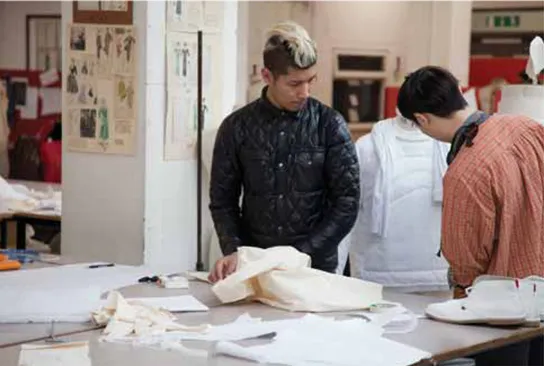
Fashion students working in a studio. The large table is essential both for cutting out and as a general work surface.
Pins and Needles
Pins and needles come in different shapes and sizes to suit all kinds of sewing tasks. Pins are used to attach pieces of material together temporarily. The job of a needle is to bring a thread through material for either temporary or permanent attachment.
Pins
Consider the following when choosing a pin:
• Fabric weight.
• Texture of fabric.
• The job in hand – modelling on the stand, temporarily attaching layers of fabric.
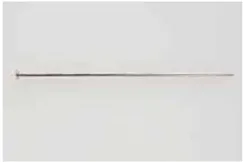
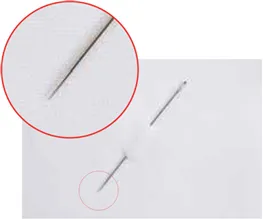
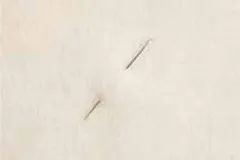
Steel Pins are used to pin all kinds of materials together, as well as fixing fabric onto a mannequin when working with design ideas on the stand. They come in different sizes for different tasks. A long pin, for example, is used to pass through several layers of fabric.
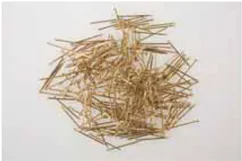
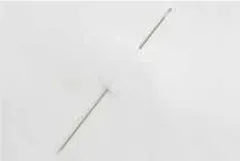
A Brass Lace Pin is very fine and will avoid creating holes in lightweight materials such as chiffon.
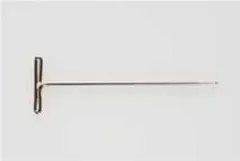
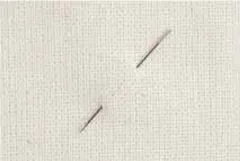
T-Head Pins can be used for loose or open weave fabrics as well as loose-knitted materials. The T-head will make sure that the pin stays in place.
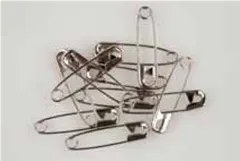
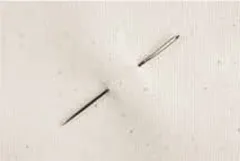
A Safety Pin will not get lost in loose-woven fabric or knitted material, unlike a straight pin.
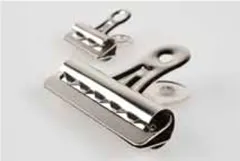
Leather, PVC and plastic materials should not be temporarily pinned together as the pin can leave a mark. Instead use Paperclips or Bulldog Clips to hold these materials together.
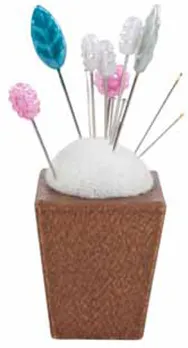
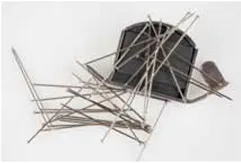
Pins are hard to keep in one place. Use a pincushion for easy access and to keep the sewing space safe and tidy. A Magnet is handy to pick up pins and needles.
Needles
Consider the following points when choosing a hand-sewing needle:
• Weight of fabric.
• Structure of fabric.
• Type of thread – size and weight.
• Design intention.
The Sharps Hand-Sewing Needle is a general needle used for a wide range of hand sewing tasks.
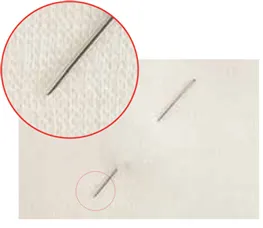
The difference between a Ballpoint Needle and a sharps needle is that the point is rounded instead of sharp. The ballpoint slides between the yarns instead of piercing, and potentially damaging or breaking, the yarn. Ballpoint needles are used for knitted fabrics and loose-woven materials.
Betweens are short needles that produce short stitches. This needle is used in detailed handwork such as quilting and tailoring.
Beading Hand-Sewing Needles have a sharp point and are very fine and long. The needle eye is very narrow enabling it to fit through the hole of a bead. The needle is long so that a number of beads can be strung at the same time.
Embroidery Needles are medium-sized and designed with a long oval eye to carry multiple strands of thread and thicker yarns.
Chenille Needles are thick, short and sharp-pointed with a large oval eye to work with thick yarns, embroidery floss and several strands of thread. The sharp point helps to penetrate closely woven fabrics.
The Tapestry Needle is short, with a blunt end so it can pass through loose-woven materials without tearing or catching. It has a long oval eye for using multiple strands of thread...