![]()
Which comes first, the inspiration or the fabric?
CHAPTER 1
Experimental Draping
OBJECTIVES
The Skill of Visualization: Train the eye to visualize finished design using a system of fabric evaluation.
–
Beginning a Collection: Evaluate which fabric convey the intended design direction.
Exercise 1: First Impressions
Analyze a fabric’s visual and tactile qualities, assess scale and volume.
Exercise 2: Studying Grainlines
Distinguish and mark the three different grainlines.
Exercise 3: Testing Design Elements
Match appropriate design elements with a given fabric.
Exercise 4: Construction Testing
Appraise construction techniques and support materials.
Exercise 5: Special Effects and Embellishments
Discover the possibilities of a fabric by experimenting with color, texture, layering, embellishments, and various crafting treatments.
Project: Experimental Draping from Inspiration Boards
Drawing from a specific inspiration, develop and sketch experimental drapes using a variety of materials and trims.
Experimental Draping
For the painter, watercolors and oils are the medium. For the designer of clothing or costumes, it is fabric. A deep understanding of the capabilities of this medium is essential to manifesting high-quality design.
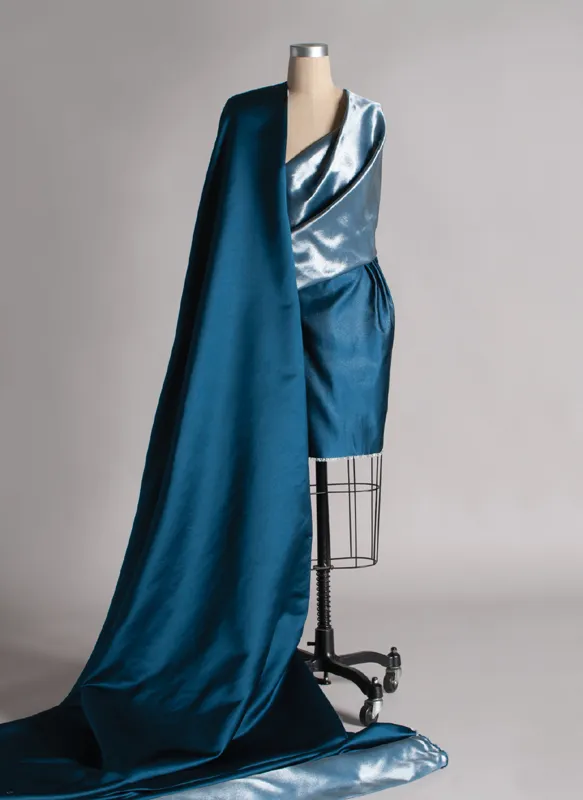
Experimental draping is a design development technique: draping textiles free form on a mannequin, and pinning, but not cutting into the fabrics. It is often used as a way to gain direction at the very beginning of the design process, stimulating imagination, creativity, and even specific designs. It can also be done after a collection or production is designed, to help you discover how a specific fabric can help to define the vision you want to communicate.
Studying the visual impact and specific qualities of a particular textile through experimental draping will often illuminate how your abstract concepts can be translated into physical three-dimensional form.
Exercises aimed at recognizing grainlines help you to see how even a subtle shift in grain placement can alter the mood and tenor of a garment. Construction exercises show how fabrics perform; some need sharply tailored construction and others seem to sing with just a simple, lightly sewn touch. Observing the way a fabric moves and reacts to various design elements can help you to visualize construction details and, most importantly, how a finished design will look in a specific fabric.
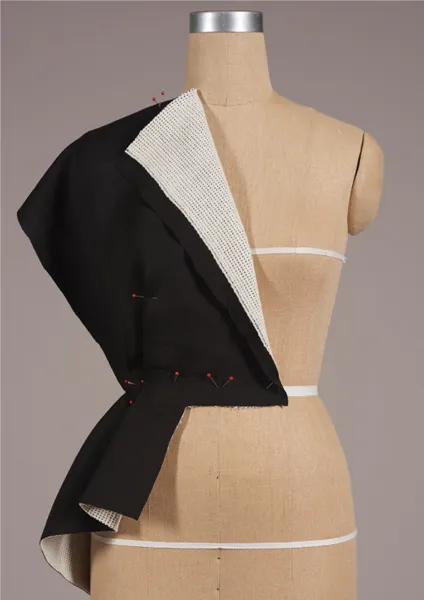
An experimental drape testing design elements for a laminated fabric: black neoprene and cream mesh.
Experimental draping exercises nurture the designer’s process of finding their own forms of expression. Many designers find a fabric that matches their signature style and then becomes their own personal medium. Using it consistently and understanding how it will react in various situations enables the designer to stretch its limits and truly make it their own. For instance, Coco Chanel was famous for using Linton tweeds, which then became a signature look for her brand. Another example is the inception of the classic blue jean: Mr. Levi Strauss took advantage of his surplus of blue serge from the French city of Nîmes (“serge de Nîmes”—denim) to start developing an effective work pant (trouser) for the California gold miners.
The Skill of Visualization
The skill of visualization entails training the mind’s eye to see how a finished design will look when executed in a particular fabric. This crucial skill takes a lot of practice and experience, but the ability to visualize the outcome of a design is a great measure of a designer’s chances of success, as it will save valuable time and money in what can otherwise take a lot of experimentation.
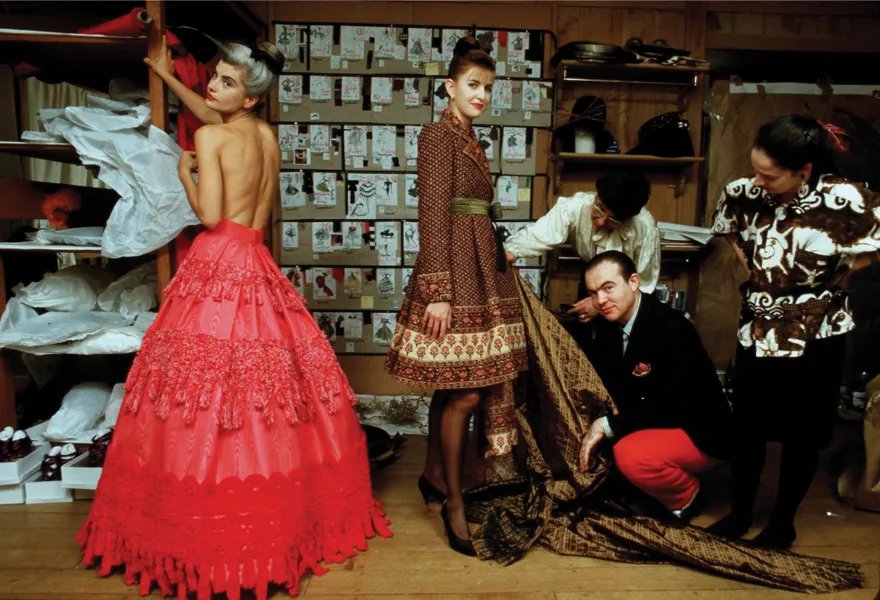
Christian Lacroix experimentally draping fabric on a model, 1987.
Research, strategic exploration, and close study of the drape of the textiles with reflective judgment will help you to develop this skill. Any designer must have a relationship with their fabrics—one that encompasses the visual, the tactile, and the intuitive—as well as an understanding of the range of possibilities with construction, embellishment, and color. Taking the time to get to know a textile makes it possible for the best possible design to emerge.
Getting to Know your Medium
• Shake hands firmly.
• Address them with their proper name.
• Take them out to lunch.
• Wash and wear them.
• Fold and drape them.
• Stitch and fuse them.
• Bathe them in different-colored dyes.
Fabric evaluation checklist
When experimentally draping to evaluate textiles, it is helpful to follow a systematic approach. Use the criteria listed below to appraise the fabrics, taking notes or photographs.
1. Visual quality of drape
• First impr...