![]()
This book gives a solid grounding in all aspects of fashion illustration, but it is only a guide to help you on your journey. Sometimes embarking on that journey is the hardest part. Creating something new from scratch is a daunting prospect for any artist. This chapter will help you ensure that your portfolio stands out from the crowd. You will discover how to find inspiration and how to use it.
Discovering sources of inspiration
American painter George Bellows (1882–1925) once stated, “The artist is the person who makes life more interesting or beautiful, more understandable or mysterious, or probably, in the best sense, more wonderful.” This is a tall order for the artist. With such expectations you are not alone if you feel daunted by the prospect of creating artwork, and not the only one who finds It hard to know where to begin. To help you to discover a starting point, this chapter reveals how to find inspiration, how to make visual use of the world around you, and how to apply your observations in creating innovative fashion illustrations, designs, and artwork.
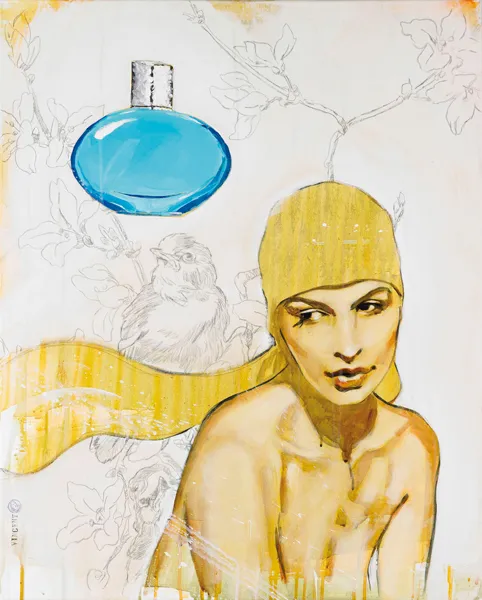
Where exactly do you look for inspiration? As British designer Sir Paul Smith says: “You can find inspiration in everything ... and if you can’t, you’re not looking properly—so look again.” This is good advice. Inspiration for creative artwork is everywhere. Begin by wandering around your home, looking at it with fresh eyes. You will be surprised how mundane, everyday objects suddenly have new meaning and potential. The old wallpaper in the sitting room could be a good background for an illustration, or a photograph of your sister may supply the perfect fashion figure silhouette for a template. The illustration on the facing page has a background directly inspired by old-fashioned wallpaper.
When you open your eyes to the world you will discover that it is overflowing with potential to trigger your imagination. Don’t be put off if you find that your ideas already exist somewhere else. The truth is that few ideas are entirely new; as Pablo Picasso said: “Everything you can imagine is real.” However, when you bring to the idea your own personal response, you provide an original interpretation.
Like all artists, designers and illustrators look for sources of inspiration to develop their work and focus on absorbing new ideas all the time. Read a variety of books and magazines, familiarizing yourself with interior trends, music, and lifestyle editorials, as well as fashion. Theatrical costume and set design can also stimulate interesting ideas. Never be without a camera or sketchbook to capture and record inspirational scenes, objects, or people.
Experiencing other environments through travel stimulates creative imagination and need not involve the expense of going overseas. If you live in the city, visit the countryside, and vice versa. If you are lucky enough to travel overseas, visit local markets and communities, observe traditional costumes and everyday clothing, eat new foods, and recognize cultural differences. By embracing the experience, you will come away from your trip with a wealth of inspiration.
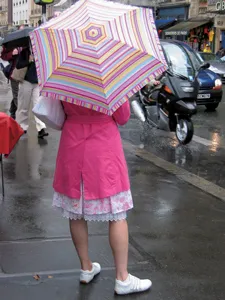
Taking photographs of, or sketching, people you see in the street gives you a rewarding variety of figures and stances for your illustrations. This girl in a busy Paris street stood out because of her brightly colored umbrella and co-ordinating outfit. The image provides an ideal starting point for a fashion illustration.
Vincent Bakkum has created a unique illustration by focusing on many elements of the composition. The background is made up of a pencil sketch inspired by wallpaper. The floating blue bottle draws in the observer, and the model is wearing a painted headscarf that flows across the page like a brushstroke. The artist has used a subtle color palette to create a tranquil mood. Few artists can produce creative ideas without a knowledge base gained from magazines, books, advertisements, and a wide variety of sources. Keep up to date with the latest trends and open your mind to new sources of inspiration.
Keep up to date with the news and world events, television, and film releases. Monitor changes and behavioral shifts in big cities around the world, watching for new trends in cities such as New York, London, Tokyo, Paris, and Copenhagen. For example, how might you apply the trend for knitting cafés in New York or permanent spray cosmetics (whereby colors are applied permanently like a tattoo) in Tokyo to your artwork? And never underestimate the importance of visiting galleries and museums. No matter how seemingly irrelevant to fashion contemporary art exhibitions might sometimes seem, it is worth visiting them. Often the exhibition you least expect to enjoy delivers the most inspiring results.
In museums, too, a wealth of inspiring artifacts and memorabilia awaits your artistic interpretation. Nostalgia for the past will always captivate us. In fashion, for example, today’s garments date quickly yet bygone eras are always a source of inspiration. Every decade sees a revival of the style of a past decade. It seems that it is second nature for us to draw from the past to illustrate the future.
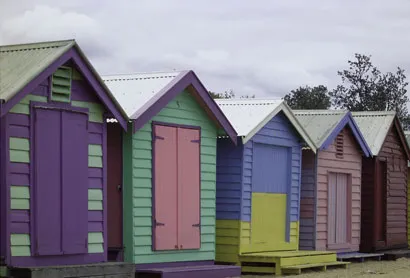
Beach huts seen on an Australian beach have added interesting accents of color to the dramatic shoreline. This scene could be used in a fashion illustration, or it could be that the colors inspire future artwork.
A building’s interior structure can be as much a source of inspiration as that of the exterior. Interesting lines for fashion design or illustration can be seen in the timber structure of this wooden roof.
As an artist, designer, or illustrator you are always open to visual stimulation in your normal day-to-day life. Even a trip to the supermarket can awaken new ideas as you look at the variety of vibrant packaging on the shelves. Your journey home might take you past architecture, landscape or gardens whose intriguing shapes and textures trigger your imagination. Your thoughts might be awakened by listening to compelling music, an image in a magazine might inspire a new idea, an absorbing television documentary might activate your creative energy, or a favorite poem conjure up engaging imagery. This type of inspiration is all around you waiting to be discovered.
Collecting inspirational items
Artists are invariably avid collectors of what to the uninitiated eye looks like junk. Accumulating anything and everything of interest is a fascinating way to build an ideas-bank for future design or artwork. Keep everything that captures your imagination, as you never know when it might be useful in the future. Arguments about the amount of clutter you possess might occur with those who share your home, but stand your ground! This clutter could one day make you a famous artist—think Tracy Emin’s My Bed. Art materials, unusual papers, wrapping, packaging, and scraps of fabric are worth storing as you may well be able to utilize them in your artwork. In Chapter Three you will find the work of Peter Clark, who uses found papers, such as maps and cigarette packets, to create delightful collaged fashion illustrations.
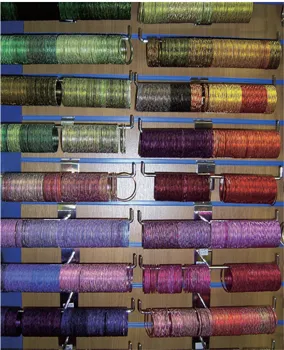
People collect all sorts of unusual items, either because they get pleasure from looking at them or because they can see creative potential in them. Many illustrators look for interesting stamps, cigarette cards, key rings, handbags, film memorabilia, calendars, buttons, and so on in garage sales, flea markets, and thrift stores. They then put their own original slant on the ideas generated by their collections. The trained eye can spot artistic potential in almost anything. A collection of bangles right, for example, makes a marvelous starting point for a fashion illustration. Look closely at the colors, shapes, and details, and see how they have been incorporated into the accompanying fashion illustration.
Books form a particularly useful collection, providing a constant and varied source of inspiration. The further reading guide on pages 228–30 gives a list of fashion and fashion illustration titles worth finding. But remember that books on all sorts of other subjects might spark ideas, too. Look in second-hand bookstores for older, out-of-print titles as well as keeping up to date with new titles, broadening your collection so that it offers an ever-expanding variety of ideas. Collecting books is costly so it is worth becoming familiar with your local library. Just browsing through the shelves in a peaceful environment can be a stimulating process. If you take a sketchbook along, you could even practice making some observational figure drawings while you are choosing which book to borrow.
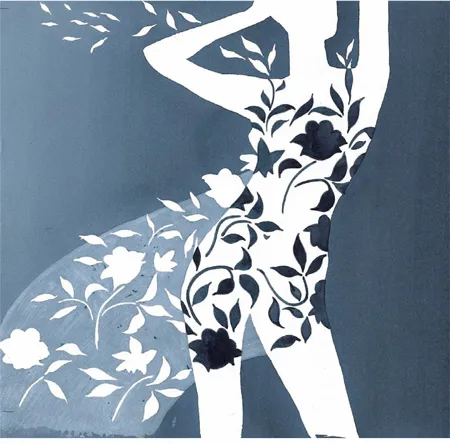
A trained eye can spot artistic potential in almost anything. Look closely at the colors, shapes, and details of these rows of brightly colored bangles, and see how they inspire the background for the fashion illustration by Gilly Lovegrove above. The striped clothing also reflects the brightly colored rows.
Invest in other forms of printed media, too, such as magazines, journals, and postcards. As magazines are printed more regularly than books their content is usually “of the moment.” Such up-to-date images can inform and inspire your artwork. Postcards from galleries can also be an economical way of taking home a little piece of inspiration, particularly if you can’t afford an exhibition catalog. Many artists have boxes of postcards saved from a lifetime of visiting exhibitions that they use repeatedly as inspirational references for fashion illustration.
Maintaining a lively interest in the world is vital for the fashion illustrator, who must combine keen observational skills with creative interpretation.
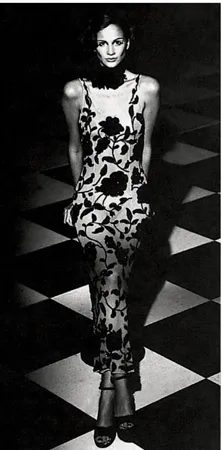
This fashion illustration by Gilly Lovegrove has been created in a monotone palette to reflect the black-and-white photograph of a Giorgio Armani dress. The floral design of the fabric is instrumental to the artwork.
Visit as many exhibitions as possible because you never know which one might provide valuable inspiration. If the exhibition catalog is too costly for you, buy postcards of your favorite images. This postcard was bought at the Royal Academy of Arts, in London, during the exhibition Giorgio Armani: A Retrospective.
Researching themes
There is no doubt that one of the most daunting aspects of creativity for the art...