![]()
1
Chapter 1 : The basics
This chapter looks at fundamental principles related to the use of type and identifies the terminology used. We will consider the different categories of typeface, such as serif and sans serif, and the main differences between them. Alongside this, we will examine families of type, which include styles such as bold and italic, the structure of letterforms, and how these properties may be used in an experimental and adventurous way both for print and screen.
The anatomy of type
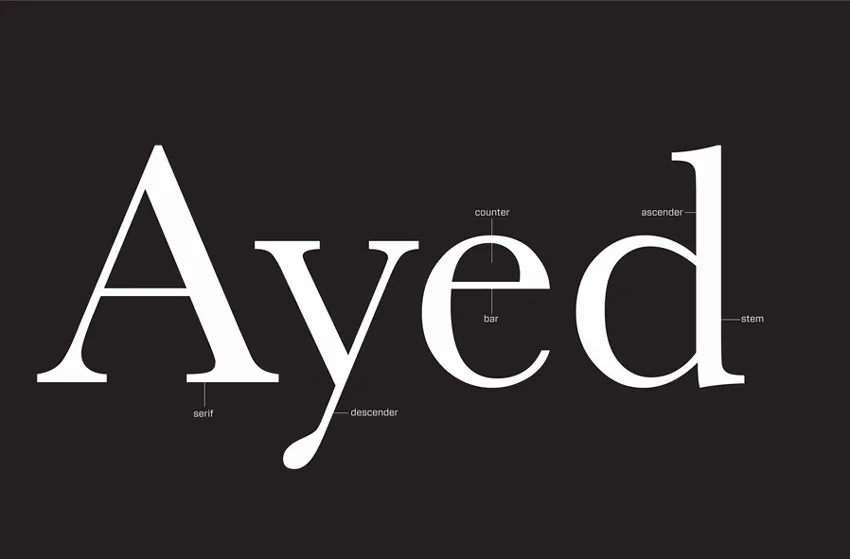
When we talk about a set of letterforms of a particular design, we refer to it as a typeface or, as it has become a term in everyday use, a font. Each letterform consists of one or more of the following parts: serif, ascender, descender, counter, bar, and stem.
This diagram shows the essential parts of a letterform referred to in this book. Further diagrams focusing on individual components will be included later in the chapter.
Categories of type
Typefaces may be divided into two main categories: serif and sans serif. The difference between these is basically that serif typefaces are based on Roman incised lettering, which features small strokes at the ends of letterforms, as seen in the diagram opposite. Sans serif letterforms do not have these strokes—hence “sans,” which means “without.”
Variations
There are many other sorts of letterform, most of which sit within these broad categories. Examples include block, or slab, serif (which has a large slab rather than a stroke at the ends of the letterform), headline, and script typefaces.
Headline, or display, typefaces are usually intended to draw attention to isolated words, phrases, or short sentences. Such typefaces tend to be eye-catching and attractive but would prove difficult to read in a large block because they often incorporate complex or quirky designs. Display faces may be hand drawn from scratch or be hand- or digitally manipulated variants of an existing typeface. Such typefaces are often available from websites as free downloads. A word of caution: you usually get what you pay for, but there is some excellent experimental work out there—for example, HVD Fonts’ Square Pants typeface (see next page).
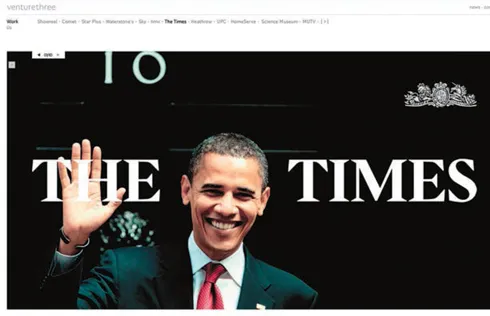
This website by Venture 3/CHI & Partners shows the classic serif typeface designed specifically for The Times newspaper and called Times New Roman. You can clearly see the small strokes that form the serifs.
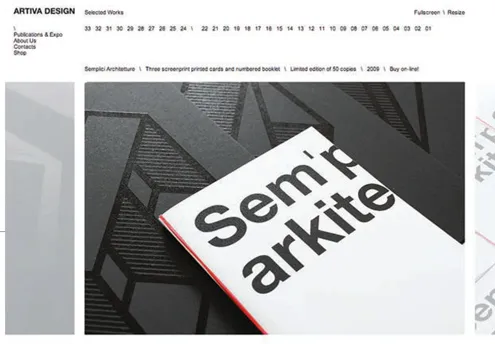
A sans serif typeface has been used by Artiva for their logotype at the head of this website page and also in the print example displayed on the website.
This playful identity by Doink uses a typeface with a prominent serif. The serifs provide a foundation for the uprights that make the letter A look as if it is standing up, with the button balanced halfway down to form the crossbar.
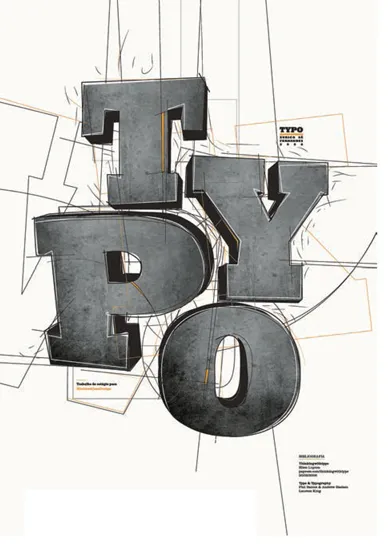
This poster, designed by Eurico Sá Fernandes, shows a slab serif typeface used to give a chunky and solid feel to the letterforms, bringing impact to the design.
| Pitfall: It is a common mistake to use a display typeface for sections of text that are meant to be read, such as magazine articles or books. These sections of text are referred to as body type, body text, or copy. We will examine this issue further in the section on legibility (see page 44). |
Script typefaces are usually intended to replicate handwriting or calligraphy. As with display or headline typefaces, script typefaces are often difficult to read if used in body text. Because they replicate handwriting, script typefaces work best as a combination of upper and lower case, rather than as all capital letters. You will probably be familiar with one of the most common applications of script typefaces: the invitation card.
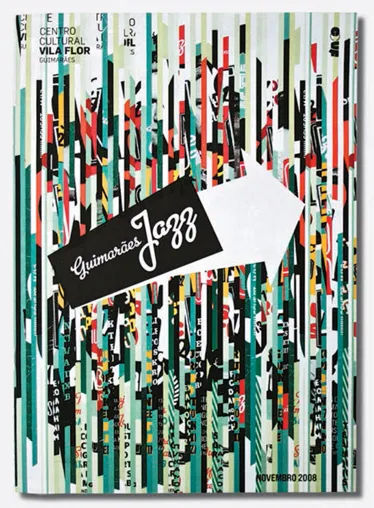
Atelier Martino&Jaña have used different typefaces to complement each other and the collaged background image, which includes different letterforms.
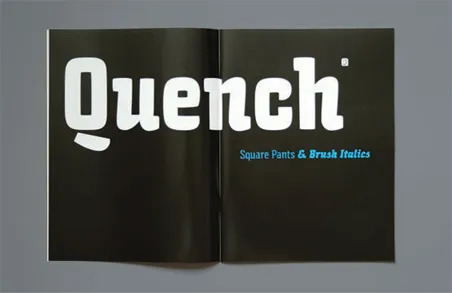
This display typeface, Square Pants by HVD Fonts, is quirky and attracts attention.
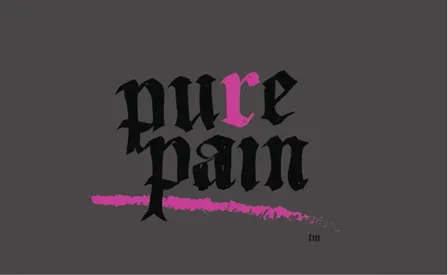
Insane have used a headline/display typeface in this logotype. The typeface draws on the structure of early hand-drawn letterforms like those produced by monks for medieval manuscripts. Although the typeface is well designed, it is not appropriate for continuous reading as it is quite complex and some of the letterforms do not form instantly recognizable letter shapes.
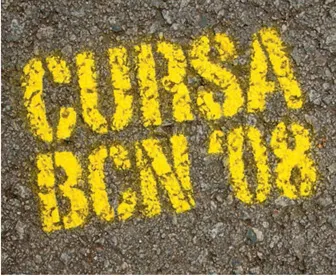
These hand-constructed letterforms by Eva Blanes illustrate how effective such typefaces can be when used selectively, such as for a single word. But imagine trying to read a paragraph or whole page in this …
Alejandro Paul’s typeface Compendium complements the sophisticated feel of the photograph and text.
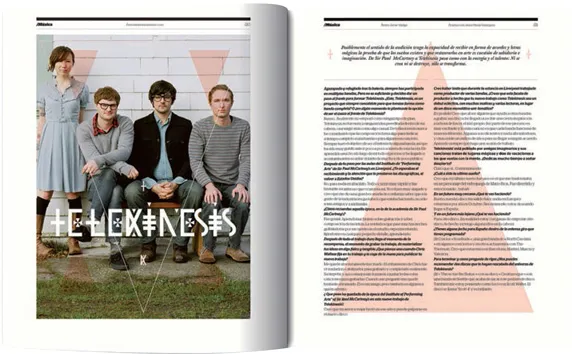
Distinctive headline type has been used by Pablo Abad for the heading on this double-page spread.
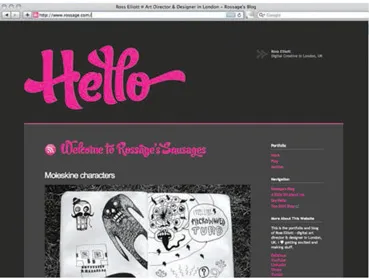
Ross Elliott has used a script typeface in a bright color on a gray background to produce an attention-grabbing introductory page for his website.
Combining typefaces
Many typographic designs call for a combination of typefaces. The way in which different typefaces are used together can have a considerable bearing on the message they communicate and can also affect legibility. For example, you might set the main text on a menu card for a chic bistro in a sans serif typeface to help communicate a modern, pared-down theme, but this effect would be nullified if the titles were set in an elaborate script typeface. Also, combining two display faces may halve rather than double their impact: the typefaces may end up competing for attention and cancel each other out.
However, typeface combination can work very well. Designers will often use contrasting typefaces to show the difference between pieces of information or to emphasize an item. An example of this could be a poster where the name of the event is in one typeface and information such as venue, times, and dates is in another typeface. It is a commonly held principle that two typefaces from the same category, such as sans serifs, do not work well together because they can look too similar. However, as with most rules, there are exceptions. There are a large variety of typefaces that have strong individual characteristics and these may work together.
You will find many examples of combinations of headline or script typefaces used as titles. A headline or script typeface is often used for titles and other short sections. This is in order to differentiate between the sections of information and/or to highlight the importance of the title. Serif and sans serif typefaces lend themselves to body text as they...