- 208 pages
- English
- ePUB (mobile friendly)
- Available on iOS & Android
eBook - ePub
Fashion School Survival Guide
About this book
This is an essential piece of kit for the aspiring fashion designer. Bringing together a wide assortment of technical tips, aide memoirs, anecdotal advice, dos and don'ts, inspirational quotes, and best practices. The day-to-day life of any student in fashion school can be hectic; dashing to meet deadlines, sketching in the canteen, late-nights during the shows, putting together your own collection. This book contains insider tips and hints that you can dip into at your leisure rather than trying to pick up along the way from a range of sources. From gathering research material and developing design ideas to choosing fabrics and cutting patterns, 100 nuggets of fashion wisdom will allow you to make the most of your experience as a fashion student.
Information
Topic
DesignSubtopic
Fashion Design— 1 —
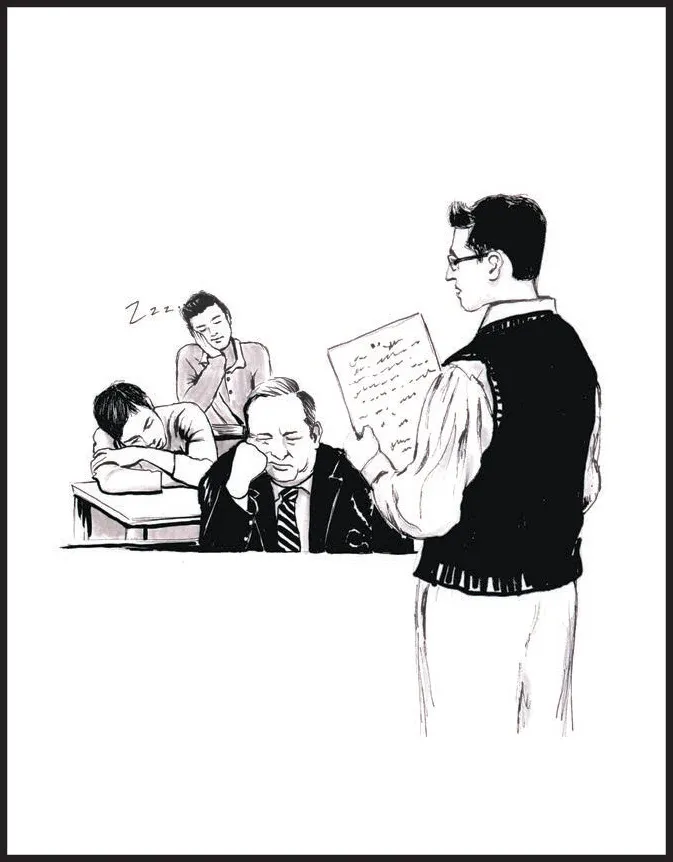
DON’T LABOUR OVER EVERY INDIVIDUAL BIT OF RESEARCH IMAGERY WHEN PRESENTING.
Focus on key elements of your research and summarize. Have you ever listened to a fellow student present their design project and tried very hard to stay awake? Sometimes it is not the project itself that is boring, but the length of time that the student is taking to explain their design process. Grab everyone’s attention by presenting a concise overview of your project, highlighting key points within your process that have informed your research and final outcome.
— 2 —
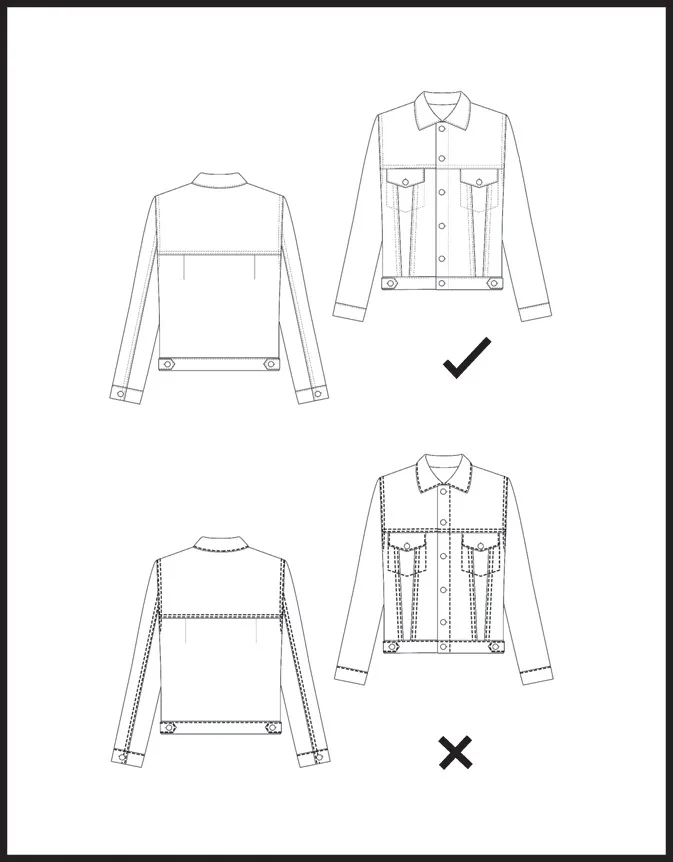
WHEN DRAWING TOPSTITCHING KEEP IT IN PROPORTION,
don’t make it monster sized! Topstitching is a stitch line sewn on the right side of the fabric that is situated parallel to the seam line (hem line, cuff or other edge). It can be used as a decorative finish, but often its purpose is functional. It can transform a garment from looking homemade to something that looks more professional. A common mistake when drawing flats (technical drawings) that have a topstitch detail is to unintentionally exaggerate the proportion of the topstitch in relation to the rest of the drawn garment. The best way to indicate a topstitch on a flat is to draw a faint (compared to the weight of line used elsewhere) continuous line.
— 3 —
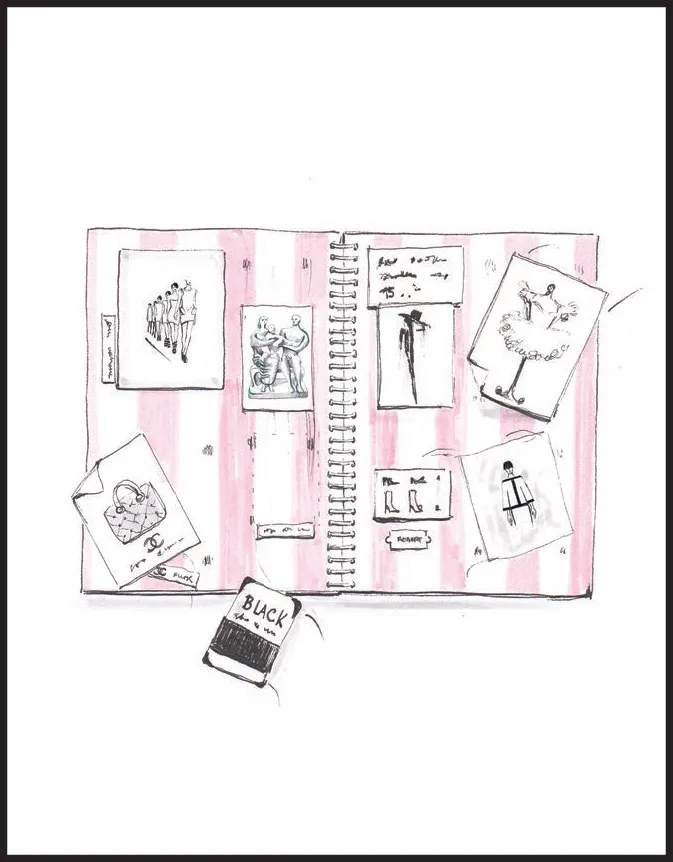
CHOOSE A GOOD ADHESIVE FOR STICKING YOUR RESEARCH IMAGERY INTO YOUR SKETCHBOOK.
It is best to avoid water-based glues as they tend to create air pockets between the layers over time. Some glues curl pages due to thickness and others lose stickiness over time – this can happen with some aerosol adhesives. Look for specialist craft glue, making sure it's right for your purposes.
— 4 —
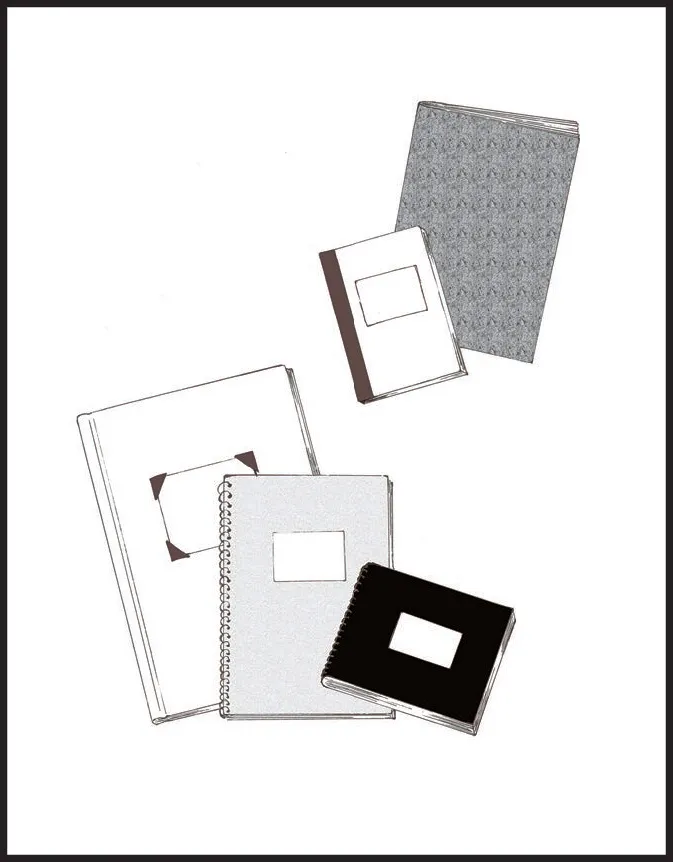
EXPERIMENT WITH DIFFERENT SIZED SKETCHBOOKS.
Sketchbooks of varying sizes, with different orientations (landscape or portrait) are widely available. Typically you will find yourself using A3, A4 or A5 (in the US 8.5 x 11 in, 11 x 17 in or 5 x 8 in). Don’t just stick to one size, experiment with different sizes and orientations to work out which one suits you best.
— 5 —
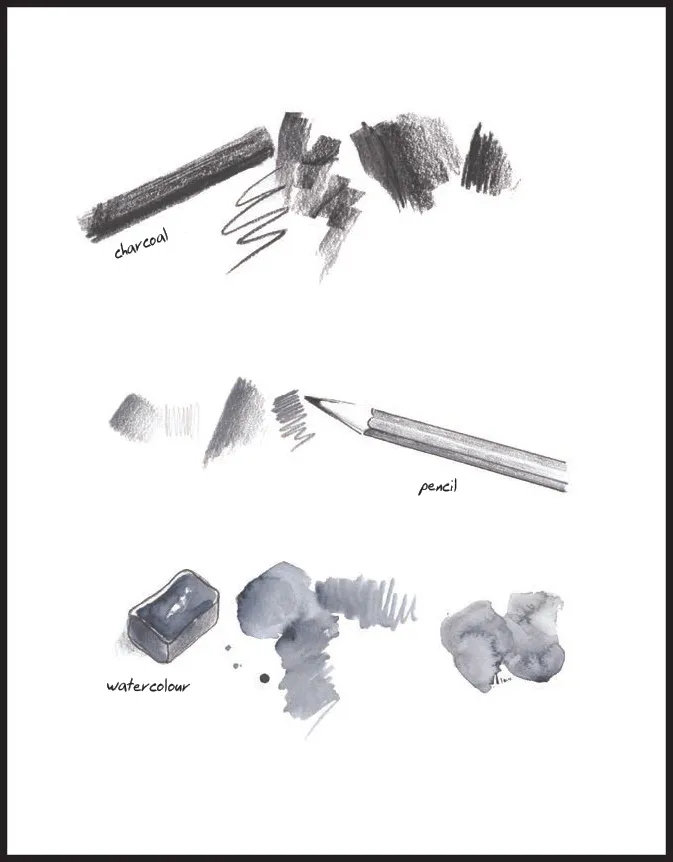
EXPERIMENT WITH DIFFERENT MARK-MARKING TECHNIQUES.
Get to know your individual media. How many different types of mark can you make using a stick of charcoal? Which different media do you think work well together?
— 6 —
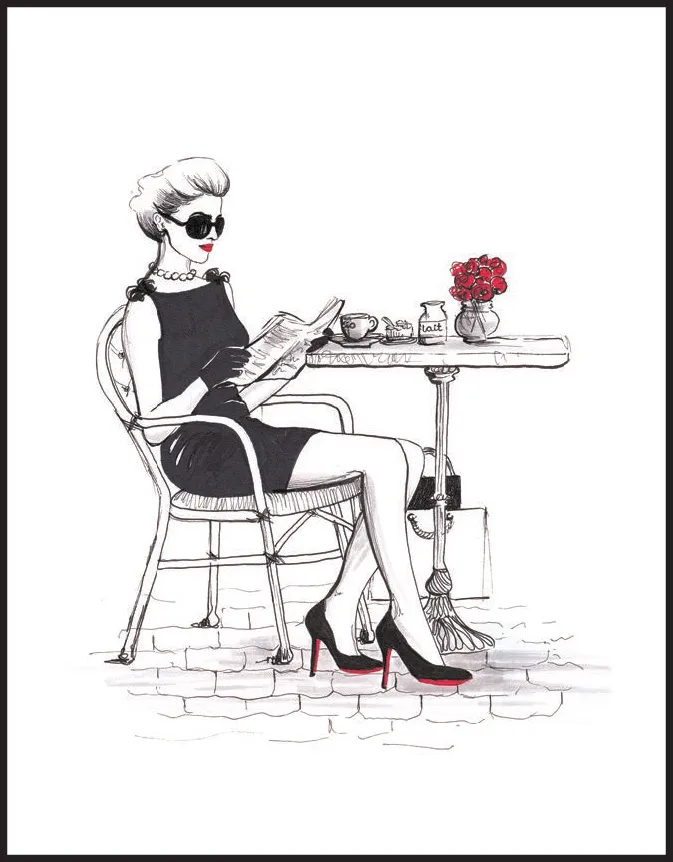
‘One is never overdressed or underdressed with a Little Black Dress.’
KARL LAGERFELD
— 7 —
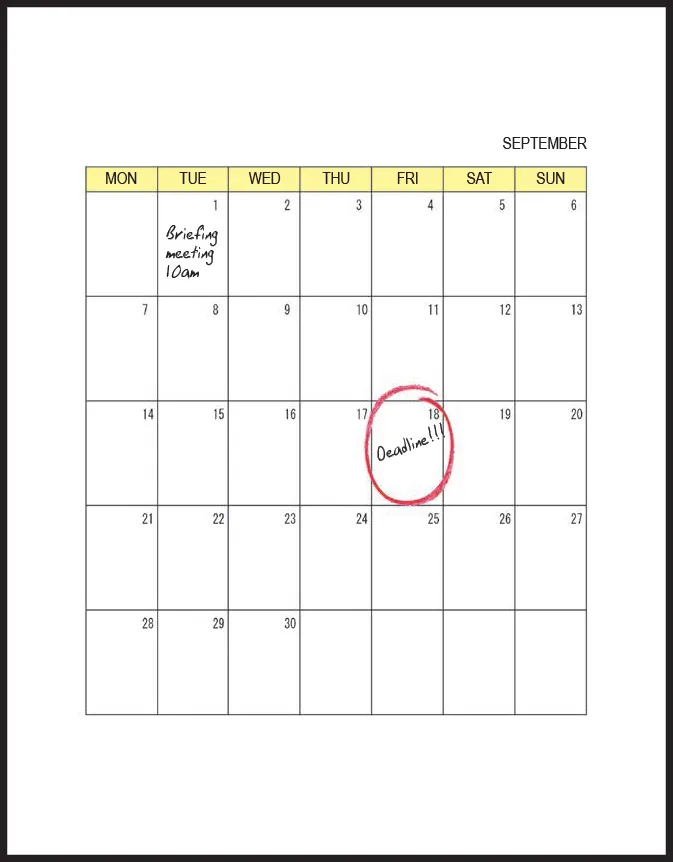
IMPROVE YOUR TIME MANAGEMENT FOR PROJECTS
by drawing up your own timetable to work in conjunction with the project’s timetable. Working backward from the submission date can really help you in moving forward. By doing this you can allocate a window of time for all the research and development stages, working backward to when you first received your design brief. Stick to it, otherwise there would be no point in drawing it up.
— 8 —
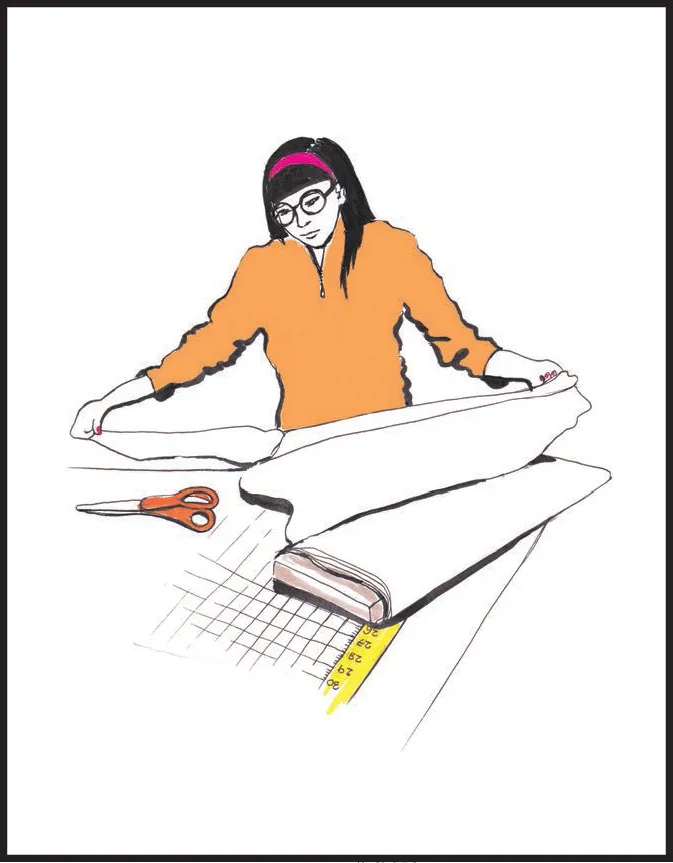
IT IS OFTEN EASY TO RIP FABRIC ALONG THE GRAIN LINE.
Some fabrics, such as cotton, are easy to divide into smaller lengths by simply ripping them, after a little snip from a pair of scissors to get you started. This is less time consuming than using a pair of scissors.
— 9 —
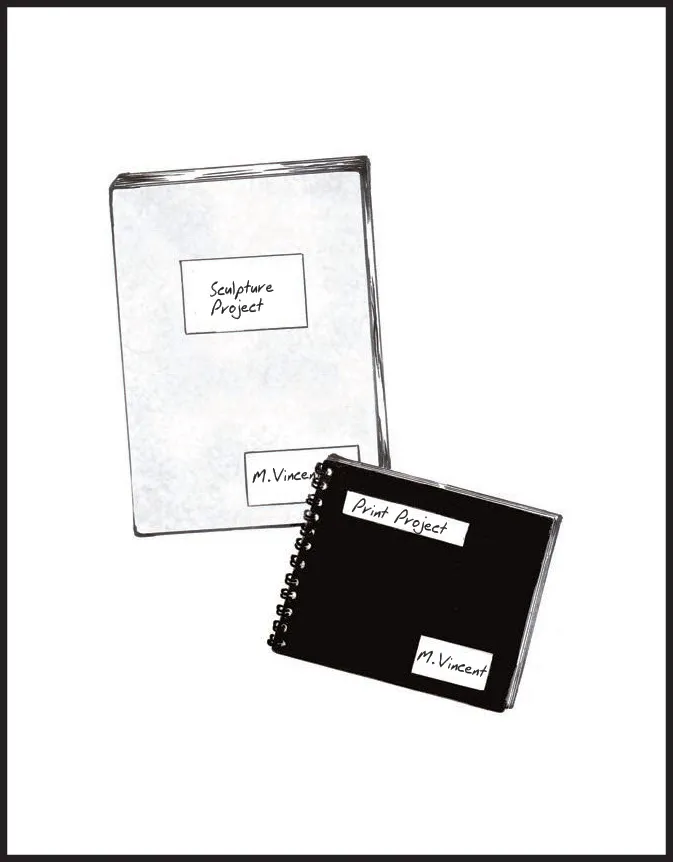
DON’T FORGET TO PUT YOUR NAME ON YOUR PORTFOLIO – INSIDE AND OUTSIDE.
Can you imagine not receiving an assessment mark because of this? It’s a common mistake. To avoid this happening include this entry in a checklist that you should create ahead of any submission, just to ensure that you have all of the required components.
— 10 —
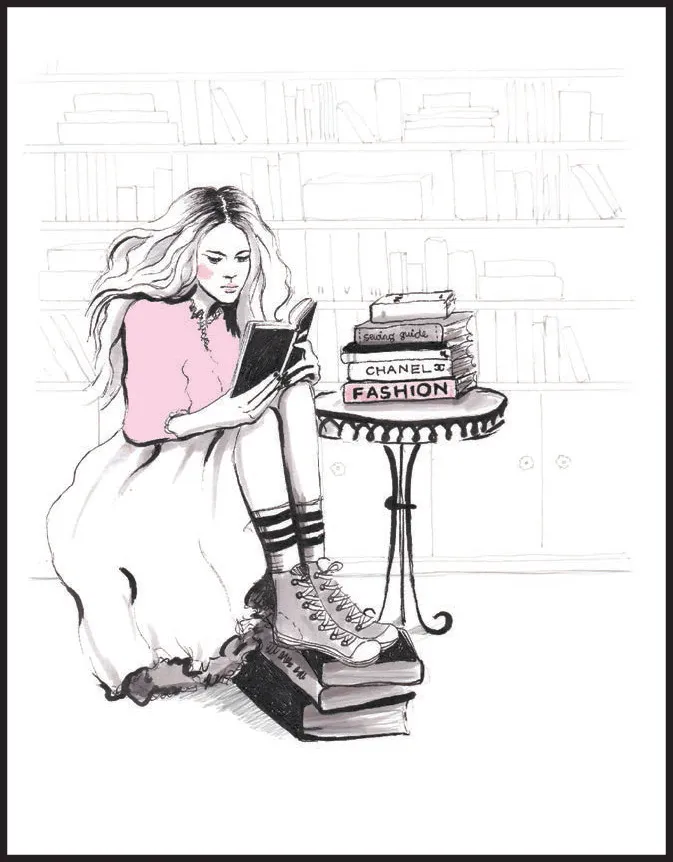
START YOU OWN PERSONAL LIBRARY OF INSPIRATIONAL BOOKS.
Books are an invaluable research resource. It makes perfect sense to establish this resource at home, so that you can have around the clock access. This need not be a costly venture either. Libraries tend to have periodic clearances – where books are either free or being sold off cheaply. There are also many websites and bookstores that specialize in secondhand books.
— 11 —
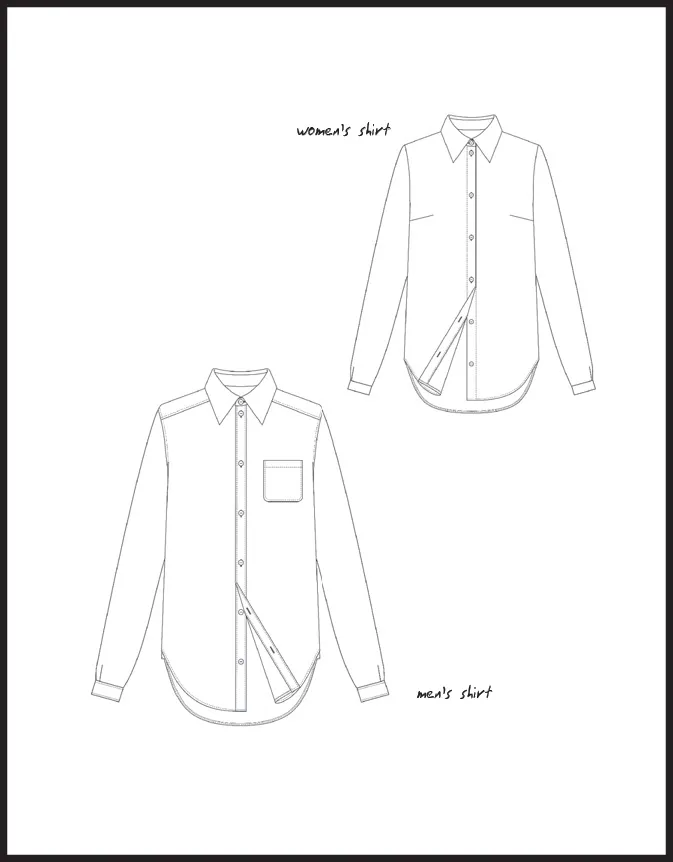
WOMEN ARE ALWAYS RIGHT! WHEN IT COMES TO CLOTHING, WOMENSWEAR FASTENS RIGHT OVER LEFT.
Have you ever noticed that men’s and women’s shirts, jackets, coats and trousers button differently? On menswear the buttons are on the right, on womenswear they are on the left. The most widely accepted reason for this is because most people are right-handed: historically women who could afford clothing with many buttons had maids to dress them, so the buttons were on the right-hand side for the maid’s benefit and on the wearer’s left. Men, on the other hand, generally dressed themselves.
— 12 —
‘I don’t do fashion, I AM ...
Table of contents
- Cover
- Title Page
- Copyright
- Contents
- 1. Presenting your research
- 2. Drawing topstitching
- 3. Sticking imagery in your sketchbook
- 4. Different sized sketchbooks
- 5. Mark-making techniques
- 6. Karl Lagerfeld
- 7. Improve your time management
- 8. Rip fabric along the grain line
- 9. Put your name on your portfolio
- 10. Start your own personal library
- 11. Womenswear fastens right over left
- 12. Coco Chanel
- 13. Matching threads to fabric
- 14. Modeling garments for presentation
- 15. Nervous about presenting?
- 16. Silhouette
- 17. Combining different fabrics
- 18. Mary Quant
- 19. Vintage and thrift stores
- 20. The bias
- 21. Constructive criticism
- 22. Testing art media
- 23. Practise machining straight lines
- 24. Yves Saint-Laurent
- 25. Bagging garments out
- 26. Give your fashion drawings hands
- 27. Start a fabric library
- 28. Consider different fastenings
- 29. Miuccia Prada
- 30. Making good eye contact
- 31. Draw from life
- 32. Fashion illustrations are nine heads
- 33. Different types of pocket
- 34. Yohji Yamamoto
- 35. Develop your initial design ideas
- 36. Showcasing fabric swatches
- 37. Alexander McQueen
- 38. Cutting chiffon
- 39. Pattern-cutting table
- 40. Presentation sheet templates
- 41. Vivienne Westwood
- 42. Use a photocopier creatively
- 43. Go window-shopping
- 44. Pattern pieces and fabric pile
- 45. Limit eraser use in sketchbooks
- 46. The warp of the fabric
- 47. Orson Wells
- 48. Proportion
- 49. Clean your portfolio
- 50. Get involved
- 51. Always remove dressmaking pins
- 52. Avoid too many black and white photocopies
- 53. Lady Gaga
- 54. Give your fashion drawings faces
- 55. Different types of collar
- 56. Buy or make a sketchbook?
- 57. Buy a sketchbook with fewer pages than you can fill
- 58. Always read around your research topic
- 59. Sewing leather
- 60. Diana Vreeland
- 61. Draw, draw and draw some more
- 62. Happy feet
- 63. Where to place zips/zippers
- 64. Best direction for button holes
- 65. Use a fixative on soft art media
- 66. Ralph Lauren
- 67. Style lines
- 68. Include shoes in your fashion drawings
- 69. Don’t forget to include darts in your flats
- 70. Long, narrow skirts
- 71. Don’t forget fabric swatches in your sketchbook
- 72. The warp of the fabric
- 73. Anna Wintour
- 74. Pleats
- 75. Separate scissors for cutting paper and fabric
- 76. Create a template for a fashion drawing
- 77. Securing pattern pieces
- 78. The grain line
- 79. Oscar Wilde
- 80. Always add a seam allowance
- 81. Practise your presentation
- 82. Find out how wide the fabric is
- 83. Magnets
- 84. Templates for each project in your portfolio
- 85. Jean Cocteau
- 86. Zips/zippers
- 87. Collect inspiring things
- 88. Ensure symmetry with hand-drawn flats
- 89. The right side of the fabric
- 90. There’s no such word as can’t
- 91. Avoid using soft pencils for fashion drawings
- 92. When drawing flats, keep garments in proportion
- 93. Avoid printing lo-res imagery
- 94. Centre-front and centre-back seams
- 95. Womenswear sizing: dresses, jackets and coats
- 96. Menswear sizing: suits, jackets and coats
- 97. Menswear: trousers
- 98. Menswear: dress shirts
- 99. Womens shoe sizes
- 100. Mens shoe sizes
Trusted by 375,005 students
Access to over 1.5 million titles for a fair monthly price.
Study more efficiently using our study tools.
Frequently asked questions
Yes, you can cancel anytime from the Subscription tab in your account settings on the Perlego website. Your subscription will stay active until the end of your current billing period. Learn how to cancel your subscription
No, books cannot be downloaded as external files, such as PDFs, for use outside of Perlego. However, you can download books within the Perlego app for offline reading on mobile or tablet. Learn how to download books offline
Perlego offers two plans: Essential and Complete
- Essential is ideal for learners and professionals who enjoy exploring a wide range of subjects. Access the Essential Library with 800,000+ trusted titles and best-sellers across business, personal growth, and the humanities. Includes unlimited reading time and Standard Read Aloud voice.
- Complete: Perfect for advanced learners and researchers needing full, unrestricted access. Unlock 1.5M+ books across hundreds of subjects, including academic and specialized titles. The Complete Plan also includes advanced features like Premium Read Aloud and Research Assistant.
We are an online textbook subscription service, where you can get access to an entire online library for less than the price of a single book per month. With over 1.5 million books across 990+ topics, we’ve got you covered! Learn about our mission
Look out for the read-aloud symbol on your next book to see if you can listen to it. The read-aloud tool reads text aloud for you, highlighting the text as it is being read. You can pause it, speed it up and slow it down. Learn more about Read Aloud
Yes! You can use the Perlego app on both iOS and Android devices to read anytime, anywhere — even offline. Perfect for commutes or when you’re on the go.
Please note we cannot support devices running on iOS 13 and Android 7 or earlier. Learn more about using the app
Please note we cannot support devices running on iOS 13 and Android 7 or earlier. Learn more about using the app
Yes, you can access Fashion School Survival Guide by Ezinma Mbeledogu in PDF and/or ePUB format, as well as other popular books in Design & Fashion Design. We have over 1.5 million books available in our catalogue for you to explore.