
- 224 pages
- English
- ePUB (mobile friendly)
- Available on iOS & Android
About this book
Many designers use folding techniques in their work to make three-dimensional forms from two-dimensional sheets of fabric, cardboard, plastic, metal, and many other materials.
This unique book explains the key techniques of folding, such as pleated surfaces, curved folding, and crumpling. It has applications for architects, product designers, and jewelry and fashion designers
An elegant, practical handbook, Folding for Designers explains over 70 techniques explained with clear step-by-step drawings, crease pattern drawings, and specially commissioned photography.
All crease pattern drawings are available to view and download from the Laurence King website.
Trusted by 375,005 students
Access to over 1 million titles for a fair monthly price.
Study more efficiently using our study tools.
Information


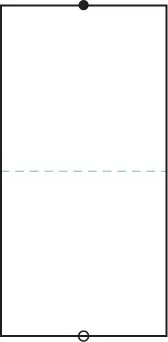
Fold the o edge to the • edge, folding the paper in half. Open the paper.
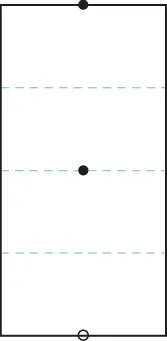
Fold the edges to the centre line. Open the paper.
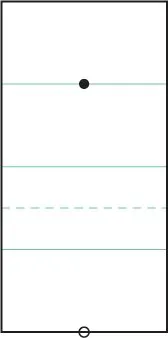
Fold the o edge to the • crease. Open the paper.
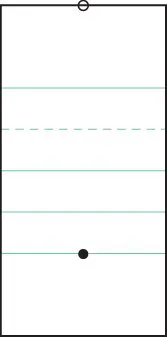
Repeat Step 3 with the other edge.
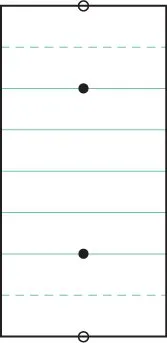
Fold the o edges to the • creases. Open the paper.
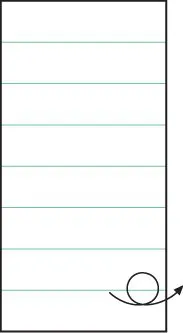
There are now seven valley folds that divide the paper into equal eighths. Turn the paper over.
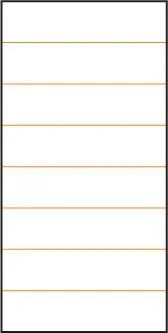
There are now seven mountain folds.
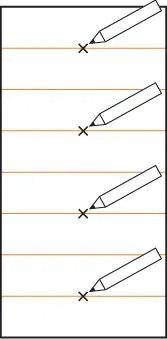
With a pencil, discreetly mark each alternate mountain crease.
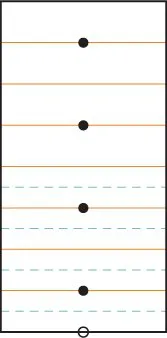
Fold the o edge in turn to all the • creases marked in Step 8, making four new folds. Open the paper after each new fold.
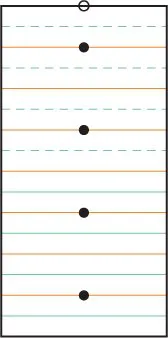
Repeat Step 9 with the other edge of the paper.
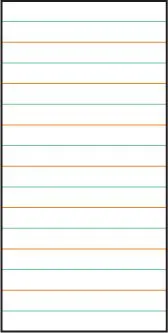
The paper is now divided into equal sixteenths, using creases which alternate mountain-valley-mountain-valley… across the paper (see photo on page 14).
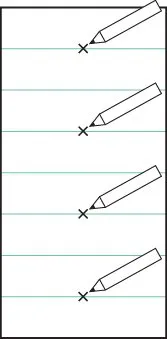
Begin with Step 6 of the Linear Sixteenths method (see page 17). Using a pencil, discreetly mark each alternate valley crease.
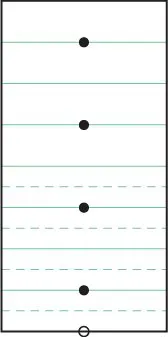
Fold the o edge in turn to all the • creases marked in Step 1, making four new folds. Open the paper after each new fold.
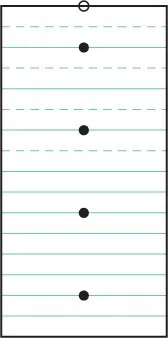
Repeat Step 2 with the other edge of the paper.
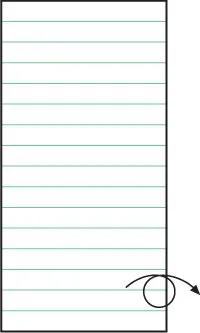
There are now 15 valley folds. Turn the paper over.
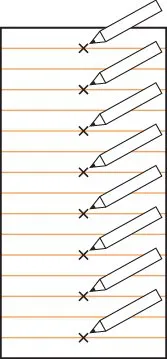
With a pencil, discreetly mark each alternate mountain crease.
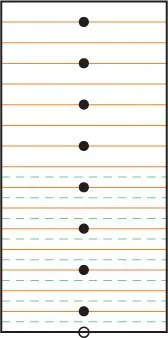
Fold the o edge in turn to all the • creases marked in Step 5, making eight new folds. Open the paper after each new fold.
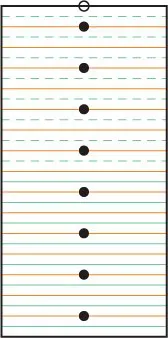
Repeat Step 6 with the other edge of the paper.
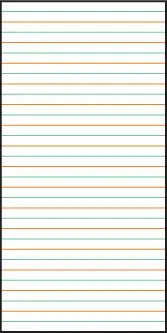
The paper is now divided into equal thirty-seconds, using creases which alternate mountain-valley-mountain-valley (see photo opposite).

Table of contents
- Cover
- Copyright
- Title Page
- Contents
- Preface
- 00. Symbols
- 01. Basic Concepts
- 02. Basic Pleats
- 03. Other Pleats
- 04. V-Pleats
- 05. Spans & Parabolas
- 06. Boxes & Bowls
- 07. No Crease, One Crease
- 08. Crumpling
- FAQs
Frequently asked questions
- Essential is ideal for learners and professionals who enjoy exploring a wide range of subjects. Access the Essential Library with 800,000+ trusted titles and best-sellers across business, personal growth, and the humanities. Includes unlimited reading time and Standard Read Aloud voice.
- Complete: Perfect for advanced learners and researchers needing full, unrestricted access. Unlock 1.4M+ books across hundreds of subjects, including academic and specialized titles. The Complete Plan also includes advanced features like Premium Read Aloud and Research Assistant.
Please note we cannot support devices running on iOS 13 and Android 7 or earlier. Learn more about using the app