- 272 pages
- English
- ePUB (mobile friendly)
- Available on iOS & Android
eBook - ePub
About this book
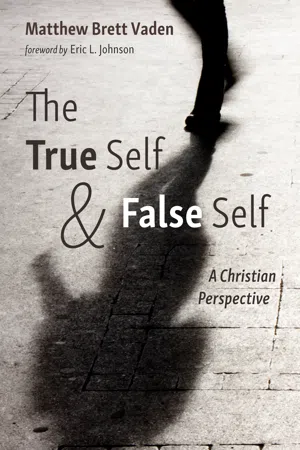
We go through life, focusing our attention on many things. But how much do we focus on ourselves? We may be aware of many things, but are we self-aware? This is a question our contemporary culture asks us to consider more and more, and words like "self-awareness," "personal identity," "authenticity," and "mindfulness" are becoming not just buzz-words but virtues. The ancient dictum "know thyself" reverberates in all corners of our lives, from Disney characters on our TVs to DISC profiles at our workplaces. Some of the more mindful members of our society may even be tempted to disdain those who are not as mindful as they are. But what if our self-aware culture, hailing us to pursue our true selves, is unaware of itself? What if our definitions of true and false self-understanding are myopic, slanted towards a narrow solipsism that is actually leading people away from authenticity, while all the while championing it? If so, how would we know? Who is best able to define these things and to teach us how to know ourselves truly? Matthew Brett Vaden traces the wisdom of past and modern-day sages to discover how we can truly discover ourselves.
Information
Topic
PsicologiaSubtopic
Storia e teoria della psicologia1
Introduction
The True Self and False Self
Two personal experiences drew me to this subject. The first was a weekend retreat called Men at the Cross, where I received the gospel in a fresh way. I had heard the gospel preached and explained countless times growing up. I had studied the gospel in Bible college and seminary. And so I knew that, as the Apostle John puts it, “God so loved the world that he gave his one and only son, that whoever believes in him shall not perish, but have eternal life” (John 3:16 NIV). I had followed and known the Lord Jesus Christ for many years. But I had not known myself very well. I had not known, or at least had resisted knowing, the parts of me that were more pretense than truth. And though I thought myself sincere and honest, the whole truth about me scared me more than I cared to acknowledge. I kept that door closed as much as possible. At this men’s retreat, however, my truth and falsehood confronted me. Rather, I confronted them, because others helped me to do so with the gospel. The impact on me was life-changing. For one thing, my sense of self was shaken. I realized I had based my identity in false selves like the “performer” and “good boy.” I was disillusioned and humbled. On the other hand, being knocked off my center of gravity opened up space in my heart to be re-centered in Christ. The door I had kept closed was now ajar.
My second experience was reading Thomas Merton’s New Seeds of Contemplation. Merton’s poetic teaching about the false self and true self gripped me. Here was another Christian, albeit outside my tradition, who was nevertheless powerfully articulating what I was learning about the gospel and myself. Merton’s words clearly and movingly described how profoundly entwined sin is with the false self. Though I had read Genesis 3 again and again through the years, I had never quite reckoned with how integral the false self is to the story of Adam and Eve, and thus to the story of all their descendants. As a result of sin, we all hide from God and cover our nakedness with “fig leaves.” Though God created us to know him and be known by him and others, we have exchanged our “naked and unashamed” existence for sin, shame, and the falsehood we use to hide. In Adam, all now enter life with his same aversion to being known, as well as with his same proclivity to concealment and self-protection. Thus, Merton writes, “To say I was born in sin is to say I came into the world with a false self. I was born in a mask. I came into existence under a sign of contradiction, being someone that I was never intended to be and therefore a denial of what I am supposed to be.”1 The false self that people wear is a denial of their humanity and their calling. Yet, though the true self is hidden, we may still attain it through grace: “The secret of my identity is hidden in the love and mercy of God.”2 Though lost because of sin, we can regain our true selves through the love of God and union with his Son.
These experiences awakened my desire to put off my old, false self and put on the true self. But I was also intrigued by how relevant and applicable the subject is in our day. Many people are trying to discover their true self. Many are aware of a lack of authenticity in others, and sometimes they feel the lack in themselves. This is true of Christians as well as non-Christians, and both have tried to address the problem. While unbelievers have many resources, without Christianity they lack the real diagnosis and cure. On the other hand, Christian psychologists and counselors could learn much from the work of secular psychology. I want to help both sides, but especially Christian counselors and pastors, who may be tempted to either utilize secular techniques and theories carte blanch without reorienting them to Christianity, or to read their Bibles and apply their counsel in isolation from outside wisdom.
As to my aim, I am proposing a Christian theory of the false self and true self that is informed by both modern and ancient scholarship. Since at least the 1950s, secular psychologists have been talking about the true and false self. They have often described the false self as an internal saboteur that blocks people from feeling authentic or real.3 The true self, however, means “being and feeling real” and belongs “essentially to health.”4 But this conversation goes back much further than the twentieth century. From ancient times, thinkers have written about true self and false self behavior. I’m particularly interested in the Judeo-Christian perspective on these phenomena, and so will give special attention to what the Bible has to say.
For those interested in my methodology, let me explain a few principles guiding my work. First, I believe that the best way to produce a robust definition of the true self and false self is to listen to many voices, even if they disagree. In the absence of dialogue between different perspectives, we won’t have a full understanding. Yet, second, because I am a follower of Jesus Christ, I believe Christianity provides the most accurate and complete worldview. And so, in this book I will privilege the Bible over all other sources of knowledge.
In this regard, I intend this book to be a work of Christian psychology.5 One of the main tasks of Christian psychology is to interpret the discoveries and assertions of secular psychology from the standpoint of Christianity. Secular psychology can be a helpful source of knowledge, and it is appropriate and imperative for Christians to wisely and faithfully utilize it in their research and practice. But the Bible has authority over all other sources of knowledge and is the primary source of knowledge about the nature, psychopathology, and psychological healing of individual human beings. Thus, an adequate Christian articulation of any concept from secular psychology must be guided and ruled by the teaching of Scripture. My hope is to do just that.
To adequately define the false self and true self, I believe we need to answer four questions: (1) Why do people reflect on themselves? (2) Why do they understand themselves wrongly? (i.e., constructing a false self) (3) What does true self-understanding entail? And (4) What interventions can foster true self-understanding?6 Let me briefly explain each of these questions.
Why Do People Reflect on Themselves?
According to both Christian and secular theories, people naturally develop the ability to reflect on themselves, i.e., to make themselves the object of their own observation, description, and evaluation. All the various psychological constructs, processes, and phenomena that have the word “self” attached depend upon this capacity (e.g., self-regulation, self-determination, self-esteem). William James proposed two particularly important concepts we need to understand for our study: the Me-self and the I-self.7 The Me-self is what people perceive, describe, or evaluate when they reflect on themselves. By analogy, think of the image you see in a mirror as your Me-self. The I-self, on the other hand, is the one who perceives, describes, and evaluates. The I-self is the one who looks into the mirror. In other words, the I-self is the knower, observer, or experiencing subject, whereas the Me-self is the thing known, observed, or believed about oneself. Human beings acquire the I-self capacity to observe the Me-self through the course of normal human development; as we grow in our ability to speak and use language, we talk about ourselves, describing ourselves, often in more and more nuanced ways.8 With each stage of life, from infancy to adulthood, people’s cognitive abilities and facility with language increase, allowi...
Table of contents
- Title Page
- Foreword
- Preface
- Chapter 1: Introduction
- Chapter 2: A Scriptural Perspective
- Chapter 3: Christian Perspectives
- Chapter 4: Secular Perspectives
- Chapter 5: A Christian Perspective
- Bibliography
Trusted by 375,005 students
Access to over 1.5 million titles for a fair monthly price.
Study more efficiently using our study tools.
Frequently asked questions
Yes, you can cancel anytime from the Subscription tab in your account settings on the Perlego website. Your subscription will stay active until the end of your current billing period. Learn how to cancel your subscription
No, books cannot be downloaded as external files, such as PDFs, for use outside of Perlego. However, you can download books within the Perlego app for offline reading on mobile or tablet. Learn how to download books offline
Perlego offers two plans: Essential and Complete
- Essential is ideal for learners and professionals who enjoy exploring a wide range of subjects. Access the Essential Library with 800,000+ trusted titles and best-sellers across business, personal growth, and the humanities. Includes unlimited reading time and Standard Read Aloud voice.
- Complete: Perfect for advanced learners and researchers needing full, unrestricted access. Unlock 1.5M+ books across hundreds of subjects, including academic and specialized titles. The Complete Plan also includes advanced features like Premium Read Aloud and Research Assistant.
We are an online textbook subscription service, where you can get access to an entire online library for less than the price of a single book per month. With over 1.5 million books across 990+ topics, we’ve got you covered! Learn about our mission
Look out for the read-aloud symbol on your next book to see if you can listen to it. The read-aloud tool reads text aloud for you, highlighting the text as it is being read. You can pause it, speed it up and slow it down. Learn more about Read Aloud
Yes! You can use the Perlego app on both iOS and Android devices to read anytime, anywhere — even offline. Perfect for commutes or when you’re on the go.
Please note we cannot support devices running on iOS 13 and Android 7 or earlier. Learn more about using the app
Please note we cannot support devices running on iOS 13 and Android 7 or earlier. Learn more about using the app
Yes, you can access The True Self and False Self by Matthew Brett Vaden in PDF and/or ePUB format, as well as other popular books in Psicologia & Storia e teoria della psicologia. We have over 1.5 million books available in our catalogue for you to explore.