Crunch all you want as the Internet of Things is the best technology around us.
Key Features ? An extensive explanation of concepts, associated hardware, and software with numerous examples. ? Detailed illustrations describing various IoT principles and applications. ? Integration of IoT into a business model, including the associated risks and benefits.
Description This book, 'IoT for Beginners', covers all of the fundamental concepts necessary to comprehend IoT and its various aspects. It provides an in-depth understanding of the role of IoT in routine activities and at the business front.The book introduces the fundamental concepts, characteristics, benefits, and drawbacks of the IoT. The book covers all the related hardware, software, protocols, platforms, standards, and programming languages. The book provides a comprehensive explanation of various IoT devices and applications in multiple industries. It explains the security requirements, architecture, challenges, and standards associated with the IoT using various use-cases. The book also highlights opportunities, challenges, and evergreen IoT projects.After reading this book, readers will understand IoT technology, its core building blocks, associated software, and platforms. The readers can put their newfound knowledge to use and make a good start with a career in IoT and edge devices.
What you will learn ? Demonstrate the various characteristics, benefits, and drawbacks of IoT. ? Acquaint yourself with the architecture, components, and a variety of IoT devices. ? Decrypt the operation of IoT devices and technologies. ? Investigate future opportunities, challenges, and enduring IoT projects. ? Acquaint yourself with the working protocols and security features of IoT.
Who this book is for This book is for students, tech professionals, and all those who are eager to learn and use IoT in their personal and professional lives and build careers around IoT technologies. Basic computer and Internet knowledge would be an added advantage.
Table of Contents 1. Basics of IoT 2. Characteristics and Benefits 3. Understanding IoT Workings 4. IoT Tools and Architectures 5. IoT Devices 6. IoT Applications 7. IoT and Business 8. IoT Today and Future 9. IoT and Security 10. IoT Projects
The first chapter is all about the basics of the Internet of Things (IoT). It would cover all basic requirements for learning and understanding of IoT. It will explain the actual meaning of IoT before discussing any other topics. Various developments had been done in the past. So, the chapter briefly describes the history of IoT. The chapter discusses various names of IoT given by researchers. The word “Things” is the foundation of IoT, and it is necessary to understand the meaning of this word. The chapter will explore the different needs of IoT. Various technologies are enabling IoT, which would be also discussed in IoT.
Currently, everyone is using IoT differently for doing different works. For instance, people use smartwatches for various purposes. A smartwatch is a popular example of IoT. People are only using it and are unaware of its meaning. A piece of sound knowledge and sufficient information about any technology helps anyone to use it properly. Some people do not have much knowledge about technologies, so this chapter would help them to obtain the basic knowledge of technologies and IoT. This chapter would also help students to get core knowledge of the IoT.
Structure
In this chapter, we will discuss the following topics:
Introduction to IoT
Definitions
History of IoT
Various names of IoT
Understanding Things in IoT
Meaning of Things
Features of Things
Need of IoT
IoT-driven technologies
Objective
After studying this unit, you will be able to understand the meaning and concept of IoT. You will learn from the existing definitions of IoT and get some insights from history. You will also understand the word Thing and its importance in IoT. You will be able to describe the need of IoT and understand the technologies that drive IoT.
Introduction to IoT
The IoT stands for “Internet of Things” which simply says that everything depends on the Internet from building applications to execute it for some purposes. The IoT is not a single technology; instead, IoT is embedded with multiple systems, network products, sensors, and interconnecting devices. IoT refers to a concept that connects all these devices and systems through the Internet. It uses these intelligent systems and connected devices for collecting data and leveraging it for the execution of required operations. The different actuators, physical objects, and embedded sensors help in data collection and sharing data.
IoT includes all things connected to the Internet and establishes communication with each other. IoT made it easy to collect information, analyze it, build the plan, and execute it to complete a task and help someone in learning. IoT is permitting all devices to make a connection with others on private Internet or intranet connections. IoT is removing the distance between the different types of networks. It is forming and building a more connected world by integrating the automated systems and connected devices. Internet-based protocols and information sensing equipment have been used for sharing information. This thing enables us to achieve monitoring, smart recognition, positioning, administration, and tracing.
With the availability and omnipresence of inexpensive computer devices and wireless networks, it becomes possible to do any development into IoT. By connecting the different objects, adding network devices and sensors to them, IoT is converting dumb devices into real ones. IoT is bringing a new level of digital intelligence that does not need any kind of human intervention.
Let us understand the IoT with an example
IoT is converting a common physical object to an IoT device with the help of the Internet that controls that object. A toy that sounds like a real animal, driverless truck, smart toasters, and remote toy car are popular examples of IoT devices. These devices are doing everything on their own. The smart TV that could be control and switch using smartphone apps, AC that uses remotes, and so on are other examples of IoT devices. People are using all these devices in their life. Different smaller IoT components are making larger IoT components, such as a traffic management system embedded with sensors and trackers for effective management of traffic.
Note: The main concept of IoT is to add some kind of sensor and intelligence to any device or object. The IoT is a coalition of the Internet, intelligence, and sense.
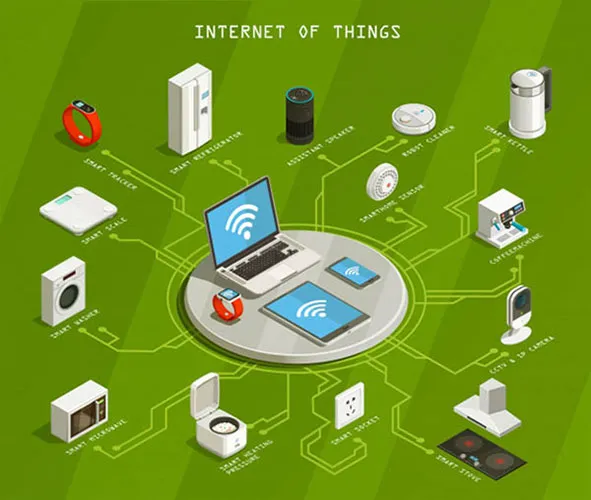
Figure 1.1 shows many examples of IoT around us. For instance, Assistance Speaker is an IoT-based device. Amazon’s Alexa and Google’s voice assistant are the best examples of the assistance speakers:
Figure 1.1: Internet of Things
It should be noted that IoT collects data for specific purposes that are useful for implementing any work. Since IoT needs the Internet for connecting devices, it does not mean that it can download any data. For instance, the healthcare profession uses data from smart IoT healthcare devices and uses it during the medication process. Even near about 35% of US manufacturers use smart sensors and collect data from these sensors. They use these data to increase production efficiency and cutting down waste. A new IoT device, Concrete Sensor has been developed, that could be inserted into the concrete. The device helps in providing data related to the material’s condition.
Note: The computer is only an electronic device, and it is not an IoT device. It is because every device that has an internet connection or can establish communication with the network automatically does not come under IoT devices. Even, the smartphone is also not considered as IoT device.
IoT is permitting business organizations, institutes, and the government to rethink the method that delivers products and services to common people for making them better. IoT has the potentials to make it more efficient and save a large amount of money and time. The first users of IoT are those who are seeking changes in their lifestyles through utility tools. After that, the second users of IoT are those who are seeking security.
Note: It is predicted by the national intelligence that in the future, IoT would also play a role in intelligence services to support the identification of issues, surveillance, monitoring the objects, location tracking, obtaining user credentials, acquiring access to the network.
Definitions
The definition defines the meaning of the particular term, concept, device, and anything through words. It helps people to understand the required thing. Thus, it is also necessary to understand the meaning of IoT through its definitions. IoT becomes a popular technology trend across the world. Despite the huge development of IoT, there is no single universal definition of the word, IoT has been existing.
The book is sharing a simple definition of IoT, “IoT is a digital connection of devices and objects that are embedded with the internet, sensors, and intelligence for establishing communication with people or other IoT-based objects.”
Various software development companies, their executives, business groups, and technology experts defined the IoT in different ways. They are promoting the specific views and meaning of IoT and its characteristics through different definitions. Some definitions of IoT define only the basic concept, whereas some definitions define meaning through characteristics.
Here are some definitions of IoT:
According to Oxford Dictionaries
“The Internet of Things is a noun and refers to an interconnection via the internet of computing devices embedded in everyday objects, enabling them to send and receive data.”
Oxford considered the Internet as an element of the IoT.
According to Internet Engineering Task Force (IETE)
“Smart object networking is IoT and here smart objects have constraints such as memory, limited power, processing resources and bandwidth.”
IETE defined that they are organizing specific requirements for achieving network interoperability among different smart objects.
According to Alexandra Deschamps-Sonsion, founder of Designswarm
“The Internet of things defines the potential new business service, products and interactions offered by embedding hardware technologies and connectivity (web/mobile/radio) in previously unconnected physical products & spaces.”
According to Dr. Mazlan Abbas, CEO of REDtone IoT
“The ultimate goal of IoT is to automate your digital lifestyle and propel your business.”
According to Jessica Groopman, Research Director, and Principal Analyst, Harbor Research
“The interconnection and interaction of the digital and physical worlds, wherein uniquely identifiable embedded technology connects and integrates physical things (that is, objects, people devices, machines, infrastructure, systems, and so on) to information networks via existing and emerging Internet infrastructure. Put simply, IoT is a platform for connecting people, objects, and environment to inform and enable visibility, interactions, and innovation.”
All these different definitions are describing the various scenario in which object connection, network connectivity, and capability of computing is extended to the configuration of diverse objects, devices, physical elements, and sensors that are not considered as computers. All these are pointing only to one thing that is to permit data sharing, generation, and consumption without much human intervention. It is emphasizing the different aspects of IoT. It is also to highlight that IoT is all about the capabilities of remote data collection, research, analysis, and management.
History of IoT
Every computer, whether it is a laptop, mobile, or tablet, requires a chip for processing. Earlier, the big size of the chips had been used. Now, it has been replaced by a small chip for establishing effective communication. Radio Frequency Identification (RFID) tags played a critical role in discovering the IoT term. RFID tags are nothing but low-power chips that establish communication wirelessly. The availability of wireless networking, broadband internet connections, cellular, and so on and its integration with RFID tags made wireless communication successful. The arrival of Internet Protocol (IPv6) supported the IoT in providing services.
In 1999, Kevin Ashton, a British technology pioneer, used the word, “Internet of Things” to describe a system that could connect the objects via the Internet and sensors in the physical world. Kevin Ashton was working in Procter & Gamble Company and part of Supply Chain Management. He discovered the word IoT after realizing the power of RFID tags that were used in Supply Chain Management at that time. The RFID tags are used for connecting the supply chain to the Internet for counting tracking the good without taking the help of a human being. Ashton thought about the concept of connecting the objects using sensors after watching this. In this way, the word IoT came into existence.
Integrating RFID tags into heavy and expensive equipment is the first IoT application for helping in the tracking of goods. Other researchers and technology experts discussed bringing the concept of sensors and intelligence in connecting objects so they automatically share data during the 1980s and 1990s. The reduction in the prices of internet connection and development cost of sensor integration cleared that in the future the intent would be an inexpensive method for connecting objects. The IoT was invented in 1999 to promote RFIT chips in communication. The popularity of IoT started in 2010 and acquired a huge market at the beginning of 2014. Table 1.1 is briefly describing how IoT become popular until ...
Table of contents
Cover Page
Title Page
Copyright Page
Dedication Page
About the Author
About the Reviewer
Acknowledgement
Preface
Errata
Table of Contents
1. Basics of IoT
2. Characteristics and Benefits
3. Understanding IoT Workings
4. IoT Tools and Architectures
5. IoT Devices
6. IoT Applications
7. IoT and Business
8. IoT Today and Future
9. IoT and Security
10. IoT Projects
Index
Trusted by 375,005 students
Access to over 1.5 million titles for a fair monthly price.
Study more efficiently using our study tools.
Frequently asked questions
Yes, you can cancel anytime from the Subscription tab in your account settings on the Perlego website. Your subscription will stay active until the end of your current billing period. Learn how to cancel your subscription
No, books cannot be downloaded as external files, such as PDFs, for use outside of Perlego. However, you can download books within the Perlego app for offline reading on mobile or tablet. Learn how to download books offline
Perlego offers two plans: Essential and Complete
Essential is ideal for learners and professionals who enjoy exploring a wide range of subjects. Access the Essential Library with 800,000+ trusted titles and best-sellers across business, personal growth, and the humanities. Includes unlimited reading time and Standard Read Aloud voice.
Complete: Perfect for advanced learners and researchers needing full, unrestricted access. Unlock 1.5M+ books across hundreds of subjects, including academic and specialized titles. The Complete Plan also includes advanced features like Premium Read Aloud and Research Assistant.
Both plans are available with monthly, semester, or annual billing cycles.
We are an online textbook subscription service, where you can get access to an entire online library for less than the price of a single book per month. With over 1.5 million books across 990+ topics, we’ve got you covered! Learn about our mission
Look out for the read-aloud symbol on your next book to see if you can listen to it. The read-aloud tool reads text aloud for you, highlighting the text as it is being read. You can pause it, speed it up and slow it down. Learn more about Read Aloud
Yes! You can use the Perlego app on both iOS and Android devices to read anytime, anywhere — even offline. Perfect for commutes or when you’re on the go. Please note we cannot support devices running on iOS 13 and Android 7 or earlier. Learn more about using the app
Yes, you can access IoT for Beginners by Vibha Soni in PDF and/or ePUB format, as well as other popular books in Computer Science & Computer Science General. We have over 1.5 million books available in our catalogue for you to explore.