Roy Hart's revolutionary work on the human voice through extended vocal technique and the Wolfsohn-Hart tradition has influenced several generations of practitioners. Hart's outstanding contribution to vocal research, practice and performance stretched over 20 years until his untimely death in 1975, and his vocal training produced performers with extraordinary and highly expressive vocal ranges. He founded a theatre company, Roy Hart Theatre, that brought his ideas to realisation in groundbreaking works. His influence, through his own use of the voice for theatre and music and its embodiment in his company, was widespread, attracting the interest of directors such as Peter Brook, Jerzy Grotowski and Jean-Louis Barrault.
This book combines:
a detailed biography giving the social and artistic context of Hart's work and that of the early Roy Hart Theatre
an exploration of Hart's own writings on his work, combined with a review of articles by his wife Dorothy Hart and in-depth interviews
a stylistic analysis of his key works, including The Bacchae, and, L'Economiste and Biodrame, and their critical reception
pathways into some of the practical exercises devised by close collaborators of Roy Hart and practitioners of the Roy Hart Theatre Tradition.
As a first step towards critical understanding, and as an initial exploration before going on to further, primary research, Routledge Performance Practitioners offer unbeatable value for today's student.
Roy Hart made an outstanding contribution to vocal research, practice and performance over a twenty-year period from the middle of the twentieth century until his untimely death in 1975. As a soloist, he lent his prodigious vocal skills to twentieth-century composers who were redesigning the limits of voice in contemporary music theatre. He founded a theatre company, Roy Hart Theatre, that brought his ideas to realisation in groundbreaking works, which attracted immense interest both in the United Kingdom and throughout Europe and South America. His influence, through both his own use of the voice for theatre and music and its embodiment in his company, was widespread, as attested by the interest of leading lights of the day, such as directors Peter Brook, Jerzy Grotowski and Jean-Louis Barrault. In many ways, he was at the forefront of a (not so quiet!) revolution of how we regard voice work today, and how we redefine the relationship between voice as an expression of the person, and voice as it manifests itself in performance. His story is a powerful reflection of a period in recent history where a small nucleus of artists dedicated themselves to challenging views that limited exploration of the voice’s boundaries and hidden potential, and, in so doing, questioned accepted conventions in making and presenting theatre.
We have called this book Roy Hart and The Early Roy Hart Theatre because, although it is centred around the founding company figure of Roy Hart, the company’s work was actually more collaborative than a focused study of him as the central figure would imply. Therefore, we look here at the evolution of the company, and focus on its work under the leadership of Hart, until shortly after his death. We recognise that the work of the company continued beyond that point, but that later phase, as the company consolidated its roots in French and international theatre, is not considered closely here. We are lucky to be able to reference the work of many company members through our study of archive materials and our documentation of the history of the company from its early beginnings in London through its relocation to France and its compelling and inventive productions throughout Europe in the 1970s and beyond. We look to the life of Roy Hart as our starting point and he remains a central figure throughout the work of the company and our chapters here. However, as you will see, much of our evidence is drawn from the writings of those around Hart and those who continue the work into the twenty-first century. Also, the work of the company lives on in the embodied practices of company members like author Kevin Crawford, Jonathan Hart, Linda Wise, Noah Pikes, Kaya Anderson and the many others who have gone on to found companies, publish books and become leaders in the field of voice training for theatre and performance. For example, Enrique Pardo, Linda Wise and the late Liza Mayer established Pantheatre of Paris which continues to disseminate and expand on Hart practices. Noah Pikes went on to write one of seminal texts on Hart, Dark Voices, and contributes exercises to Chapter Four of this book. Jonathan Hart and Richard Armstrong have both made a lasting contribution to the Experimental Theatre Wing at New York University and continued to amplify the scope of vocal performance in contemporary music theatre. Nadine George, through her Voice Studio International, trains teachers in her approach to voice, and Margaret Pikes in collaboration with Patrick Campbell has recently authored Owning Our Own Voices, Vocal Discovery in the Wolfsohn-Hart Tradition (Routledge, 2020). These are just some examples of the global reach of the original company members and subsequent associate artists, and their influence on international voice practice and pedagogy. As mentioned, this book mirrors this shared heritage as we include contributions and exercises from four other company members and/or Hart practice teachers in Chapter Four of this book: Noah Pikes, David Goldsworthy, Edda Heeg and Pascale Ben.
Chapter One of this book looks at the early years of Hart and the forming of the company through to its rich production phase up to Hart’s decease in 1975 and the dissemination of the work through the many and varied careers of the company members as voice teachers and practitioners.
In Chapter Two we look to detail the principles of Hart and company members through the traces of practice we found in production documents, interviews and letters. Hart did not leave behind a fully documented theory of his practice, but those who embodied the practices in their work with him and after his death have provided many insights into the work that help to detail the methodology in studio training and in performance.
In Chapter Three we look to a number of productions including: The Bacchae, Biodrame and L’Economiste to give evidence of the work in performance, and to give the reader insights into how this sometimes esoteric work translated into production. This chapter is enhanced by the testimonies of performance as detailed by Kevin Crawford and other company members.
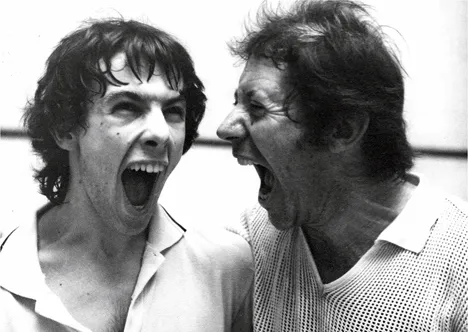
Figure 1.1 Roy Hart and Kevin Crawford, image courtesy of Ivan Midderigh, RHT Photographic Archives.
Finally, in Chapter Four we look to offer you, the reader, a set of workshop principles through the listed exercises, so as to give you an embodied route into the work. Much of the work was advanced and developed by a fully dedicated company, but the principles are fundamental and hopefully accessible to you in this way. We are grateful for the contributions of some other company members here, as listed in the chapter, and feel that this sharing of workshop practices is an appropriate reflection of the continuing life of the work through its many members, and their students who form a new generation of Hart practitioners.
EARLY YEARS
Roy Hart was born Reuben Hartstein to Polish-Lithuanian parents in Johannesburg, South Africa on 30 October 1926. After an Orthodox Jewish education, he studied English, history of music, philosophy and psychology at Witwatersrand University, Johannesburg. Already at school his talent for theatre and in particular his vocal talents had been noticed and at university he took on major roles in theatre productions, culminating in playing the leading role in Peer Gynt by Ibsen in 1946. Derek Rossignol, who was, by a twist of fate, to later become a founder member of his company, Roy Hart Theatre, recalls having seen him perform: ‘(his) performance of Peer Gynt was most impressive – you’d have thought he was already professional!’ (Pikes 2019: 79). Shortly after this he decided to leave South Africa, and travel to England where he became the recipient of a coveted scholarship to the Royal Academy of Dramatic Art (RADA).
In May of 1947 he commenced his studies at RADA, London, this time using the name Royden Hart. The acting teacher at that time wrote in his first report from summer 1947: ‘Has talent but is in need of intensive technical training to make full use of it. A good voice and great vitality and force, when he will make use of them. His main difficulty is his re-action to criticism’ (RADA 1947). A later report that same year refers again to his ‘talent and great “weight” on the stage, unusual in a student’ (RADA 1947) but reiterates that he must learn to accept criticism.
On 5 June 1947, quite early on in his studies at RADA, Roy Hart met Alfred Wolfsohn. He recounted how he first met him in an interview with José Monleón: ‘The family who I lived with told me that since I had such a good voice why shouldn’t I see a good friend of theirs who dealt with the voice? It was Wolfsohn’ (Monleón, Estruch and Domenech 1971). This first meeting with Wolfsohn had a profound impact on Hart and he immediately wrote about it in his diary, describing Wolfsohn as ‘a man who I feel has the ability to bring out the very best in me. … He is indubitably the finest thing that has happened in my life. He has I feel evidently “seen” or felt in me something deep and meaningful not just another otiose artist’ (Roy Hart unpublished diary 1947).
Alfred Wolfsohn (1896–1962) was a charismatic and highly unconventional voice teacher, who, as a German Jew, had fled Nazi Germany and settled in London in 1939. His experiences as a soldier during the First World War had left him profoundly traumatised. In particular, he was haunted by the screams of wounded, anguished soldiers that he had heard on the battlefield. In order to heal his wounded spirit, he found that music and in particular singing brought solace, and reaffirmed his search for meaning in a world that seemed to have gone mad in war. His ideas, expressed in his book Orpheus or The Way to a Mask and in his unpublished manuscripts, propose a radical revisioning of how we approach the voice. He believed that the voice was a profound mirror of the soul, and that the development of the voice was a key to personal individuation. Vocal problems and difficulties had a psychological origin and he needed to address these in his pupils in order to heal their voices. He had the gift of deep complicity with his students and was instrumental in guiding them to intense self-discovery through his voice classes. Wolfsohn is now recognised as being a visionary figure who forged a profound reappraisal of the potential of the human voice (Wolfsohn 2012).
Hart’s engagement with Wolfsohn created some conflict and tension with his studies at RADA, but he did complete the two-year span of study. Hart felt that he was torn between the text-based work on the voice as practiced at RADA and Wolfsohn’s approach which seemed to emphasise the sound over the word. In addition he was profoundly influenced by the personal and philosophical implications of Wolfsohn’s work which contrasted with the more limited vision of the actor as he perceived it at RADA. Above all he was preoccupied with his deep need to find authenticity and vocal embodiment as an actor. His attempts to explain what he was doing with Wolfsohn were met with derision by his fellow students and his teachers remarked on what they called ‘over-voicing’ which was surely a side-effect of Wolfsohn’s work on range extension. Clifford Turner, who was to have a lasting influence on voice teaching in the UK through his book Voice and Speech in the Theatre (1950), wrote in his last report on Hart: ‘A good voice here, but he is inclined to over-voice although there has been a marked improvement in this’ (RADA 1949).
By the spring of 1949, at the end of his second year, Hart was still getting good reports. The school’s principal wrote: ‘He has a robust sense of dramatic expression. He has imagination which he must use more precisely to present characters, not himself. He deserved his free fee exhibition’ (RADA 1949). However, he clearly disappointed his acting teacher: ‘This student has the making of a good actor, but he must listen more to direction, and less to outside influence’ (ibid.). Clearly this ‘outside influence’ refers to Wolfsohn, who was occupying an increasingly central place in Hart’s training and his attitude towards theatre. This came to a head when Hart finally rejected a major role so he could continue studying with Wolfsohn. At this point both RADA and Hart’s family thought he was lost. Roy Hart, however viewed his change in direction differently. He had felt for some time that there was a conflict in himself between his rabbinical origins, symbolised in his grandfather, who disapproved of theatre, and his own desire to go onstage.
Roy Hart himself described his problems as an actor in this way: ‘Yet I had known for some time that my voice was not rooted, not literally embodied; that the varied roles I was considered to perform so well were actually only figments of my imagination with no connection with my body’ (Roy Hart 1967). Wolfsohn offered Hart a way forward to embody or root his voice so he might perform in a more holistic fashion. To this end, Hart’s studies with Wolfsohn, and this is where they also departed from the conventional training offered at RADA, included an in-depth self-examination, a testing of his own psychology and self-belief.
THE WOLFSOHN YEARS
Hart studied intensively with Wolfsohn from 1947 till Wolfsohn’s death in 1962. During this time he was challenged and tested by Wolfsohn who brought formidable psychological and philosophical insight to his work, insisting on the connection between the psyche and the voice, between art and humanity. Hart has not left us a written record of these years, but its influence could be found in his evolving practice, and in the people he subsequently chose to form the theatre company with. Thoroughly immersing himself in Wolfsohn’s multidimensional approach to the voice, which was much influenced by Jungian analytical psychology, was profoundly nurturing for Roy Hart. Gradually he rediscovered what he called his own embodied voice and began to repair the cleavage in himself between his deep passion for theatre and his need for moral and spiritual anchorage. His shyness gave way to renewed confidence in himself. His teaching too reinforced his conviction that this work was his life’s work, as Wolfsohn would say, his ‘vocation’. A key moment in Hart’s studies with Wolfsohn was when he was grappling with the role of Othello in the scene of Desdemona’s murder that he was due to perform (notwithstanding the concerns of playing a Black character as written by a white playwright). The breakthrough occurred when he discovered his own violence and, most importantly, the sound expressing it. Hart recalled: ‘I no longer needed any decor, costume or prop to give my performance a seeming of truth’ (Roy Hart ‘Biodrame….is somewhat the story of my life’ 1973).
Once he had completed his studies at RADA Hart was able to concentrate fully on his work with Wolfsohn, and as Wolfsohn became indisposed owing to a recurring illness, Hart gradually assumed more responsibility and took on a teaching role, which included giving lessons to Marita Günther, Kaya Anderson, Derek Rossignol and Robert Harvey (all of whom became key founder members of Roy Hart Theatre). Hart comments on this period of his life:
At that time we had decided to dedicate ourselves to experimentation: we were going to study a play and divided it into parts from the point of view of sounds. It was then that he got sick and since I was already working with some students I had to start taking care of the rest of the people. In this way I gained much experience.
(Monleón, Estruch and Domenech 1971)
Already by 1955 Roy Hart was regarded as one of Wolfsohn’s star pupils, and he was singled out for his interpretations of T.S Eliot, despite the vocal accomplishments of his fellow students, who sang across an impressive range. In performance Ha...
Table of contents
Cover
Half Title
Series
Title
Copyright
Contents
List of figures
List of abbreviations
Acknowledgements
1 BIOGRAPHY AND INFLUENCES
2 ROY HART AND DOROTHY HART: WRITINGS, INTERVIEWS, LETTERS
3 FOUR PRODUCTIONS BY RHT (1967–76)
4 PATHWAYS TO THE HUMAN VOICE: IN THE FOOTSTEPS OF ROY HART AND ROY HART THEATRE
Bibliography
Index
Trusted by 375,005 students
Access to over 1.5 million titles for a fair monthly price.
Study more efficiently using our study tools.
Frequently asked questions
Yes, you can cancel anytime from the Subscription tab in your account settings on the Perlego website. Your subscription will stay active until the end of your current billing period. Learn how to cancel your subscription
No, books cannot be downloaded as external files, such as PDFs, for use outside of Perlego. However, you can download books within the Perlego app for offline reading on mobile or tablet. Learn how to download books offline
Perlego offers two plans: Essential and Complete
Essential is ideal for learners and professionals who enjoy exploring a wide range of subjects. Access the Essential Library with 800,000+ trusted titles and best-sellers across business, personal growth, and the humanities. Includes unlimited reading time and Standard Read Aloud voice.
Complete: Perfect for advanced learners and researchers needing full, unrestricted access. Unlock 1.5M+ books across hundreds of subjects, including academic and specialized titles. The Complete Plan also includes advanced features like Premium Read Aloud and Research Assistant.
Both plans are available with monthly, semester, or annual billing cycles.
We are an online textbook subscription service, where you can get access to an entire online library for less than the price of a single book per month. With over 1.5 million books across 990+ topics, we’ve got you covered! Learn about our mission
Look out for the read-aloud symbol on your next book to see if you can listen to it. The read-aloud tool reads text aloud for you, highlighting the text as it is being read. You can pause it, speed it up and slow it down. Learn more about Read Aloud
Yes! You can use the Perlego app on both iOS and Android devices to read anytime, anywhere — even offline. Perfect for commutes or when you’re on the go. Please note we cannot support devices running on iOS 13 and Android 7 or earlier. Learn more about using the app
Yes, you can access Roy Hart by Kevin Crawford,Bernadette Sweeney in PDF and/or ePUB format, as well as other popular books in Media & Performing Arts & Music. We have over 1.5 million books available in our catalogue for you to explore.