This book isn’t in the library right now, search for another
- English
- ePUB (mobile friendly)
- Available on iOS & Android
eBook - ePub
No longer available
Business Ethics 6e
About this book
Business Ethics 6e is a combination of theory and practice and useful for graduate and post-graduate teaching, managerial training and the ethical orientation of members of professional associations.
Tools to learn more effectively

Saving Books

Keyword Search

Annotating Text

Listen to it instead
Information
INTRODUCTION
In any field of study there are a number of key concepts and distinctions that one needs to be familiar with. Such core concepts and distinctions provide the vocabulary for engaging in a meaningful discussion in any specialised field of study. The field of Business Ethics is no exception in this regard. It also has a set of core concepts that often feature in discussions about business ethics. Typical examples of such concepts are terms such as ethics, morality, values, integrity, and virtues.
Although these concepts are related in some or other way, there are also some very important differences between them. If the connections and distinctions between these concepts are not clarified, it can lead to confusion and misunderstanding.
In this first part of the book we start by defining the concepts ‘business’, ‘ethics’ and ‘business ethics’. Once the unique focus of the field of business ethics has been identified through the definition of these terms, we attend to a number of important distinctions that need to be made in the field of business ethics. We focus specifically on the distinction between what could be considered as ethically right and ethically wrong and how that distinction gets blurred in the case of ethical dilemmas. We also explore the relationship between ethics and the law as well as the distinction between ethics and values and between ethics and integrity. Finally, we analyse the distinction between personal and organisational ethics by employing the metaphor of apples and barrels.

Key concepts and distinctions in ethics
Introduction
In order to talk meaningfully about business ethics there are a number of concepts and distinctions that one needs to understand. In this chapter we will discuss some of the key concepts and distinctions in the field of business ethics.
Business
The concept ‘business’ can have different meanings, as is illustrated in the expression that ‘the business of business is business’. We will thus do well to clarify what we mean by business before defining what we mean by business ethics.
Business, as used in the above expression can either refer to a specific type of organisation or to a specific type of activity. When we talk about a business as a specific type of organisation, we refer to organisations (or enterprises) that provide goods or services in exchange for some form of payment. The providers of such goods or services can be public or private enterprises, or individuals. In narrow definitions of business ethics, the domain of business ethics is confined to private enterprises. In broader understandings of business ethics, also public (or state-owned) enterprises are included within the scope of business ethics. The latter broader understanding of the scope of business ethics will be used in this book.
Business, however, can also refer to a certain kind of activity. The type of activity that business in this sense of the word refers to is the activity where individuals or organisations voluntarily enter into transactions of economic exchange for goods or services. Business ethics studies the fairness of such economic exchanges as well as the ethical issues that surface in business activity.
Business ethics is the study of both business as organisations as well as business as an activity. In this regard it has become commonplace in business ethics to distinguish three dimensions of business as organisation and as activity, viz. Economic Ethics, Corporate Responsibility, and Organisational Ethics (Enderle, 2003; Goodpaster, 1992; Rossouw & Stueckelberger, 2012):
• Economic ethics: Business organisations and business activity always occur within an economic system or a wider socio-political framework. This economic framework is determined at national level by political decisions, laws and regulations as well as social norms that shape the contours of the economic playing field and the rules that govern business organisations and business activities. When economic activity transcends national boundaries, international trade agreements and other international norms and conventions also come into play. The macroeconomic framework determines to a large extent what freedoms and responsibilities business organisations will have and also which economic priorities will be pursued. In Chapter 2 we will explore what macroeconomic ethics entails.
• Corporate responsibility: Businesses as organisations inevitably find themselves in a network of relationships within the societies in which they operate. These relationships include interactions with a wide range of parties such as the state, civil society, competitors, suppliers, customers, employees and the media. It is typical of relationships that they bestow both benefits and responsibilities on the parties involved in a relationship. The corporate responsibility dimension of business ethics studies the ethical (or social) responsibilities of business organisations towards the societies in which they operate as well as the business activities that are considered to be socially responsible or irresponsible. In Chapter 3 we will explore what social responsibility entails.
• Organisational ethics: Business organisations develop their own structures, systems and standards that direct and control their business activities. These structures, systems and standards provide the parameters within which internal stakeholders (such as employees) and external stakeholders (such as suppliers, clients and business partners) need to operate. Organisational ethics studies both the ethics of business activity and of the structures, systems and standards of business organisations. Although the structures, systems and standards imposed by business organisations constrains what employees, suppliers, contractors and other stakeholders can do, they never totally constrain the freedom and responsibility of these individuals. To the contrary, individuals always retain some freedom to act with initiative and discretion. In Chapter 4 we will explore the ethical dimension of organisational ethics.
Although these three dimensions are clearly distinguishable in theory, they are interrelated in practice. Often a single phenomenon has simultaneous implications for all three dimensions of business ethics. A good illustration is economic empowerment of women. Creating conditions and incentives that will ensure that women take their rightful place in the economy might become a strategic objective in a government’s macroeconomic policy. On the social responsibility level, a company might decide to support certain initiatives in their society that will empower women to take their rightful place in the economy. On the organisational level the company might change its hiring, promotion, and procurement practices in order to ensure the upward economic mobility of women.
With a better understanding of what we mean by business as organisation and as activity and the three dimensions of business ethics as they relate to business, let us do a similar exploration of what we mean by ethics.
Ethics
Sometimes people try to maintain a distinction between the meaning of the concepts ethics and morality. In ordinary language, however, the two concepts are almost indistinguishable. People tend not to make any distinction between ethical and moral behaviour on the one side, or between unethical and immoral behaviour on the other side. In this book ethics and morality will be treated as synonyms.
Ethics is about with what is good or right in human interaction. It revolves around three central concepts: ‘self’, ‘good’, and ‘other’. Ethical behaviour results when one does not merely consider what is good for oneself, but also considers what is good for others. It is important that each of these three central concepts be included in a definition of ethics.
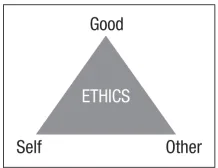
Figure 1.1 Ethics: the three central concepts
Should the concept of ‘good’ be neglected, the unique nature of ethics collapses. Ethics is not merely concerned with the interaction between a self and an ‘other’, but with the quality of interaction. Ethics is the determination of whether the interaction between the self and the other is good or bad for all parties involved or affected by the interaction.
A similar distortion occurs when the ‘self’ is excluded from the definition of ethics. Then the concern is merely about what is good for others, without taking the interests of the self into consideration. This pure form of altruism is probably unattainable, as it is almost impossible for someone to totally exclude their own interests. It is also dangerous to neglect one’s own interests, as a sense of one’s own well-being is a prerequisite for sustained interaction with other people. Alisdair MacIntyre captured this insight well when he said: “Self-sacrifice is as much of vice […] as selfishness” (MacIntyre, 1999:160).
Equally, the other cannot be excluded from the definition of ethics, as this will result in selfishness. A concern merely for what is good for oneself runs counter to the very nature of ethics, which is to ensure that the interests of both oneself and others are considered. Ethical behaviour thus can be self-interested, but not merely selfish. When you know your behaviour may have negative consequences for others, but care only about what is good for yourself, such action is selfish and unethical. If, on the contrary, you seek to serve your own interests, whilst simultaneously caring about how the interests of others will be affected, then your behaviour is self-interested whilst also being ethical.
Business ethics
When ethics is applied to business we consider the impact that business organisations and business activity have on the interests of all who are affected by it. Business ethics is about identifying and implementing standards of conduct in and for business that will ensure that the interests of its stakeholders are respected.
Business ethics thus refers to the values and standards that determine the interaction between business and its stakeholders. From this definition it is clear how the three concepts of the self, good and other, which are integral to the definition of ethics, also apply to business ethics. Business ethics is about the ethical values and standards (good) that guide the business (self) in its interaction with stakeholders (others).
Consequently, what is at stake in studying and practising business ethics is to give content to the good (ethical values and standards) and to determine whether the interaction between the self (business) and others (internal and external stakeholders) lives up to these ethical values and standards.
Right, wrong and dilemmas
Ethics is often perceived as a grey area where there is little clarity about what is right or wrong. This perception of ethics is mistaken. There is a broad consensus within and amongst societies about what is considered to be either ethically right or wrong. Both within and across societies there is, for example, a consensus that the protection of innocent life and telling the truth is ethically right. There is a similar consensus that the killing of innocent people and blatant dishonesty is wrong.
The same goes for ethics in business. There are certain behaviours that are considered ethically right, such as respect for the dignity of employees and for company property. On the other hand, discrimination against employees and theft of company property is considered wrong. Whether companies and their employees live up to these standards is another question, but they would generally agree to these standards of behaviour.
However, despite the clarity that exists about what is right or wrong, difficult situations arise in business where the distinction between what is ethically right and wrong becomes blurred. These tough choices are called moral dilemmas. The nature of moral dilemmas is that they do not allow one the luxury of deciding between right or wrong, but they force one to choose between two or more options that are all to some extent wrong. It is a matter of choosing between a rock and hard place. In other cases, dilemmas might force one to choose between two competing good values, such as honesty and loyalty. By making a choice that favours the one value over the competing one, the competing ethical value is compromised (Allen, 2012).
Privacy in e-mail use is a typical moral dilemma in business. Whilst some would regard the monitoring of employees’ e-mail as unethical, others would justify it as a legitimate managerial prerogative.
Dilemmas can be either interpersonal or intrapersonal: they do not only occur in groups of people, but a person may also experience a dilemma within her or himself. Both social (interpersonal) and personal (intrapersonal) dilemmas are characterised by the fact that there is no longer a choice between right and wrong, but between competing ethical or unethical options.
The challenge that faces businesses when it comes to the above distinction between right, wrong and dilemmas, is to be as clear as possible on what they consider to be ethically right or acceptable behaviour. They need to be equally clear on what they consider to be ethically wrong and thus regard as unacceptable behaviour. They also need to acknowledge that ethical dilemmas arise from time to time and should provide guidance on how these dilemmas should be approached.
Ethics and t...
Table of contents
- Cover
- Title Page
- Copyright
- Contents
- Acknowledgements
- Preface
- Part 1 Definitions and distinctions
- Part 2 The ethics of business
- Part 3 Theories on ethics and business
- Part 4 Business ethics matters
- Part 5 Ethical decision-making in business
- Part 6 Governing ethical performance
- Part 7 Case studies
- References
- Index
Frequently asked questions
Yes, you can cancel anytime from the Subscription tab in your account settings on the Perlego website. Your subscription will stay active until the end of your current billing period. Learn how to cancel your subscription
No, books cannot be downloaded as external files, such as PDFs, for use outside of Perlego. However, you can download books within the Perlego app for offline reading on mobile or tablet. Learn how to download books offline
Perlego offers two plans: Essential and Complete
- Essential is ideal for learners and professionals who enjoy exploring a wide range of subjects. Access the Essential Library with 800,000+ trusted titles and best-sellers across business, personal growth, and the humanities. Includes unlimited reading time and Standard Read Aloud voice.
- Complete: Perfect for advanced learners and researchers needing full, unrestricted access. Unlock 1.4M+ books across hundreds of subjects, including academic and specialized titles. The Complete Plan also includes advanced features like Premium Read Aloud and Research Assistant.
We are an online textbook subscription service, where you can get access to an entire online library for less than the price of a single book per month. With over 1 million books across 990+ topics, we’ve got you covered! Learn about our mission
Look out for the read-aloud symbol on your next book to see if you can listen to it. The read-aloud tool reads text aloud for you, highlighting the text as it is being read. You can pause it, speed it up and slow it down. Learn more about Read Aloud
Yes! You can use the Perlego app on both iOS and Android devices to read anytime, anywhere — even offline. Perfect for commutes or when you’re on the go.
Please note we cannot support devices running on iOS 13 and Android 7 or earlier. Learn more about using the app
Please note we cannot support devices running on iOS 13 and Android 7 or earlier. Learn more about using the app
Yes, you can access Business Ethics 6e by Deon Rossouw,Leon van Vuuren in PDF and/or ePUB format, as well as other popular books in Éducation & Éducation générale. We have over one million books available in our catalogue for you to explore.