- 174 pages
- English
- PDF
- Available on iOS & Android
Il gioco e la novellistica fra Tre e Quattrocento
About this book
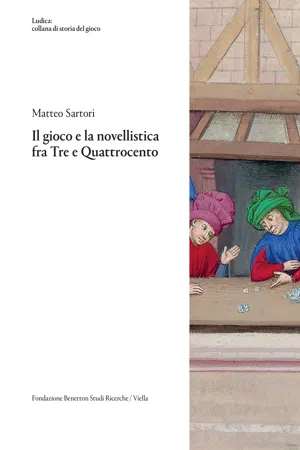
Gli ultimi secoli del medioevo vedono l'affermarsi della novella, una narrazione breve che racconta vicende storiche o immaginarie offrendone una rappresentazione assai realistica e strettamente legata al contesto dell'epoca. Nelle novelle trovano posto numerosi passatempi, giochi e attività ludiche, attraverso cui si è tentato di cogliere come si modifichi la logica sottesa alla ludicità fra il Tre e il Quattrocento.L'indagine si sviluppa per temi: partendo dal significato assunto dai concetti di ozio e di tempo, viene proposta un'interpretazione della novellistica come una sorta di gioco letterario, centrando l'attenzione sui giochi all'aperto – la giostra, il torneo, la caccia, la scherma – e sui giochi da tavolo – i dadi, le tavole, gli scacchi, la baratteria –, e infine la festa, la musica e la danza.L'analisi dei fenomeni ludici, considerati nella loro specificità ma anche sempre nelle loro connessioni reciproche, mette in luce i cambiamenti intercorsi nel passaggio fra i due secoli. Nel corso dell'epoca umanistica l'attenzione degli autori di novelle tende a privilegiare i giochi in grado di fornire un alto livello di spettacolarità, di rievocare i costumi della civiltà classica, nonché di marcare una netta distinzione di ceto sociale.
Frequently asked questions
- Essential is ideal for learners and professionals who enjoy exploring a wide range of subjects. Access the Essential Library with 800,000+ trusted titles and best-sellers across business, personal growth, and the humanities. Includes unlimited reading time and Standard Read Aloud voice.
- Complete: Perfect for advanced learners and researchers needing full, unrestricted access. Unlock 1.4M+ books across hundreds of subjects, including academic and specialized titles. The Complete Plan also includes advanced features like Premium Read Aloud and Research Assistant.
Please note we cannot support devices running on iOS 13 and Android 7 or earlier. Learn more about using the app.
Information
Table of contents
- Copertina
- Occhiello
- Colophon
- Frontespizio
- Indice
- Alessandra Rizzi, Introduzione
- I. L’ozio e il tempo: due concetti chiavenella ludicità tre-quattrocentesca
- II. Il gioco del novellare
- III. Le giostre, i tornei, i bigordi, la scherma e la caccia
- IV. I giochi da tavolo: i dadi, le tavole, gli scacchi e la figura del barattiere
- V. La festa, la danza e la musica
- Conclusioni
- Bibliografia
- Nota sull’apparato iconografico
- Elenco delle illustrazioni
- Indice dei nomi e dei luoghi
- Quarta