eBook - ePub
Basic Electricity and Electronics for Control: Fundamentals and Applications 3rd Edition
- English
- ePUB (mobile friendly)
- Available on iOS & Android
eBook - ePub
Basic Electricity and Electronics for Control: Fundamentals and Applications 3rd Edition
About this book
This class-tested book gives you a familiarity with electricity and electronics as used in the modern world of measurement and control. Integral to the text are procedures performed to make safe and successful measurements of electrical quantities. It will give you a measurement vocabulary along with an understanding of digital and analog meters, bridges, power supplies, solid state circuitry, oscilloscopes, and analog to digital conversions. This book is about behavior, not design, and thus lends itself to an easy-to-understand format over absolute technical perfection. And where possible, applications are used to illustrate the topics being explained. The text uses a minimum of mathematics and where algebraic concepts are utilized there is sufficient explanation of the operation, so you may see the solution without actually performing the mathematical operations. This book is student centered. It has been developed from course materials successfully used by the author in both a college setting and when presented as short course study classes by ISA. These materials have been successful because of the insistence on practicality and solicitation of student suggestions for improvements. Basic Electricity and Electronics for Control will enhance student success in any industrial or technical school setting where basic technician training is to take place.
Trusted by 375,005 students
Access to over 1 million titles for a fair monthly price.
Study more efficiently using our study tools.
Information
Chapter 1
ELECTRICAL BASICS
The focus of this text is electrical measurement practices. Given this topic, it will be assumed that the reader is either acquainted with or wishes to become acquainted with the basics of electricity. However, even readers with previous knowledge will differ greatly in their depth of understanding, the length of time since their study (if any) of electrical phenomena, and how deeply they absorbed the basic electrical facts.
To make this text as useful as possible to so wide a variety of readers, the first chapters provide the reader with a primer in basic electrical behavior before delving into the practices of measurement. As the focus of this book is not design but tasks of a more practical nature, explanations will employ a very limited amount of mathematics (indeed, only arithmetic). Since electricity cannot be seen and the number of complex explanations for electrical phenomena increases steadily, the text will look only at electrical behavior and use simple (yet accurate) descriptions rather than mathematical models.
ENERGY
What is energy? It is the force that accomplishes work. Physics tells us that work is described as “force through a distance.” An electric current can transfer electromotive force and the “source” of energy—where the force is generated—can be physically separated from the point at where the work is to be performed. An electric current will transfer energy from the source to accomplish work at the “load.” In fact, the energy in an electric current may perform the work as well as transfer the energy from some distance.
POTENTIAL
In order for any energy to be transferred (or work to be performed) the levels of energy at the point where the work is to be performed must be different. This is a common-sense or “intuitive” concept. Similarly, water will not flow unless the source of the water is at a higher level. In fact, water was the first analogy used to describe electric concepts. Figure 1–1 illustrates a water tower, piping, a water wheel, and a drain. If there is no water in the tower, then there will be no water pressure. The height of a water column determines the pressure exerted at the bottom of the column. In the case of Figure 1–1, this pressure causes a flow of water through the water wheel. The pressure at the bottom of the drain is now the lowest pressure in the system. Energy has been transferred from the water tower through the water wheel because of the difference in pressure between the water tower and at the drain. This is the first of a series of very important observations: if there is no pressure difference, there is no energy to be transferred or transformed. Because of the difference in energy, fluid will flow in the piping, operate the water wheel, and exhaust at the drain. The pressure difference itself did not power the water wheel, however; the flow did. But there would be no flow without the pressure. Pressure itself is “potential” energy. Pressure is defined as force over an area (pounds per square inch, etc.). Potential energy does not perform work, but it has the potential to perform work. Once the fluid is in motion some of the pressure is transformed into “kinetic” energy. Kinetic energy is force in motion. It does the work, as it will be the force acting through a distance. Since the discoverers of electricity could not see current—could not really conceive of it—they merely observed and recorded its behavior. We will do the same.
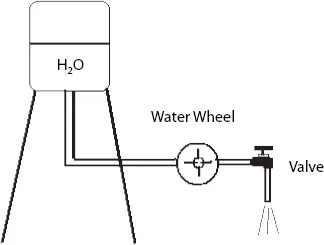
Figure 1–1 Water tower, wheel, and drain.
CHARGE AND CURRENT
Since the early discoverers of electricity couldn’t visualize it, they equated it to water flow. They called electrical flow “current” (not terribly original, but it gets the point across). If there is no electrical pressure difference, there will be no electric current flow. An electric current performs the work. Though there are many explanations for the actual constitution of current flow, the concept we will stick to is that an electrical current is “a movement of charge.” There are two (and only two) types of charges: negative and positive. Whether an item has a net negative or net positive charge depends on who is observing it and what their net charge might be. Figure 1–2 illustrates the importance of having a 0 charge reference.
In Figure 1–2, it is easy to see that the plates marked negative and positive will have a difference in charge between them and that if you observe the negative plate from the positive, it is indeed negative. The same can be said for observing the positive plate from the one marked negative; it is indeed positive. But what about observing from the more and less positive plates? If you use the less positive plate as your reference, then the more positive will be positive. However, if you observe the less positive plate using the more positive plate as your reference, it will appear to be negative. But they are both positive, no? Actually, the observation that both are positive could only come from an independent observer, one with a different (and presumably more negative) reference relative to the two positive objects. All things are relative. This is another point that you will need to remember throughout measurement. You must establish a reference. Though the reference may appear to be charged when observed from an independent location, the reference is our zero, so we may only determine the charge differences relative to our reference.
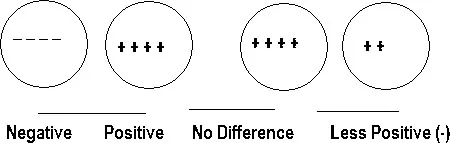
Figure 1–2 Difference in charge.
THE COMPLETE PATH
For an electrical current to flow a complete path must exist from the point of high to the point of low pressure. This is different than our water tower analogy, yet it is still easy to understand. In order to conduct electricity, conductors are used—the pipes in the water tower analogy. Conductors are made of materials that easily pass electrical charges. Insulators are made of materials that will not easily conduct electricity. Conductors such as wires are usually made of metals such as copper or aluminum. Insulators are made of materials like rubber, plastic, and some ceramics. Insulated wires (the most common kind) have an insulator wrapped around the wire to keep the charges from contacting the environment. Figure 1–3 illustrates the need for a complete conductive path.
The source develops the electric pressure or potential (difference in charge). This source could be a battery, generator, or any method for generating a difference in charge. Again, this difference in charge is known as “potential.” In fact, it has a more formal name: “electromotive force” or “EMF.” It is the electrical pressure that will cause current to flow in the conductors (drawn as connecting lines in Figure 1–3). There must be a conductive path from the negative to the positive side of the source through the load. If this is not so, then there will be no way to equalize the difference in charge and nothing to relate one terminal to the other. If you are at the positive terminal and measure the difference along the conductor to the positive end of the load, you will detect no difference in charge. (Note: This may not be precisely true depending on the measuring equipment you use—as we explain in later sections. For our purposes here, however, any difference will be insignificant.) The same can be said for the negative terminal of the source through the conductor to the negative terminal of the load. Notice in Figure 1–3 that the entire potential is across the load.
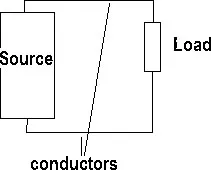
Figure 1–3 The complete conductive path.
Now the potential can do work. Whatever the load is (heating a resistance, turning a motor, etc.), energy will be used. This is work. There is one hard and fast rule for energy: “there is no free lunch.” In other words, anything that is moved, heated, cooled, or changed in one way or another, generally involves work, and the energy to perform that work must be provided.
REVIEW
For work to be performed the energy must be available to perform that work. In order for an electric current to flow there must first be a potential difference, an electromotive force. This force can move charges through conductors. Conductors conduct charges easily; insulators do not. For a potential to cause an electric current a complete conductive path must exist between the negat...
Table of contents
- Half Title
- Title Page
- Copyright
- TABLE OF CONTENTS
- PREFACE
- LIST OF CHAPTER OBJECTIVES
- 1 ELECTRICAL BASICS
- 2 TERMINOLOGY
- 3 MEASUREMENT ERRORS
- 4 BASIC ELECTRICAL MEASUREMENT
- 5 METER MOVEMENTS
- 6 DC VOLTAGE MEASUREMENT
- 7 DC CURRENT MEASUREMENT
- 8 DC BRIDGES
- 9 AC FUNDAMENTALS
- 10 AC SOURCE FUNDAMENTALS
- 11 THE OSCILLOSCOPE
- 12 REACTIVE COMPONENTS
- 13 AC MEASUREMENT
- 14 SOLID STATE: PRINCIPLES
- 15 ZENER DIODES, SCRs, AND TRIACS
- 16 OPERATIONAL AMPLIFIERS
- 17 DIGITAL LOGIC
- 18 ANALOG/DIGITAL CONVERSION
- 19 INDUSTRIAL APPLICATIONS
- ANSWERS TO CHAPTER EXERCISES
- INDEX
Frequently asked questions
Yes, you can cancel anytime from the Subscription tab in your account settings on the Perlego website. Your subscription will stay active until the end of your current billing period. Learn how to cancel your subscription
No, books cannot be downloaded as external files, such as PDFs, for use outside of Perlego. However, you can download books within the Perlego app for offline reading on mobile or tablet. Learn how to download books offline
Perlego offers two plans: Essential and Complete
- Essential is ideal for learners and professionals who enjoy exploring a wide range of subjects. Access the Essential Library with 800,000+ trusted titles and best-sellers across business, personal growth, and the humanities. Includes unlimited reading time and Standard Read Aloud voice.
- Complete: Perfect for advanced learners and researchers needing full, unrestricted access. Unlock 1.4M+ books across hundreds of subjects, including academic and specialized titles. The Complete Plan also includes advanced features like Premium Read Aloud and Research Assistant.
We are an online textbook subscription service, where you can get access to an entire online library for less than the price of a single book per month. With over 1 million books across 990+ topics, we’ve got you covered! Learn about our mission
Look out for the read-aloud symbol on your next book to see if you can listen to it. The read-aloud tool reads text aloud for you, highlighting the text as it is being read. You can pause it, speed it up and slow it down. Learn more about Read Aloud
Yes! You can use the Perlego app on both iOS and Android devices to read anytime, anywhere — even offline. Perfect for commutes or when you’re on the go.
Please note we cannot support devices running on iOS 13 and Android 7 or earlier. Learn more about using the app
Please note we cannot support devices running on iOS 13 and Android 7 or earlier. Learn more about using the app
Yes, you can access Basic Electricity and Electronics for Control: Fundamentals and Applications 3rd Edition by Lawrence Thompson,Lawrence (Larry) M. Thompson in PDF and/or ePUB format, as well as other popular books in Technology & Engineering & Electrical Engineering & Telecommunications. We have over one million books available in our catalogue for you to explore.