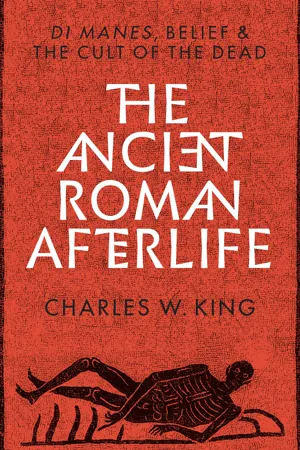
A comprehensive study of the manes, their worship, and their place in Roman conceptions of their society.
In ancient Rome, it was believed some humans were transformed into special, empowered beings after death. These deified dead, known as the manes, watched over and protected their surviving family members, possibly even extending those relatives' lives. But unlike the Greek hero-cult, the worship of dead emperors, or the Christian saints, the manes were incredibly inclusive—enrolling even those without social clout, such as women and the poor, among Rome's deities. The Roman afterlife promised posthumous power in the world of the living.
While the manes have often been glossed over in studies of Roman religion, this book brings their compelling story to the forefront, exploring their myriad forms and how their worship played out in the context of Roman religion's daily practice. Exploring the place of the manes in Roman society, Charles King delves into Roman beliefs about their powers to sustain life and bring death to individuals or armies, examines the rituals the Romans performed to honor them, and reclaims the vital role the manes played in the ancient Roman afterlife.
"King ranges widely across literary genres, law, epigraphy, and archaeology. He provides a thorough, rigorous, and well-documented study of an aspect of Roman religion and culture that, despite its importance, has so far not received due attention." —James B. Rives, author of Religion in the Roman Empire
"Groundbreaking . . . An invaluable resource for scholars of religion, funerary practice and afterlife in ancient Rome and more generally . . . King aims to use his model of variability in Roman belief to show the cult of the dead as inclusive of all Romans, living and deceased. Through extensive literary evidence and select cross-cultural comparisons, he largely succeeds. This stands to become a foundational text." — Antiquity
"King presents many attractive impressions of Roman society in his study . . . King's major thesis—that Romans regarded their dead as gods, thought about them, communicated with them, attended to them, and intended to join them—is conclusively presented." — Bryn Mawr Classical Review