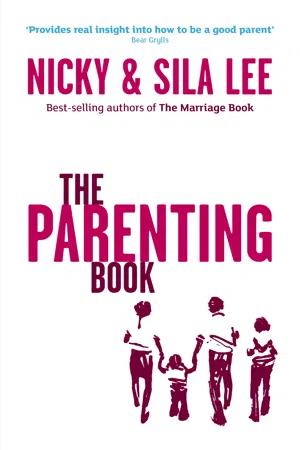
'We believe that healthy families are at the heart of a functioning society. We developed our courses and wrote The Marriage Book and The Parenting Book because the church has the opportunity to offer support to people at a practical, grassroots level. Every family strengthened makes a difference to a child and to our nation.'Drawing on their own experience of bringing up four children, and having talked to thousands of parents over the years on their parenting courses, Nicky and Sila Lee bring fresh insights and time-tested values to the task of parenting. The book covers the following areas: - Understanding how families work
- Meeting our children's needs
- Building character through setting boundaries
- Helping our children make good choices
- Passing on our believes and valuesFull of valuable advice and practical tips, The Parenting Book is a tool to come back to again and again.
- 512 pages
- English
- ePUB (mobile friendly)
- Available on iOS & Android
eBook - ePub
About this book
Information
Topic
Theology & ReligionSubtopic
ChristianitySection 1
Understanding how families work
Chapter 1
Knowing what the family is for
Family is having music on and Mummy, Daddy, Bart and Fergus dancing.
Fergus, aged 3
Family is a place where I feel totally safe and able to show my weaknesses, knowing they will still love me afterwards.
Kirsty, aged 28
Family. What family? They were never around for me.
Rupak, aged 22
Our family is the mould for what we become.
Simon Walker
Lecturer and author
The family is both the fundamental unit of society as well as the root of culture. It represents a child’s initial source of unconditional love and acceptance and provides lifelong connectedness with others. The family is the first setting in which socialisation takes place and where children learn to live with mutual respect for one another. A family is where a child learns to display affection, control his temper and pick up his toys.
Professor Marianne E. Neifert
Paediatrician
Everyone needs a family. Our family is our home; the place where we know we belong, where we turn when we need comfort, support, advice, or help. It is where we can be ourselves, where we do not need to pretend, where we are accepted and loved, where we can relax, where we can grow, where no one is allowed to take themselves too seriously and where we can laugh. Or at least it should be. And our family is where we learn the balance between looking after ourselves and looking out for each other.
| Nicky | One Friday evening, we were driving out of London in rush-hour traffic with our four children aged between four and eleven. It had been a hectic day and I was opening my mail at the red traffic lights. One envelope was marked ‘private and confidential’ and Benj, looking over my shoulder, asked me what ‘confidential’ meant. I tried to think of a way to explain that he would understand. The best I could manage was ‘only for you’. Half an hour or so later, in order to survive the traffic jams, we bought a McDonald’s meal to eat in the car. Sila was taking orders from the children and asked Josh, our four-year-old, what he would like. He replied emphatically, ‘A Big Mac and confidential chips, please.’ With three siblings and the frequent need to share, this new word was a useful addition to his vocabulary! |
Creating a family
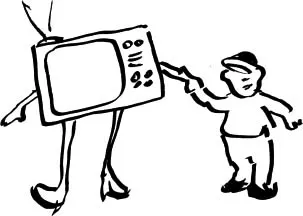
Family life has had to survive all sorts of pressures through the ages. Today in the West, the threat comes mainly from heightened social and economic expectations, broken relationships and a pressure on our time. For many children, the TV and the Internet have become surrogate parents, providing generally poor, if alluring, role models.
Many of us are stretched in one way or another, some to breaking point. Feelings of anxiety and inadequacy are universal among parents. Rob Parsons, Director of the UK charity Care for the Family, started a talk to 200 parents with the words: ‘You are almost certainly doing a better job than you think you are.’ There was an almost audible sigh of relief.
As parents we can easily compare ourselves with others – perhaps making us critical of other families, whilst trying madly to present the perfect front. But comparisons are unhelpful for us and our children: some children are more compliant and are easier to parent than others who are more strong-willed or complex. Your family will be different to our family and any other family. We can take tips from our friends, but we will not parent in the same way. We must decide on our own approach and have confidence in the uniqueness of our own family.
A friend of ours found herself having to bring up three children on her own after her husband left. She told us, ‘As a single parent I have to work hard at building a sense of family for my children – that means being very careful what we do at weekends. We can spend time with other family units and they can see how a family with both parents works but I also need to show them that we are a family.’
It is worth taking a long term view of what we want to achieve. We can easily be caught up in the immediate crisis: trying to persuade a baby to sleep through the night, repeatedly disciplining a child for hitting a brother or sister, or arguing with a teenager who wants to pierce every available body part. The result can be that we miss the bigger picture – our desire to see our children grow up to be confident, secure adults who fulfil their potential and build strong relationships with us and with others.
Before you read on, pause for a minute or two to take stock of where you are and how you feel about the way you are parenting your child or children. (Throughout The Parenting Book we will refer to ‘children’ while being aware that you may have only one child, a step-child or step-children.)
However you feel you are doing in your parenting, we hope this book will encourage you that there are changes you can easily make to strengthen your family life. We can choose the type of family we create. You will probably want to do some things differently to the way you were brought up. We do not have to repeat the past. In the middle of a blazing argument, a teenager said to his father, ‘You have never told me that you loved me.’ To which his dad replied, ‘Well, it was never said to me.’
Our family life
Have a look at the statements below, decide which are relevant to your situation and ask yourself how true they are for your family life now. Try to be honest!
- We set aside special time to be together as a family at least once a week.
- I spend some time each week doing something with each child that they think is fun.
- We sit down around a table to eat together as a family (with the TV off) several times a week.
- I regularly tell my children I love them and give them more praise than criticism.
- I know what makes my children feel loved.
- I limit the amount of time my children watch TV or play computer games.
- My children feel they can talk to me and that I listen to their concerns.
- I know who my children’s friends are, what they enjoy doing at school and their favourite food.
- My children feel they can tell me if and when I have upset them.
- I am in control of myself when disciplining my children.
- I am able to discuss key parenting issues with my partner and we work on a joint approach.
- My children, as appropriate for their age, know my beliefs and values.
- I pray regularly for my children and am passing on spiritual values.
- I have friends or family members I can turn to when I feel overwhelmed in my role as a parent.
All parents need goals to aim for. Without them, we drift. We have highlighted four that have helped give our family life direction over the years. Admittedly, we have not always acted in line with them, but they have been a helpful yardstick. You may well choose others.
1. The family provides support
If I was feeling unhappy, Mum or Dad would have a little chat before bed – pretty cringy – but it always made me feel much better.
Josh, aged 21
Family is the first reference point of who we are. The old saying, ‘Blood is thicker than water,’ remains true whether we have had a smooth or bumpy ride through our upbringing.
All children will experience hardship and disappointment in some form or another. Young children can be very cruel to each other. They may not be invited to a friend’s party or be picked for a playground game. As teenagers or young adults, they may be excluded by their classmates or let down by a friend.
Most children will face failure sooner or later: whether failing an exam or getting themselves into trouble. All teenagers will experience times when they know that they have let their parents and themselves down.
Former prisoner Sam Huddleston described how he started drinking heavily in his early teens. He fathered his first child at sixteen and began to make a living selling drugs. Throughout this time, he ignored his father’s advice and ‘God-talk’, as he described it. On one occasion he was drunk and tried to steal alcohol from a shop with his cousin. They got into a fight with the shopkeeper. The cousin stabbed the shopkeeper, who subsequently died. Sam was arrested and later sentenced to life in prison.
On his first day in prison his father came to see him in the ‘visiting tank’.
He described what happened:
I picked up the phone. ‘Hello, Dad.’ I looked down; I couldn’t look at his face. ‘Sammy,’ came the voice through the receiver, ‘we’re in trouble, and I don’t know what we’re gonna do. But we’re gonna make it …’ He said a lot more, but I kept hearing those first words. ‘We’re in trouble …’ ‘We.’ Dad and I. The family and I. Not Sam alone, no matter how many times I’d turned my back on everything Dad stood for. I hoped I wasn’t going to cry.1
Our children need to know that, whatever happens, their family will keep loving them and will pick them up and encourage them to keep going. They need to know their family values them, accepts them for who they are, misses them when they are not there and forgives them when, like Sam Huddleston, they mess up.
2. The family provides fun
Family has always been a place where we have laughed a lot. The boys, I think, are all genuinely funny and Mum and I never really minded being laughed at.
Kirsty, aged 28
Laughter is healing – psychologists tell us that laughter releases endorphins into the brain, reduces stress and improves our mood. Laughter helps us to keep life in balance. As we laugh together, we feel like a unit. Laughter dissolves tension – it draws us together in a shared understanding. Laughter stops us taking ourselves too seriously, and the family is a great place to learn to laugh at ourselves. Family teasing can be a way of conveying affection, though we have to tread carefully. Teasing can say, ‘I know you intimately and I love your funny quirks.’ But we must never laugh unkindly at our children and we must be prepared for them to laugh at us. We asked our eldest son, Benj, what he and his siblings thought about having us as their parents, to which he immediately replied, ‘We laugh at you guys the whole time!’ We decided not to press him for anything more specific.
A sense of humour provides fun and draws us closer together as a family. Fun does not need to be expensive – it might just be jumping in puddles, playing games, recounting stories at mealtimes or going out for the day together.
| Sila | When I was growing up, we were great friends with a family who had children of a similar age to my sister, my brother and myself. They were always fun to be with. The dad in particular had a wonderful sense of humour. I remember the shock I felt as a teenager when I heard that he had left his wife and children to set up home with another woman. I had always thought they were a very c... |
Table of contents
- Cover
- Title Page
- Copyright
- Epigraph
- Contents
- Foreword
- Acknowledgments
- Introduction
- Section 1: Understanding how families work
- Section 2: Meeting our children’s needs
- Section 3: Building character through setting boundaries
- Section 4: Helping our children make good choices
- Section 5: Passing on our beliefs and values
- Epilogue
- Endnotes
- Other useful resources
Trusted by 375,005 students
Access to over 1.5 million titles for a fair monthly price.
Study more efficiently using our study tools.
Frequently asked questions
Yes, you can cancel anytime from the Subscription tab in your account settings on the Perlego website. Your subscription will stay active until the end of your current billing period. Learn how to cancel your subscription
No, books cannot be downloaded as external files, such as PDFs, for use outside of Perlego. However, you can download books within the Perlego app for offline reading on mobile or tablet. Learn how to download books offline
Perlego offers two plans: Essential and Complete
- Essential is ideal for learners and professionals who enjoy exploring a wide range of subjects. Access the Essential Library with 800,000+ trusted titles and best-sellers across business, personal growth, and the humanities. Includes unlimited reading time and Standard Read Aloud voice.
- Complete: Perfect for advanced learners and researchers needing full, unrestricted access. Unlock 1.5M+ books across hundreds of subjects, including academic and specialized titles. The Complete Plan also includes advanced features like Premium Read Aloud and Research Assistant.
We are an online textbook subscription service, where you can get access to an entire online library for less than the price of a single book per month. With over 1.5 million books across 990+ topics, we’ve got you covered! Learn about our mission
Look out for the read-aloud symbol on your next book to see if you can listen to it. The read-aloud tool reads text aloud for you, highlighting the text as it is being read. You can pause it, speed it up and slow it down. Learn more about Read Aloud
Yes! You can use the Perlego app on both iOS and Android devices to read anytime, anywhere — even offline. Perfect for commutes or when you’re on the go.
Please note we cannot support devices running on iOS 13 and Android 7 or earlier. Learn more about using the app
Please note we cannot support devices running on iOS 13 and Android 7 or earlier. Learn more about using the app
Yes, you can access The Parenting Book by Nicky Lee,Sila Lee in PDF and/or ePUB format, as well as other popular books in Theology & Religion & Christianity. We have over 1.5 million books available in our catalogue for you to explore.