Is it possible for a life to change?In their own compelling words, fifteen men from all walks of life tell the stories of their lives and how they have been transformed, often in dramatic circumstances, by an encounter with God. Some have overcome years of crime and extreme violence, others have seen their addictions disappear. Every story is gripping and inspirational.This is a book for anyone interested in whether God is there - and what he can do.
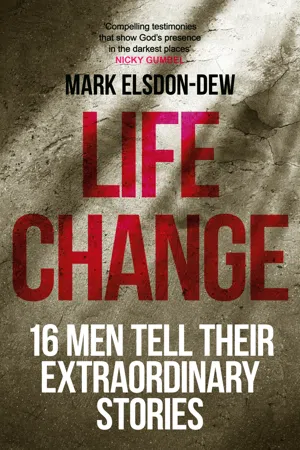
- 240 pages
- English
- ePUB (mobile friendly)
- Available on iOS & Android
eBook - ePub
About this book
Information
Topic
Theology & ReligionSubtopic
Christianity 1
The Strip-Cell Prisoner
The story of Shane Taylor
The Strip-Cell Prisoner
The story of Shane Taylor
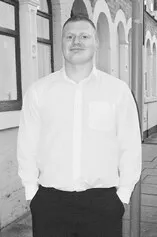
For many years, Shane Taylor was considered to be one of the most dangerous prisoners in Britain’s jails. Originally jailed for attempted murder, he had his sentence extended by four years when he attacked a prison officer with a broken glass in an incident that provoked a riot. After that, he was sent to some of Britain’s most secure ‘Category A’ prisons, where he was often held in solitary confinement because of his violence towards prison officers.
My father was schizophrenic and would batter my mother. When I was a baby she escaped and fled to a battered wives’ home a couple of miles from Middlesbrough. My dad would try to hunt her down. Once she moved out of the sheltered home and another woman took her room. My dad broke into the room and beat this other lady up, thinking it was my mum.
I was still a baby when mum remarried a man called Gordon Taylor and I took his name (my real name is Almond). He was like a real dad to me. When I was about six I made friends with kids who would get into trouble. I’d shoplift – pinching sweets, trainers or anything. I got caught a few times and I’d be taken home where I’d be smacked or grounded. But it didn’t bother me. We did what we wanted. My mum tried everything to keep me out of trouble, but it wouldn’t work.
From a very young age – eight or nine – I started going to court for burglaries, and robberies. But of course I was so young that they couldn’t do anything with me except send me to foster parents or to a children’s home. Then I’d just escape back home and do exactly the same things again with my friends. The police would catch me for another charge; so then I’d go back to court. It was a constant cycle.
By the time I was twelve or thirteen I was hanging around with twenty-one-year-old lads, which made me feel good. They used to do burglaries and pinch cars. All my friends stole. I didn’t realise I was doing wrong at that time. By the time I knew it was wrong I couldn’t stop. Sometimes my friends and I would run off and not go home for days on end. Our parents were obviously worried so they’d phone the police. The police would be out looking for us, but we would be out constantly, burgling as many places as we could. The main thing we used to do was to knock on people’s doors and say, ‘Excuse me, we’ve got to go all the way to Sunderland and we need a drink.’
And they’d go, ‘Oh, you’re so young. Come in while I make you a sandwich.’ While they went into the kitchen, we would run into the front room and grab a purse or handbag. Then we’d run out. We used to have thousands of pounds on us from our stealing. We’d show off to our mates, going, ‘Hey, do you want a tenner?’ We’d end up giving half of it away. We’d go out and the older lads would buy rally cars – Astra GTs, Nova GTEs and Cosworths. Then we’d go and do other crimes in the car we’d bought. I thought, ‘This is what everybody does.’
I got arrested hundreds of times, charged and taken to court. But I would get out and go straight back into it again. I had no fear. I thought, ‘I’m young, I can’t go to prison.’
We had these big screwdrivers to unscrew windows with, so we could get into any empty house. Once in we’d just ransack the place. There could be anything from two to five of us. We’d steal money, TVs, video machines, hi-fis, anything that would sell. We’d then take the goods straight to someone who would buy them off us. Then we’d go and do the same thing somewhere else. We’d go everywhere – Seaham, Easington, Wheatley Hill, Peterlee, Durham – wherever we could get to in the car. That was my life between the ages of nine and fourteen.
When I got caught I’d get grounded at home. To stop me running away, my stepdad nailed all the upstairs windows down. But it made no difference. I’d wait until they were in the front room before sneaking downstairs and running out.
That was when they started taking my clothes off me. So then I put my dad’s clothes on and sneaked out. It was like a constant challenge for me. I knew my parents were doing these things out of love, but I didn’t listen.
I went to school a bit but I ended up getting expelled from every single school. Eventually I ended up in Elemore Hall [a residential school in County Durham], which is where you go when no other school can handle you. You stay there during the week and come home at weekends. But as soon as I got there I was getting everybody to run away with me. We were pinching cars, going back home and getting together with all the lads. The police would catch us and take us back to the school. The following night I’d sneak out again.
At about thirteen or fourteen I was sent to a secure unit – Aycliffe Secure. I could have escaped if I’d really tried, but it was a nice place. There were TVs, a gym and everything. I used to get cannabis, dope and tack brought in, then my mates and I would get stoned. It was nothing like prison at all. I had a friend in prison who was writing to me, saying, ‘I’m in prison. Get yourself here.’ He was in Deerbolt Prison [in County Durham] and I thought, ‘I want to be with all my mates.’ I knew hundreds of people in there. So in order to get in there I deliberately ran away, for which I was sent to Deerbolt.
One day at Deerbolt I was bored so I got this big wooden table leg and pulled it off. Then I said to a friend, ‘Do you want to start a riot?’ He said ‘Yeah,’ so we went round saying to everyone, ‘Are you up for a riot?’ – and everyone was. There was a woman officer playing pool. I walked up to her, grabbed the pool balls off the table and started chucking them through the windows. Eventually we ended up in segregation and I was moved to Wetherby Prison. I was sixteen.
In Wetherby all went well until one day my pay form for working in the canteen servery arrived. It showed my payment as being £2 instead of £12, which it should have been. Soon afterwards I was putting some hot water in my cup and the officer said, ‘Hurry up . . .’ I held the cup up to him and said, ‘I’ll put this in your face.’ He jumped back and I was so cross that I went back into my cell, barricaded myself in, smashed the window out, kicked the door off and waited till the riot people came. Then I walked out and went down into the ‘seg’.
One day when we were in the exercise yard I said, ‘Let’s kick off. Let’s give them trouble.’ There was a metal pole bolted into the wall and I pulled it off and two of the other guys did the same. We tried to pull the barbed wire down so we could crawl up and get onto the roof. But they came in with the riot shields, screaming and shouting, got me down and handcuffed me.
Then I got moved again – this time to Moorland Prison [near Doncaster]. I was on the wing for dangerous young offenders. I kept my head down and eventually got released from there. But by now I’d started to get violent – I’d fight anybody and was up for anything. I had this motto: ‘If you want to survive in a criminal world you’ve got to become more violent than the violent.’ So my aim was to instil fear in people. I would go after whoever I felt like. If I couldn’t find him, I would go after somebody else in his family. I wanted to be so feared that people would fear the fact that I was walking near them. I didn’t have any morals like some criminals have.
From the age of fourteen or fifteen I’d carried a knife. I had a fascination with guns and knives – mainly knives. They were like a god to me. Having a knife in my hand was like the thing. They’d be big, ten-inch, kitchen blade knives. If anyone came up to me or I felt threatened, I’d pull it out and use it. Eventually I had a whole set of knives strapped round my waist – the smaller one up to the bigger one. One time one of my knives led to me being set up by the police. They had caught me stealing a car and cornered me in a back garden. That was where they said that I pulled a knife out on them. But it was a set-up. I had the knife on me, but the policeman pulled the knife out and said that I pulled it out on him. So I started thinking, ‘He set me up. I hate him.’ In the interview they asked, ‘So, why did you pull a knife out on the police officer?’
I said, ‘I wish I did and I wish I’d killed him.’
And they said, ‘You don’t mean that, do you?’
I said, ‘I do mean it. Before I die I’m going to kill a police officer or somebody who has anything to do with authority.’ I got to the point where I felt no fear.
One time in prison there were these black lads from London. In the exercise yard they were challenging people and fighting with them. When they came to me I just ran at them, swung a few punches and went mad. Then the prison officers came running out and put a stop to it. The next day I walked past these black lads and smashed my dinner plate over one of them. The dinner went everywhere and we started battling on the floor. I later found out this lad was well known in the London area for being pretty hard. Another time I went to the door of a man (who thought he was the main man) and asked him if he knew if the mail had been given out. He went, ‘**** off!’ I was so mad. I went into my cell and stormed up and down, getting madder and madder and shouting to my cellmate, ‘I’m gonna kill him!’ I walked out the door and saw this guy walking down the stairs. I went up to him and said, ‘Tell me to **** off, did you?’
He went, ‘Yeah, I did. Why? Have you got a problem?’ Before he could finish I smacked him in the face and he went flying into the doorway. Then I started punching him and leathering him. Six or seven prison officers appeared and tried to get me off him but they couldn’t. I carried on hitting him, shouting, ‘I’m gonna kill you!’ That’s when one of the prison officers punched me and I let go and fell on the floor. I got put in segregation again for that. By the time I got out of that prison, I was getting into a bit of drugs and more violence.
I went to Hartlepool where there was a local hard man, well known by everybody. People said, ‘He’s a feared man. No one will dare touch him.’ He was a really big, powerful, mentally ill person. He had taken a video machine from two young lads I knew. This hard man had heard they were trying to sell it and had pulled out a hammer on them and taken it. So we went after him. One lad had a big aluminium baseball bat, the other had a knife – and I had a nine-inch knife.
When we approached him he said, ‘Come on . . .’ One lad ran at him and was whacking him with the bat. I thought, ‘I need to help him here, he’s only young.’ So I ran at the hard man and stabbed him. As I was doing it he hit me with the hammer. I can remember seeing sparks and then I can’t remember anything else. When I came back round I was a mile away from the scene, running away with these two lads. I thought I still had the knife in my hand, but I only had the knife handle.
I looked at the lads and they were white. I said, ‘What’s happened?’ They said, ‘You’ve killed him. You stabbed him through his head, Shane. He’s pouring with blood.’ I said, ‘Have I?’ Then we ran all the way back to Peterlee. It turned out he was a very hard man. The knife had gone right through the top of his head and come out above his eye. He pulled the knife out with his own hand and vowed that he would get me back. It was all over the news. I got caught and they tried to charge me with the offence, but in the end it got dropped and they charged me with affray.
Some time after that I stabbed a local hard man in the shoulder while we were in a pub. The police were informed, so I was on the run.
I then ‘taxed’ (robbed) a fifteen-year-old drug dealer because I needed the money. When I finally got caught, the charge was Section 20 – GBH. I was nineteen. I got Section 20 for the two stabbings, a couple of affrays and carrying offensive weapons. I was sentenced to four years. At first I was in Northallerton but then, when I turned twenty-one, I was sent to Holme House Prison in Stockton-on-Tees.
A lot of people had heard about me before I got to Holme House. I was crazy, doing loads of violent and mad things. People would say things like, ‘There’s Shane over there. He’s off his head, don’t mess with him.’ There was a lad in Holme House who used to bully me when we were kids. He came up to me and said, ‘Can you remember that time when I nutted you? I’m so sorry, I didn’t mean to do it . . .’ I loved the attention I was getting. It made me feel like a king. I was the madman that everyone looked up to – and I had a gang of people who would do what I asked them to do.
One time I set up this prisoner who I needed to get. I got him down into the gym, punched him and smashed his eye open. Another time a prison officer refused to let me out of our wing so that I could go to the gym (after originally saying that he would let me go). So I said, ‘How come you never let me out?’ He went, ‘What a pity.’ So I went, ‘You’re dead – you’re going to get it . . .’ I was swearing and getting angry. And he said, ‘Oh, how many times have I heard that?’
Then I went up to this little lad who was playing pool and said, ‘Pick up them pool balls and chuck them at that screw.’ He went ‘Oh . . .’ I said, ‘Do you want a name for yourself? Do you want people to know you? Do you want my respect?’ He went, ‘Yeah.’ I said, ‘Then just do it.’ So he picked up the pool balls and started chucking them at this prison officer. The officer came running towards us and pulled out his baton.
I was holding a large coffee jar and I smashed the end of it and held the broken glass in my hand. As he approached me he tr...
Table of contents
- Cover
- Title Page
- Imprint Page
- Dedication
- Contents
- Introduction
- Chapter 1
- Chapter 2
- Chapter 3
- Chapter 4
- Chapter 5
- Chapter 6
- Chapter 7
- Chapter 8
- Chapter 9
- Chapter 10
- Chapter 11
- Chapter 12
- Chapter 13
- Chapter 14
- Chapter 15
- Chapter 16
- Endmatter page 1
Trusted by 375,005 students
Access to over 1.5 million titles for a fair monthly price.
Study more efficiently using our study tools.
Frequently asked questions
Yes, you can cancel anytime from the Subscription tab in your account settings on the Perlego website. Your subscription will stay active until the end of your current billing period. Learn how to cancel your subscription
No, books cannot be downloaded as external files, such as PDFs, for use outside of Perlego. However, you can download books within the Perlego app for offline reading on mobile or tablet. Learn how to download books offline
Perlego offers two plans: Essential and Complete
- Essential is ideal for learners and professionals who enjoy exploring a wide range of subjects. Access the Essential Library with 800,000+ trusted titles and best-sellers across business, personal growth, and the humanities. Includes unlimited reading time and Standard Read Aloud voice.
- Complete: Perfect for advanced learners and researchers needing full, unrestricted access. Unlock 1.5M+ books across hundreds of subjects, including academic and specialized titles. The Complete Plan also includes advanced features like Premium Read Aloud and Research Assistant.
We are an online textbook subscription service, where you can get access to an entire online library for less than the price of a single book per month. With over 1.5 million books across 990+ topics, we’ve got you covered! Learn about our mission
Look out for the read-aloud symbol on your next book to see if you can listen to it. The read-aloud tool reads text aloud for you, highlighting the text as it is being read. You can pause it, speed it up and slow it down. Learn more about Read Aloud
Yes! You can use the Perlego app on both iOS and Android devices to read anytime, anywhere — even offline. Perfect for commutes or when you’re on the go.
Please note we cannot support devices running on iOS 13 and Android 7 or earlier. Learn more about using the app
Please note we cannot support devices running on iOS 13 and Android 7 or earlier. Learn more about using the app
Yes, you can access Life Change by Mark Elsdon-Dew in PDF and/or ePUB format, as well as other popular books in Theology & Religion & Christianity. We have over 1.5 million books available in our catalogue for you to explore.