From foundation to fully optimized
Every executive acknowledges the importance of having a business strategy, but when it comes to creating and implementing a strategy for their organization, the “how” and “what” of strategic planning becomes elusive. In their manuscript, OptimizingStrategy for Results, authors Waema, Price, and Baiya give leaders the tools, processes, and step-by-step instructions to—
• Establish a proven framework for creating a strategy that can be dynamic and responsive
• Address the importance of creating a culture aligned to create and execute on this strategy
• Align the diversities of people’s talent, skills, and passions as a key component of leveraging their strengths throughout the strategy continuum.
Strategy is a process, not an event. When it is done well, strategy includes great preparation over time, vigorous debate about what should and should not be a part of the strategy commitment, meticulous planning, ongoing focus, regular review, meaningful evaluation, and learning. Optimizing Strategy for Results will teach readers how to prepare for, create, and optimize strategy to achieve results.
eBook - ePub
Optimizing Strategy For Results
A Structured Approach to Make Your Business Come Alive
- 234 pages
- English
- ePUB (mobile friendly)
- Available on iOS & Android
eBook - ePub
Optimizing Strategy For Results
A Structured Approach to Make Your Business Come Alive
About this book
Information
STAGE 1

THE FOUNDATIONS
OF STRATEGY
OF STRATEGY
An organization’s purpose, its long-term vision, and its core values serve as the foundation and the strategy that will lead to its success. These three constituent elements are at the heart of a business and should remain constant and solid, like the foundation of a building. A building cannot be erected until its foundation is strong and stable. Similarly, an organizational strategy cannot be developed and executed until these elements are established and internalized. They feed into and support each other, as seen in figure 1.1.
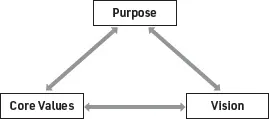
Figure 1.1. The foundations of strategy.
To determine what your organization’s foundation should be, you first need to know the essence of the organization’s identity, or brand. Next, you must decide where you want the organization to go, what future state it’s moving toward. These questions represent wide and varied conversations within the company and with external stakeholders; they should include storytelling about the company’s past, what the organization is about, and what it aspires to become and achieve in the future.
For example, you want your organization to transition from state A (its current position—say, a restaurant chain with two locations) at time T1 (now) to state B (a multistate franchise operation) at time T2 (the long term; e.g., 10 years). This transition takes place because state A is the current reality, and the organization has identified opportunities to transition to a superior state (state B). The transition is achieved through strategy—the continuous adjustment of goals and actions that is represented by the line between the two states. The strategy will enable the organization to improve its performance from P1 (making a small profit at those two locations) at T1 (state A) to P2 (enough revenue to expand) at a future time, T2(state B). The vision is only realizable at T2 and is not available before then (change takes time). The core values are everywhere within the box, and we cannot achieve the vision without these core values and purpose.
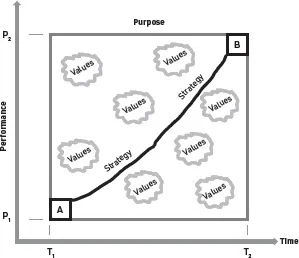
Figure 1.2. Performance over time, built on the foundational elements of strategy.
Figure 1.2 shows strategy in action: a line connecting the current state of the company with its goal. However, arriving at the goal takes time, and it must be surrounded and supported by a foundation of purpose, values, and vision.
In our consulting, we often work with organizations that assume their purpose, vision, and values based on past documents rather than taking the time to discuss, reflect, and refine them. Their attitude toward purpose and values is often, “Well, that’s the way we have always done it, and there doesn’t seem to be a reason to change.” Their attitude about vision is often, “We are just going to keep doing what we’ve been doing and hope for the best. Besides, who can predict the future these days?”
One of the companies Ron worked with developed a purpose statement that read, “Improving the quality of life through principles of individual wellness and promoting the highest principles of free enterprise.” Its core values were: respect for every individual, a commitment to excellence, a dedication to customer service, and promoting success through personal initiative. This purpose statement and these core values initially evolved from several conversations during a weekend retreat in April 1989 in Sun Valley, Idaho. Core ideas also emerged from these discussions. It took several months to refine them and to gain support from the majority of the employees. Next, Ron worked with them to develop a 10-year vision that included product development and market growth. The goal was to grow the business in current markets and expand into new countries. When this goal was adopted, the company’s leaders didn’t know how they would achieve it. However, the goal provided clarity as they made decisions and encountered both challenges and opportunities along the way. During this time, the company introduced several new products and expanded into eight new countries, which resulted in a tripling of the company’s revenue and a customer base growth of more than 100,000.
PURPOSE
A crucial piece of an organization’s foundation is its purpose; it is why the company exists. Organizational purpose is often described in a mission or purpose statement, which answers core questions about the company. For any organization, this is a good place to start. For example, to create a purpose statement, you and your leadership team must clearly define why the company exists, what the business will do to accomplish this purpose, who its customers are, and what those customers value. We tend to use the terms “purpose” and “mission” differently: the purpose is why the organization exists and the mission is the organization’s purpose applied to current customer needs—what it will do to fulfill the purpose. This is an important distinction that has opened up new insights for us and our clients.
Why does your company exist?
Purpose gives an organization its heart. Verne Harnish1 argues that an organization’s purpose can be discerned from the following two questions.
What difference are we making in the world?
A primary way to determine what difference your company is making in the world is to explore who is affected by its existence. One of Ron’s clients, a family-owned agribusiness, started by asking several generations of their family, then their employees (both full time and seasonal), then their buyers, brokers, distributors, grocers, and, finally, consumers, what difference they thought they were making in the world. Through this discussion, the organization became more aware of the wide scope of its impact—its decisions, investments, values, and results all had the potential for significant impact. It was decided that the difference the company makes in the world is connecting farmers with the tools, machinery, and support they need to thrive in today’s agriculture market.
Why would our customers, or the world,
miss us if we weren’t around?
miss us if we weren’t around?
Would anyone miss your company if it were gone, and—more importantly—why? These questions are both easy and hard to answer. Initially, most organizations begin by meeting one or more specific needs in the communities they seek to serve. There are a variety of motivations that lead an entrepreneur to launch a new business: “I want to be my own boss”; “I want to create wealth”; “I have a new product or service and I want to control how it is produced or delivered”; or “I couldn’t find a job that provided for my family, so I decided to create the job for myself.” These initial motivations drive the creation of the product or services you provide to your customers and the world, and they are what would be missing if you were gone.
Occasionally, an entrepreneur has a large vision that can only be pursued through a new business. For example, one of our clients who started his first business boldly proclaimed, “I want to cure cancer!” In the beginning, answers come easily because of the close connection between the founders of a company and its customers (or constituents, in the case of nongovernment or government entities). As organizations mature and seek to discover—and then pursue— their greatest potential, these questions deserve greater attention. It is highly unlikely that Bill Gates, Steve Jobs, Jeff Bezos, or Elon Musk started their businesses with the same purpose statement they have today. Instead, as they and their businesses grew, reasons for existing as an organization grew as well and needed to be clarified and expanded. The original purpose of Amazon, Google, or Alibaba was embryonic at the beginning, and each has grown in scope and clarity along the way. So how do you identify the seed of purpose and bring greater clarity for the future?
An organization’s purpose is often derived from the purpose of its founder or leadership. In private firms, this is often evident in the founder’s story of why they began the business or determined by the CEO or board of directors. It is some fundamental story of why the company was built and what greater effect it would achieve in the world.
Dr. Evans runs a company called The Innovator’s Advantage, LLC. After growing up in Kenya and coming to the United States for university and postgraduate studies, he rediscovered a passion for innovation, which he remembers being present from his earliest years working on the family farm. As he pursued this passion academically and then as an employee of a global technology company, it became evident that he would only be happy owning a company that was a catalyst for innovation for his clients and their organizations. This would be the core purpose for his company’s existence. This seed of purpose has driven him to continually ask, “What difference are we making in the world?” and “Why would our customers or the world miss us if we weren’t around?” Today, Dr. Evans can answer these questions with clarity, conviction, and passion.
If your founder’s story was never recorded or has been lost over time with the company’s growth, write a new one. You may need to interview your organization’s founder, or you may need someone to interview you if you are the founder. What drove them or you to create the company? What greater purpose do you hope to achieve by offering your product or service? In a formal, public organization, the purpose can often be captured in the instruments that established it, such as a law or by-laws.
After thinking deeply about the way your organization can change the world, the void its absence would create, and its superhero origin story, you should have a good idea of why your company exists. Describe it in a sentence—and write it down!
What does your business do?
We also encourage you to progress from simple to complex explanations when defining what your business does. Think about how you would describe your business to an eight-year-old. For example, “We put new rubber on tires so that trucks are safe and can go farther without having to worry about their tires.” (This was the purpose of a company Ron co-owned with his father.) It may not sound exciting, but it’s the best place to begin.
There is actually a lot hidden in this simple statement, such ...
Table of contents
- Cover Page
- Title Page
- Copyright Page
- Contents
- Foreword
- Preface
- Introduction
- Part 1: Preparation
- Part 2: Creating Strategy
- Part 3: Optimizing Strategy
- Afterword
- Acknowledgments
- Endnotes
- Glossary
- Index
- About the Authors
Trusted by 375,005 students
Access to over 1.5 million titles for a fair monthly price.
Study more efficiently using our study tools.
Frequently asked questions
Yes, you can cancel anytime from the Subscription tab in your account settings on the Perlego website. Your subscription will stay active until the end of your current billing period. Learn how to cancel your subscription
No, books cannot be downloaded as external files, such as PDFs, for use outside of Perlego. However, you can download books within the Perlego app for offline reading on mobile or tablet. Learn how to download books offline
Perlego offers two plans: Essential and Complete
- Essential is ideal for learners and professionals who enjoy exploring a wide range of subjects. Access the Essential Library with 800,000+ trusted titles and best-sellers across business, personal growth, and the humanities. Includes unlimited reading time and Standard Read Aloud voice.
- Complete: Perfect for advanced learners and researchers needing full, unrestricted access. Unlock 1.5M+ books across hundreds of subjects, including academic and specialized titles. The Complete Plan also includes advanced features like Premium Read Aloud and Research Assistant.
We are an online textbook subscription service, where you can get access to an entire online library for less than the price of a single book per month. With over 1.5 million books across 990+ topics, we’ve got you covered! Learn about our mission
Look out for the read-aloud symbol on your next book to see if you can listen to it. The read-aloud tool reads text aloud for you, highlighting the text as it is being read. You can pause it, speed it up and slow it down. Learn more about Read Aloud
Yes! You can use the Perlego app on both iOS and Android devices to read anytime, anywhere — even offline. Perfect for commutes or when you’re on the go.
Please note we cannot support devices running on iOS 13 and Android 7 or earlier. Learn more about using the app
Please note we cannot support devices running on iOS 13 and Android 7 or earlier. Learn more about using the app
Yes, you can access Optimizing Strategy For Results by Ron Price,Timothy Mwololo Waema, BSc, PhD.,Evans Baiya in PDF and/or ePUB format, as well as other popular books in Business & Business General. We have over 1.5 million books available in our catalogue for you to explore.