If you were to design a building that prioritises occupants' happiness, what would it look like? How would the materials, form and layout support healthy ways of living and working? Delving into the evidenced-based research on architecture and mental wellbeing, The Happy Design Toolkit helps you to create happier places. It explores how factors, such as lighting, comfort, control over our environments and access to nature, exercise and social interaction, can impact how we feel.
Easy-to-understand tips include bringing nature into your developments with roof gardens and living facades and countering social isolation with communal areas that encourage chance interaction. Each of the featured architectural interventions includes an analysis of the wellbeing benefits as well as the potential limitations or associated challenges. From sparking joy in individual homes and workplaces to encouraging healthier lifestyles through landscaping and urban design, this book demonstrates how wellbeing concepts can be integrated across a range of scales and typologies.
Packed with inspiration and advice, The Happy Design Toolkit will breathe new life into your projects and help you create a happier and more inclusive built environment for everyone.
Features real-world examples including Marmalade Lane co-housing by Mole Architects, Francis Holland School by BDP, Maggie's Centre Oldham by dRMM Architects, Kings Crescent Estate by Karakusevic Carson Architects and Happy Street by Yinka Ilori.
Over 100 hand-drawn illustrations of design details and elevations.
Essential reading for architects, interior designers, landscape architects and students.
' Light belongs to the heart and spirit. Light attracts people, it shows the way, and when we see it in the distance, we follow it.' - RICARDO LEGORRETA, ARCHITECT
Figure 1.0: In Praise of Shadows house, Tel Aviv-Yafo, Israel, by Pitsou Kedem Architects
It is not an exaggeration to say that without light, we simply Would not exist. The sun's light is responsible for sustaining almost all life on earth, with the exception of the animals who receive their energy from hydrothermal vents on the ocean floor. Without light there would be no plant life, destroying food chains and the planet's supply of oxygen.
The other obvious way in which light helps, us, of course, is in allowing us to see things. It is easy to forget that when we look at buildings, we are not actually seeing the bricks or timbers themselves, but the electromagnetic radiation that bounces back off them. Even if we could somehow survive without light, daily life would undoubtedly become a much more challenging experience, forcing us to rely on our other senses to navigate the world around us.
Despite this, for the most part we take light for granted, with most of us having access to electric light at the push of a button - although our forebears would have been all too aware of what a world without light felt like. As Bill Bryson explained: 'We forget just how painfully dim the world was before electricity. A candle, a good candle, provides barely a hundredth of the illumination of a single 100-watt light bulb,'1 Before we harnessed the power of electricity to light spaces in the nineteenth century, even with candles, gas lamps and oil lamps, humanity was immeasurably more dependent on the sun's light than we are today.
While we might not think about its existence that much, three and a half billion years of evolution on a planet abundant with the sun's light has unsurprisingly resulted in daylight being rather beneficial for us as a species. Most of us are aware of its connection to vitamin D - when our skin is exposed to sunlight, our bodies produce the vitamin using energy from cholesterol. The production of vitamin D is vital for good physical and mental health, helping to regulate our calcium and phosphate levels. Without it, we can develop problems with our bones, teeth and muscles, and it can lead to fatigue and depression.
Exposure to daylight plays a key role in supporting our mental health in other ways too, with a key example being our circadian rhythms. Circadian rhythms are the physical, mental and behavioural changes that all our bodies undertake every day, from waking and sleeping to releasing hormones, and even when we eat or use the toilet.2 The body naturally manages these rhythms itself through a 'master clock' in a part of the brain called the hypothalamus, but this is highly sensitive to the colour - and most importantly quantity - of light {sometimes called Equivalent Melanopic Lux or EML) to which our eyes are exposed.
Every morning, as we are exposed to high quantities of blue morning light, our body temperature Starts to increase and chemicals are released that make us feel more awake.3 As this light changes throughput the day, becoming 'warmer' on the colour spectrum, our bodies release melatonin and we start to get sleepy. For this reason, a good amount of morning daylight exposure particularly within the first hour of waking - is connected to getting a better night's sleep. At anybody who has read Matthew Walker's excellent book. Why We Sleep will know, regularly lasing even just a couple of hours sleep a night can have a significant impact on both our physical and mental health.4
Studies have also demonstrated that the rate of production of serotonin by the brain is directly related to the quantity of bright sunlight, available: at a given time.5 Serotonin is a hormone which affects our mood and appetite (as well as our sleep). This can result in low mood and even symptoms of depression, and when this happens as a result of reduced exposure to light in winter it is known as seasonal affective disorder (or SAD).
Historically, architects have generally championed the importance Of light. Le Corbusier stated: 'Architecture is a learned game, correct and magnificent, of forms assembled in the light.'6 This poetic dialogue between light and physical forms seems to have fascinated architects since the ancient Greeks at the very least, although in a sense this is very logical - without light, we could not experience their visual compositions, and indeed there could be no 'beauty' as we know it.
It is certainly true that visual experiences, be it a vibrant colour or the play of light across a surface, can create a feeling of uplifting joy in us. However, bringing light into buildings can create problems for designers. Solar gains can result in overheating, whereas too much glass in the wrong orientation can Cause heat loss. If handled badly, light can cause glare, resulting in discomfort, distraction, headaches and even damage to the eyes. It is up to designers to therefore harness the power of light in a positive way, avoiding these issues while maximising the positive benefits it has to offer.
A welcoming window seat
Your desire to be near a window is your desire to be close to life!'
- MEHMET MURAT ILDAN, AUTHOR
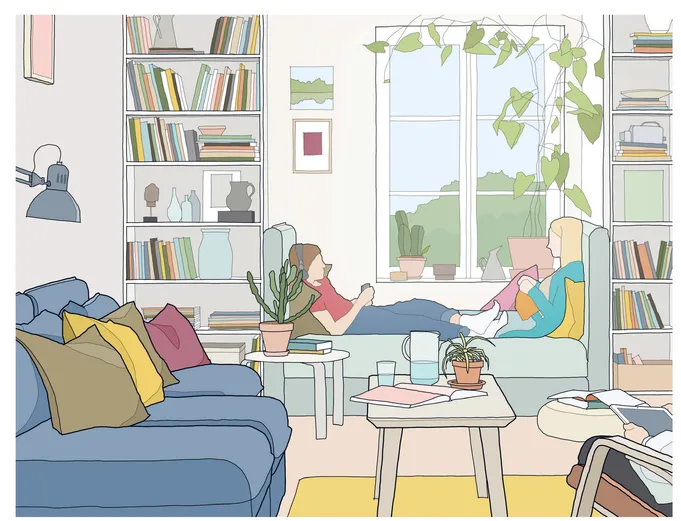
Figure 1.1: A window seat can be a cosy place to relax and socialise
Potential mental wellbeing benefits
► Improved sleep
► Feel-good chemical release
► Nature interaction
► Sense of privacy
► Mindfulness opportunity
Potential issues and considerations
► Space requirements
► Impact on layouts
I got the idea for writing this book when sitting on a window seat at my family home, so it seems fitting that it should be the first feature in this book. The window seat in question is something between a bench and is bed, with soft cushions and a beautiful view along a green Deyonshire valley. As I sat there reading, I realised just how many positive psychological benefits were provided by such a Simple design feature.
First, due to their inherent proximity to glazing, window seats offer more daylight than perhaps any other form of internal furniture. Not only does this tight offer all those unseen benefits - such as supporting Our circadian rhythms - but as the sun falls on skin it can provide a gentle warmth, giving us an instant sense of pleasure and positivity, as well as engaging our senses.
I am aware that in the introduction to this book I explained that it is vital for us to support all our design decisions with a strong base of evidence and that this might feel fairly anecdotal, but studies show this feeling of pleasure I experienced from the sunlight on my skin is fairly universal across humans. One such study found that people had higher serotonin levels on sunny days than on cloudy ones. Which may have caused that feeling of positivity, as it correlates with better mood, feelings of satisfaction and Calmness.7 There was certainly an element of being more mindful and more in touch with my senses too - something we will come on to explore later in this book.
Being in close proximity to the window also allowed me to experience how the light, sky and weather changed throughout the morning, providing a gentle reference to the passing of time. These dynamics of light and shadow are an element of biophilia - or love of nature - which we will also explore the benefits of later.8 Window seats can offer other biophilic interactions, too, such as the view on to trees, hedges and animals I was afforded in this instance. With the seat located snugly inside a nook, I was fortunate enough to have both a view out over the countryside and a good view back into the room itself, giving me a psychological sense of safety and a reassurance of my privacy.
Furthermore, when the sun's heat became too much, I was able to easily open the window and benefit from a cooling breeze, giving me an instant level of control over my personal thermal comfort. Added advantages of this were the pleasant smells that drifted in from the garden, along with the sound of bird's, engaging two more of my senses with further biophilic elements.
As you continue reading this, book, I encourage you to come back to the humble window seat, as it addresses many of the chapters: light, comfort, control and nature in particular, with social and aesthetic benefits too, if designed in the right way. While it may seem like a small element of a building, in a Sense the window seat encapsulates everything this book is about: using design moves or features that are often seemingly simple to create better places for the people who use them every day. By doing so, we can create moments of joy in the lives Of our buildings' occupants, and support better mental health throughout the population.
Design tips
1 Look to integrate other concepts from this book into a window seat; for example, by addressing human comfort through the materials specified, control by giving users autonomy over the thermal environment, or nature by locating it in the position with the best natural views.
2 Window seats can offer chances for storage within them too, reducing clutter and improving the internal appearance of a space. Where p...
Table of contents
Cover
Title
Copyright
Contents
Acknowledgements
About the author
Introduction
1 Light, natural and artificial
2 Comfort and materials
3 Control and autonomy
4 Nature and biophilia
5 Aesthetics and legibility
6 Activity and exercise
7 Social interaction, community and sense of place
Conclusions and further thoughts
References
Index
Trusted by 375,005 students
Access to over 1.5 million titles for a fair monthly price.
Study more efficiently using our study tools.
Frequently asked questions
Yes, you can cancel anytime from the Subscription tab in your account settings on the Perlego website. Your subscription will stay active until the end of your current billing period. Learn how to cancel your subscription
No, books cannot be downloaded as external files, such as PDFs, for use outside of Perlego. However, you can download books within the Perlego app for offline reading on mobile or tablet. Learn how to download books offline
Perlego offers two plans: Essential and Complete
Essential is ideal for learners and professionals who enjoy exploring a wide range of subjects. Access the Essential Library with 800,000+ trusted titles and best-sellers across business, personal growth, and the humanities. Includes unlimited reading time and Standard Read Aloud voice.
Complete: Perfect for advanced learners and researchers needing full, unrestricted access. Unlock 1.5M+ books across hundreds of subjects, including academic and specialized titles. The Complete Plan also includes advanced features like Premium Read Aloud and Research Assistant.
Both plans are available with monthly, semester, or annual billing cycles.
We are an online textbook subscription service, where you can get access to an entire online library for less than the price of a single book per month. With over 1.5 million books across 990+ topics, we’ve got you covered! Learn about our mission
Look out for the read-aloud symbol on your next book to see if you can listen to it. The read-aloud tool reads text aloud for you, highlighting the text as it is being read. You can pause it, speed it up and slow it down. Learn more about Read Aloud
Yes! You can use the Perlego app on both iOS and Android devices to read anytime, anywhere — even offline. Perfect for commutes or when you’re on the go. Please note we cannot support devices running on iOS 13 and Android 7 or earlier. Learn more about using the app
Yes, you can access The Happy Design Toolkit by Ben Channon in PDF and/or ePUB format, as well as other popular books in Architecture & Architecture Design. We have over 1.5 million books available in our catalogue for you to explore.