For many Americans, the emergence of a "porno chic" culture provided an opportunity to embrace the sexual revolution by attending a film like Deep Throat (1972) or leafing through an erotic magazine like Penthouse. By the 1980s, this pornographic moment was beaten back by the rise of Reagan-era political conservatism and feminist anti-pornography sentiment.
This volume places pornography at the heart of the 1970s American experience, exploring lesser-known forms of pornography from the decade, such as a new, vibrant gay porn genre; transsexual/female impersonator magazines; and pornography for new users, including women and conservative Christians. The collection also explores the rise of a culture of porn film auteurs and stars as well as the transition from film to video. As the corpus of adult ephemera of the 1970s disintegrates, much of it never to be professionally restored and archived, these essays seek to document what pornography meant to its producers and consumers at a pivotal moment.
In addition to the volume editors, contributors include Peter Alilunas, Gillian Frank, Elizabeth Fraterrigo, Lucas Hilderbrand, Nancy Semin Lingo, Laura Helen Marks, Nicholas Matte, Jennifer Christine Nash, Joe Rubin, Alex Warner, Leigh Ann Wheeler, and Greg Youmans.

eBook - ePub
Porno Chic and the Sex Wars
American Sexual Representation in the 1970s
- 366 pages
- English
- ePUB (mobile friendly)
- Available on iOS & Android
eBook - ePub
Porno Chic and the Sex Wars
American Sexual Representation in the 1970s
About this book
Information
Publisher
University of Massachusetts PressYear
2018Print ISBN
9781625342263
9781625342256
eBook ISBN
9781613764602
I
Films
Chapter 1
From Porno Chic to Porno Bleak
Representing the Urban Crisis in 1970s American Pornography
Whitney Strub
AN INEVITABLE SCENE FROM the hit 1974 vigilante film Death Wish perfectly crystallized pervasive media narratives of urban dread, as two sneering muggers swagger through a subway car, their menace accented by the flickering lights and grinding roar of the tracks. Passengers scurry away, leaving only the placid-looking Charles Bronson, on whom the creeps pull switchblades. The film solicits audience cheers when Bronson nonchalantly draws a gun, blowing them both away.
The scene’s inevitability rests on the subway’s role as mobile metonym for the much-bemoaned urban crisis of the 1970s. According to the reactionary narrative of Death Wish and companion films such as Dirty Harry (1971), the crisis stemmed from a breakdown in law and order, as petty bureaucrats and legally hamstrung police left men, women, and children unsafe on city streets, susceptible to the criminal intents of a wide array of muggers, rapists, and murderers. While liberals disputed the causes of the crisis, few in the mid-1970s questioned its existence, as urban public space took on dangerous hues in media representation. Nothing better symbolized the urban crisis than the New York City subway train, rickety, often graffiti-scarred, and—if movies like Death Wish; The French Connection (1971); The Taking of Pelham One Two Three (1974); and even Woody Allen’s Bananas (1971) were to be believed—lawless.
Film scholars have certainly noted the role of 1970s American film in propagating ominous visions of the city that “for the most part reproduced and validated the right’s discourse on the urban crisis while amplifying the suburban middle-class fears the discourse helped to generate,” as Steve Macek writes.1 For the most part, however, these analyses hew close to the Hollywood mainstream, or the opposition it drew from marginal but reputable sources, such as the independent black films Killer of Sheep (1977) and Bush Mama (1979).2 Less recognized are hardcore pornographic films such as Shaun Costello’s Fiona on Fire (1977), which virtually replicates the iconic Death Wish scene, this time on a New York commuter train. Everything from the mise-en-scène to the costuming matches the Bronson film, except this time when the creeps clear out the car, two women are left behind. Instead of a cathartic vigilante killing, what ensues is a brutal rape scene.
“Urban crisis” was a phrase that emanated out of macroeconomic trends such as deindustrialization that had begun as early as the 1950s but grew increasingly visible and even visceral in the wake of the urban unrest that had coursed across the nation in the late 1960s, most notoriously in Watts, Newark, and Detroit. In New York City, the primary base of early hardcore filmmaking, a heightened sense of economic and political crisis suffused the 1970s, as the city teetered on the brink of bankruptcy by 1975, while racial and ethnic tensions swelled. Meanwhile, Times Square, in midtown Manhattan, acted as a virtual open red-light district, besotted with lurid theater marquees promising to test the legal boundaries with ever-increasing explicitness. Indeed, the connection between the so-called urban crisis of the 1970s and the emergence of hardcore pornography is generally understood as a material or spatial one: as downtowns decayed in the face of white flight and disinvestment, the abandoned spaces provided ideal sites for the proliferation of small storefront adult movie theaters and the repurposing of older, now defunct cinemas, resulting in a smutty blight etched across the urban landscape.3
Fiona on Fire suggests another angle: that heterosexual smut frequently colluded in the reactionary narrativization of the urban crisis, joining the mass media in promoting images of a lawless urban jungle that reinforced middle-class white fear and hostility to the city. While theorizations of the genre emphasize its utopian formal qualities, in fact heterosexual porn of the era was often markedly dystopian diegetically, representationally, and also in its regularized depiction of sexual violence. Shooting guerilla-style and making vivid use of urban locations, 1970s heterosmut offered a vision of the urban crisis in which the erosion of the social contract provided sexual opportunities—but also grave sexual danger for women. From alleys to subways to apartments, city space was presented as rife with threats. In this sense, straight porn reinforced the dominant cultural narrative of the urban crisis being peddled by such Hollywood scare films as Dirty Harry and Death Wish.
As imbricated as straight porn was with the city, gay male pornography of the decade made even more striking use of urban space, but to very different ends. For gay men, any breakdown in a social order partly defined by violent, state-sponsored homophobia was an advance, and indeed, gay porn documented the historical moment in which once-furtive cruising spaces took public shape as affirmations of pride and visibility. From its very inception, gay porn offered a powerful counternarrative of the city. While the straight world indulged its urban anxieties in Death Wish and Fiona on Fire (fig. 1.1), the early gay hardcore film The Back Row (1972) reclaimed the subway car as a site of pleasure and desire. Here, stars Casey Donovan and George Payne drift from the Port Authority bus station, where they cruised one another through sustained eye contact, to the Times Square subway stop. For them, the empty car they enter is no threat but rather opportunity; the two men build erotic tension as they fondle their respective crotches enticingly, before exiting at the Christopher Street stop, delivered to gay-friendly terrain where they continue their erotic flirtation (figs. 1.2, 1.3).
In this essay I analyze the still underexamined body of pornographic 1970s cinema, using both pioneering early films that set the template for the narrative hardcore feature and also representative works from across the decade to show how straight porn often proved complicit in a reactionary cultural narrative whereas gay porn called into question the very heteronormative underpinnings of the “urban crisis” framework. I also suggest that contestations over the periodization of “the seventies” or the “Golden Age of Pornography” might take into account the use of urban space as a useful historical marker; between the secretive smut of earlier years, generally shot inside for legal reasons, and the reprivatized porn of the 1980s that followed the brutal new enclosure movement of the rising carceral state, the documentation, and indeed constitution of, public sex acts as a central historicized marker of this era.
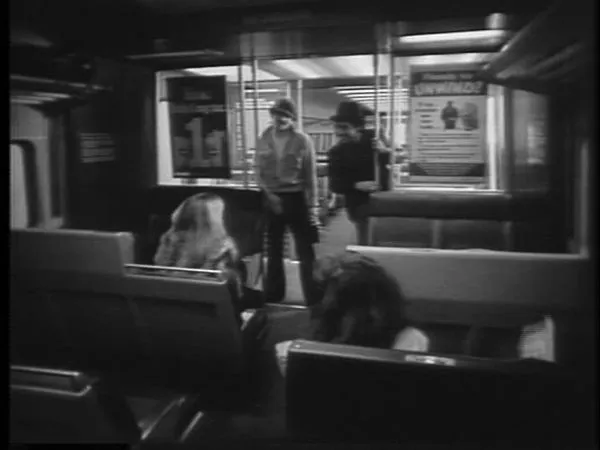
Figure 1.1. The commuter car as a site of sexual danger in Fiona on Fire (Shaun Costello, 1978).
The Urban Pornotrope
Thomas Jefferson failed to chart the future with his ideal of the agrarian yeoman farmer, but the dyspeptic founding father did set the tone for subsequent visions of urbanism, likening cities to degeneracy, cankers, and sores in Notes on the State of Virginia (1787) and calling them “pestilential to the morals, the health and the liberties of man” in an 1800 letter.4 As the industrial revolution helped spur urbanization, cultural representations played a key role in keeping Jefferson’s animosity alive. While cities were indeed sites of crime, poverty, squalor, inequality, and pollution, sensationalized sexual representations often served as one of the most visceral venues for antiurbanism. The penny press itself took shape largely around the 1836 murder of prostitute Helen Jewett; salacious pamphlets such as Prostitution Exposed (1839) doubled as exposés and guidebooks; the dime novels of George Thompson and George Lippard mixed class consciousness with lurid reveling in urban debauchery, leading one scholar to term their books, with such titles as City Crimes and Venus in Boston, “urban porno-gothic”; and even reform-minded serious literature such as Stephen Crane’s Maggie: A Girl of the Streets (1893) used a young woman’s descent into prostitution to chart the ravages of the city.5
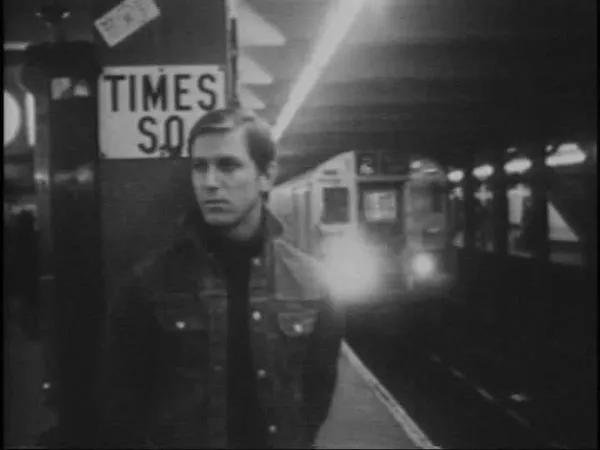
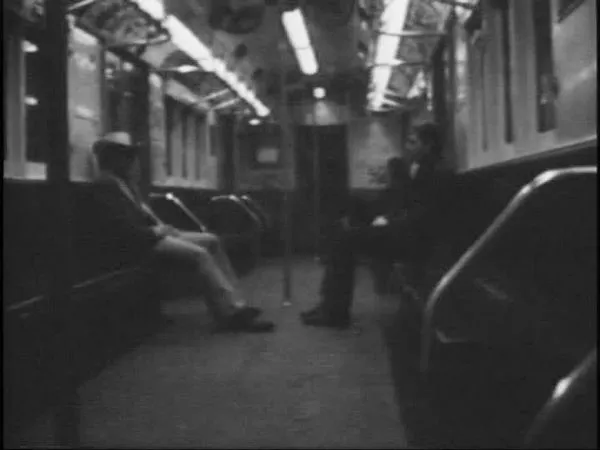
Figures 1.2 and 1.3. The subway system as gay erotic nexus in The Back Row (Jerry Douglas, 1972).
By the time the cinema emerged at the dawn of the twentieth century, these urban pornotropes informed its very development. Early nickelodeon features built on a specifically urban mode of spectatorship. The “white slave” panic of the 1910s coincided with the birth of the modern narrative feature film, with The Traffic in Souls (1913) helping shape cinematic grammar even as it depicted New York City’s streets as rife with nefarious sex traffickers who sought to abduct innocent white women and coerce them into a life of “iniquity,” as the film has it.6 While graphic stag films also accompanied more socially acceptable movies from the birth of the medium on, their illegality pulled them away from actual city space; the exploitation films whose prurient charge drew audiences all the way into the 1960s, meanwhile, further perpetuated antiurbanism in their various narratives of sin, drugs, and death.7
Events of the late 1960s helped solidify what we might call the urban pornotrope, a symbolic fusion of city space and sexual depravity. Liberalization of obscenity law coincided with urban unrest and disinvestment in American cities to open new space for pornography-oriented businesses to take root. Adult bookstores and storefront theaters proliferated as traditional shops moved out and downtowns became economic deserts. But the urban pornotrope was inscribed textually as well, most visibly in the grindhouse exploitation films that often depicted a nightmarish Times Square even as they played it. Tawdry works such as The Sex Killer (1967) and The Curse of Her Flesh (1968) suggested urban chaos driven by dark desires, a sexual noir in which the depravity was linked visually to the stark location shooting that left “sexploitation” films “inextricably tied” to the concrete geography of Times Square.8
When hardcore porn moved aboveground in 1970, as liberalized obscenity laws and a relaxation in public sexual mores made even greater openness possible, its pioneering works proved insistently urban. Mona: The Virgin Nymph, often regarded as the first hardcore narrative feature film, begins in a city park and moves quickly to a Los Angeles sidewalk, where heroine Mona approaches a passing man with a brazen inquiry: “Do you want me to suck your cock?” The act itself is completed in an adjacent alley. Tomatoes, another hardcore front-runner, foregrounds its urbanism as well, opening with a man walking among sleek downtown San Francisco corporate towers (fig. 1.4). Even the film’s opening credits were painted on the sides of buildings and tacked to public bulletin boards. Finally, the New York City–lensed Bacchanale featured an apparitional female lead drifting past tenement buildings, their intricate fire escape ladders a surreal geometry for the roving camera.
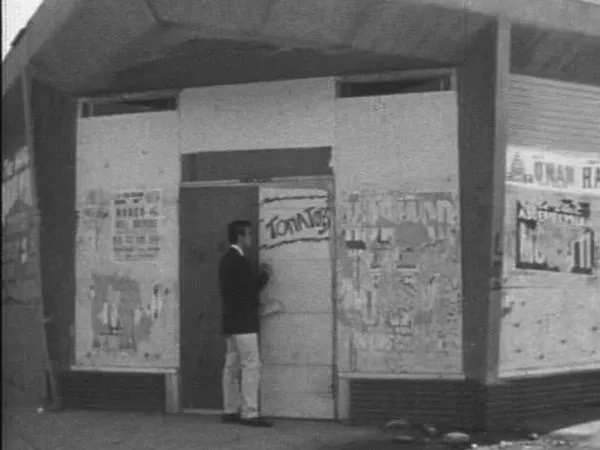
Figure 1.4. Urban decay literally enables hard core in Tomatoes (Joel Roberts, 1970).
Not all heterosmut relied on the city; the genre also had its share of escapist fare, pastoral drama, and futuristic science fiction. But so embedded was the urban pornotrope that all three of the defini-tive “porno chic” films of 1972–73 employed it. Deep Throat, the most famous porn film of all time, began with a protracted credit sequence of Linda Lovelace driving through Miami, set against the city sky-line. Behind the Green Door exuded its San Francisco setting throughout. Despite being set primarily in Limbo en route to Hell, even the existentialist The Devil in Miss Jones nodded to New York in its opening suicide scene, where an open window reveals a busy street several floors below as Georgina Spelvin’s title character prep...
Table of contents
- Cover
- Title Page
- Copyright Page
- Contents
- Acknowledgments
- Introduction
- Part I. Films
- Part II. Magazines / Print Culture
- Part III. Political Contexts of Pornography
- Part IV. Preserving Pornography: History, Memory, Legacy
- Notes on Contributors
- Index
Trusted by 375,005 students
Access to over 1.5 million titles for a fair monthly price.
Study more efficiently using our study tools.
Frequently asked questions
Yes, you can cancel anytime from the Subscription tab in your account settings on the Perlego website. Your subscription will stay active until the end of your current billing period. Learn how to cancel your subscription
No, books cannot be downloaded as external files, such as PDFs, for use outside of Perlego. However, you can download books within the Perlego app for offline reading on mobile or tablet. Learn how to download books offline
Perlego offers two plans: Essential and Complete
- Essential is ideal for learners and professionals who enjoy exploring a wide range of subjects. Access the Essential Library with 800,000+ trusted titles and best-sellers across business, personal growth, and the humanities. Includes unlimited reading time and Standard Read Aloud voice.
- Complete: Perfect for advanced learners and researchers needing full, unrestricted access. Unlock 1.5M+ books across hundreds of subjects, including academic and specialized titles. The Complete Plan also includes advanced features like Premium Read Aloud and Research Assistant.
We are an online textbook subscription service, where you can get access to an entire online library for less than the price of a single book per month. With over 1.5 million books across 990+ topics, we’ve got you covered! Learn about our mission
Look out for the read-aloud symbol on your next book to see if you can listen to it. The read-aloud tool reads text aloud for you, highlighting the text as it is being read. You can pause it, speed it up and slow it down. Learn more about Read Aloud
Yes! You can use the Perlego app on both iOS and Android devices to read anytime, anywhere — even offline. Perfect for commutes or when you’re on the go.
Please note we cannot support devices running on iOS 13 and Android 7 or earlier. Learn more about using the app
Please note we cannot support devices running on iOS 13 and Android 7 or earlier. Learn more about using the app
Yes, you can access Porno Chic and the Sex Wars by Carolyn Bronstein, Whitney Strub, Carolyn Bronstein,Whitney Strub in PDF and/or ePUB format, as well as other popular books in Social Sciences & Gender Studies. We have over 1.5 million books available in our catalogue for you to explore.