eBook - ePub
Foil and Sabre - A Grammar of Fencing in Detailed Lessons for the Professor and Pupil
- 352 pages
- English
- ePUB (mobile friendly)
- Available on iOS & Android
eBook - ePub
Foil and Sabre - A Grammar of Fencing in Detailed Lessons for the Professor and Pupil
About this book
First published in 1892, "Foil and Sabre" is a comprehensive, step-by-step guide to fencing. It aims to provide the student with a complete course of instruction in the contemporary European fencing style, and does so plainly and with the aid of simple illustrations. This volume is perfect for beginners and experienced fencers alike, and it is not to be missed by collectors of vintage fencing literature. Contents include: "Historical Outline of Fencing in France", "The School at Joinville-le-Pont", "The New Academy of Arms", "Physical Development", "Instruction", "Preliminary Definitions", "Manner of Holding the Foil", "Position of Attention", "The Position of On Guard", "The Advance. La Marche", "The Retreat. La Retraite", etc. Many vintage books such as this are becoming increasingly scarce and expensive. We are republishing this volume now in an affordable, modern, high-quality edition complete with a specially commissioned new introduction on fencing.
Information
Print ISBN
9781473332829
9781528773980
PART I.

PRELIMINARY DEFINITIONS.
THE foil is composed of two portions,—the Blade and the Handle, each subdivided into several parts. The blade, quadrangular in shape, is of steel, and for convenience of instruction and reference is divided into three imaginary portions of equal length,—
1. The Point, or “Feeble,” comprising the first third, from the tip, or button, downward toward the guard, and is the part by which the touch is made.
2. The Heel, or “Forte,” that portion extending from the hilt upward one third distance to the button, and is the part with which the parries are executed.
3. The Middle comprises the middle third of the blade, and is the part which touches the opponent’s weapon in the engagement.
That portion of the steel which passes from the guard through the grip to the pommel is called the Tongue.
The Handle proper is divided thus:—
1. The Guard between the blade and the hand is supposed to shield the latter.
2. The Grip, a piece of wood ordinarily wrapped with cord, through which the tongue passes.
3. The Pommel, a piece of brass or steel forming the extreme butt of the handle.
Different sizes of blades are marked by a stamped figure. Nos. 4 and 5 are most in use. A properly balanced foil should poise evenly at a point about one inch from the guard. The proper balance is obtained by regulating the weight of the pommel. Great importance attaches to the choice of a blade and to the manner in which it is mounted. Fencing-masters for this reason generally prefer to mount their own weapons.
Manner of Holding the Foil.—The foil being placed in your hand, place your thumb upward on the convex side of the handle, nearly touching the guard; the fingers are together underneath.
The thumb and index finger largely monopolize the management of the foil, while the other fingers take part more emphatically at the moment of parrying. A tight grasp by all the fingers would render the articulations heavy, and the benumbed hand would lose its sensitiveness and delicacy of touch, which, as I have said, is such an essential quality in a good fencer.
Position of Attention.—Grasp the handle lightly according to the prescribed rules; place the feet at right angles with each other, the head erect, the right arm and foil extended downward on the right side, the button four inches from the floor, the left arm hanging down naturally, the body placed sideways in order to form a profile against your opponent. (See fig. 27.)
Position of On Guard.—1. Being in position “attention,” elevate the arm and foil, both in line and extended toward the adversary, the hand at the height of the eye. (See fig. 1.)
2. Lower the arm and foil till the button is at a distance of four inches from the floor.
3. Swing the foil down, and continue the point around to the left side of the body until the blade reaches a horizontal position in front of the thighs, the hand becoming reversed, nails downward; at the same time place the fingers of the left hand together along the blade, palm up, and nails touching the guard.
4. The foil and both hands, maintaining the same relative positions, are carried above the head, until the arms are straight, keeping the blade horizontal and close to the body in its ascent.
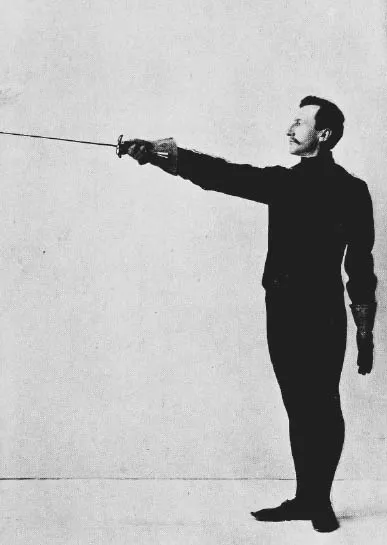
FIG. 1. FIRST MOVEMENT TO COME ON GUARD.
5. Rebend your arms; let the left arm fall to a curved position behind the head and the hand slightly above the head; simultaneously bring the right hand down in the direction of the opponent and place it at the height of your right chest, the thumb upwards and the arm curved, the elbow well in and at a distance of eight inches from the body. The point of your sword must be in line with the adversary’s eye. (See fig. 2.)
6. Keeping feet in their position at right angles, bend your legs, separating them at the knees, care being taken to preserve the poise of the body.
7. Shift the whole weight of your body on to the left leg; advance the right foot to a convenient distance and place it on the ground in a direct line from your left heel toward the opponent. (See fig. 3.) In this position, keep the weight of the body slightly more on the left leg, and the right knee in a perpendicular line above the right instep.
The Advance.—Being placed “On Guard,” advance the right foot to a convenient distance, and let the left foot follow immediately after with same length of step, care being taken not to derange the position of the body nor that of the hand. Both steps are taken with the greatest rapidity, but the right foot always leads the left.
The Retreat.—Being placed “On Guard,” step the left foot backward; and as near instantaneously as possible let the right foot follow, care being taken not to derange the position of the body nor that of the hand; the left foot must always step backward before the right.
The Calls.—Strike the floor sharply twice or once with the right foot, but do not derange the position of the body. This movement is executed in order to ascertain whether the equilibrium is preserved.
Extension of the Arm.—Develop your arm to its full extent without any jerky or rough movement of the body, especially of the shoulder. The arm, wrist, and hand form a straight line with the foil, at a height enabling you to look over it, the hand and foil being on a level with the shoulder. (See fig. 4.)
In order to resume the original position, bend the arm without a jerk, replace it in line with your right chest, the elbow at a distance of eight inches from the body and in line with it.
The Lunge.—The arm being in Extension as above, suddenly straighten out the left leg and simultaneously carry forward, to a convenient distance, the right foot and place it flat on the floor, the knee in a perpendicular line above the instep. In making this step forward, the right foot should not be raised more than one inch from the floor. Simultaneously as the body is going forward on this lunge, straighten and lower the left arm to a position four inches above the left leg. This movement forms a counter balance to the right hand’s attitude. All these movements must be executed correctly and simultaneously in order to ensure a firm attitude. (See fig. 5.)
The return to “On Guard” is executed by bending the left leg briskly, and at the same time giving strong impulsion backward with the right leg; throw the left arm up and carry the weight of the body back on to the left leg; lastly and almost simultaneously replace the right foot in its original position and the weight of the body largely upon the left leg.
Recover Forward.—The action of recovering forward is the return to “Attention” from “On Guard.”
1. Extend the right arm and foil forward, the hand in line with the eye; simultaneously lower the left hand to the left side.
2. Draw the foot that is in the rear up to the one which is in front, straightening the legs, and stand thus erect. (See fig. 1.)
Recover Backward.—1. Same as for recovering forward.
2. Draw the foot that is in advance back to the one in rear, straightening the legs, and stand thus erect. (See fig. 1.)
The Salute.—1. Having ended the movement of recovering backward or forward, carry the hand around to a position in front of the throat, with the blade vertical before the face, the hilt at the centre of the chin, knuckles turned outward. (See fig. 34.)
2. Lower the foil and extend the arm, nails down in tierce, the point of the blade four inches from the floor and the whole slightly to the right. (See fig. 35.)
The different Lines.—The different lines which exist in fencing constitute the spaces which the blade covers when “On Guard.” They number four, and are thus classified:—
1. The Sixte Line, otherwise named Tierce, Right, or Outside Line, that part of the body which is on the right side of the blade.
2. The Quarte Line, otherwise named Left, or Inside Line, that part of the body which is on the left side of the blade.
3. The High Line, or Prime, that part of the body above the hilt of the blade.
4. The Low Line, or Seconde, that part of the body under the hilt of the blade. (See fig. 6.)
Engagements are effected only in the Quarte and Sixte Lines, attacks only in the High and Low Lines.
In order to simplify the instruction I have classed them as follows:—
LINES OF “ENGAGEMENTS.”
Line of Quarte, left side of the blade.
Line of Sixte, right side of the blade.
LINES OF “ATTACKS.”
Above the blade, High Line.
Below the blade, Low Line.
Thus t...
Table of contents
- Cover
- Title
- Dedication
- Author’s Preface
- Editor’s Preface
- Contents
- Illustrations
- Historical Outline of Fencing in France
- The School at Joinville-le-Pont
- The new Academy of Arms
- Physical Development
- Instruction
- Part I.
- Part II.
- Part III.
- Part IV.
- Index
Trusted by 375,005 students
Access to over 1.5 million titles for a fair monthly price.
Study more efficiently using our study tools.