From the emergence of department stores in the late 19th century to the financial disasters of the years following the end of World War I, the history of large-scale retailing in Germany was dominated by a pioneering generation of German-Jewish entrepreneurs who found fortune and influence only to have their livelihoods taken by Hitler and the Nazis in the 1930s.
Drawing on a range of archival sources and private collections, The Kaiser, Hitler and the Jewish Department Store reveals how, contrary to Nazi claims, Jewish-owned department stores were decent employers, popular with customers, and well integrated into the economy. In fact, such institutions were so integral to German society that, when Hitler came to power in 1933, the Nazis were forced to abandon their pledge to abolish them. As this revelatory history argues, the end of the Jewish-run store cannot solely be attributed to the rise of antisemitism: it was also the consequence of financial mismanagement and the indifference of the German people.
John F. Mueller reveals the German-Jewish department store as a powerful force in society and politics as well as a leader in architecture and design. His book challenges common assumptions about the relationship between consumer culture, the German-Jewish business community and the rise of Nazism, providing fresh insights into the social history of modern Germany.
- 256 pages
- English
- ePUB (mobile friendly)
- Available on iOS & Android
eBook - ePub
About this book
Information
1 Foundation: 1834–90 ‘Travelling Sons of David’
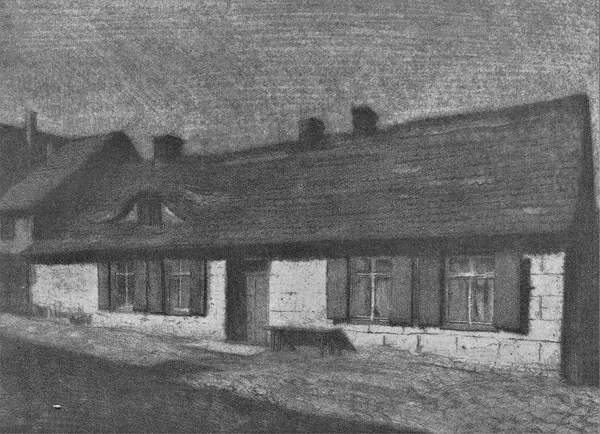
Figure 1.1 The humble provincial birthplace of Oscar Tietz, who would have a palace-like store built in Berlin. © Author.
Before they were ‘department store kings’, they were ‘Travelling Sons of David’.1 An interconnected group of predominantly Jewish families, who were hawkers of trinkets at the beginning of the nineteenth century, emerged within the course of the century to become the retailers of the German Empire, serving every strata of society – from the labouring woman to the Emperor himself. This chapter will demonstrate how the formation of the German Empire allowed Jewish men and women to establish businesses selling essential goods in every corner of Germany and how in doing so they made themselves indispensable to the burgeoning population by becoming providers and to the growing economy as clients. We will see how the population were dependent on the stores – as the stores were dependent on the consumer – and how the department stores were dependent on manufacturing industry for their goods – as the industry was on the department stores to buy these goods.
Importantly, this chapter will introduce us to the entrepreneurial dynasties and their extraordinary rise. It will show the relationship between the origins of department stores and the religious identities of the proprietors, and thus establish the important link between the nature of Germany’s rooted provincial identity and Jewish retailers. By charting the geographic locations and expansion of department stores in their early stages, we can fully appreciate the diversity of the landscape Jewish businesspeople were serving and the way they became embedded in every town and city. We will see how, in these places, business people, customers, local authorities and the public in general worked together to establish these stores as well as the hard work put in by these store owners and their experiences in living among the local communities. The origins of the great department stores of Berlin, Hamburg or Munich lay in the German province, and they remained of primary importance to the nationally operating businesses throughout the period. In the very month Hitler took power in 1933, the German Federation of Department Stores (Verband Deutscher Waren- und Kaufhäuser) noted the following in their periodical:
In small towns the store always needs to feel more personal than in large towns. Of primary importance are the quality of products, the management and the location of the store. In small towns the most important factor is the personality of the owner or branch manager. Trust in the owner ensures custom; it is the fundament of the whole business … There are still families which have, for generations, purchased their wares from the same department store.2
This trust was, as we will see, built in the 1880s.
The rise of these Jewish family businesses was in parallel with that of Germany as a nation and an economy. At the beginning of the nineteenth century, the area roughly sandwiched between France and Russia was a collection of small states, all of which shared German as their language. These states included Prussia, ancient Hanseatic cities and tiny principalities such as Lippe, Oldenburg and Schwarzburg-Sonderhausen. The vast majority of these mainly monarchical states had their own written constitutions, independent judiciary, the right to assemble, some form of freedom of worship and little censorship. Moving people, goods and services across principalities was a nightmare, especially if one was Jewish, and treated very differently in each state.
The first tentative steps towards Germany uniting into one single economic area were made in 1834 when the German Customs Union was established. Since the early nineteenth century, capital markets – the raising and moving of money to invest – had become more mobile. This was driven by the building of the first railway lines, improvements in the postal system and the introduction of the telegraph service. Communication and exchange of money and goods became easier for those willing to agree on shared terms of reference. The Customs Union was a way in which these advances could be enjoyed across a large part of central Europe without being hampered by the bureaucracy of the myriad of German states. The borders of the Customs Union were roughly those the German Empire would have (without Luxembourg and Alsace-Lorraine) until the end of the Second World War. A British traveller in 1839 saw the potential of the Customs Union for Germany and the disadvantages this had for his own country, describing it as ‘uncourteous [sic] of the Germans to have united in a convention virtually excluding the manufacturers of a liberal nation which regards them so favourably as England does’.3 The union was headed by Prussia which took full advantage of the easy access to steel and coal the scheme gave them, leaving the traditional principal state in the German family of nations, Austria, out of this economic innovation.
The German War of 1866 finally established Prussia as the most powerful nation in central Europe, sidelining the Austrians as leaders of the German-speaking world. The loose German Federation under their Austrian headship was dissolved, and Prussia established the North German Federation instead. The southern kingdoms were excluded until they joined forces with the northern Germans against the French in 1871. Baden, willingly, Württemberg, indifferently, and Bavaria, grudgingly, accepted Prussian leadership during the Franco-Prussian War. The headship of Prussia was not just because of ‘the political weight which her position and extent naturally give’, as our British traveller noted, but also due to ‘a strong moral influence, arising from the just and amiable character of her king, as well as the intelligence of her government’.4 The King of Prussia Wilhelm I was declared the German Emperor.
Although the new capital of the Empire was Berlin and Prussia would dominate politics, considerable power was left with the other German states to regulate most of their internal affairs as they pleased, with their own parliaments, police forces, schooling systems and economic policy. The constitution of the German Empire allowed for a joint parliament, elected by universal male suffrage. The Evangelical Church (a mixture of Lutheranism and Calvinism) was the established church of Prussia, but Jews were granted the same legal rights as non-Jews across the Empire, even if in practice considerable discrimination continued. Real power lay directly with the Emperor, who could appoint ministers at will. In effect, however, as Wilhelm I saw himself foremost as the King of Prussia rather than the German Emperor, it was Prince Otto von Bismarck who as chancellor held the reins of power.
‘Concerning what will then happen one feels curious. For the German nation is still young, and its maturity is of importance to the world. They are a good people, a lovable people, who should help much to make the world better’, Jerome K. Jerome noted during his visit to the new nation.5 A powerful state had been formed in the centre of Europe within a relatively short space of time. It had unified borders, laws, currency, weights and measurements, as well as railway and telecommunication systems. The increasingly strong economy of the German states received a huge boost from the single market. By the end of the century, Germany’s industrial production rose by 100 per cent, in comparison to only 40 per cent in Britain. While investments reduced in other countries during this period, the new German Empire, bolstered possibly by the optimism of its recent foundation, increased them. The electricity network was expanded, telephone exchanges installed and the railways began reaching even remote areas of the country.
The state could even afford to increase investment in social security, mainly to attempt, unsuccessfully, to halt the rise of the German Social Democratic Party (Sozialdemokratische Partei Deutschlands, SPD), a socialist establishment. The SPD’s influence and ‘radical views’ resulted in many of their members being imprisoned, entirely legally under the German system in which criticism of authority could land you in jail.6 The SPD was to become one of the most politically powerful forces in Germany as it served the growing working classes. In 1875, the German population was 37 million and by 1910 it was 62.5 million, of which many laboured in the industrial cities that replaced provincial towns. The vague terms ‘urbanization’ and ‘industrialization’ are used to explain both the explosion of the population and its successful housing, feeding and clothing. The growth of industrial output and the subsequent expansion of cities would not have been possible without mass-producing food, clothing and hygiene articles and providing these at reasonable cost to the population.
Before mass manufacture, one bought the items one needed for everyday life from the people who produced them. Most wares were made individually and bespoke for the customer. The few things that were manufactured from early on, such as cloth, could be bought from a merchant or directly from the workshop. Pedlars, often Jews as it was a living they were permitted to earn, offered the few things that were made in bulk as door-to-door salesmen. In the mid-nineteenth century, pegs, pins and little practical haberdashery items that the frugal housewife needed and that could easily be transported were the mainstay of their trade. Shops at this time were described as dark dens, above which the family of the retailer lived; the purpose of the enterprise was subsistence of the family, and not profit.7 ‘Entering, for instance, one of the larger butcher’s shops … one finds oneself transported into a patriarchal milieu, as it has been able to survive in the same form for hundreds of years and more.’8 The private and public spheres overlapped. The serving of customers and the administration of the business were neither separated nor specialized. The office would open straight out into the shop and only stairs would divide the master’s sitting room from the courtyard where the apprentices would work. In these dimly lit, poorly designed shops, the retailer, his son or an assistant girl would sell items they had produced on the premises or purchased from a merchant as stock. The price was dependent as much on who was buying as on who was selling. Payment was hardly ever by cash; an account was kept to be settled at intervals9 – hardly an appealing prospect for the customer.
This type of shop had to rely on suppliers, not just for their wares, but also for the credit they could give them. Independent companies usually had very little capital, so they bought their merchandise with credit, paying it off once the items were sold and then purchasing new ones with yet more credit. In practice, this meant a shopkeeper purchased products off a wholesaler, a middleman between producer and retailer, promising him payment once the goods were sold. Once the retailer had managed to sell them, he paid off the wholesaler, purchasing more items with a fresh credit. The middlemen would naturally mark the items up as they passed through his hands. Hence, small retailers were often utterly dependent on their supplier.10 The profit margins were very tight for such retailers; they had little ready cash for investments, could not choose their products themselves and could not react quickly to changing trends or needs of the population. There was no spare cash for investment. During the course of the nineteenth century, this form of retailing, practiced by many, became utterly out of step with Germany’s development and wholly incapable of supplying the working population with clothing or sustenance. It was also not a secure means of making a living. And yet, shopkee...
Table of contents
- Cover
- Half-title Page
- Title Page
- Contents
- List of Illustrations
- Acknowledgements
- Introduction
- 1 Foundation: 1834–90 ‘Travelling Sons of David’
- 2 Expansion: 1890–1900 ‘Each Sale – A Piece of Renown’
- 3 Labour: 1890–1930 ‘Qualified Young Ladies’
- 4 Apogee: 1900–14 ‘The Kaiser Is Impressed’
- 5 Survival: 1914–29 ‘Dear Corner of Homeland’
- 6 Decline: 1929–32 ‘Voices of Envy’
- 7 Fall: 1933–9 ‘Two Million Hitler Portraits’
- Conclusion
- Notes
- Bibliography
- Index
- Copyright Page
Trusted by 375,005 students
Access to over 1.5 million titles for a fair monthly price.
Study more efficiently using our study tools.
Frequently asked questions
Yes, you can cancel anytime from the Subscription tab in your account settings on the Perlego website. Your subscription will stay active until the end of your current billing period. Learn how to cancel your subscription
No, books cannot be downloaded as external files, such as PDFs, for use outside of Perlego. However, you can download books within the Perlego app for offline reading on mobile or tablet. Learn how to download books offline
Perlego offers two plans: Essential and Complete
- Essential is ideal for learners and professionals who enjoy exploring a wide range of subjects. Access the Essential Library with 800,000+ trusted titles and best-sellers across business, personal growth, and the humanities. Includes unlimited reading time and Standard Read Aloud voice.
- Complete: Perfect for advanced learners and researchers needing full, unrestricted access. Unlock 1.5M+ books across hundreds of subjects, including academic and specialized titles. The Complete Plan also includes advanced features like Premium Read Aloud and Research Assistant.
We are an online textbook subscription service, where you can get access to an entire online library for less than the price of a single book per month. With over 1.5 million books across 990+ topics, we’ve got you covered! Learn about our mission
Look out for the read-aloud symbol on your next book to see if you can listen to it. The read-aloud tool reads text aloud for you, highlighting the text as it is being read. You can pause it, speed it up and slow it down. Learn more about Read Aloud
Yes! You can use the Perlego app on both iOS and Android devices to read anytime, anywhere — even offline. Perfect for commutes or when you’re on the go.
Please note we cannot support devices running on iOS 13 and Android 7 or earlier. Learn more about using the app
Please note we cannot support devices running on iOS 13 and Android 7 or earlier. Learn more about using the app
Yes, you can access The Kaiser, Hitler and the Jewish Department Store by John F. Mueller in PDF and/or ePUB format, as well as other popular books in History & 20th Century History. We have over 1.5 million books available in our catalogue for you to explore.