![]()
Part One: Principles
![]()
PATCHES
Landscape ecology principles are listed and illustrated below in four sections: Patches; Edges; Corridors; and Mosaics. Each section begins with an introduction to important terms and concepts, and ends with a list of key references. For additional references please refer to the bibliography.
In a densely populated world plant and animal habitat increasingly appears in scattered patches. Ecologists first considered habitat patches analogous with islands, but soon largely abandoned the analogy due to the major differences between the sea and the matrix of countryside and suburban developments surrounding a “terrestrial” patch. Patches, however, do exhibit a degree of isolation, the effect and severity being dependent on the species present.
Four origins or causes of vegetation patches are usefully recognized: remnants (e.g., areas remaining from an earlier more extensive type, such as woodlots in agricultural areas); introduced (e.g., a new suburban development in an agricultural area, or a small pasture within a forest); disturbance (e.g., a burned area in a forest, or a spot devastated by a severe windstorm); and environmental resources (e.g., wetlands in a city, or oases in a desert).
Patches are analyzed below and differentiated in terms of (1) size, (2) number, and (3) location. Patches may be as large as a national forest, or as small as a single tree. Patches may be numerous in a landscape, such as avalanches or rock slides on a mountainside, or be scarce such as oases in a desert. The location of patches may be beneficial or deleterious to the optimal functioning of a landscape. For example, small, remnant forest patches between large reserves in an agricultural matrix can be beneficial. In contrast, a landfill located adjacent to a sensitive wetland may have a negative impact on the ecological health of the landscape.
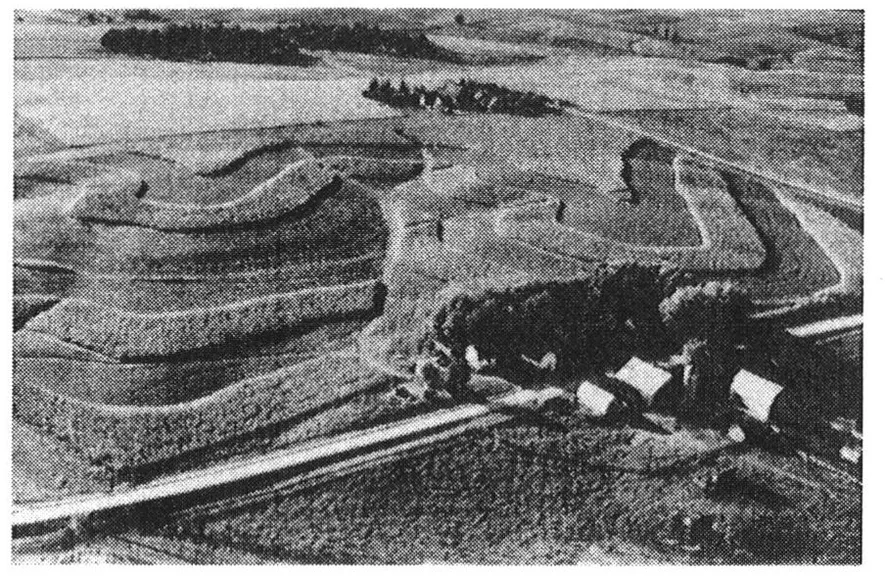
Farmstead woodlots and wheat,
Minnesota, U.S.A., USDA
Soil Conservation Service photo.
PATCH SIZE: LARGE OR SMALL?
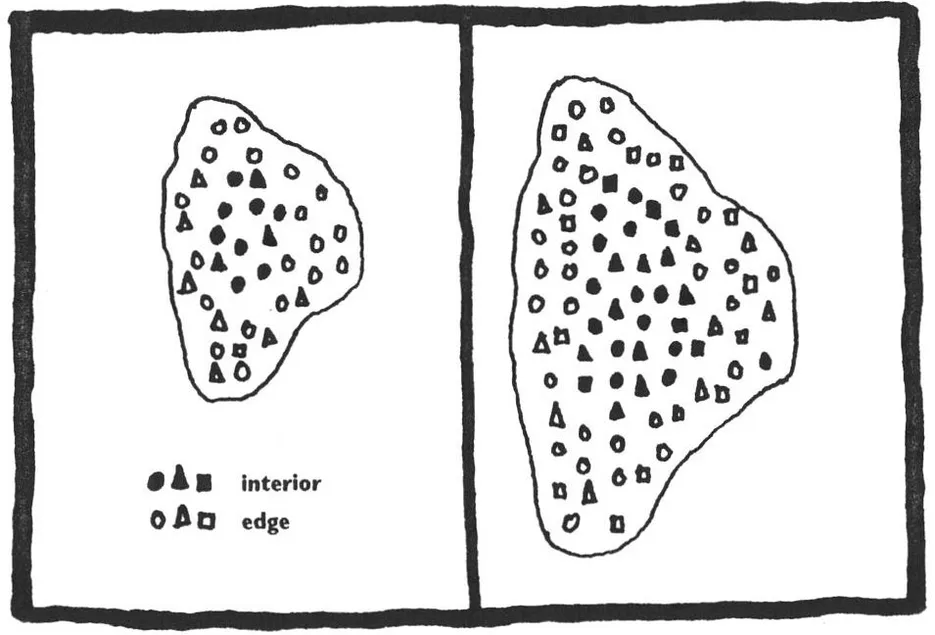
P1. Edge habitat and species
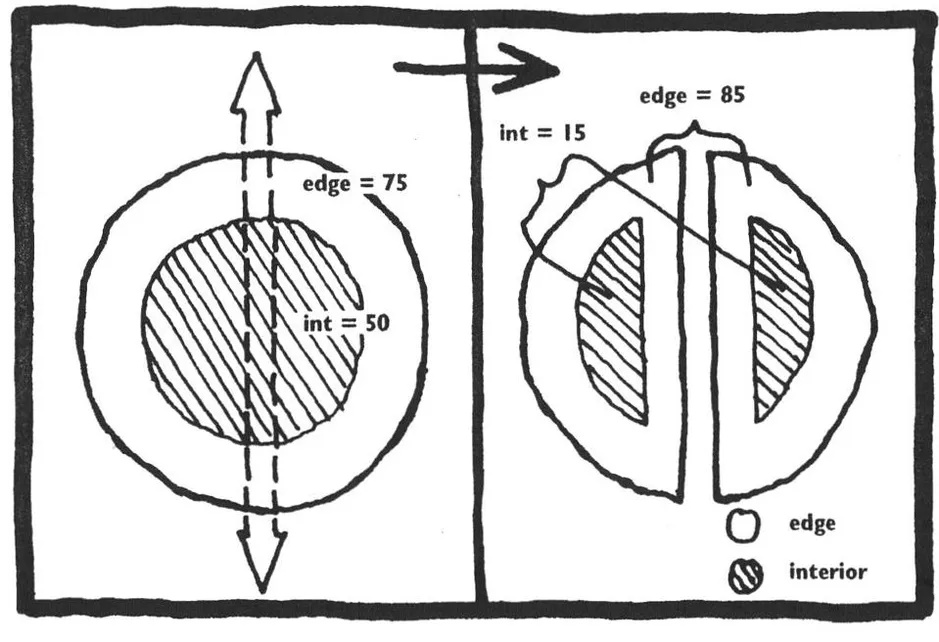
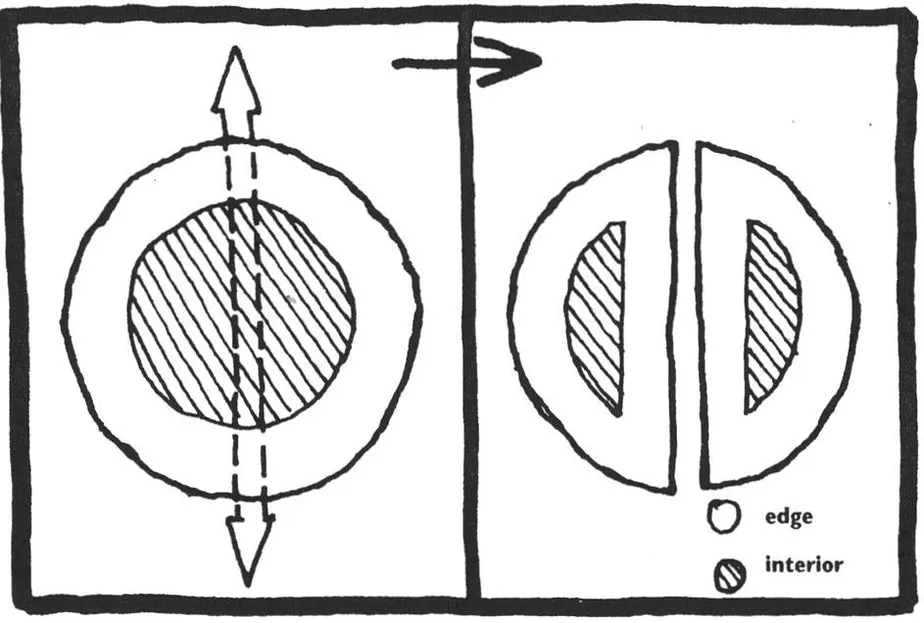
Dividing a large patch into two smaller ones creates additional edge habitat, leading to higher population sizes and a slightly greater number of edge species, which are often common or widespread in the landscape.
P2. Interior habitat and species
Dividing a large patch into two smaller ones removes interior habitat, leading to reduced population sizes and number of interior species, which are often of conservation importance.
P3. Local extinction probability
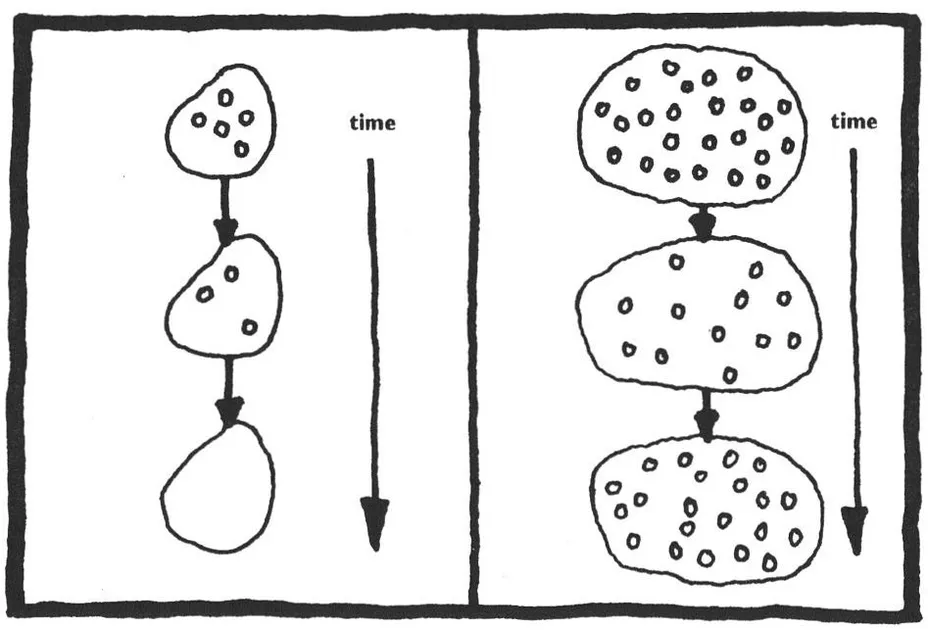
A larger patch normally has a larger population size for a given species than a smaller patch, making it less likely that the species (which fluctuates in population size) will go locally extinct in the larger patch.
P4. Extinction
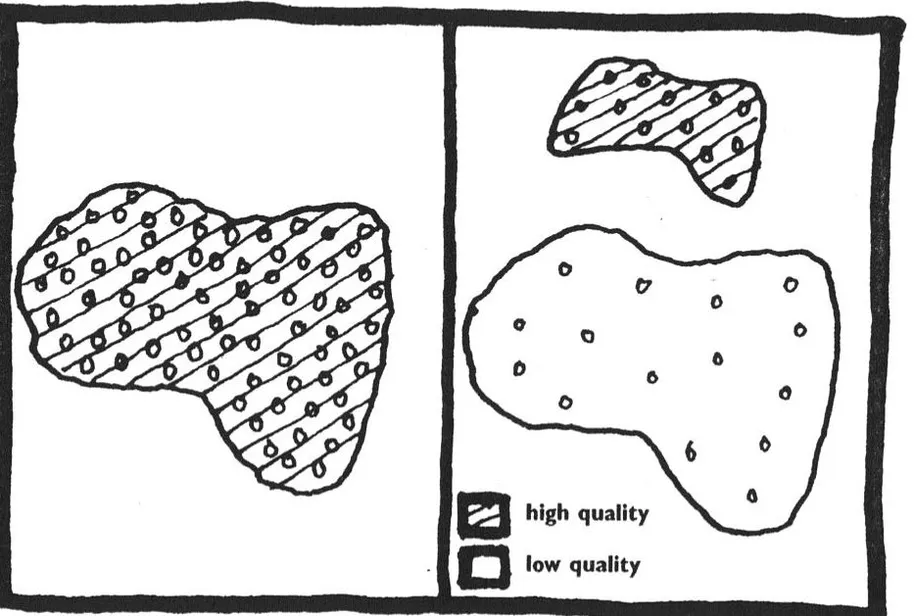
The probability of a species becoming locally extinct is greater if a patch is small, or of low habitat quality.
P5. Habitat diversity
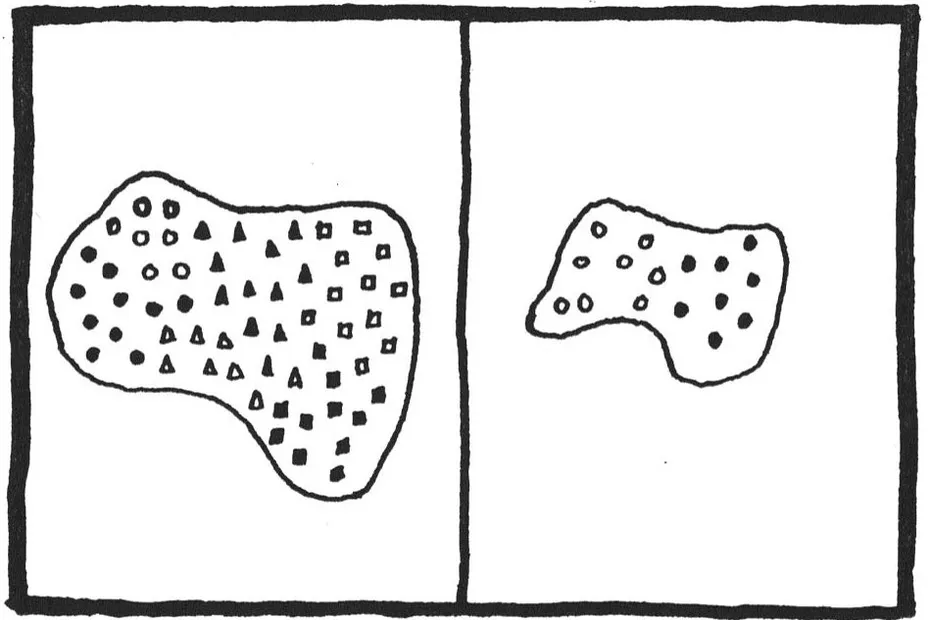
A large patch is likely to have more habitats present, and therefore contain a greater number of species than a small patch.
P6. Barrier to disturbance
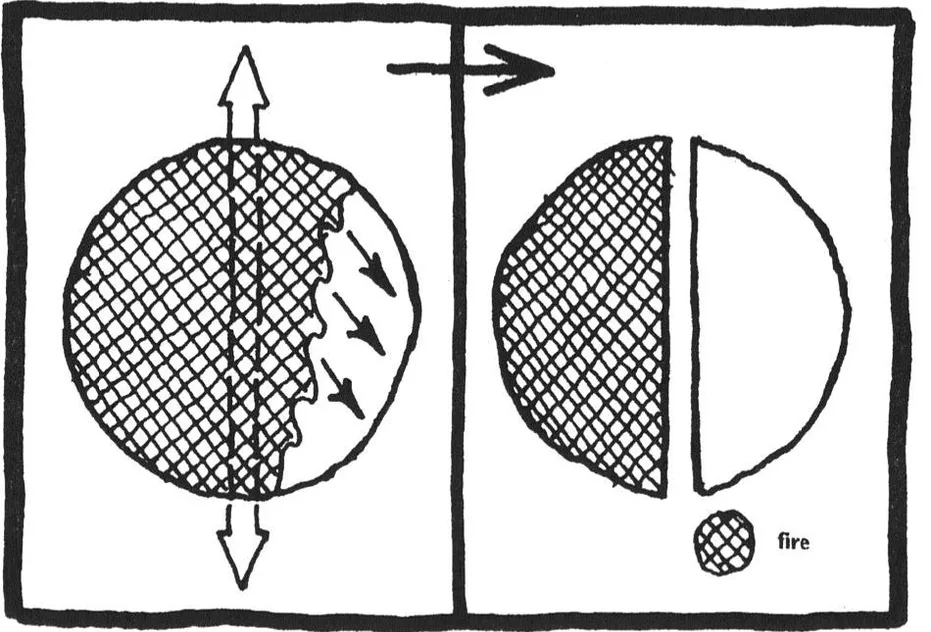
Dividing a large patch into two smaller ones creates a barrier to the spread of some disturbances.
P7. Large patch benefits
Large patches of natural vegetation are the only structures in a landscape that protect aquifers and interconnected stream networks, sustain viable populations of most interior species, provide core habitat and escape cover for most large-home-range vertebrates, and permit near-natural disturbance regimes.
P8. Small patch benefits
Small patches that interrupt extensive stretches of matrix act as stepping stones for species movement. They also contain some uncommon species where large patches are absent or, in unusual cases, are unsuitable for a species. Therefore small patches provide different and supplemental ecological benefits than large patches.
PATCH NUMBER: HOW MANY?
P9. Habitat loss
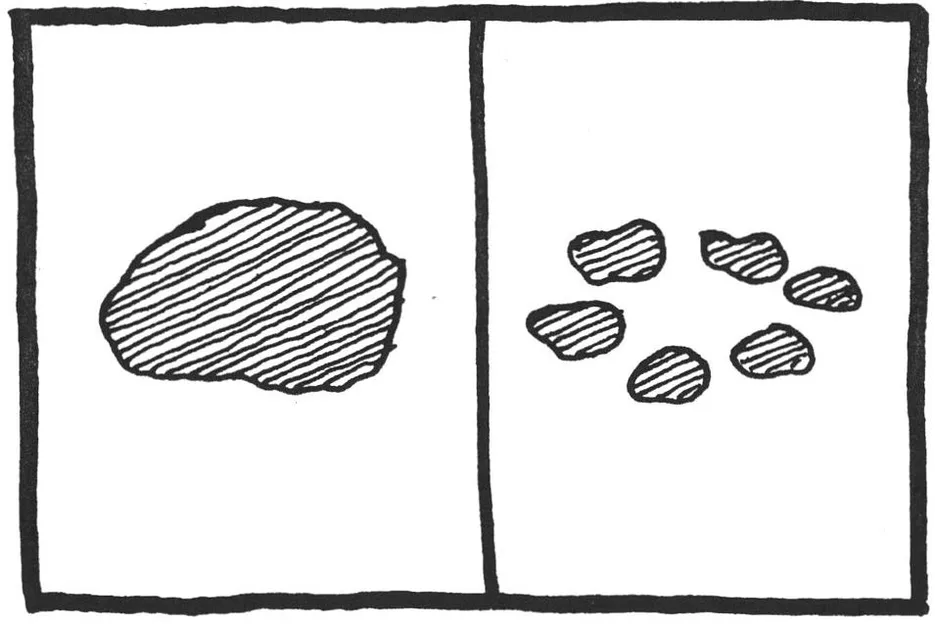
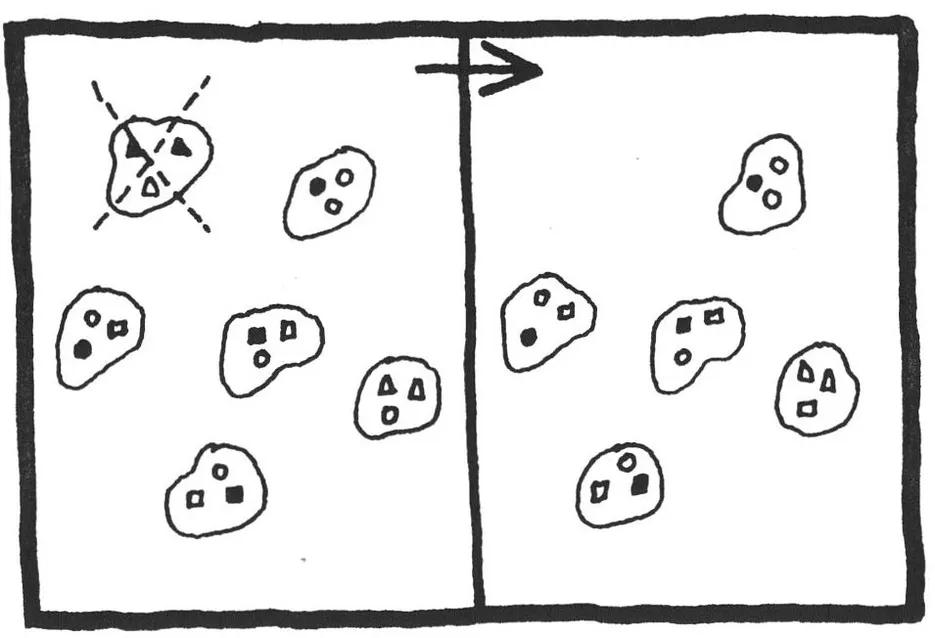
Removal of a patch causes habitat loss, which often reduces the population size of a species dependent upon that habitat type, and may also reduce habitat diversity, leading to fewer species.
P10. Metapopulation dynamics
Removal of a patch reduces the size of a metapopulation (i.e., an interacting population subdivided among different patches), thereby increasing the probability of local within-patch extinctions, slowing down the recolon...