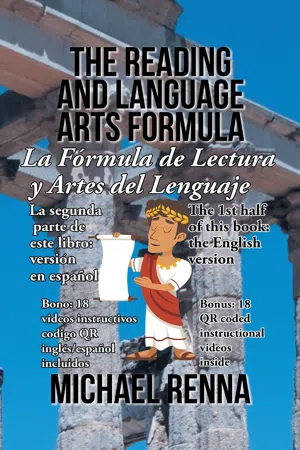
This is a formula project assignment primarily designed to effectively improve students' reading and language arts performance. Results can be seen substantially fast. You will be happy with the results! It is designed in a way that it can be easily assessed by any certified English language arts teacher. It can be used as a writing center activity in class or just simply something that parents can monitor at home in order to strengthen their child's reading and writing. It is a project assignment that takes roughly three weeks to complete. Having fully completed two or three of these project assignments (nine weeks total / one semester), you should see a positive difference in your students' reading and language arts performance. This assignment can be applied to almost any type of reading genre or selection. You may add your own task and assignment ideas to the project to enhance its value. Grading and evaluating the project assignment/assessment can be performed at your own discretion. With consistent use of this formula project assignment, your students will exercise written products related to the following areas: surveying, inquiring, identifying, chronological sequencing, applying background knowledge, text structure, summarizing, expository essay writing, comparing and contrasting, creative and logical reasoning, identification of the major components of a story, reflective writing, transitional writing, spelling and grammar, punctuation, making inferences, drawing conclusions, making predictions, extracting details/citing the text, providing sound evidences, explaining more fully in your own words, elaborating, and personalized illustrative artwork. Lastly, this formula project is something that parents can actively monitor at home with their children. It is a great way that they can take part in their child's academic improvement in school.
- 176 pages
- English
- ePUB (mobile friendly)
- Available on iOS & Android
eBook - ePub
The Reading and Language Arts Formula: PQRK3SEC6 Formula
About this book
Trusted by 375,005 students
Access to over 1.5 million titles for a fair monthly price.
Study more efficiently using our study tools.
Information
Topic
EducationSubtopic
Teaching Languages
How to Fully Complete the PQRK3SEC6 Project
PQRK3SEC6 Materials
Loose-leaf paper, and a pencil/erasable pen, or printer paper to accompany work completed on a word processor are all fine examples depending upon what the person assigning the project has in mind. I recommend starting with loose-leaf paper and a pencil and then graduate onto a word processor and printer paper as I saw the child’s handwriting significantly improve over some time. If you want to allow more room for illustrations to be added to the project, then a combination of loose-leaf paper and white printer paper may be your first choice.
An explanation of the acronym PQRK3SEC6:
P = Preview
The student is going to take the book they want to read and flip through it. They will scan all the titles, subtitles, boldface print, and pictures that can be found. While doing this, the child is to try to conjure an idea of what the book is going to be about just by previewing the content and illustrative clues that they see. In other words, they are to get an idea of what the book is going to be about just from what the titles, subtitles, illustrations, and boldface print may reveal. The preview should only take a few minutes. Then, they are to make a prediction by writing down what they think the book will be about. They can use that prediction as a reference moving forward. Hold onto the paper as a reference.
The idea behind the preview is to get the student digesting several clues about the book before actually reading it. This process will lead to increase student self-confidence later on as they come across the lines they read in the story that match the preview ideas. In general, the background knowledge that gets activated during the preview will encourage a more motivated reading process periodically throughout the book. An analogy of this scenario can be presented in the case where you pick up a magazine with pictures of tasty Italian dishes, and then while reading the article, you can easily comprehend the description of how it tastes because you have already seen it in the photos before reading the description.
Q = Question
The second letter of this formula project assignment is the “Q.” The “Q” represents the question or inquiry part of the acronym. The “Q” is to be based on the preview. Here is how it works: The student is to write down a list of questions that they may have, which is based on the illustrations, titles, and subtitles that were previewed. So for example, if the book had pictures of lots of snow, mountains, campers, and animals, then the child might write down a question that asks, “What country/state does this story take place in?” They may also write down the question, “Does this story take place in the mountains, or, perhaps, a northern country?” If the book has no pictures, but it has a title that reads “The forest journey begins,” then the student can formulate a question such as “Where is the forest mentioned in the title of chapter 2 located?”
There should be about ten questions written down and recorded by the student in this “Q” section. For younger children, such as ages eight or nine, five questions will be more appropriate. The questions, of course, cannot be answered at this time, as the child has not read the book yet. Formulating these questions supports the inquisitive nature of the student. It gets them wondering. This is a motivator. The questions should be kept alongside the preview ideas when completed. Leave two lines between each question in case you want to make the student answer those questions upon completion of the book.
R = Read
So it is now time to read the book, and believe it or not, you must actually draw up a mathematical plan for this step. This plan refers to how many pages will be read a day and the time involved in doing so. Without this mathematical plan drawn up, things can become quite discouraging. For ADHD children, using a yellow index card to help them focus on only the specific line being read is a good idea. Tell a student with ADHD to read for ten minutes and then stop for a ten-minute break (frequent breaks). They should repeat this routine over and over. This way, their spirit doesn’t burn out with the concentration that is required. A good reading spot at home could be a small room with not too many noises or things to distract the student. They should have an object that they would like to take a break with in the room while waiting for the fifteen minutes to be up. By doing this, they don’t have to leave the room that would threaten their return for more reading. An example of an object that they would like to take a break with could be a favorite toy to play with, a portable video game, or even a book to color and draw in.
A snack is also essential. Juice or milk, with a sandwich and yogurt, is usually a good example. Peanut butter packs a lot of calories. It is important to have a water bottle available as well. The child should read 40 minutes a day. So naturally, that would mean four 10-minute sessions in reading and four 10-minute sessions playing with their break time object. Finally, make a time line on paper and show how mathematically the 40 reading minutes each day will add up to 280 minutes a week and 560 minutes for two weeks, which is actually 9 hours and 20 minutes total. Go a step further and, perhaps more usefully, draw out and explain that if 12 pages are read a day, and there are 120 pages in the book, then it will take ten days to finish the book. This would leave eleven days to then complete all the written assignments so that the project assignment will be ready to turn in on time in three weeks.
Naturally, if your child is in the middle or high school years and the book is 375 pages, instead of 125 pages, then you would have to about triple your reading time in order to stay on this particular time line if your fluency pace is not already tripled by that age. So the point is, it is mandatory that you draw out a mathematical time line / plan to demonstrate how the student plans to arrive at the due date with a fully completed project. By doing so, the student builds more confidence in fully finishing the project rather than being discouraged by any futur...
Table of contents
- Title Page
- Copyright
- Contents
- Book Reviews
- Opening Thoughts
- Synopsis
- How to Fully Complete the PQRK3SEC6 Project
- Grading the PQRK3SEC6 Project
- Enhancing the Project
- Practicing Cause and Effect, Making Inferences, and Drawing Conclusions
- Interdisciplinary Application of the PQRK3SEC6 Project
- Working with a Resource Teacher/Private Tutor
- Inconsistencies with Test Scores and Classroom Performance
- Collaboration (Small Group Centers)
- A Mnemonic Trick That Will Build Fluency in Writing the Opinion Essay
- Building on the Depth of Response in Class
- Modeling a PQRK3SEC6 Project
- A sample PQRK3SEC6 Project
- Writing Outside the PQRK3SEC6 Project
- Instructional Video Library
- An Outline of the PQRK3SEC6 Project
- Conclusion
- La Fórmula de Lectura y Artes del Lenguaje
- Table de Contenido
- RESEÑAS DE LIBROS
- PENSAMIENTOS INICIALES
- SINOPSIS
- CÓMO COMPLETAR EL PROYECTO DE LA FÓRMULA PQRK3SEC6
- CALIFICACIÓN DEL PROYECTO DE LA FÓRMULA PQRK3SEC6
- MEJORAR EL PROYECTO DE LA FORMULA PQRK3SEC6
- PRACTICAR CAUSA Y EFECTO, HACER INFERENCIAS Y SACAR CONCLUSIONES
- PROYECTO DE APLICACIÓN INTERDISCIPLINARIA DE LA FÓRMULA
- TRABAJAR CON LOS RECURSOS DEL PROFESOR
- APRENDIZAJE COOPERATIVO (TRABAJO EN GRUPO)
- UN TRUCO NEMOTÉCNICO QUE AUMENTARÁ LA FLUIDEZ. (ENSAYOS)
- CONSTRUYENDO LA PROFUNDIDAD DE LA RESPUESTA Y LA FLUIDEZ EN LA CLASE
- MODELAR UNA COPIA FINALIZADA DE UN PROYECTO DE ASIGNACIÓN DE PQRK3SEC6 PARA LOS ESTUDIANTES
- UNA MUESTRA DEL PROYECTO PQRK3SEC6
- PLANIFICAR Y ESCRIBIR ENSAYOS INFORMATIVOS Y DE OPINIÓN. (FORMAL)
- UN ESBOZO DE LA PQRK3SEC6
- CONCLUSIÓN
- About the Author
Frequently asked questions
Yes, you can cancel anytime from the Subscription tab in your account settings on the Perlego website. Your subscription will stay active until the end of your current billing period. Learn how to cancel your subscription
No, books cannot be downloaded as external files, such as PDFs, for use outside of Perlego. However, you can download books within the Perlego app for offline reading on mobile or tablet. Learn how to download books offline
Perlego offers two plans: Essential and Complete
- Essential is ideal for learners and professionals who enjoy exploring a wide range of subjects. Access the Essential Library with 800,000+ trusted titles and best-sellers across business, personal growth, and the humanities. Includes unlimited reading time and Standard Read Aloud voice.
- Complete: Perfect for advanced learners and researchers needing full, unrestricted access. Unlock 1.5M+ books across hundreds of subjects, including academic and specialized titles. The Complete Plan also includes advanced features like Premium Read Aloud and Research Assistant.
We are an online textbook subscription service, where you can get access to an entire online library for less than the price of a single book per month. With over 1.5 million books across 990+ topics, we’ve got you covered! Learn about our mission
Look out for the read-aloud symbol on your next book to see if you can listen to it. The read-aloud tool reads text aloud for you, highlighting the text as it is being read. You can pause it, speed it up and slow it down. Learn more about Read Aloud
Yes! You can use the Perlego app on both iOS and Android devices to read anytime, anywhere — even offline. Perfect for commutes or when you’re on the go.
Please note we cannot support devices running on iOS 13 and Android 7 or earlier. Learn more about using the app
Please note we cannot support devices running on iOS 13 and Android 7 or earlier. Learn more about using the app
Yes, you can access The Reading and Language Arts Formula: PQRK3SEC6 Formula by Michael Renna in PDF and/or ePUB format, as well as other popular books in Education & Teaching Languages. We have over 1.5 million books available in our catalogue for you to explore.