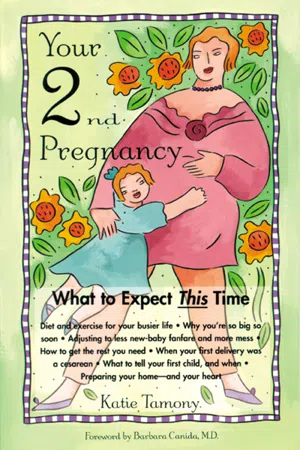
Every pregnancy is unique, and this informative book is the only one dedicated to exploring the specific differences and experiences of a second pregnancy. It offers insight into how your body, emotions, and expectations may change compared to your first time around. Covering everything from physical symptoms to preparing your first child for a sibling, this guide helps you navigate the journey with confidence, understanding, and support tailored to second-time moms.
- 234 pages
- English
- ePUB (mobile friendly)
- Available on iOS & Android
eBook - ePub
About this book
Information
Topic
Medicine1
Congratulations! You’re Pregnant . . .Again!
I KNEW I was pregnant again when my gums started feeling sore. I know it sounds crazy. I had other symptoms, too, but the sore gums clinched it for me. I remembered that feeling from my first pregnancy just a year earlier.
And this pregnancy was a shock; we didn’t plan it, so my reaction to the news was very different. Everything in my life is pretty planned out—including how far apart our kids were going to be. My husband and I were both speechless for awhile, just letting the news sink in. I kept looking at our baby and imagining doing it all again.
Amy
The smell of fish was the first sign—I smelled it in every grocery store. And I couldn’t stand it all of a sudden. And then everything started to fall in place—the late period, the tiredness. It was kind of fascinating that I just knew it this time. Oh, sure, we bought a pregnancy test, but I knew it before we took it. I felt like an old pro, even though it had been two years. All the same feelings came rushing back: Are we ready for this? How is our life going to change? Can we afford it? Only now I was more confident that we could handle whatever changes came our way.
Jenna
I kept thinking that I should be more sick. During my first pregnancy, I was bedridden for a month. Was something wrong this time? I read all these books that said morning sickness was good, and I kept thinking, “Is this pregnancy going to take?”—because I had already had one miscarriage. So I told myself not to think I was pregnant until the thirteenth week, and then I’d be excited. Even though the doctor said everything looked fine, I couldn’t let myself think baby—but I couldn’t help it. And once the thirteenth week started, I was elated. I told everybody. And they were all kind of ho-hum about it, like big deal, another kid. But I was so excited.
Jane
My periods were never very regular, so my first pregnancy was two months along before I had an inkling I might have something more than the flu. The nausea hit in the afternoon, so I was sure it wasn’t morning sickness. Sure, that is, until I bought a home test and my husband and I pored over the results like chemists making a breakthrough discovery. We had created a child, or what looked at this point to be two little pink lines on a stick. We were elated, and giddy, and stared at the pregnancy test as if it were a crystal ball.
The pregnancy test for the second child was a bit less exciting. My husband was trying to get our daughter fed and dressed for day care while I slapped lunches together before work. The tiny tube foretelling our future was left unattended longer than the five minutes required, but the results were just as dramatic and unreal. Another child? Another nine months? My husband and I looked at each other incredulously. We asked the same questions we had the first time: Were we ready? Does anyone ever feel totally prepared? I immediately dumped out my coffee and looked in the medicine cabinet for the prenatal vitamins I’d stopped taking when I gave up nursing just four months earlier.
There’s an immediate recognition when you find out you’re pregnant with your second child. It’s as if those first nine months are played in fast-forward right there in the doctor’s office. You’re on your way to 3 A.M. feedings, infinite diaper changes, first words, and first steps for a second time. As you haul the baby swing out of storage and try to remember who borrowed your maternity clothes, some old feelings and questions from your first pregnancy are bound to resurface. The tired-excited-sick-anxious-peaceful mood swings will start up again soon, but with a different twist. After all, you are a veteran decorated with stretch marks of pregnancy and childbirth and a mom who knows what taking care of and loving a child truly means. So what’s left to worry or be excited about during the next nine months?
It’s impossible to predict what a second (or third or fourth) will be like. As anyone who’s ever been pregnant has been told, every pregnancy is different. That obstetric rule even applies to two pregnancies in the same woman, whether she has her children ten months apart or ten years.
There are bound to be physical differences, of course. You’re older, in an older body. You have a uterus that’s already been stretched to accommodate a watermelon, and this is going to impact how you carry your second child. Some physical symptoms may repeat themselves; some may not. It depends on your health, your level of stress, and plenty of other variables. Even though every second pregnancy is different, there are some symptoms and feelings many pregnant moms share.
Because you’re more in tune to what pregnancy feels like (especially if you had your first within the last four years), you are apt to suspect your second pregnancy earlier and more accurately. On the other hand, a woman who’s been pregnant before is suspicious of every dizzy spell, every wave of nausea, and any late period—even if they have nothing to do with being pregnant. So how do you know for sure?
Second pregnancies are not necessarily sequels. You may not experience the same early symptoms this time around. That said, there are certain cues and nuances to the hallmarks of a second pregnancy.
dp n="22" folio="10" ? Are You Pregnant Again?
Breast Tenderness and Fullness
If you’ve just finished nursing your first baby (or if you’re still nursing a toddler), breast changes can be tricky to detect. The natural ebb and flow of hormones and a changing milk supply governed by your nursing toddler’s needs may distort the size and shape of your breasts and the appearance of your nipples. If you’ve stopped nursing altogether, your breasts may appear smaller than they were before your first pregnancy. Some women note that a first pregnancy and breastfeeding forever change the shape of their breasts and the size and color of the areola, making it difficult to judge what’s normal.
Some specific signs to watch for include a fullness similar to the way breasts appear just before menstruation and a tingling or tenderness of the nipples. Breast changes may be accompanied by other early signs of pregnancy, such as nausea, extreme fatigue, a lack of a period, or frequent urination.
Morning Sickness
If you’ve had it before, you know that this least popular of pregnancy clues doesn’t come only at 7 A.M. You can feel woozy any time of the day, especially if you’re a busy mom who isn’t eating properly. Running after a toddler all day or juggling a car pool, staff meeting, and school play, combined with skipping meals, can drop blood sugar levels. Of course, illness, food poisoning, and anxiousness can also cause you to feel queasy, but, if you’re getting enough to eat and still feel nauseous—especially when confronted with sharp odors—take note. If nausea continues day to day and you have no fever or diarrhea, then you might have morning sickness. Women who’ve had it before tend to recognize it instantly, but they’re also more likely to mistake simple lightheadedness for morning sickness if they’re trying to conceive a second child.
More than half of all pregnant women experience some nausea during the first trimester. If you had morning sickness during your first pregnancy, your chances of experiencing it again are slightly higher, although it probably won’t be as severe. If you didn’t experience it the first time, you may be in for an unpleasant surprise: plenty of mothers who skated through the first nine months are practically chained to a toilet the next time around.
If you don’t experience it during your second pregnancy, don’t be alarmed. Because so little is known about the causes of morning sickness, doctors don’t think of it as a positive or negative influence on your baby’s health. If you’ve got it bad, take heart: after looking at the records of more than nine thousand pregnant women, researchers at the National Institutes of Health found that expectant mothers who reported throwing up during the first trimester were a little less likely to suffer miscarriages or stillbirths than those who said they didn’t vomit. They also had a somewhat lower chance of delivering prematurely.
It’s commonly thought that nausea during the first fourteen weeks of pregnancy is caused by elevated levels of certain hormones. These hormones affect the entire digestive system, causing waves of nausea, constipation, and gas. Estrogen, in particular, may cause special sensitivity to odors. Mildly offensive smells grow more powerful, even sickening, during the first couple of months: the aroma of coffee, your daughter’s soiled diaper, your cat’s litter box. Even ordinarily benign food smells such as chicken—raw or cooked—can become unbearable. Nausea can also be triggered by other sensory perceptions, such as loud noises, bright light, closed spaces, or constant motion.
“Why Is Mom Getting Stick?”
You’re hanging onto the toilet bowl for the third time in one day and suddenly, there’s a tap at your shoulder. “Mom, are you OK?” says your concerned firstborn. Do you tell him you’re fine? Do you tell him about the baby? How do you reassure a child who’s just a baby himself that mommy’s OK?
If you have told your child you’re pregnant—and older kids (five and up) are often in the know early on—the answer is pretty straightforward. “You don’t want to tell your child that the baby is making you sick,” says family therapist Dawn Gruen. “But you can say that having a baby changes your body in all sorts of strange ways. Explain that one of the effects is feeling like you’re carsick or seasick a lot of the time.” You can reassure your child that throwing up often makes you feel better. Discussing the subject is also a good opportunity to explain that resting more and eating crackers in bed before you get up makes you feel better.
When you haven’t told your child about being pregnant, the best advice is to be reassuring and matter-of-fact about episodes of getting sick. “My three-year-old wasn’t frightened; he was fascinated,” says Melanie. “After awhile, it got boring. He hardly noticed when I ran into the bathroom.” Even children who are frightened at first will be less so the more often you get sick. “I wouldn’t worry about having to talk to your three-year-old every time you get sick. He has other things going on in his life besides how you’re feeling,” says another mom. “The first couple of times might be weird for him to see you like that, but then he just wants to go play.”
When your firstborn is just an infant herself, it’s not easy to explain what’s going on. You’re likely to be met with a puzzled expression if you try to articulate just how you feel to a one-year-old. “Kids are easily distracted at this age,” says Ann, mother of a three- and a two-year-old, who remembers how sick she was with both pregnancies. “After I threw up, I would just stand up and take him outside to play with toys or get a snack. I didn’t throw up as much the second time, so it wasn’t horrific. The best thing was just not to make a big deal about mommy being sick.” Don’t make a big deal to your child, but, at the end of the day when your partner asks (or doesn’t ask) how your day went, be sure to tell him how difficult handling morning sickness can be while caring for a baby. No matter how routine it gets to be, you owe yourself a pat on the back for carrying on, business as usual.
If your husband cooks, now’s the time for him to take on family meal preparation. If he doesn’t, consider altering the family budget to handle more pizza deliveries and deli takeouts. “One of the ways I coped with morning sickness was not to go near the kitchen unless it was to get something for myself,” says one mom. Of course, that’s not always possible. If you used to prepare scrambled eggs every morning for your baby and you can’t handle it now, try substituting another nutritious and less nauseating food. Keep a glass of ginger ale or wedge of lemon handy whenever you have to cook.
Fatigue
Do you remember the fatigue of your first pregnancy? Well, it’s probably going to be even more constant during your second. You’ve got a growing baby on the inside and a growing child demanding attention on the outside. You may be working part- or full-time. You also have a marriage, a home to manage, and about five minutes of free time a day. The demands on your mental and physical energy add up to exhaustion for a pregnant mom. You’ll likely notice this symptom earlier than the other ones the second time.
If you’ve waited more than four years between births, you may not experience the kind of physical exhaustion that comes from playing tag with a rambunctious two-year-old. On the other hand, you’re older this time, and your school-age child surely needs as many ballet lessons, scout field trips, and visits to playmates as you can manage. Just having to make decisions about another human being every day can be tiring. “Mental fatigue can be just as exhausting—sometimes more so—than physical fatigue,” says Dawn Gruen, a Seattle family therapist who specializes in postpartum adjustment issues. “As mothers, we tend to shoulder all of the responsibility for our kids’ schedules, moods, and needs.” Couple that kind of mental fatigue with the physical demands of growing a baby, and it’s easy to see why many mothers say they crave sleep more the second time.
A Missed Period
If you’re still nursing your first child, you may not be having periods, or they could be irregular. You can become pregnant before you resume regular periods and not even realize it.
If you have resumed your periods after your last pregnancy, then amenorrhea, or the absence of menstruation, is usually a symptom of second pregnancy. However, a great many other things can cause you to skip a period or stop having them altogether: travel, stress, extreme weight gain or loss, and strenuous exercise can all affect your cycle.
Food Cravings
Not every pregnant woman experiences food cravings, but most moms remember the extreme hunger pangs and food aversions that occur in the first trimester. Sometimes this is the first symptom you’ll notice in a second pregnancy. That is, unless you’re debilitated by morning sickness so severe that you’re living on popsicles. When you do feel hungry, it’s an almost overpowering need for a particular food—you want a strawberry yogurt and you want it now! One mom notes that she didn’t feel any weird cravings during her first pregnancy, but her second brought bizarre yearnings for pickles and lemonade. “Sometimes I want relish and catsup—not bowlfuls of the stuff, but I have this intense need for a taste of it once in a while,” says Tracy. “My husband is afraid anytime I mention I want to try out a new recipe. He knows our son will eat weird things, too, so he’s got to be the voice of reason.”
Frequent Urination
As the uterus grows, it puts pressure on the bladder. Your uterus is likely to expand up out of your pelvis sooner this time, so you may almost miss this symptom. Still, as the body begins to process fluids more efficiently and the kidneys pick up speed in preparation for the growing fetus, you’ll probably be making more trips to the bathroom.
“It actually was a go...
Table of contents
- Title Page
- Copyright Page
- Dedication
- Table of Contents
- Foreword
- Acknowledgments
- Introduction
- 1 - Congratulations! You’re Pregnant . . .Again!
- 2 - Making Adjustments
- 3 - The Third Trimester
- 4 - Problem Pregnancies
- 5 - Playing It Safe
- 6 - The Big Event
- 7 - Second Baby, Second Cesarean?
- 8 - Facing Changes
- 9 - A Real Working Mom
- 10 - Making Room for Flour (or More)
- 11 - Care and Feeding
- 12 - Boy or Girl?
- 13 - Emotional Changes
- Conclusion
- Recommended Reading
- Index
Trusted by 375,005 students
Access to over 1.5 million titles for a fair monthly price.
Study more efficiently using our study tools.
Frequently asked questions
Yes, you can cancel anytime from the Subscription tab in your account settings on the Perlego website. Your subscription will stay active until the end of your current billing period. Learn how to cancel your subscription
No, books cannot be downloaded as external files, such as PDFs, for use outside of Perlego. However, you can download books within the Perlego app for offline reading on mobile or tablet. Learn how to download books offline
Perlego offers two plans: Essential and Complete
- Essential is ideal for learners and professionals who enjoy exploring a wide range of subjects. Access the Essential Library with 800,000+ trusted titles and best-sellers across business, personal growth, and the humanities. Includes unlimited reading time and Standard Read Aloud voice.
- Complete: Perfect for advanced learners and researchers needing full, unrestricted access. Unlock 1.5M+ books across hundreds of subjects, including academic and specialized titles. The Complete Plan also includes advanced features like Premium Read Aloud and Research Assistant.
We are an online textbook subscription service, where you can get access to an entire online library for less than the price of a single book per month. With over 1.5 million books across 990+ topics, we’ve got you covered! Learn about our mission
Look out for the read-aloud symbol on your next book to see if you can listen to it. The read-aloud tool reads text aloud for you, highlighting the text as it is being read. You can pause it, speed it up and slow it down. Learn more about Read Aloud
Yes! You can use the Perlego app on both iOS and Android devices to read anytime, anywhere — even offline. Perfect for commutes or when you’re on the go.
Please note we cannot support devices running on iOS 13 and Android 7 or earlier. Learn more about using the app
Please note we cannot support devices running on iOS 13 and Android 7 or earlier. Learn more about using the app
Yes, you can access Your Second Pregnancy by Katie Tamony,Barbara Canida in PDF and/or ePUB format, as well as other popular books in Medicine & Gynecology, Obstetrics & Midwifery. We have over 1.5 million books available in our catalogue for you to explore.