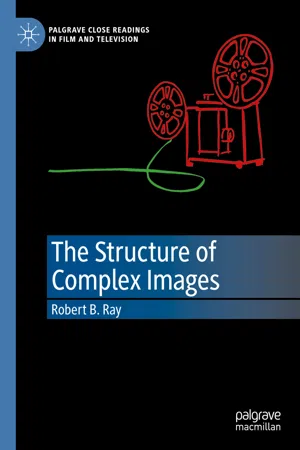
After over a century of existence, the cinema still has its mysteries. Why, for example, is the job we call movie stardom unlike any other in the world? How do films provide so much unconcealed information that we fail to notice? What makes it hard to define what counts as "acting"? How do movies like Casablanca and Breathless store the film and world histories of their generations? How can we reconcile auteurism's celebration of the movie director's authority with the camera's automatism? Why have the last four decades of film criticism so often neglected such questions? After beginning with an overview of film studies, this book proposes a shift from predictable theoretical approaches to models that acknowledge the perplexities and mysteries of the movies. Deriving methods from cinephilia, Wittgenstein, Richard Rorty, Stanley Cavell, Eleanor Duckworth, V. F. Perkins, and James Naremore, Robert B. Ray offers closereadings that call attention to what we have missed in such classic films as La Règle du Jeu, It Happened One Night, It's a Wonderful Life, Vertigo, Holiday, The Philadelphia Story, Casablanca, Breathless, and Tickets.
- English
- ePUB (mobile friendly)
- Available on iOS & Android
eBook - ePub
The Structure of Complex Images
About this book
Information
Subtopic
Film & Video© The Author(s) 2020
R. B. RayThe Structure of Complex ImagesPalgrave Close Readings in Film and Televisionhttps://doi.org/10.1007/978-3-030-40631-8_11. Introduction
Robert B. Ray1
(1)
Department of English, University of Florida, Gainesville, FL, USA
1.1 Perplexity and Method
During my first years as a teacher, I routinely made the common beginner’s mistake: excited by the subject matter and anxious about filling class time, I over-prepared, generating notes and lectures and hand-outs enough for twice the fifty-minute period facing me. I lectured a lot, and I spoke rapidly, covering a huge amount of material. High evaluation scores made me think that things were fine, but a few years later, one of my best students told me, “We didn’t understand a thing you said; we were just responding to the energy.” Then in my third year of this headlong rush, something happened: I arrived for a class scheduled to cover something about film theory (auteurism ? Brecht?) only to discover that I had left all my notes at home. When I told the class, one guy in the front row promptly cracked wise: “Now we’ll see how much he really knows.”
The student’s remark was good-humored, even encouraging, like a coach’s pep talk, but I recognized his accidental insight. How much did I really know about what I had been professing? Not much, I’m afraid. My university operated at the time on a quarter schedule (as opposed to semesters), and I was teaching eight different courses a year, each meeting four times a week. The material was new and interesting, and after getting through one teaching day, I would go home to re-load for the next. I read books and articles about the texts and movies I was using, and I generated pages and pages of notes and lecture-outlines, but I almost certainly didn’t have (or take) the time to think a lot about what I was doing. And then, having left all my crutches at home, I had to.
That week, the class had watched Truffaut’s Shoot the Piano Player , so, resorting to improvisation, I proposed that we map the spatial logic of the penultimate scene’s shootout-in-the-snow, beginning with Charlie’s arrival at the secluded cabin and continuing through the two gunmen’s appearance and Lena’s sudden death. We proceeded shot-by-shot, with me diagramming the articulations on the blackboard. The students and I quickly noticed that Truffaut had used classical elements to prompt shot changes: characters’ looks and guns aimed off-screen, movements in specific directions. But no matter how hard we tried, we couldn’t figure out the characters’ spatial relationships to each other. The effort, however, was exhilarating. Although I had certainly used close analysis before, I had never devoted so much class time to a single sequence. At some point, on the way to sensing that Truffaut had deliberately obscured his scene’s spatial continuity to make Lena’s death seem brutally random, I realized I was experiencing the most exciting class I had ever taught.
The lesson was a profound one. Years later, I discovered its formulation in Gareth Matthews’s Socratic Perplexity and the Nature of Philosophy (1999):
Getting yourself perplexed about something you’re teaching—that’s the lesson, but it’s harder than it looks. For one thing, perplexity may inhibit the publication required for tenure and promotion, a problem Matthews acknowledges, associating what he calls “professionalized perplexity” with Socratic “midwives,” who “never give birth to any books, perhaps not even to many published articles” (92). Furthermore, allowing yourself to be perplexed, especially in front of a class, takes a kind of self-confidence rare in new teachers. I certainly didn’t have it.All of us who teach philosophy have had the experience of being perplexed about the topic we are to lecture on, or discuss in a seminar. It belongs to our calling. Suppose I am asked to teach an introductory course in aesthetics, even though I have never taught aesthetics before and even though I have no worked-out views in the philosophy of art that I want to defend or transmit to others. The biggest constraint on my chances in success in carrying out this assignment will not be my ability to come up with a defensible theory of, for example, what makes something count as a work of art. The biggest constraint on my chances of success will be my ability to get myself perplexed about, say, whether Marcel Duchamp’s famous urinal, which he called “Fountain,” is or is not a work of art, and why, or why not. If I can get myself perplexed about this question, I have a very good chance of getting my students perplexed and thereby motivating them to consider, with me, the various theories that have been offered in response to this sort of question. But if I cannot get myself perplexed about this question, I have very little chance of getting my students interested in theories about what makes something an art object. (68–69)
I arrived at perplexity again while teaching a history of film class covering the years 1930–1965. We began by reading Frederick Taylor’s The Principles of Scientific Management, whose advocacy of division-of-labor, “scientific” matching of workers to tasks, and the precise definition of “the one best way” for each job all lay behind the Hollywood studios’ production system. One day, I asked my students a question: We spend a lot of time in English departments reading plays, but why, even in the days before VCRs and DVD players, did we never read film scripts? This question, I thought, had something to do with what André Bazin called the cinema’s “ontology,” but I couldn’t say exactly how. To help us think about this problem, I provided the following pairs:
I then asked these questions:We had some ideas. Of the left-hand items, the architectural blueprint seems the most prescriptive, largely because of liability laws. The unpredictability of a popular song’s recording amounts to the “Louie, Louie” case: no sheet music of that song can account for why, of all the scores of versions, only the Kingsmen’s version has become the one we know. A classical musician’s credibility, on the other hand, depends on his ability to follow the set of instructions contained in the score. Wittgenstein has taught us the priority of a word’s use over its meaning: decades ago, who would have understood the contemporary use of “sick” to mean “unbelievably great”?
architectural blueprint | building |
Taylor’s “one best way” | doing the job |
classical music score | classical musical performance |
popular song’s sheet music | recording of a popular song |
text of a play | performance of a play |
studio-era continuity script | movie |
definition of a word | use of a word |
- 1.In which of these cases does the left-hand item prove the most prescriptive? Or, to put the question another way, in which of these cases, if we have the left-hand term, does the right-hand item become the most predictable?
- 2.Why is a classical music score more prescriptive than the sheet music for a popular song?
- 3.Can we say that we often find ourselves thinking of the left-hand items as more definitive, more important, more permanent than the ones on the right?
- 4.Why don’t we read film scripts?
The perplexity concerned the distinction between a play’s text and a film’s script. The ready answers seemed unsatisfying. Do we value a play’s text because it can be performed by different casts? Well, so can a movie’s script; after all, in Hollywood, re-makes have become business-as-usual. Does the issue involve the relative proximity of the spectator to the thing shown, near in the case of film, variable in the theater? If so, how? Do actors and directors adhere more faithfully to a play’s text than to a movie’s script? If so, why? Why do playwrights command more respect than scriptwriters? When the students and I noticed that the unpredictability of the script/movie relationship resembled that of the pop song’s sheet-music/record, we began to sense that recording (whether of images or sound) somehow increased the possibility of surprise. You could write a book about why.
Obviously, I’m not the only person to discover the methodological advantages of perplexity. Socrates, after all, based his whole approach to philosophy on it, and Stanley Cavell, the model for Chap. 5 of this book, has contrasted instrumental reading, where texts are “impress[ed] … into the service of illustrating philosophical conclusions known in advance” (Cavell 1987: 1), with “slow reading”:
Richard Rorty makes a similar distinction between “methodical” and “inspired” criticism, between “knowing what you want to get out of a text in advance and hoping that the person or thing or text will help you want something different” (Rorty 2009: 145) .1 Wanting something different becomes the really valuable outcome of starting from perplexity, and if that wish is not the beginning and end of education, it should play a significant role. Perplexed by a scene in Shoot the Piano Player and taken by surprise at its complexity, I ended up that day in class wanting something different—not a diagrammatic accounting of spatial continuity but a...What I call slow reading is meant not so much to recommend a pace of reading as to propose a mode of philosophical attention in which you are prepared to be taken by surprise, stopped, thrown back as it were on the text. (Cavell 2005: 15)
Table of contents
- Cover
- Front Matter
- 1. Introduction
- Part I. Film Studies and Its Problems
- Part II. Cinephilia, Cavell, and Description-as-Method
- Part III. Movie Star Performance
- Part IV. Memory Theaters
- Part V. The Structure of Complex Images
- Back Matter
Trusted by 375,005 students
Access to over 1.5 million titles for a fair monthly price.
Study more efficiently using our study tools.
Frequently asked questions
Yes, you can cancel anytime from the Subscription tab in your account settings on the Perlego website. Your subscription will stay active until the end of your current billing period. Learn how to cancel your subscription
No, books cannot be downloaded as external files, such as PDFs, for use outside of Perlego. However, you can download books within the Perlego app for offline reading on mobile or tablet. Learn how to download books offline
Perlego offers two plans: Essential and Complete
- Essential is ideal for learners and professionals who enjoy exploring a wide range of subjects. Access the Essential Library with 800,000+ trusted titles and best-sellers across business, personal growth, and the humanities. Includes unlimited reading time and Standard Read Aloud voice.
- Complete: Perfect for advanced learners and researchers needing full, unrestricted access. Unlock 1.5M+ books across hundreds of subjects, including academic and specialized titles. The Complete Plan also includes advanced features like Premium Read Aloud and Research Assistant.
We are an online textbook subscription service, where you can get access to an entire online library for less than the price of a single book per month. With over 1.5 million books across 990+ topics, we’ve got you covered! Learn about our mission
Look out for the read-aloud symbol on your next book to see if you can listen to it. The read-aloud tool reads text aloud for you, highlighting the text as it is being read. You can pause it, speed it up and slow it down. Learn more about Read Aloud
Yes! You can use the Perlego app on both iOS and Android devices to read anytime, anywhere — even offline. Perfect for commutes or when you’re on the go.
Please note we cannot support devices running on iOS 13 and Android 7 or earlier. Learn more about using the app
Please note we cannot support devices running on iOS 13 and Android 7 or earlier. Learn more about using the app
Yes, you can access The Structure of Complex Images by Robert B. Ray in PDF and/or ePUB format, as well as other popular books in Media & Performing Arts & Film & Video. We have over 1.5 million books available in our catalogue for you to explore.