- English
- ePUB (mobile friendly)
- Available on iOS & Android
eBook - ePub
About this book
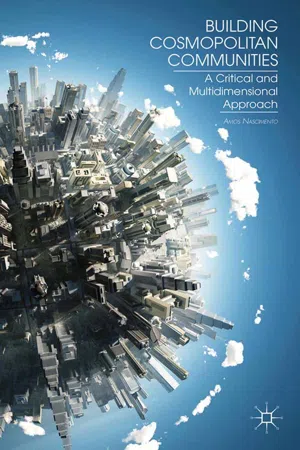
Building Cosmopolitan Communities contributes to current cosmopolitanism debates by evaluating the justification and application of norms and human rights in different communitarian settings in order to achieve cosmopolitan ideals. Relying on a critical tradition that spans from Kant to contemporary discourse philosophy, Nascimento proposes the concept of a "multidimensional discourse community." The multidimensional model is applied and tested in various dialogues, resulting in a new cosmopolitan ideal based on a contemporary discursive paradigm. As the first scholarly text to provide an interdisciplinary survey of the theories and discourses on human rights and cosmopolitanism, Building Cosmopolitan Communities is a valuable resource to scholars of philosophy, political science, social theory, and globalization studies.
Information
I
A CRITICAL AND MULTIDIMENSIONAL APPROACH
2
THE TRANSFORMATIONS OF THE CRITICAL TRADITION
Before considering how community, human rights, and cosmopolitan ideals can be articulated within a normative philosophical framework, we need to go back to the eighteenth century, take Immanuel Kant’s views on Criticism as point of departure, and show how the tradition he inaugurated has been changed and updated. The focus here is not necessarily on the epistemology of Kant’s three Critiques, but rather on the critical method he initiated and the practical applications of this method in history, ethics, politics, law, and aesthetics. The focus is not solely on Kant either. He is the starting point of a series of definitions of cosmopolitanism, community, human rights, and normativity that still inform Critical Theory. These definitions were important for Georg Friedrich Hegel and his critique of Kantian formalism, but because Hegel remained bound to idealism and to the German status quo, his views had to be superseded. Therefore, it is in the materialism of Karl Marx and Friedrich Engels that we see a radical rejection of Hegel’s views, which represented an abstract “critique of heavens” that never came down to a “critique of earth.” This subtle but radical change in the meaning of critique becomes explicit when Marx upgrades the critical tradition by proposing a “critique of ideology” and a “critique of philosophy” as conditions for a Critique of Political Economy. This is not simply a new term, but a new program affirming the materiality of life, priority of human needs, rejection of workers’ alienation, and promotion of social transformation. We cannot, however, stop at Marx. There were new developments in Marxism, strong opposition to it, and also a particular alternative approach to “critique” represented by Max Horkheimer, Theodor Adorno, and other members of the so-called Frankfurt School.
The Frankfurt School revised the conceptions of “critique” in Kant, Hegel, and Marx in order to define a new approach, Critical Theory, designed to include important social and cultural issues that had emerged in the first half of the twentieth century but were neglected by political parties in Europe. This program is not static, but rather dynamic, and renews itself to include a “critique of instrumental reason” or “critique of positivism” as well as a “critique of society” and a “critique of culture” that led to Adorno’s transformation of Critical Theory into an “Aesthetic Theory.” My point so far should be obvious. There are many dimensions of “critique” and Critical Theory itself is a project “under construction.” Hence, the Frankfurt School cannot be our endpoint either. Authors such as Adorno and Horkheimer remained prey to a certain pessimism that was superseded by a more hopeful approach based on a turn to a pragmatic “critique of meaning” provided by Jürgen Habermas and Karl-Otto Apel. By transforming both Kant’s Criticism and Critical Theory in light of the linguistic turn, Apel and Habermas initiated a new program: “Critical Discourse Theory.” Yet, this program remains in flux, as evidenced by Habermas’s changes in his own position, his differences with Apel, and the emergence of new generations of philosophers who build on the strengths of Discourse Theory while recognizing its shortcomings.
This summary indicates already some key shifts within a critical tradition in Germany. While Kant, Hegel, and Marx clearly emphasize the importance of science, the members of the Frankfurt School question scientificism and turn to social and cultural issues. But here also there are differences, not only among the members of this group but among also what has been called the different “generations” of the Frankfurt School. While Adorno and Horkheimer represent a first generation of the old Frankfurt School [alte Frankfurter Schule], which remained limited by the subjectivism and pessimism of the period between World War I and World War II, a second generation identified with a new school [die neue Frankfurter Schule] linked to Habermas, Apel, Albrecht Wellmer, and others, stressed intersubjectivity and expanded the scope of the critical tradition once more while collaborating with partners in the United States, such as Thomas McCarthy and Richard Bernstein, to propose a new program that defines critique as the pragmatic analysis of validity claims and their meaning. A third generation of philosophers directly or indirectly related to the Frankfurt School, such as Axel Honneth, Matthias Lutz-Bachmann, Martin Seel, and Christoph Mencke, was extended to include the collaboration of philosophers in the United States, such as Seyla Benhabib, Nancy Fraser, and James Bohman. With this, they widened the scope of the critical tradition by including themes such as community, gender, democracy, and cosmopolitanism. A more recent group of authors such as Cristina Lafont, Rainer Forst, Max Pensky, Eduardo Mendieta, Andreas Niederberger, and many others constitute a fourth generation that takes multiculturalism, race, cosmopolitanism, and globalization into account while paying attention to specific contexts and contemporary challenges to normative theories. This generation not only expands the repertoire of themes and initiates a fruitful dialogue with contemporary positions, but also reestablishes the link with the original sources and intentions of the critical tradition.
In providing an overview of these developments and links, this chapter introduces and exposes in more detail the key concepts I presented in the introduction. I make explicit my commitment to Critical Theory and at the same time identify the kinds of “critique” available today. As it will become clear later on, by providing this overview, I rely on a key methodological contribution of Discourse Theory, which Apel calls the “transformation of philosophy” and Habermas defines as “historical reconstruction.” Based on this reconstruction, we will see that the scope of “critique” has definitely expanded and included many of the elements needed to discuss community, human rights, and cosmopolitan ideals.
THE CRITICISM OF IMMANUEL KANT
The conceptual history of the term “critique” can lead us all the way back to ancient Greek times (Koselleck 1977), but I will start with some key modern references that point directly to Kant. The term “critica” was used in eighteenth-century Italy by Giambattista Vico (1725) to characterize a method based on imagination [fantasia], which aimed to study the creativity and authenticity of human artifacts (Verene 1981; Pompa 1990), while “criticism” was applied in Britain by the Earl of Shaftesbury and Joseph Addison to characterize the process of informing the general public about the need to examine concrete artworks, appreciate their impact on spectators, and express this appreciation through informed judgment. In his three-volume collection of essays, Characteristics of Men, Manners, Opinions, Times (Cooper 1711), Lord Shaftesbury defends the role of the art critic as an interpreter of artworks. At the same time, in a series of 11 essays published in The Spectator under the title “The Pleasures of Imagination” (1711), Addison considered questions such as why pleasure is produced by external objects, how people experience the external world, how one can describe and judge artistic objects based on the theories of John Locke and Thomas Hobbes, and how Descartes explained the functioning of the mind. Addison answered these questions to provide a model of the “true Critick” who should be able to analyze literary works and understand the role of imagination as a faculty related to both morality and aesthetics (Addison 1711, “The Spectator” 412). The Common Sense Philosophy of the Scottish Enlightenment followed a similar line of thought: Francis Hutcheson published his An Inquiry into the Origin of Our Ideas of Beauty and Virtue in 1725, Edmund Burke’s Philosophical Inquiry into the Origin of Our Ideas on the Sublime and the Beautiful appeared in 1757, and, shortly thereafter, in 1762, Henry Home (Lord Kames) published his Elements of Criticism in three volumes. He defended the advantages of studying criticism not as a mere exercise of the imagination but rather as a rational endeavor to guide reflection and judgment (Home 1762:7–10).
Why do we need to know all this? These references are relevant insofar as they influenced the beginning of a tradition of critical philosophy initiated by Immanuel Kant. Most of the works mentioned above were translated into German between 1762 and 1773 and Kant had access to them. He was deeply influenced by the Scottish Enlightenment (Kuehn 1987). Also, among these philosophers, Home—Lord Kames—was the one to exert a central influence that led to Kant’s adoption of the term “criticism.” Home had shown that, differently from metaphysics and mathematics, criticism had “the tendency to improve social intercourse” (1762:11). Another important point he made is that “the science of criticism appears to be an intermediate link, finally qualified to connect the different parts of education” (1762:10). Kant quoted Home in scattered notes written at this time—later collected as Reflexionen, numbered from 1 to 6455, and published in volumes 15–18 of the Akademieausgabe of his Gesammelte Schriften [hereafter, AA] (1902). One of them confirms this influence, even if only elliptically: “Fine art allows only critique. Home. Therefore no science of the beautiful” (Reflexionen 1588). This is an interesting statement because it presents “critique” as an instance between natural science and arts while showing us where Kant got the idea of an intermediate method capable of articulating different but complementary forms of cognition. Kant’s statement in his Reflexionen 1588 provides us with an important point, stressed later in further developments of Critical Theory: criticism is related not only to science and society, but also to aesthetics and culture.
Next, I focus on his own conception of critique, which will later help us define community, human rights, and cosmopolitan ideals in terms of individual autonomy and membership in an extensive social unit within and beyond the limits of the nation-state.
A disclaimer is necessary before I proceed. Although Kant synthesizes previous trends on cosmopolitanism and anticipates many themes later introduced in the Charter of the United Nations in 1945 and the Universal Declaration on Human Rights in 1948, it is possible to identify and criticize many anachronisms in his work. This includes errors in his views on history, geography and anthropology (Mendieta and Elden 2011), traces of pietistic religious metaphysics in his teleological thinking (Apel 1997; Kuehn 2002), the bias of German political chauvinism, lack of consideration for women and gender issues (Kleingeld 1993; Shell 1996), and the affirmation of racist assumptions (Bernasconi 2001, 2003, 2006; see exchange between Kleingeld 2007 and Bernasconi 2011). As we recognize these shortcomings in an author that was bound to eighteenth-century Europe, it is still possible to find many important elements in Kant’s thinking (Habermas 1996). First, however, we must step back and exegetically consider the meaning of “criticism” and “critique” as well as the contemporary influence of these concepts. Kant provided us with a tool to criticize his own work and our own shortcomings, so this explains why the tradition of critique is in constant transformation.
Critique or Criticism was the very denomination chosen by Kant to characterize his philosophical program. So much so that his philosophy is now classified into two moments: the precritical period between 1755 and 1769 and the mature critical stage inaugurated with the publication of his Critique of Pure of Reason [KrV, AA 4] in 1781, which was prepared by reflections and discussions in the 12 years between 1769 and 1781 (Kreimendahl 1990). The precritical period shows the influence of ancient metaphysics while the “critical turn” in his philosophy represents a shift toward modern science in order to reject untenable metaphysical assumptions and define the limits of reason. This shift can be identified in the very titles of his books. While his precritical work on aesthetics carries the Burkean title Observations on the Feeling of the Beautiful and Sublime (1764 [AA 2]) and is influenced by empirical anthropology, the work published on this same topic in 1790, thus after the “critical turn,” is titled Critique of the Faculty of Judgment [KdU, AA 5]. The difference in these titles is reason enough to ask a few questions.
If Kant’s mature thinking was based on science, why does he use the aesthetic concept of “criticism” to identify his mature thinking? A partial answer is given by recalling the methodological twist given to this term by Home when he saw criticism as a procedure to guide judgment. Mirroring Home’s proposal, Kant proposes a tripartite division of knowledge according to the methods of science, historical discipline, and critique (Reflexionen 622, 623, 624, 626). Moreover, he introduces new layers of meaning that add complexity to his use of the term. In the announcement of his lectures for 1765, he practically presents the plan for his future career and provides the architectonic design of his intellectual program: first, he divides philosophy into metaphysics, logic, ethics, and physical geography, and then he relates criticism to logic. Accordingly, his Lectures on Logic, offered annually since 1765 but published in 1800 by Gottlob Benjamin Jäsche (Logik [Jäsche] in AA 9), defines logic as a canon that serves the goal of criticism. Although Kant concedes that the axiomatic statements of mathematics could be defined as dogmas, as Christian Wolff had suggested, he rejects the extrapolation of this mathematical “dogmatism” because it claims absolute certainty in areas to which mathematical proofs could not be applied. Second, Kant recognizes the possibility of using David Hume’s skeptical method to question particular statements, but avoided the generalization he identified negatively as “skepticism.” In his view, “both methods are faulty, if applied too generally” [beide Methoden sind, wenn sie allgemein werden, fehlerhaft] (Logik 84; also KrV A 424/B 451). This explains why he avoided both extremes and followed Home in proposing an “intermediate link,” an alternative between these two, which he called criticism.
Third, in his Announcement of the Program of His Lectures for the Winter Semester 1765–1766 Kant adds that critique as a whole had the double task of projecting the edifice of reason [Gebäude der Vernunft] in theoretical terms and relating it to practical life (1765/1766:10–13 [AA 2] and Logik 8). Therefore, criticism can be interpreted as the architectonic plan upon which different forms of cognition could be organized as complementary, with a look at both logical and abstract issues on the one hand and an eye on their possible application on the other. He did not stop there. Shortly thereafter, in a letter to Marcus Hertz on February 27, 1772, this project evolved into a general method based upon which he characterized his whole philosophical endeavor, dividing it into a critique of reason [Kritik der Vernunft] and a critique of taste [Kritik des Geschmacks], later to be defined as aesthetics. There is at least one other perspective relevant to the understanding of Kant’s criticism at this time, found in the Critique of Pure Reason (KrV B 741–742) and in three versions of a manuscript entitled On the Progress of Metaphysics since Leibniz and Wolff (prepared in 1790 but published only posthumously in 1804 [AA 20]): criticism is to be identified as the last of three historical stages in the evolution of philosophy. Dogmatism corresponds to an old attitude that is questioned by skepticism, which is then superseded by criticism (AA 20:281–282). We will later see how this evolutionary idea remains throughout the transformations of the tradition of criticism. All these aspects show that criticism is more than an aesthetic method as it has logical, architectonic, methodical, and historical connotations.
A second question is unavoidable: How does Kant apply the concept of criticism to these various areas? The three Critiques constitute the pillars of his Critical or Transcendental Idealism and provide a summary answer: the Critique of Pure Reason [KrV], originally published in 1781 and revised in 1787, dealt with matters of metaphysics and epistemology; the Critique of Practical Reason, published in 1788 [KpV], is related to norms for social behavior; and the Critique of the Faculty of Judgment, of 1790 [KdU] (see Kant 1960), connected aesthetic and teleological judgments in an attempt to complete the systematic project Kant had delineated in 1765. Let me simply highlight some important aspects of these three important works, which will be relevant for us later on.
The first Critique deals with the tension between metaphysics and natural science. Its main goal is to expound the “human standpoint” that conditions knowledge and to demarcate the bounds of reason. Nevertheless, Kant establishes connections between epistemology and juridical, logical, political, moral, and cultural issues (Henrich 1973; Kaulbach 1982; Lyotard 1986:34–46; O’Neill 1989:3–27; Korsgaard 1996:114–122; Wood 1999:111–155; Longuenesse 2005:236–241). For instance, he identifies dogmatism not merely as a procedure in the field of mathematics alone, but also as the method of both speculative metaphysics and political despotism, which are not transparent about their procedures and, therefore, bring about injustice [Ungerechtigkeit]. In the same way, skepticism’s strong focus on causality is characterized by its hopelessness that leads to indifference (KrV A viii/B xiii, xx–xxii). Keeping an eye on these two extremes, Kant engages in a critical search for a middle term. Leaving aside the complex discussions on perception, logic, and dialectics, I limit myself to the juridical images in central passages of the first Critique.
In the preface of the first edition of 1781, he says that the instance to answer all possible philosophical questions is the “tribunal” [Gerichtshof] of reason (KrV A viii–ix, A 443/B 491). This expression reappears in several passages (KrV B 529, 697, 768, 779, 815) and is considered by many as the main structural metaphor of the first Critique (Vaihinger 1892; Henrich 1963, 1973; O’Neill 1989). Indeed, his discussion of sensibility as well as of the antinomies was permeated by juridical language (KrV A 43/B 66, 331). Moreover, ...
Table of contents
- Cover
- Title
- Introduction
- Part I A Critical and Multidimensional Approach
- Part II Communities, Human Rights, and Cosmopolitan Ideals
- Conclusion
- Bibliography
- Index
Trusted by 375,005 students
Access to over 1.5 million titles for a fair monthly price.
Study more efficiently using our study tools.
Frequently asked questions
Yes, you can cancel anytime from the Subscription tab in your account settings on the Perlego website. Your subscription will stay active until the end of your current billing period. Learn how to cancel your subscription
No, books cannot be downloaded as external files, such as PDFs, for use outside of Perlego. However, you can download books within the Perlego app for offline reading on mobile or tablet. Learn how to download books offline
Perlego offers two plans: Essential and Complete
- Essential is ideal for learners and professionals who enjoy exploring a wide range of subjects. Access the Essential Library with 800,000+ trusted titles and best-sellers across business, personal growth, and the humanities. Includes unlimited reading time and Standard Read Aloud voice.
- Complete: Perfect for advanced learners and researchers needing full, unrestricted access. Unlock 1.5M+ books across hundreds of subjects, including academic and specialized titles. The Complete Plan also includes advanced features like Premium Read Aloud and Research Assistant.
We are an online textbook subscription service, where you can get access to an entire online library for less than the price of a single book per month. With over 1.5 million books across 990+ topics, we’ve got you covered! Learn about our mission
Look out for the read-aloud symbol on your next book to see if you can listen to it. The read-aloud tool reads text aloud for you, highlighting the text as it is being read. You can pause it, speed it up and slow it down. Learn more about Read Aloud
Yes! You can use the Perlego app on both iOS and Android devices to read anytime, anywhere — even offline. Perfect for commutes or when you’re on the go.
Please note we cannot support devices running on iOS 13 and Android 7 or earlier. Learn more about using the app
Please note we cannot support devices running on iOS 13 and Android 7 or earlier. Learn more about using the app
Yes, you can access Building Cosmopolitan Communities by A. Nascimento in PDF and/or ePUB format, as well as other popular books in Politics & International Relations & Political Philosophy. We have over 1.5 million books available in our catalogue for you to explore.