eBook - ePub
Religious Representation in Place
Exploring Meaningful Spaces at the Intersection of the Humanities and Sciences
- English
- ePUB (mobile friendly)
- Available on iOS & Android
eBook - ePub
Religious Representation in Place
Exploring Meaningful Spaces at the Intersection of the Humanities and Sciences
About this book
Religious Representation in Place brings together an interdisciplinary group of scholars from the Humanities and Sciences to broaden the understanding of how religious symbols and spatial studies interact. The essays consider the relevance of religion in the experience of space, a fundamental dimension of culture and human life.
Information
Topic
Theology & ReligionSubtopic
Architecture GeneralSection III
Representing Space in Contemporary Contexts
Chapter 9
Ornament and the Other: Sacred Spaces and Religious Identities in Andalusia*
S. Brent Plate
An hour’s drive from the nearest sea, in a shopping mall in the center of Seville, Spain, is a popular restaurant and nightclub called “Buddha Del Mar.” Its three-leveled interior conveys a chic modernism, augmented by South and Southeast Asian Buddhist imagery. Under the gaze of Siddhartha and a thumping bass, dancers drink and drinkers dance until the break of dawn.
Zooming out to the shopping mall in which Buddha Del Mar operates furthers the religio-cultural clash. The building is a converted train station originally constructed early in the twentieth century, styled in what was then a trendy architectural fashion: the highly ornamental Neo-Mudejar (figure 9.1). Neo-Mudejar revives the “original” Mudejar style that arose on the Iberian Peninsula beginning in the twelfth century, after the Christian reconquista (reconquest) of land that Muslims had ruled over for centuries. The Christians did not much tolerate Muslims (or Jews), but they appreciated their arts and crafts, and after some exiles and forced conversions, Mudejar emerged as a Christianized version of traditional Islamic ornamentation. So here we see a secular nightclub borrowing Buddhist imagery, set within an architectural style initially developed by Muslims, existing in a predominantly Roman Catholic Christian culture.
Not far from the religious-themed nightclub is the great Gothic cathedral of Seville, by volume one of the largest Christian churches in the world. The structure replaced the former central mosque of Seville, after the 1248 reconquest of the city by Ferdinand III. The mosque itself had been built over an older Visigothic church, which was itself created on top of a Roman pagan temple. The building’s most prominent feature, and Seville’s most prominent icon, is “La Giralda,” originally a giant minaret built by the ruling Almohads in the twelfth century, later converted to a bell tower by Christians. The massive tower is ornamented in geometric motifs that were common across the medieval Islamic empire.
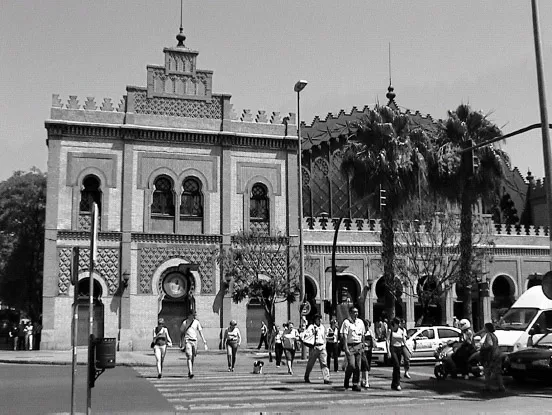
Figure 9.1 “Plaza de Armas” shopping center, Sevilla, Spain. Neo-Mudejar style.
Source: Photo by S. Brent Plate.
From these scenarios, I begin with two questions that motivate my interests in this chapter. There are no straightforward answers to be given, but the possibilities serve as guides. First, what does it mean that the bell tower of the largest Gothic church in the world was primarily built by Muslims, for Muslim purposes, and is filled with ornamentation that reflects a Muslim worldview? And, second, why does a train station turned shopping center borrow an ornamental architectural style from a half millennium earlier, when all those who developed the art have long since left the very space in which it developed? What does a view of architectural space tell us about clashes and changes in economic, political, and religious identities within one geographic location?
In answering such questions, what becomes most critical is the interaction between viewers and buildings as ornament triggers ways of being in space and time. In the following, I argue that the use of ornament is utilized as a visual marking of identity, as the production of space becomes the production of identity. Meanwhile, changes in styles mirror new modes of identification, though through this reflexive process repressed elements of identity can also be revealed. Starting with an outline of the place of ornament within Islam, I note how Islamic ornamental styles developed specifically in Seville and greater Andalusia, and ultimately how they continued after Islam was no longer the dominant cultural-political-religious force, especially commenting here on the rise of the neo-Mudejar. Finally I chart three differing examples of the ongoing presence of Islamic-inspired ornamentation in modern European spaces, and how orientalism is bound to ornamentalism. Through a focus on ornament, we begin to see some interesting and at times odd connections between Christians and Muslims in the Medieval and Modern Iberian peninsula.
Whether nightclub or cathedral, mosque or temple, there is no preexistent abstract space, untethered from lived life, sacred or otherwise. Instead, “spaces are produced,” as Henri Lefebvre has argued. People create space, while space creates people. For our interests here, spatial production occurs through social processes including the religious practices of those who enter and perform within the built environment, the use of symbolism by designers, commercial interests, and religio-political battles that aim for greater public visibility. If spaces are produced, they are also reproduced. “No space disappears in the course of growth and development,” Lefebvre says further. “Social spaces interpenetrate one another and/or superimpose themselves upon one another.”1 In the spatial reproductions in Seville and beyond, cultures clash, identities are formed and reformed, power exerted, symbols made meaningful, memories invoked. Each new reproduced space, with new ornamental styles, in this particular geographic location, in the southernmost part of the southernmost European peninsula, is built up and out, superimposing, overtaking, and replacing; the old never fully erased, but palimpsestically showing through, reveals a history of growth and development, and a history of otherness: the forgotten, repressed, and defeated.
Mere Decoration? Ornament in Islamic Context
Ornament is “not generally essential to the structure of an object,”2 and therefore a secondary and even expendable element of a work of art. In other words, ornamentation is a kind of marginalized other to the main body of an artwork or architectural site. Nonetheless, ornament can be deeply meaningful. For the purposes of this chapter, I would initially put it thus: ornament can alter the perceptual space of the object to which it is attached—vases shrink or enlarge while rooms distort depending on their surface decoration, and social identities are formed and reformed by the added imagery. The structure itself is altered by its decoration. Ornament reorients space, altering the perception of the object to which it is attached.
In his masterful work The Mediation of Ornament, Islamic art historian Oleg Grabar argues for the importance of ornament by suggesting, “There is a difference between ‘filling’ a space with a design and transforming an object by covering all or parts of its surfaces with that design.” The latter can go so far as to “transform the very purpose of its carrier.”3 Grabar offers an expansive view, not arguing that ornament only operates one way and not another—filling with design or transforming an object—but he does reorient the conversation by thinking of ornament as an “intermediary” whose chief operation is to establish a relation between viewer and object. Not far from Marshall McLuhan’s quip that the “medium is the message,” Grabar shows how the ornament is the object. He takes a performative approach, asking after what it does instead of simply what it is, provocatively claiming “ornament itself can be the message that is communicated.”4
I won’t here elaborate on the many ways representational imagery functions in the Islamic arts as a whole, but with reference to ornament we can say that representation occurs through constricting the cosmically ordered natural world (flowers, stems, leaves, and trees, as well as geometric proportions and alphabetic characters) and reforming it as a medium that points beyond itself. By “artificially” representing the “natural,” the observer is paradoxically submerged in true nature, the cosmos ordered by the singular Creator. We are in the realm of symbolism here, but a direct correspondence between object and meaning is not immediately apparent.
Following most critically from Grabar, what I am interested in are the various ways ornamental imagery is used, understood, and then reused and reunderstood. The point here is that meaning stems not simply from the object itself, nor from some apparent theology behind it, but from the interaction between object and observers. This interaction is part and parcel of the production of space.
Drawing on Space: Calligraphy and Arabesque
The term “ornamentation” encompasses various designs within the Islamic arts. Of interest here is the ornamentation found in/on architecture, including three discernible types of imagery: (1) calligraphy as epigraphy, (2) vegetal arabesques, and (3) geometrical arabesques. These have a fair amount of overlap, and often are simply seen together. All are related in their uses of repetition, production of rhythmic space, two-dimensionality, interlacing, and the utter and the often complete coverage of building walls—some have pejoratively called this the horror vacui (fear of empty space), but Ernst Gombrich positively called it amor infiniti (love of the infinite).5
The English term “calligraphy” comes from the Greek roots meaning “beautiful writing.” In Arabic the term khatt is often used, and has connotations of a space “marked out” or an “outline.”6 It is also the term used in early Muslim urban planning, and key cities such as Basra, Kufa, and Fustat were built using principles of measurement related to variants of the term khatta. There is, then, already an architectural relation to writing within Islam.
Along with architecture, calligraphy is a key artistic contribution of Islam to world cultures. It is valued because it ...
Table of contents
- Cover
- Title
- Introduction
- Section I Theoretical Frameworks for Approaching Space
- Section II Representing Space in Ancient and Medieval Contexts
- Section III Representing Space in Contemporary Contexts
- Bibliography
- List of Contributors
- Index
Trusted by 375,005 students
Access to over 1.5 million titles for a fair monthly price.
Study more efficiently using our study tools.
Frequently asked questions
Yes, you can cancel anytime from the Subscription tab in your account settings on the Perlego website. Your subscription will stay active until the end of your current billing period. Learn how to cancel your subscription
No, books cannot be downloaded as external files, such as PDFs, for use outside of Perlego. However, you can download books within the Perlego app for offline reading on mobile or tablet. Learn how to download books offline
Perlego offers two plans: Essential and Complete
- Essential is ideal for learners and professionals who enjoy exploring a wide range of subjects. Access the Essential Library with 800,000+ trusted titles and best-sellers across business, personal growth, and the humanities. Includes unlimited reading time and Standard Read Aloud voice.
- Complete: Perfect for advanced learners and researchers needing full, unrestricted access. Unlock 1.5M+ books across hundreds of subjects, including academic and specialized titles. The Complete Plan also includes advanced features like Premium Read Aloud and Research Assistant.
We are an online textbook subscription service, where you can get access to an entire online library for less than the price of a single book per month. With over 1.5 million books across 990+ topics, we’ve got you covered! Learn about our mission
Look out for the read-aloud symbol on your next book to see if you can listen to it. The read-aloud tool reads text aloud for you, highlighting the text as it is being read. You can pause it, speed it up and slow it down. Learn more about Read Aloud
Yes! You can use the Perlego app on both iOS and Android devices to read anytime, anywhere — even offline. Perfect for commutes or when you’re on the go.
Please note we cannot support devices running on iOS 13 and Android 7 or earlier. Learn more about using the app
Please note we cannot support devices running on iOS 13 and Android 7 or earlier. Learn more about using the app
Yes, you can access Religious Representation in Place by M. George, D. Pezzoli-Olgiati, M. George,D. Pezzoli-Olgiati in PDF and/or ePUB format, as well as other popular books in Theology & Religion & Architecture General. We have over 1.5 million books available in our catalogue for you to explore.