This book uncovers the mysterious social and political structures of China's "Third Front," the large state-sponsored development of inland China during the late Maoist period. This movement gave birth to a few important industrial bases such as Panzhihua and Liupanshui and had significant impact on megacities such as Lanzhou, Wuhan, and Chongqing. Yet, this is scarcely known to the West and even the younger generation of Chinese. Chen explores the ways that new industrial structures and hierarchies were created and operated, using political and sociological methodologies to understand what is distinctive in the history of the Chinese corporation. This book will be of immense interest to political scientists, sociologists, China scholars, and researchers of alternative economic structures.
Chao ChenTolerationNew Perspectives on Chinese Politics and Societyhttps://doi.org/10.1007/978-981-10-8941-1_1
Begin Abstract
1. Introduction
Chao Chen1
(1)
Xiamen University, Xiamen, Fujian, China
End Abstract
Located 50 miles northwest of Chengdu , the economic and trading center of southwestern China, is Danjingshan—a small town surrounded by stretches of rolling mountains. This mountainous terrain not only impeded the town’s economic development but also isolated it from the outside world. However, at this hidden and primitive spot, a group of workers from many more developed cities on the east coast labored in a modern factory. This is the Jinjiang Oil Pump and Nozzle Factory (hereafter referred to as “Jinjiang Factory”), the field site of this study.
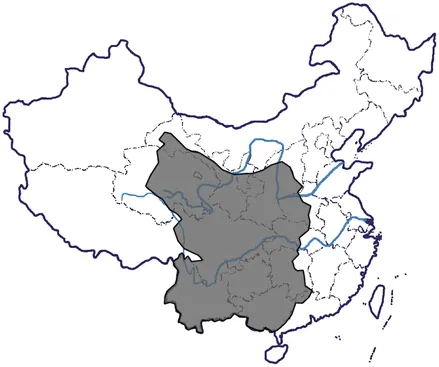
In fact, Jinjiang Factory is not the only example of this strange template. Similar factories and workers can be found in the remote areas of almost all the southwestern and northwestern provinces of China (see Fig. 1.1). These factories are called “Third Line Enterprises ” and the workers are called “Third Line Workers”. They are products of an immense but secret industrial project that began in the 1960s and ended in the 1980s. In the context of China’s history, it is called the Third Line Construction1 (Li and Jiang 2005; Meng 2013).
Fig. 1.1
The area of the Third Line Construction
In the 1960s, China’s security was facing two potential threats. Internationally, China was not on good terms with either of the two superpowers. Domestically, the country’s industrial capacity and population were overwhelmingly concentrated in the east coast area. In order to maintain its industrial production in the event of war, the central government believed that it was essential to establish an alternative industrial base in western China. Out of this concern for security, from the early 1960s to the late 1970s, numerous factories and workers were transferred from cities on the east coast and the old northeast industrial base, such as Shanghai, Tianjin, Beijing, and Shenyang, to the desolate interior. By the early 1980s, in the area of the Third Line Construction, more than 1100 industrial projects had been completed (Yuan 2003; Meng 2013), about 29,000 enterprises established (Lin and Ji 1987), and nearly four million workers were transferred (Liu 2012).The industries were mostly related to the military. Mao stipulated that the construction of Third Line factories should follow the principle of “by the side of mountains, dispersion and being caved” (kaoshan, fensan, jindong). Hence, these factories and workers were covertly scattered in remote villages or mountain areas, isolated from the outside world. The Jinjiang Factory is just one of these secretly transferred factories.
The Third Line factories and their workers have received scant treatment in the existing literature on Chinese labor politics. Compared to the numerous and matured studies on urban SOEs in Mao’s era and after, studies on the Third Line Construction mainly focused on its scale, influence, and historical significance to Chinese industrial development, while few have paid attention to its workplace politics and sociology (Naughton 1988; Mel 1993; Chan et al. 1996; Chen 2004; Bachman 2001; Dong 2001; Li and Jiang 2005; Bramall 2009). The confidentiality of the Third Line Construction and its remote locations may have deterred researchers. Published information on Third Line Enterprises is scant and there are few archival sources. In addition, many of the factories closed in the 1990s. A recent development that helped the author to investigate this subject is a resurgence of interest among retired former workers in Third Line Enterprises . Former participants in the Third Line are now composing memoirs, forming online communities, and holding events related to their history. In these activities, the author discovered a pathway to investigate this understudied topic. Drawing on untapped primary sources, this book addresses the gap in our understanding of Third Line Enterprises. In particular, this book asks the following question: what sort of industrial relations could be found in the Third Line Enterprises?
One important lesson introduced by the existing literature on urban SOEs is that even in these work units informal social ties outside the unit could shape management practices (Lee 1999; Gallagher 2005; Cai 2006). Geographic isolation in the Third Line Enterprises made the situation different—there were no pre-existing social relationships among workers and the social context. Under such unique circumstances, did managers have a freer hand in enforcing discipline due to the factory’s isolation? Through an in-depth analysis of a typical Third Line enterprise , the Jinjiang Factory, I will show that geographic isolation did not actually lead to a stricter and harsher management. In contrast, it encouraged the creation of densely interconnectedsocial networks within the factory. These networks promoted workers’ control over the production process. As a result, isolation encouraged group managers to adapt by tolerating rule-breaking behavior, such as absenteeism.
In the analysis of industrial relations, this study mainly focuses on the level of group leaders. In Chinese factories, group leaders or supervisors are grassroots managers, who directly interact with workers on a daily basis. This unique position in the organizational hierarchy requires them to constantly juggle frequently conflicting demands of their upper managers and their member workers. Ideally, and according to the policies, group leaders should respond to the needs of their workers as a homogeneous group; in practice, they had to develop techniques to respond to the workers as heterogeneous individuals. To cope with these controversies, they make personal decisions, establish routines, and invent tactics . All of these decisions and inventions eventually set the context and create informal policies for workers to follow. In short, group leaders are not merely passive policy implementers but active policy makers and re-makers. Therefore, without detailed knowledge of the actual managerial behavior of group leaders, we can hardly understand what is really happening in the production line.
Because of this book’s specific focus on worker–leader relations in the factory, there is no attempt to offer a full history of the Third Line Enterprises from the 1960s to the 1990s. Instead, the study attempts to shed light on the Third Line workers’ lives during a particular period from the mid-1970s to the 1980s. This period marks the peak of operation for many Third Line Enterprises. In response to the perceived rising US threat, the planning of the Third Line Construction had emerged as early as in the mid-1960s. However, this construction was not widely implemented until the 1969–1971 period, when the threat from the Soviet Union was seemingly more and more urgent. As a result, the vast majority of the Third Line Enterprises were established in the early 1970s. In the 1990s, as market-oriented enterprise reforms started, the Third Line Enterprises faced two different fates. Many of them went bankrupt and disappeared. Those that survived were relocated into nearby cities and gradually transformed into normal urban state-owned enterprises (SOEs). The reforms of the 1990s put an end to the Third Line Enterprises as a unique form of workplace. Therefore, the onset of reform in the 1990s provides a natural endpoint for this study.
Although the Third Line Enterprises lasted for only about 20 years, they had tremendous significance for Chinese industry development and urbanization. Taking this unique group of factories as the research subject, this book makes contributions in three aspects. First, based on several interviews and fieldwork in a Third Line enterprise, this study provides analysis of first-hand materials on the Third Line workers who have long been unknown to, or maybe forgotten by, society, officials, and scholars. Second, with these valuable materials, this study for the first time systematically documents the daily life and working relations in the once-confidential Third Line Enterprises . Third, by knowing the Third Line workers’ lives, this study draws attention to the varieties of industrial relations in pre-reform China. In a word, as an immense industrial project related to millions of Chinese in Mao’s era, studies on the Third Line Enterprises and their workers have been missing from the existing literature and the significance of this study is to fill this gap.
To sum up, this is a book on industrial relations in a Third Line enterprise with a special focus on the level of group leaders’ management. It is grounded in observations and interviews with workers and managers of Jinjiang Factory in Sichuan Province. The rest of the chapter is organized as follows. In the first section , I review two modes of managerial control in SOEs from the mid-1970s to the 1980s argued by previous studies. The second section explains the emergence of the tolerating strategy in Jinjiang Factory. Taking the group leaders’ management of workers’ absences as an example, the third section shows how the tolerating strategy manifested itself in practice. The fourth section is a discussion of the methodology for the fieldwork.
1.1 Managerial Control in SOEs from the mid-1970s to the 1980s
Over the period from the mid-1970s to the 1980s, two modes of control in Chinese SOEs have been identified. Neo-traditionalism is arguably the only method of labor control prior to 1978, while “disorganized despotism” took shape in the 1980s. Do these models apply to the Third Line factories? In this section , I will show that due to the unique social structure in a Third Line factory, these modes of control are not applicable to the Third Line Enterprises . In addition, these modes suffer from one reductive problem: the interest of grassroots managers is assumed to fully overlap with that of their upper managers. As a result, the contextual differences and the analytical limitation make the previous studies ineffective in understanding the workplace order of the Third Line Enterprises . It is worth notin...
Table of contents
Cover
Front Matter
1. Introduction
2. The Third Line Construction and Jinjiang Factory
3. The Context of Toleration (1): Isolated Life in Jinjiang Factory
4. The Context of Toleration (2): Interconnected Social Networks
5. The Context of Toleration (3): Workers’ Control on Production
6. Toleration in Practice (1): The Phenomenon of Absenteeism
7. Toleration in Practice (2): The Governance of Absenteeism
8. Conclusion
Back Matter
Trusted by 375,005 students
Access to over 1.5 million titles for a fair monthly price.
Study more efficiently using our study tools.
Frequently asked questions
Yes, you can cancel anytime from the Subscription tab in your account settings on the Perlego website. Your subscription will stay active until the end of your current billing period. Learn how to cancel your subscription
No, books cannot be downloaded as external files, such as PDFs, for use outside of Perlego. However, you can download books within the Perlego app for offline reading on mobile or tablet. Learn how to download books offline
Perlego offers two plans: Essential and Complete
Essential is ideal for learners and professionals who enjoy exploring a wide range of subjects. Access the Essential Library with 800,000+ trusted titles and best-sellers across business, personal growth, and the humanities. Includes unlimited reading time and Standard Read Aloud voice.
Complete: Perfect for advanced learners and researchers needing full, unrestricted access. Unlock 1.5M+ books across hundreds of subjects, including academic and specialized titles. The Complete Plan also includes advanced features like Premium Read Aloud and Research Assistant.
Both plans are available with monthly, semester, or annual billing cycles.
We are an online textbook subscription service, where you can get access to an entire online library for less than the price of a single book per month. With over 1.5 million books across 990+ topics, we’ve got you covered! Learn about our mission
Look out for the read-aloud symbol on your next book to see if you can listen to it. The read-aloud tool reads text aloud for you, highlighting the text as it is being read. You can pause it, speed it up and slow it down. Learn more about Read Aloud
Yes! You can use the Perlego app on both iOS and Android devices to read anytime, anywhere — even offline. Perfect for commutes or when you’re on the go. Please note we cannot support devices running on iOS 13 and Android 7 or earlier. Learn more about using the app
Yes, you can access Toleration by Chao Chen in PDF and/or ePUB format, as well as other popular books in Business & International Business. We have over 1.5 million books available in our catalogue for you to explore.