- English
- ePUB (mobile friendly)
- Available on iOS & Android
eBook - ePub
The Social Media Manifesto
About this book
The Social Media Manifesto is a handbook to enable leaders across the business to understand how social technology can be incorporated into their company. Including case studies from Google, IBM, Spotify, Unilever, and Coca-Cola, it provides insight and practical advice for managers to implement their own social business plans.
Information
CHAPTER 1
The Death of “Brand”
Michael Wolff and Wally Olins pioneered the concept of branding, setting up Wolff Olins in Camden in the 1960s and since then they have continued to push the boundaries beyond packaging and design and into new spaces—including digital spaces. In 2011 Wolff worked with Intel to produce a piece of content for Intel’s Visual Life project. The video is filled with great sound bites from Wolff, who talks mainly about design, aesthetics and the concept of brand, but one of the standout comments from the video is:
A brand is really a way of remembering what something is like, for future reference. Something you value, something you feel attracted to.
On the surface, this comment is purely about the aesthetics of a brand, but I think Wolff is being much broader than design. In a world of increasingly visual communications (not from a design point of view but from the point of view of being able to actually see communications) it is important to realize the impact that this has on the brand—we can see the logo, the marketing materials, the advertising, but now we also see the conversations going on around a brand. This has an interesting effect, if we are to believe Krugman’s theory of Effective Frequency (in which he believes that there is a certain number of times someone has to see something before they remember it), which would now have many more inputs than before the digital evolution. Conversation is part of the fabric of the brand, and we can see it everywhere.
So the big question resting over the future of brand perception is who is responsible for it? In the old world of one way communications it used to be the public relations and advertising department (both of which would produce the only “visible” brand communications on behalf of the business), but in a world where your potential and existing customers are talking more frequently and having greater access to people across your whole organization, that is simply not the case any more—which begs the question, “how do we control our brand perception?” Well, the best way to shape your brand perception has not changed, your brand has to listen to its customers, react to them and learn from them, but now it is in real time, making it a job for the whole business. From the customer service department through to the IT team, everyone represents your business now because communications has been flattened out. If there is someone in your market research team who has been treated badly by the CEO, a few tweets or blog posts later the whole world may potentially know the situation. In modern brand building, the whole business is responsible, and this requires the business leaders to have a fundamental understanding of why and how. We can no longer rely on packaging and design to create salience in the supermarket aisles, when people potentially have a constant stream of information being delivered to them about your business.
Douglas Rushkoff, arguably one of the most influential commentators on digital culture believes that “the web is biased towards non-fiction”—people are looking for facts and information on products, especially during a time of economic uncertainty when each purchase has to deliver on its promise.
Take, for instance, the insurance industry in the UK where consumer loyalty dropped to 20 percent in 2011.1 If you take this drop in loyalty, and map it against the volume of people using Google to search for advice and reviews around insurance products (around 12 million monthly searches2), you can see that people are looking for facts and information. If we then take this data and add in information in the fall of trust of brands from the 2012 Edelman Trust Barometer, you can see that searching for reviews and advice online has become a huge part of consumer behavior; in fact, 60 percent of consumer journeys3 that end in purchase online, start with search. So this heady combination of changing consumer behavior, deference to brand voice and preference to consumer reviews makes search engines a large part of your business’s brand image. What makes this even more interesting is the way in which search engines like Google prioritize “social” search results—giving forums like MoneySavingExpert and MoneySupermarket a huge level of influence (they have a combined monthly reach of more than 20million users)—especially when you consider that in the insurance industry, more than 30 percent of all conversations taking place in these two forums are direct complaints about brands. Your brand is being represented not by the advertising or messaging that you promote, but by the product or service reviews that people find when they search for your brand.
This obviously puts a huge emphasis on the product, not the brand. That is not to say that people do not still care about brands and storytelling, but unless your story is backed up by a great product, people are not going to buy into both. In a world of absolute consumer truth, your search engine results are king.
One of the major issues with this is that there is a tendency toward negativity in digital spaces—a negative experience is much more easily shared (due to the anonymous nature of much of the digital space) than a positive experience. This is a basic human truth (especially in the UK, where moaning is a competitive sport)—basic analysis of the major personal finance forums reveals that almost 95 percent of conversations taking place are either neutral (mostly statement based) or negative (with 30% directed specifically at brands). This makes for a challenging space for brand reputation—the brand has to respond to customer issues for two specific reasons: (1) to resolve a customer issue, and (2) to be visibly resolving customer issues (remember the 1:9:90 cliche, 1% of people create content, 9% of people comment on it, yet 90% of people see that content—so each customer complaint is seen by potentially 10,000,000 people)—leaving complaints unresolved is akin to refusing to answer customer complaints in the call center. With this in mind, huge above-the-line campaign amplification campaigns merely paper over the cracks created by substandard products or services. A great example of this is when Orange, the telecommunications brand, decided to launch a Twitter account for Orange Wednesdays (its flagship entertainment campaign)—very quickly the Twitter feed was filled with customer service complaints—purely because Orange decided to launch a brand campaign rather than deal with very direct business issues.
James Dyson, the creator of arguably one of the most successful brands of our times gave a talk at a Wired conference in early 2012 called Disruption by Design at which he stated that the only word that is banned at Dyson is the word “brand”; “we are only as good as our latest product. I do not believe in brand at all.” Now this obviously generated a huge amount of discussion, most of which pointed at the fact that Dyson spends a huge amount of money on advertising every year, but the product is what people care about and Dyson has a rich heritage of always focusing on the product benefits, rather than the brand story, much like Apple.
With such an increasing focus on product benefits, what role is brand supposed to play? Well, with brands such as Nike and Coca Cola, the story becomes an integral part.
There is a fantastic parable in Sun Tzu’s The Art of War that describes the role of the king and the villagers. Tzu says that the king who builds himself a castle and never walks among the villagers will always provoke revolt, yet the king who lives with the villagers and walks among them every day will always be a man of the people. We have lived for too long under tyrannical brands that have dictated our tastes and our buyer behavior—and, as with politics over the last century, technology is giving power back to people. Brands that listen to their consumers and employees, that are not just seen to care, but actually care, are finding themselves in strong positions. Those that play ignorant to their audience are starting to crumble, with few exceptions (although of course there are exceptions). Businesses that are tightly guarded by “brand guardians” and public relations agencies provoke intrigue, inspection and (mostly) invite critical examination—in fact the lack of trust that consumers have in these “brand guardians” has continuously fallen since the late 1990s. Yet those brands that practice “open” and transparent behavior find themselves in a much stronger position—people understand that they listen, people are not fed the press release, they have conversations with real people from within the company.
Take a minute to think about which employees, in your business, come into contact with the general public everyday. It is everyone. Unless you are running a business from the outer reaches of the Arctic Circle, without an Internet connection and employing only reclusive people, your employees are going to have their own social networks and through social media they have access (and people have access to them) far beyond the four walls of your business. Information about your business will be spreading through those networks as we speak. Networks are absolutely integral to understanding and measuring perceptions of your brand.
Let us take an example, in Figure 1, the black dots are employees, the gray lines are relationships and the gray dots are non-employees.
Business X has 30 employees, and each is professionally connected to each other like the figure below:
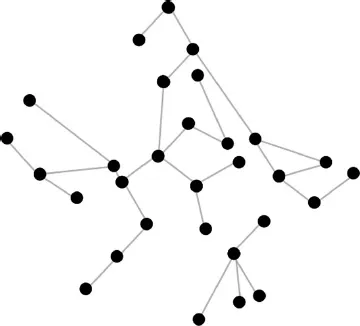
Figure 1 Traditional hierarchical business network
Now, let us look at how they socialize with each other in and out of work (see Figure 2):
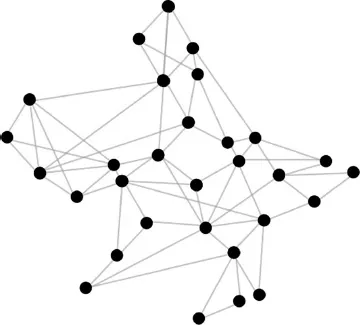
Figure 2 Actual social network within the organisation
Now, let us look at their immediate social networks outside of your business (see Figure 3):
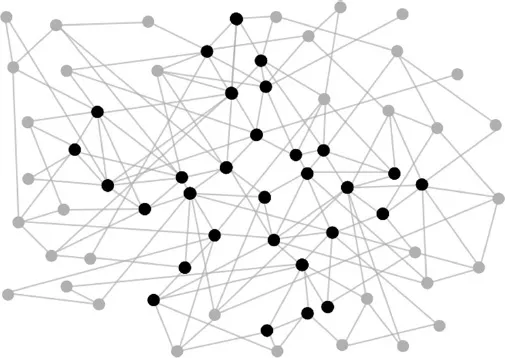
Figure 3 Social network outside of the organisation
It is easy to see how quickly a message could spread from inside the business (regardless of the department) to a much wider network (see Figure 4)—which, when you consider that the sociological theory of six degrees of separation was recently reduced to 4.2, indicates that within a matter of hours that message could have traveled the globe. (The originators of the message are highlighted in light grey; the recipients of the message are highlighted in black.)
What is evident from this basic analysis is that what people know about your brand is not as simple as running an advertising campaign or securing editorial coverage in a national newspaper. Your people are your brand, and the conversations that they have with their wider networks are how brand perceptions are built. If you can understand how your employees are connected to one another and understand their social graphs (networks), you can begin to understand your brand perception.
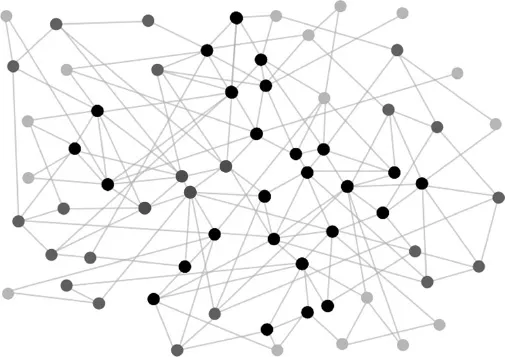
Figure 4 Flow of information within that social network
THE SINGLE BRAND
As you have seen, the concept of the single brand is difficult to attain. What used to be the domain of the public relations or advertising department now rests across the whole business and this makes singularity of the brand message complicated. However, the problem that technology and networks causes is also the solution. If you can begin to understand how your workforce are connected (outside of traditional hierarchical structures), then you can begin to understand how your brand message (or any message) is spread. While this sounds daunting, it is in fact relatively simple—analyze email logs. Speaking with the IT department and analyzing the email logs is basic statistical analysis, if you then take this data and run it through a simple graphing program such as Gephi then you can begin to match the social network of your organization against the formal structure of your business. This may seem like a very basic move, but very few brands have done this, one key example is the way in which IBM structures its core teams. IBM has a detailed database of employee information, explaining strengths, weaknesses and...
Table of contents
- Cover
- Title
- Copyright
- Acknowledgments
- Contents
- List of Figures
- Foreword
- Introduction
- Chapter: 1 The death of “brand”
- Chapter: 2 Embracing convergence
- Chapter: 3 Embracing complexity
- Chapter: 4 The role of data
- Chapter: 5 An introduction to social business
- Chapter: 6 Leadership
- Chapter: 7 Marketing and advertising
- Chapter: 8 Public relations
- Chapter: 9 Sales
- Chapter: 10 Research and development
- Chapter: 11 Human resources
- Chapter: 12 Customer service
- Chapter: 13 Leadership (redux)
- Chapter: 14 Conclusion
- Notes
- Index
Trusted by 375,005 students
Access to over 1.5 million titles for a fair monthly price.
Study more efficiently using our study tools.
Frequently asked questions
Yes, you can cancel anytime from the Subscription tab in your account settings on the Perlego website. Your subscription will stay active until the end of your current billing period. Learn how to cancel your subscription
No, books cannot be downloaded as external files, such as PDFs, for use outside of Perlego. However, you can download books within the Perlego app for offline reading on mobile or tablet. Learn how to download books offline
Perlego offers two plans: Essential and Complete
- Essential is ideal for learners and professionals who enjoy exploring a wide range of subjects. Access the Essential Library with 800,000+ trusted titles and best-sellers across business, personal growth, and the humanities. Includes unlimited reading time and Standard Read Aloud voice.
- Complete: Perfect for advanced learners and researchers needing full, unrestricted access. Unlock 1.5M+ books across hundreds of subjects, including academic and specialized titles. The Complete Plan also includes advanced features like Premium Read Aloud and Research Assistant.
We are an online textbook subscription service, where you can get access to an entire online library for less than the price of a single book per month. With over 1.5 million books across 990+ topics, we’ve got you covered! Learn about our mission
Look out for the read-aloud symbol on your next book to see if you can listen to it. The read-aloud tool reads text aloud for you, highlighting the text as it is being read. You can pause it, speed it up and slow it down. Learn more about Read Aloud
Yes! You can use the Perlego app on both iOS and Android devices to read anytime, anywhere — even offline. Perfect for commutes or when you’re on the go.
Please note we cannot support devices running on iOS 13 and Android 7 or earlier. Learn more about using the app
Please note we cannot support devices running on iOS 13 and Android 7 or earlier. Learn more about using the app
Yes, you can access The Social Media Manifesto by Jed Hallam in PDF and/or ePUB format, as well as other popular books in Business & Business Communication. We have over 1.5 million books available in our catalogue for you to explore.