- English
- ePUB (mobile friendly)
- Available on iOS & Android
eBook - ePub
Performing Feeling in Cultures of Memory
About this book
Performing Feeling in Cultures of Memory brings memory studies into conversation with a focus on feelings as cultural actors. It charts a series of memory sites that range from canonical museums and memorials, to practices enabled by the virtual terrain of Second Life, popular 'trauma TV' programs and radical theatre practice.
Information
1
Sensing the Holocaust Affect: Memorials in Repeat, Revision and Return
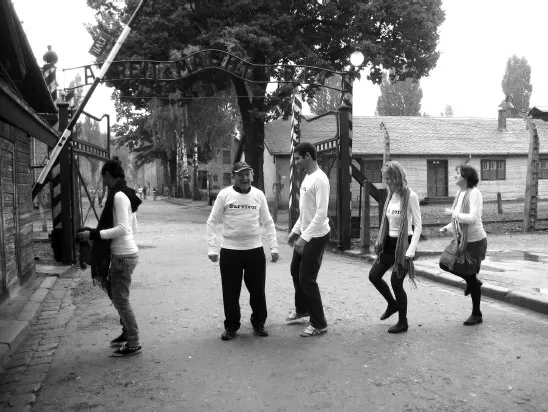
Figure 1.1 Jane Korman, ‘I Will Survive’, Dancing Auschwitz (2010)
Source: Photo copyright Jane Korman.
Dancing on graves
In January 2010, a curious form of Holocaust art appeared on YouTube. It featured the father of artist Jane Korman, Holocaust survivor Adolek Kohn, dancing to Gloria Gaynor’s 1978 disco anthem I Will Survive with five of his grandchildren across memorial sites in Central and Eastern Europe. Korman’s family covered Auschwitz Death Camp, The Absent Synagogue, Radagast Train Station and Lodz Ghetto in Poland; the Terezin Ghetto Fortress, Theresienstadt Concentration Camp and The Maisel Synagogue in the Czech Republic; and Dachau Concentration Camp in Germany. Their dancing was simple and jovial, their choreographics reminiscent of the kind of dancing that happens at family functions, recalling easy moves, such as a shoulder shimmy or a step-to-the-side. Their attitudes were neither attention seeking nor self-conscious, but rather seemed to rely on familiar practices of family photography. There is no sense, at least in watching the clip, that its performers had intended for it to become an online sensation, earning over 700,000 hits in under two weeks,1 or that in the ensuing days, the global media would alternately charge it with claims of disrespect or applaud it for its life-affirming vision.2 In October, Dancing Auschwitz won the People’s Choice award for the Best European Short Film at the 2010 DokumentART Film Festival in Neubrandenberg, Germany.3
In this chapter I examine Dancing Auschwitz to consider how iconic memorials situated across Germany’s touristscape create opportunities for sensorial and sentimental engagements with the past. In particular, I chart the memory affect in its guise as a Holocaust affect – and I build on Vivian M. Patraka’s notion of the ‘Holocaust performative’ to emphasise how histories of the Holocaust are mediated through contexts which enable bodies to feel the pasts of others. Patraka’s study of the United States Holocaust Memorial Museum focusses on how the idea of the Holocaust is constructed through gestural interactions with material history.4 This is cast through the replacement by museum visitors of the Holocaust deceased, where ‘[i]n a museum of the dead, the critical actors are gone’ and it is instead ‘the museum-goers . . . who constitute the live, performing bodies’.5 The practice is such that we ‘rehearse with our bodies . . . the immeasurability of the loss’ and in doing so ‘perform acts of reinterpretation’.6 In these acts, we assume a ‘conditional subjectivity’, which materialises a ‘Holocaust performative’ in the interstice between the ‘historical real’ and the ‘live, embodied, disappearing moment of performance’.7 If the Holocaust performative points to the constitution of the idea of the Holocaust as immeasurable loss, then the Holocaust affect points out that feeling is the medium of the perception of this loss and its constituting message. It is one dimension of how the Holocaust idea is created and is also its designated performative effect.
As I established in this book’s introduction, the memory affect is a concept that aims to unpick how culture reproduces the feel-ability of memory as a practice of ethical transmission. This argument understands that feeling is produced as a delimiter of difference, rather than as one morally superior form of response to it. In this chapter I argue that it is the specific kind of feel-ability produced through, and about, Holocaust history that works to produce it as an ‘originary’ trauma. This connects to Patraka’s observations of the way that the term ‘Holocaust’ functions as public ‘performance’. In it, she observes the ‘evocative power’ of a linguistic sign, which contains ‘all the protocols of the unspeakable . . . and a sense of unlimited scope to the pain and injustice’.8 As Naomi Mandel explains, the idea of unspeakability carries an ideological ‘emphasis on the limits of thought, language and representation’ in recollecting traumatic histories.9 It foregrounds an impossibility of response – those acts which ‘modestly and self-consciously gestur[e] toward [their] own limits’ as ‘ethical practice’.10 In other words, unspeakability as a limit point of recollection is also an enactment producing other social effects: it ‘reflects a certain self-congratulatory morality . . . under the guise of not wronging the victims’.11 The Holocaust affect makes clear that spectator bodies interact with material history to confirm or contest the term ‘Holocaust’. Further, this interactive zone of embodied practice, material remnants and replica objects is played out through constructions, remediations and expressions of affect, which also have, and are, material effects.
As one expression of the broader terrain of memory affects covered in this book, the Holocaust affect shows how the tourist body is enmeshed in the production of unspeakability in complex ways. That is, it explains the ends to which performance reinscribes trauma as a limit point of representation. While the Holocaust performative points out that any iteration of the Holocaust as an idea marks the event as singularly unknowable, the Holocaust affect highlights that it is the staging of this unknowability as a distinct kind of feeling (the feeling of an absence of feeling, perhaps), which is productive of varying kinds of sentimental certainty: particularly, those which come about as constructions of victim and witness identities.12 In this way, a work such as Dancing Auschwitz might be seen to reveal the ‘sentimental politics’ of these ideological underpinnings, to recall Lauren Berlant from this book’s introduction.13 As a result, it critically ruptures the relationship between sentiment and sensation, and instead invites us to re-perceive the framework of that sentimental sensorium. In fact, it isolates the cultural significance of memory’s affect and redirects this into a global elsewhere, enabling spectators of the work to feel affect’s affective dimensions. Dancing Auschwitz hence shows that if the Holocaust performative produces meanings about the Holocaust, then the Holocaust affect is the felt effect of the truth-effect of those meanings. In it, we embody the feeling of a particular past, and we also embody the idea that this is a past that ought to be re-felt. Richard Crownshaw characterises this as the ‘cultivation’ of the Holocaust’s ‘affectiveness’, a practice that most often occurs through ‘identification with the Holocaust’s victims’.14 Here, unknowability is contradictorily affective, in that it generates the exceeding, but hidden, memory ‘charge’ that a traumatised victim is given to possess. It is this very cultural practice of feel-ability that highlights the assumed capacity for one body’s history to be felt by another, as well as for the assumed moral certitude in doing so. In this sense, the Holocaust affect operates to hide the ways in which feeling, as an intersubjective process, is used to produce forms of subjective certainty.
Through a discussion of four very different memorial sites: Dachau Concentration Camp Memorial Site, Christian Boltanski’s Missing House, Menashe Kadishman’s Shalechet and Peter Eisenman’s Memorial to the Murdered Jews of Europe, I examine how culturally scripted behaviours of recollection produce feelings as, about and for Holocaust victims. I further use Dancing Auschwitz – an act of intergenerational dancing that occurred at some of the sites in question – to interrogate the function of feeling as it is more usually remediated by them. I argue that the affective engagement enabled by the practitioning of embodiment in such public, site-driven contexts strikes an uncomfortable performativity between feelings of and feelings for, where tourists are encouraged to perform as ‘ethical’ subjects whose felt responses to these sites reinscribe hegemonic histories of loss. That is, tourists are co-productive of affect’s accumulative power as a mechanism of historical recollection. Their bodies, as sites of feeling, drive and percolate the ascent of its felt force. This is a politics that emerges in the interstices that Dancing Auschwitz opens up between repertoires of mourning and their role in producing the continuously performing affectivity of memory sites themselves.
Considering the unspeakable in terms of embodied redoing reveals how bodies not only engage in the cultural sensorium of recollection, but are also constituted by it. Rebecca Schneider points out that all feeling occurs in the body as a kind of repetition, through processes of what she terms ‘re-gesture, re-affect, re-sensation’.15 For Schneider, it is the reiterative principle in everyday communicative behaviour that is heightened by ‘the explicit twiceness of reenactment’, which ‘trips the otherwise daily condition of repetition into reflexive hyper-drive, expanding the experience into the uncanny’.16 The notion of gesturing towards limits – a literalisation of Mandel’s terms – is hence informed by the fact that embodied practices are never entirely singular, but are rather affectively built as an intersubjective phenomenon that accumulates in fixity over time. This is the paradox situated at the heart of memory culture. Its explicit gestural regimes rely on repetition to make concrete and predetermined subject positions a process of phenomenal certainties, certainties that are bound around the sensing of the unspeakable as an exemplary delimiter of intractable difference. Dancing Auschwitz makes us see that any gesture towards the limits of representation marks the tourist’s encounter with Holocaust history and the Holocaust performative as discursive currency. That is, the positioning of the Holocaust at the limit point of speech also creates subject positions of ethical responsibility in reply. Sensory histories are enfolded into the tension performed between the polarities of repetition and unspeakability, revealing the sticky enmeshment of spectator bodies in any Holocaust iteration.17
As the sites I discuss reveal, the Holocaust affect designates the circulation of the embodied capacity to secondarily experience an originary event within mass culture as a unique kind of ‘first’. As a presencing in the body, it also importantly hides that secondariness from corporeal view. It is in this way a descriptor for the occurrence of the loss of loss as a newly felt event in itself. As a concept, it accounts for the intensities of emotion, sensation or sentiment that arrive through specific forms of corporeal engagement, as well as for the cultural process of circulating that field of sensation. It is hence both the citation of feeling and the feeling of citation: the feeling of feeling as it is transmitted and circulated, as it becomes commodity or even fetish. It produces the sensation of sentiment, and the sentiment in sensation, as political, ideological effect. It folds out of bodies who feel, who perform ‘public’ feeling, who perform themselves being ‘feeling-publics’. The Holocaust affect is not stagnant, nor held by the particular sites that animate it. It is, rather, moved by bodies across different sites to mingle with other affective contexts, to get lost, re-routed, short-circuited and hyperbolised. The construction, contagion and accumulation of the felt effects of any encounter with the past come to form the force field in which relations between site and body and body and history unfold.
Embodying unspeakability
My grandfather was imprisoned at Dachau and my journey 18 kilometres outside of Munich city some 60 years after his release is one of many such scenarios of intergenerational return. As one in a group of tourists, I travel to Dachau Concentration Camp Memorial Site by train and then walk in a queue to the gates. Our loose patterning on the entry strip works in counter-imitation to the regulated repertoires that once enforced prisoners to the site. As an act of postmemory, my visit brings into focus the variations on a history that stem from a distant, and difficult, familial legacy.18 In what ways should I perform the job of cathecting my grandfather’s traumatic past? What and how should I feel? Here, the existence of the site as a venue for remembrance seems grounded in a kind of continuous choreographic misrecognition, a staged tension between my movements as a visitor and the site’s former repertoires of incarceration. For me, it is the unavoidable indecency of stepping differently that creates an implied otherness, as if my own banal routine makes visible, by negation, the histories held therein. In this, Dachau invites me to corporeally, sensorially invest in the Holocaust as a site of affective difference, which my body then unwittingly mobilises (Figure 1.2).
Sites such as concentration camp memorials, which mourn the public phenomenon of trauma, are secular, liminal spaces that invoke the quotidian performer in heightened engagements of the historically remediated. The politics of feeling held in a site such as Dachau are most strongly produced by the ways in which it recreates lived trauma and stages itself as its aftermath. Dachau, like many such sites, aims to recreate a nominal sensing of the presence of the historical event by performing as the future of its past. Dachau hence draws bodies into its dramaturgies of authenticity by acting as both a metonym of the Holocaust and a material index of its legacy. It stands in for the Holocaust, and via its performance of remains, is also tangible evidence of its history. As Barbara Kirshenblatt-Gimblett has explained, such ‘in situ’ sites rely on an ‘art of mimesis’ by expanding the world of the ethnographic fragment to entire representational displays.19 In memorial concentration camp sites, however, it is an expanded ‘poetics of detachment’ that informs the in situ landsc...
Table of contents
- Cover
- Title Page
- Copyright
- Contents
- List of Figures
- Acknowledgements
- Introduction: Feeling the Return of Memory
- 1. Sensing the Holocaust Affect: Memorials in Repeat, Revision and Return
- 2. Becoming Other-wise: Remembering Intercorporeal Indigeneity Down Under
- 3. Feeling Remediated: The Emotional Afterlife of Psychic Trauma TV
- 4. Affecting Indifference: Traumatic A-materiality in Second Life
- 5. Affect’s Spill: Theatrical ‘Sensationship’ in Cultures of Memory
- Notes
- Bibliography
- Index
Trusted by 375,005 students
Access to over 1.5 million titles for a fair monthly price.
Study more efficiently using our study tools.
Frequently asked questions
Yes, you can cancel anytime from the Subscription tab in your account settings on the Perlego website. Your subscription will stay active until the end of your current billing period. Learn how to cancel your subscription
No, books cannot be downloaded as external files, such as PDFs, for use outside of Perlego. However, you can download books within the Perlego app for offline reading on mobile or tablet. Learn how to download books offline
Perlego offers two plans: Essential and Complete
- Essential is ideal for learners and professionals who enjoy exploring a wide range of subjects. Access the Essential Library with 800,000+ trusted titles and best-sellers across business, personal growth, and the humanities. Includes unlimited reading time and Standard Read Aloud voice.
- Complete: Perfect for advanced learners and researchers needing full, unrestricted access. Unlock 1.5M+ books across hundreds of subjects, including academic and specialized titles. The Complete Plan also includes advanced features like Premium Read Aloud and Research Assistant.
We are an online textbook subscription service, where you can get access to an entire online library for less than the price of a single book per month. With over 1.5 million books across 990+ topics, we’ve got you covered! Learn about our mission
Look out for the read-aloud symbol on your next book to see if you can listen to it. The read-aloud tool reads text aloud for you, highlighting the text as it is being read. You can pause it, speed it up and slow it down. Learn more about Read Aloud
Yes! You can use the Perlego app on both iOS and Android devices to read anytime, anywhere — even offline. Perfect for commutes or when you’re on the go.
Please note we cannot support devices running on iOS 13 and Android 7 or earlier. Learn more about using the app
Please note we cannot support devices running on iOS 13 and Android 7 or earlier. Learn more about using the app
Yes, you can access Performing Feeling in Cultures of Memory by B. Trezise in PDF and/or ePUB format, as well as other popular books in History & Historiography. We have over 1.5 million books available in our catalogue for you to explore.