
- English
- ePUB (mobile friendly)
- Available on iOS & Android
eBook - ePub
Figurations in Indian Film
About this book
This volume brings together a series of essays that interrogate the notion of figuration in Indian cinemas. The essays collectively argue that the figures which exhibit maximum tenacity in Indian cinema often emerge in the interface of recognizable binaries: self/other, Indian/foreign, good/bad, virtue/vice, myth/reality and urban/rural.
Information
Subtopic
Film & VideoPart I
Political and Typological Figures
1
Sensate Outlaws: The Recursive Social Bandit in Indian Popular Cultures
Bishnupriya Ghosh
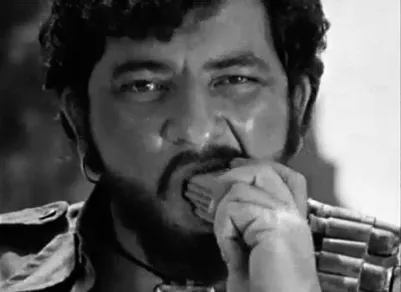
Figure 1.1 “Gabbar ki asli pasand” television ad for Britannia biscuits1
Scene one: The Sholay event
Generations of movie-going audiences still hear Gabbar Singh’s mocking question to his ill-fated henchman: “Kitne adami the?” (How many men were there?), he asks, the unsaid jab (and why were you unable to tackle them?) casting a chill in the air. The eponymous villain of Ramesh Sippy’s Sholay (1975), the sadistic daku (dacoit) of the rugged Chambal Valley, proved unforgettable. As Sholay’s reputation snowballed by word of mouth, the film became a cultural landmark unparalleled in its popular reception. It holds the record for 60 golden jubilees across India, doubling its original gross profits 1975–2000. Neighborhood festivals continued to play “Sholay dialogues” long after the departure of Sholay from theaters, quotidian performances of Gabbar’s role immortalized his menacing persona, and corporations deployed the famous image to consolidate markets (see, fig.1). Within a year, Sholay had become a long media event, its contents routinely repurposed in mass media and replayed in expressive popular culture.
Clearly the film’s romance with popular sovereignty over state power had tapped a vein: after all, the fearsome daku was only the malignant doppleganger for the heroes Viru and Jay, the latter played by the megastar Amitabh Bachchan (the angry young man of the 1970s2), who were unrepentant pranksters against the law. Attuned to Sholay’s scorn of the rule of law, the Indian Censor Board refused to certify the original ending to the film where Thakur kills Gabbar Singh and justice is won by popular mobilization.3 At the cusp of the Indian Emergency (1975–77), a period that deepened postcolonial disillusion about the democratic state’s commitment to civil liberties, Sholay would erupt into an event—a “creative event” (événement matrice) activating a cultural figuration of the outlaw.4
No surprise, then, that fiction would spill over into the real world of social banditry. Real-life social bandits would feel its magic touch. If the historical Gabbar Singh had been one of many Chambal Valley dacoits killed in a police ambush, 1965, the fictional Gabbar immortalized the daku as a lone figure and celebrated his defiance of the law. Hence Phoolan Devi, India’s famous bandit queen who captured the national imagination with her moral surrender in 1983, could bank on both the vigilante and the outlaw’s cultural purchase—and particularly, on their opposition to the law-abiding action as reasonable action. Sholay turned out to be Phoolan Devi’s first film, the hunted bandit disappearing, once again, from the theater just before the police arrived. More famously, one policeman recounts her Gabbar-like mockery in an emasculating provocation to police forces echoing over the inaccessible Chambal beehads (ravines): “Goliyan nehi hai to chudiya pehenlo!” (If you have no bullets, be sure to wear bangles; my translation).5 Together the two figures, Gabbar and Phoolan Devi, configure the mythic social bandit that haunts the Indian rural hinterlands envisioned on the silver screen. That configuration or “diagram”—assembling the petite Phoolan Devi and the corpulent Gabbar Singh—is now a prime cultural commodity: package tours of the notorious beehads are offered in Gabbar and Phoolan Devi’s name for tourists visiting the state of Madhya Pradesh.6
Movie buffs could unearth an abundance of curious connections between the fictional and real bandit vibrant in the national social imaginary by the mid-eighties. Jaya Bachchan (who starred as the romantic interest for Jay in Sholay)—the daughter of the renowned journalist Tarun Bhadhuri, who had accompanied Acharya Vinoba Bhave on his 1958 padyatra (mission on foot) to the India’s Chambal Valley to reclaim the hearts of the baaghis (rebels)—insisted Amjad Khan read her father’s famous Abhishapta Chambal (The Accursed Chambal, 1958) as preparation for the Gabbar role. Here, the plot thickens, for the first cinematic venture inspired by the book—one so wildly popular in Kolkata that Satyajit Ray, no less, encouraged Bhadhuri to write an English version (Chambal: The Valley of Terror, 1972)—was Ashok Roy’s Bengali-language film, Putlibai (1972). Based on the original “bandit queen” of the Chambal, Roy singled out the lone feminine figure from her many male counterparts. Sholay followed, its success encouraging Roy who was still fascinated by the female outlaw to now focus on Phoolan Devi: his Bengali-language film, Phoolan Devi (1984) was followed by a Hindi version, Kahani Phoolvati Ki (1985), aimed at a larger national audience. Both of Roy’s popular melodramas starred Reeta Bhaduri (Tarun Bhaduri’s daughter, and Jaya Bhaduri/Bachchan’s sister). These were succeeded by the equally populist Daku Hasina (1987), featuring the siren-star Zeenat Aman, after the infamous massacre at Behmai and Phoolan Devi’s surrender. By 1987, as she languished in jail, Phoolan Devi had become a national legend, in part drawing her cultural purchase from the gloried infamy of these fictionalized social bandits. As I will shortly argue, the Roy films, a forgotten part of the bandit diagram in the Indian social imaginary after Sholay, not only link mass cultural cinematic avatars (Sholay and, later, Shekhar Kapur’s controversial Bandit Queen, 1994, made for BBC’s Channel Four7) to regional folklore (the bandits in oral biraha cycles, for instance), but they irrevocably establish the Chambal Valley as India’s heart of darkness—still to be brought into the fold of modernity. Since then Phoolan Devi’s bloody saga has been captured on the screen several times; and oral legends transcribed in cinema—as Vishal Bharadwaj notes of his popular epic on modern bandits, Omkara (2006)—continue to charm audiences.8
The Gabbar Singh/Amjad Khan, Jaya Bhaduri/Bachchan, Tarun Bhaduri, Ashok Roy, Phoolan Devi linkages yield not just archival pleasures. They reveal a larger cultural field of oral, print, and audiovisual media where a specific constellation—the lone defiant outlaw vulnerable to state violence— emerges as the haunting remainder of the failed democratic state. A constellation of real and imaginary emergences in mass media and popular culture, and thereby a “diagrammatic relation” in the Deleuzian sense, this recursive cultural figure will be the subject of this essay. How do we explain the endurance of this diagram enclosing a massive repertoire of iconic images? Given the steady entry of illustrious individualized outlaws into political life, what cultural work does such a repertoire achieve? At stake is how cultural figuration becomes political ontology, an inquiry that proceeds along three vectors. First, the semiotic: I chart the grammar of the “outlaw icon” as a diagram that manages the huge cultural repertoire yawning across multiple media fields. Here, as I have argued elsewhere,9 the outlaw appears as a deeply corporeal aperture, a tactile-optical diagram that facilitates incorporation into the social in acts of embodied consumption. Second, the historical: I focus on the historical category of the social bandit to consider its cultural recursivity. I argue for the persistence of the social bandit as a symptom of deep uncertainties—over-political representation and land acquisition, primarily, but also in context of emerging industrial and economic networks. Therefore the social bandit is hardly an archaic category; rather, amid new conflicts over land and energy resources, we see the demand for social justice continue past the colonial era. Finally, the political: I argue for the icon’s capacity to potentialize collective aspirations, its status as a virtual image constantly becoming real in public culture. I propose the outlaw icon as an event, one whose pursuit yields a hauntology of Indian politics. A sensate, volatile figure, the recalcitrant outlaw icon—born of political desire—functions as a remainder: it embodies a structure of feeling that recognizes continuing state violence against subaltern populations.
The sensate icon: The sign as technology
In a larger work, Global Icons: Apertures to the Popular, I argue the figurative economy of the icon enables it to periodically operate as a magical technology of the popular (Ghosh, 2011). I will not rehearse that argument here, but select observations made there are relevant to the sensate cultural figure that is the outlaw. Often lone (as opposed to contemporary gangsters embroiled in power struggles), always defiant of the law but also vulnerable to its thanatopolitics, the outlaw icon in South Asia straddles a formidable repertoire of vernacular manifestations: outlaw avatars range from legends (oral lore, later transcribed in print media) such as Putlibai, memorable for dying with the Qu’ran in one hand and a bottle of rum in the other; to real-life subjects of investigative journalism, such as Veerappan, the sandalwood smuggler wittily christened “the bandit king”; and cinematic heroes such as Phoolan Devi. These iconic images in popular culture circulate as commodities (the premiere instance, Kapur’s global subaltern fetish, Phoolan Devi), or even waste, as art historian Kajri Jain (2007) maintains in Gods in the Bazaar, until “re-sacralized” through acts of worship. On those occasions, the vernacular sacrality of oral culture turns mass commodity into singular image. Art historians and religious studies scholars alert us to this possibility, to the “making” of icons in the labor of veneration (see, for instance, Alfred Gell on magical agency or David Morgan on popular religiosity).10 The point is that the icon cannot ever be relegated to representation alone; it’s very grammar gestures to the real, to the actors engaged in forms of collective adoration or desecration.11
My gamble is the distinction of the iconic image will provide a critical frame for investigating the machinic propensities of figuration in general. Notwithstanding its varying status with regard to something larger (the divine, nature, or the social as absent totality), as art historians, religious studies scholars, and ethnographers demonstrate in the necessarily situated explorations of icon veneration, I have argued it is possible to stabilize a grammar of the icon across cultural contexts—despite the well-rehearsed differences between iconoclasm and iconophilia.12 Here the work of semioticians, notably the pragmatist Charles Sanders Peirce, whose exegeses fell into critical disrepute following the ascendancy of Sassurian epistemologies in the academy, provides some initial direction. Most semioticians will agree the iconic image involves an epistemological encounter: we perceive an icon when we have seen it before, when it jogs our cultural memory. Culturally familiar, the always-graphic image that is icon often elicits a cursory glance, since it mostly functions as shorthand. It relies on the repetition of formal elements, stabilized in a minimal iterative trace that has annexed symbolic resonances; over time, these resonances appear as the icon’s natural, universal properties. More importantly, the iterative trace indexes something greater: “Google Earth” opens into virtual planetary space where we lose ourselves even as the Tank Man opens into a (deceptively) universal social totality where everyone desires political freedom. Such myth-making capacities, Roland Barthes warns,13 can too easily naturalize culturally particular aspirations (the American desire to export a specific kind of democratic expression) as universal ones. Therefore, in its commodity form, icons can be routinely deployed for hegemonic gain. Nations demand the allegiance to their flags, orthodox religious coteries their gods (e.g., Ram for the Indian Hindu Right), and governments their iconic monuments (e.g., the Vietnam memorial). By the same token, icons also emerge as symbols through which heterogeneous social groups place popular demands—something in the order of the phantasmatic object necessary for the articulation of the popular, as Ernesto Laclau (2007) has argued in his exegesis on populist reason. Tahrir Square, for instance, has passed into global cultural memory as a symbolically loaded image mobilized in popular struggles across the world.
If the formal grammar posits the icon as an “aperture,” an opening in an optical field, Peirce elaborates its sensate economy. The icon, he explains, much like the its counterpart, the index, is a “natural” or “degenerate” sign in its sensory likeness to an ontological object; unlike the symbol, a sign whose connection to the referent is arbitrary and therefore mandates abstraction, the icon depends on sensory perception and not rational cognition alone (Peirce, 186714). An embodied encounter, the icon activates a loss of the coordinates that institute a subject as separate from a perceived object, a haunting forgetfulness constitutive of synaesthetic immersion. Affect theorists of the post-Cartesian subject, particularly those indebted to Gilles Deleuze, privilege what Peirce saw as “loss”; they underscore the corporeal dynamism of the subject that moves toward matter, an experience activated by sensuous media-like icons. An onrush of sensations—excitations in the nervous system, too many to be processed and organized immediately as perceptions or affections, Brian Massumi (2002)15 explains—enables such movement. Highly decorative, lustrous objects such as icons, Elizabeth Grosz (2008) maintains in her elaboration of Deleuze’s Francis Bacon: The Logic of Sensation (2005), place the subject in contact with the “unlivable forces of the universe” (as Deleuze calls them). New pathways and connections can emerge at such momentous ontological becoming—pathways that Grosz perceives as truer to the open-sociality of the body. It is this sensate encounter that Deleuze, referring back to Peirce, marks as a “diagrammatic relation”: in Francis Bacon’s paintings, he explains, color elicits sensations that initiate synaesthsia, the optical (the apparatus central to the icon as a graphic sign) passing over into the haptic. Bacon’s t...
Table of contents
- Cover
- Title
- Copyright
- Contents
- List of Figures
- Notes on Contributors
- Introduction
- Part I Political and Typological Figures
- Part II Generic Mutations
- Part III Star Figures
- Part IV Figuring (out) New Bollywood
- Afterword
- Index
Trusted by 375,005 students
Access to over 1.5 million titles for a fair monthly price.
Study more efficiently using our study tools.
Frequently asked questions
Yes, you can cancel anytime from the Subscription tab in your account settings on the Perlego website. Your subscription will stay active until the end of your current billing period. Learn how to cancel your subscription
No, books cannot be downloaded as external files, such as PDFs, for use outside of Perlego. However, you can download books within the Perlego app for offline reading on mobile or tablet. Learn how to download books offline
Perlego offers two plans: Essential and Complete
- Essential is ideal for learners and professionals who enjoy exploring a wide range of subjects. Access the Essential Library with 800,000+ trusted titles and best-sellers across business, personal growth, and the humanities. Includes unlimited reading time and Standard Read Aloud voice.
- Complete: Perfect for advanced learners and researchers needing full, unrestricted access. Unlock 1.5M+ books across hundreds of subjects, including academic and specialized titles. The Complete Plan also includes advanced features like Premium Read Aloud and Research Assistant.
We are an online textbook subscription service, where you can get access to an entire online library for less than the price of a single book per month. With over 1.5 million books across 990+ topics, we’ve got you covered! Learn about our mission
Look out for the read-aloud symbol on your next book to see if you can listen to it. The read-aloud tool reads text aloud for you, highlighting the text as it is being read. You can pause it, speed it up and slow it down. Learn more about Read Aloud
Yes! You can use the Perlego app on both iOS and Android devices to read anytime, anywhere — even offline. Perfect for commutes or when you’re on the go.
Please note we cannot support devices running on iOS 13 and Android 7 or earlier. Learn more about using the app
Please note we cannot support devices running on iOS 13 and Android 7 or earlier. Learn more about using the app
Yes, you can access Figurations in Indian Film by Meheli Sen,Anustup Basu in PDF and/or ePUB format, as well as other popular books in Media & Performing Arts & Film & Video. We have over 1.5 million books available in our catalogue for you to explore.