- English
- ePUB (mobile friendly)
- Available on iOS & Android
eBook - ePub
About this book
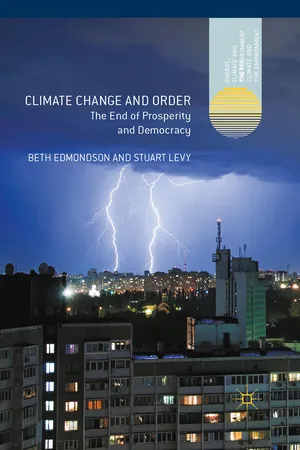
Beth Edmondson and Stuart Levy examine why it is so difficult for the international community to respond to global climate change. In doing so, they analyse and explain some of the strategies that might ultimately provide the foundations for appropriate responses.
Information
1
Waiting for What?
Introduction
Through much of 2009, the world waited for political leaders to convene at a climate summit in Copenhagen. In turn, many of these leaders waited for others to lead the way in declaring emissions targets and other political strategies for responding to climate change. Overall, 2009 was a year in which the world waited for a new program of action to emerge. Some held high expectations of likely comprehensive agreements. Some expected that the Copenhagen Summit would provide a venue for intense political bargaining. Many believed that a raft of linked agreements would emerge from what was expected to be one of the most important meetings of government leaders since the first international climate change discussions of the 1980s. Even those with relatively modest expectations anticipated the likely negotiation of parameters for a new global climate change agenda. Few expected that this cornerstone event in 21st-century political leadership would result in so little. The Copenhagen Climate Summit provided no substantive new emissions targets, no new international standards or strategies and no new political alliances or coalitions of interests to support subsequent initiatives.
Instead, the Copenhagen Summit produced an agreement to wait and-see how climate change consequences unfold, how and which states meet their previously set targets and how the weight of scientific consensus reconfigures projections of likely climate change impacts. In effect, this amounts to a general political preference for doing nothing to respond to climate change in order to protect a business-as-usual pursuit of economic prosperity. The failure of government leaders to commit their own peoples and industries to reducing greenhouse gas emissions can only be understood in terms of wilful non-response. The wait-and-see approach adopted at Copenhagen was chosen by political leaders of societies who prefer to continue to enjoy the comforts and prosperity afforded by immediate and ongoing mass consumption of fossil fuels. Their non-response positions derived from clinging to hopes of easy solutions or the possibility that costs will be borne by others because these political leaders deemed the short-term political costs of pursuing meaningful climate change adaptation and mitigation responses too high. At present, intensive industrial production and the maintenance of an international political economy are privileged over other imperatives because progress, prosperity and democratic freedoms override other considerations. Consequently, global climate change will continue to impact upon the earth, its populations and forms of human societies for decades to come with escalating impacts upon habitats and livelihoods.
Analyses of the Copenhagen Climate Summit as short-sighted shifting of hopes towards new technologies, or a lack of willingness among affluent states to accept large-scale changes to their economies and lifestyles, miss the central point. These failures are derived from an unwillingness to take unilateral actions and assume leadership roles as well as an absence of shared alternative political ideals and visions across the world. It is not merely in the context of global climate change that leaders of governments have revealed preferences to let others bear costly burdens. The histories of international peacekeeping, pollution management and uneven economic development are replete with these political dynamics.
Effective climate change responses are only likely to emerge following the exertion of pressure upon political and economic actors to demonstrate new forms of political leadership that seek to preserve human societies into the future. Contemporary states are particularly sensitive to political pressure from other states and intergovernmental organisations, and these might serve to support new expressions of political leadership. At present the diversity of states creates obstacles to the collective decision-making that was previously anticipated in international climate change conferences and forums. Diversity increases states’ tendencies to cling to historically based political visions and relationships as sources of effective order to support their continued territorial independence. These political realities are not new, so closer observation of the events leading up to the Copenhagen Climate summit should have enabled very limited outcomes to have been widely anticipated. This does not mean, however, that we should accept non-responses as either inevitable or tolerable.
The leaders of modern sovereign states are poorly equipped to demonstrate the forms of political imagination that are now required for responding to global climate change. The mainstays of international political dealings between states, such as trade, diplomacy and collective security, are poor vehicles for political change, although they have proven relatively effective at enabling predictability in relations between states. This quest for international stability contributes a powerful inertia in international settings where changed political values and visions are involved. Stability and predictability constitute powerful international dynamics because they support economic well-being and security. Many states are currently incapable of de-coupling their hopes of economic prosperity through industrial production from beliefs in the independence of statehood. These organising principles and patterns of conduct between states are unlikely to support changed forms of relations and visions of well-being.
Climate change, the availability and possession of useful resources and maintaining global order present particular challenges for world peace. Avoiding the worst consequences of climate change and redistributions in resources will be improved by revisiting the international political community’s ideas, values and sources of political authority and by re-examining states’ power and capacities to provide security. World responses to global climate change, and the major economic and political reconfigurations arising from it, will be determined by the sources and dynamics of major tensions between states and their opportunities and abilities to promote the peaceful resolution of conflict. Climate change presents significant challenges for the relations between states, including their orderly conduct in recognising other sovereign authorities and their continued general adherence to principles of non-intervention (Edmondson, 2011; Barry and Eckersley, 2005; Postiglione, 2001; Mathews, 1991).
Changes in the patterns, volumes and distribution of rainfall and corresponding increases in droughts and floods will impact upon the availability and locations of arable land and useful water resources (Dow and Downing, 2007). These changes will alter where people might live, where and how cities might be sustained and how the world’s populations might support themselves, including through food production (Romero-Lankao, 2008; Roaf et al., 2005). Additionally, warming oceans affect marine-life stocks, their breeding and food cycles, ocean currents and their cooling effects. These changes shape subsequent weather patterns because the oceans are key drivers of wind, rain, cloud formation and the earth’s abilities to absorb carbon dioxide.
Rising sea levels will ultimately impact upon all land masses, and this basic change in the physical world will have enormous political ramifications. At present, political leaders tend to treat rising sea levels as limited events that present challenges for particular states. The most notably affected are low-lying states that are surrounded by water, or those with especially wide river mouths where ocean inflow presents risks of freshwater contamination and flood (Dow and Downing, 2007). However, rising sea levels will challenge all states, and not just because of human migrations.
Rising sea levels are linked with the many other aspects of global climate change, most importantly, with changes to the geophysical drivers of climatic patterns that are most prone to high levels of unpredictability. These present the most difficult challenges for developing mitigation and adaptation strategies. Such changes, even if experienced at modest levels, disrupt orderly relations and structures within the international political community. The effects of climate changes will impact upon the circumstances and experiences of states and alter their traditional capacities.
Global climate change is presenting the international political community with a need for fundamentally different approaches in the ways that states seek security. It presents increasing challenges to states’ abilities to secure their identities and achieve their political and economic interests. These challenges also risk undermining states’ contributions to the ongoing maturation of the international political community. It raises further questions as to the roles that might be played by those states that, for reasons of ideology or capacity, are unable to make meaningful contributions to environmental issues which are becoming pressing. Although some states may be in a position to undertake leadership roles, it seems inevitable that others will lack the political adaptability required to lead effectively in this new environment. Many will struggle to demonstrate timely responsiveness to information, and some will resist attempts to pursue responses under the leadership of others.
Large-scale resource and territory wars are not inevitable in the 21st century, but neither is their avoidance assured. Minimising conflicts arising from fresh water and energy shortages will rely upon political management of social and economic vulnerabilities (see Chapters 5–7 for further discussion of these issues). Maintaining international order relies upon the international political community becoming a guardian of the global ecosystem through governance mechanisms that overturn accepted divisions between domestic (internal) and international (external) activities among states. Central to this are the questions: At what point do states and the international political community accept responsibility for initiatives to address climate change and its consequences? When will they exercise the political leadership required to achieve mitigation and adaptation strategies to preserve human communities into the future?
The challenges of increasing atmospheric and ocean temperatures, more frequent and more severe storms, shortages in useful water supplies and problems of maintaining orderly relations among states require the reinvention of international structures and accepted modes of conduct among states (Dyer, 1996). Global climate change presents the international political community with major challenges that further reduce the utility of pre-existing understandings of order and the nature of sovereign states (Gardiner and Hartzell-Nichols, 2012, pp. 1–3; Diehl, 1997). This is only partly because climate change consequences transcend borders and potentially disorder our understandings of security. Maintaining fixed borders, protecting people and resources can no longer be held as central roles of states when they can no longer be secured or come to be directly threatened by environmental challenges. If mitigation and adaption strategies are to reduce the extent and magnitude of global climate change consequences, they will rely upon decision-making capacities of states that overcome the dilemmas arising from representative political systems, modern economic production and consumption. Solutions will rely upon international agreements that recognise unequal capacities for adaptation among states and accommodate notions of justice (Markowitz and Shariff, 2012a; Page, 2006). Leaving some states behind will not provide good outcomes for any.
As the effects of climate change become more pronounced, states and the human communities they contain will experience new costs and limitations arising from their geographic locations (United Nations Development Programme, 2008). Agricultural practices and viability will be jeopardised in some regions of the world as weather patterns change and the amount of land suited to food production is reduced. The need to curb reliance upon fossil fuel use, in industry and transportation to minimise further greenhouse gas emissions, will also impact upon what can be produced, where and for what cost. The increasing incidence of extreme weather events, such as more intense tropical cyclones and storms, are projected to affect larger areas as they move further toward the poles. Similarly, heatwaves, drought and flooding from storms and concentrated rainfalls are predicted to become more commonplace (Intergovernmental Panel on Climate Change, 2007b; Gore, 2006; Flannery, 2005).
All such events will have economic and social costs (United Nations Development Programme, 2008; Stern, 2006). Slowly rising sea levels will inundate low-lying coastal regions and urban centres. These will disrupt daily life and national economies as agriculture, industries and human settlements relocate. Changes such as these will impact the global population in countless ways and force political responses as demands grow for policies and actions to address their consequences and underlying contributing causes (United Nations Development Programme, 2008).
The political composition of states, and the international political community constructed by them, emphasise states’ rights to independent decision-making and have nurtured hopes of economic prosperity through industrial production and trade. The ideas that underpinned states’ behaviour and identity have created an international political community that pursues order and security through economic expansion (Philpott, 2001). Chief among these ideas has been respect for the sovereign integrity of states, which was understood to depend upon widespread acceptance of states’ rights to be protected from intervention by others, especially in their internal affairs (Najam, 2005a; Kütting, 2000; Hoffman, 1997; Morgenthau, 1973). This right underpinned their pursuit of industrial development and economic progress and has constructed an international political community with limited capacities for responding to global climate change. The contemporary global political issues of addressing climate change and maintaining order reveal the possible end of autonomous security, upon which sovereign statehood relies.
For modern states, everything – the provision of food, shelter and employment for the population, together with production and the balance of trade – depends upon the availability and management of an extensive list of resources. Sovereignty, security and economic growth are all intimately aligned with resource use. Concerns about long-term land and resource use are largely a relatively recent addition to the list of state responsibilities. In the face of 21st-century climate change and resource redistribution, scarcity and competition become matters over which even the most powerful states can exercise only limited control.
The nature of the international political community partially explains why it continues to struggle to achieve effective international agreements for global climate change mitigation and adaptation strategies. The manner in which collective responses to problems are determined and enacted has been premised upon expectations that major threats to well-being will affect only groups of states. In the 21st century, these expectations are affecting economic, social, cultural and strategic relations between states and these impacts will increase as global climate change impacts unfold. In spite of some obvious links between environmental management and governance, many states have shown themselves reluctant to accept responsibility for the environment except in relation to resource use. As noted by Page (2006, p. 4), ‘the popular view has been that the bad effects of weather are regrettable but not unethical, inequitable or unjust … since they are no one’s fault’. This confirms attitudes towards the physical environment as one of the ‘givens’ within which governments conduct themselves and pursue their visions of economic prosperity and social progress. In most societies, the environment provided a backdrop to political affairs, constituting a source of valuable resources and a recreational facility (Ponting, 1991).
Important political structures
Old concepts and systemic dynamics no longer ensure orderly conduct in international relations, and, as the diverse consequences of global climate change highlight inequalities, we might anticipate the emergence of new political divisions and attempts to establish new structures. New major powers are likely to be those that accommodate and positively respond to these new challenges. New understandings of international relationships, actors and processes will be important for 21st-century political practices as pre-existing dynamics, such as beliefs in progress as a measure of effective government and security through non-intervention lose utility. Likewise, current security preoccupations with religious and ethnic identities as sources of tension between states, and likely security risks within them, offer little that is useful for appreciating how the international political community should respond to contemporary global climate change and related environmental concerns. In the 21st century, as climate change and water resource issues impact more directly upon states’ capacities, it will be important to understand states’ abilities to generate new modes of production, forms of political authority and accepted behaviour in cooperative decision-making.
Autonomous security, articulated in the form of independent sovereign statehood, was previously considered a rational means of securing political independence (Waltz, 1979). Over time it produced an international political system that contributed both directly and indirectly to environmental destruction and created an array of structural problems. Sovereignty created ideas of independence, economic progress and security that produced actions among states that were intelligible and defensible during the 19th and 20th centuries. Among these were ideas about resource security and exploitation, progress as a competitive measure of comparative civilisation and the pursuit of rival policies to promote physical security and social identity. In the 21st century, however, many of the long-term consequences of these ideas and actions have become dangerous and threaten the future viability of states, the international political community and the global environment.
The expanding size and range of activities undertaken by human communities in pursuit of higher standards of living constitutes ‘a potential threat to the environment’ (Jackson and Sorensen, 2007, p. 256). Human action supported by sovereign states has resulted in ‘widespread ecological degradation’ (The Commission on Global Governance, 1995, p. 29). The natural environment is no longer entirely natural; it has been shaped and impinged upon by successive human communities that have changed its composition and functioning. Whether or not human communities have been wholly responsible for the onset of climate change, or have merely contributed to a range of causal factors, is beside the point. The consequences of changes in the global ecosystem will have to be dealt with by international political actors, including states, engaged in communal problemsolving.
Dividing the international political community into sovereign territorial states and an expanding host of ‘other’ actors with lesser rights, obligations and prerogatives may prove detrimental to timely climate change responses. While states remain central actors, they are also problematic sources of authority because their independence and drives to protect their own people, territory and resources ahead of the needs of others creates enduring divisions and limits communal problemsolving (Gardiner and Hartzell-Nichols, 2012; Edmondson, 2011). The...
Table of contents
- Cover
- Title Page
- Copyright
- Contents
- List of Figures and Tables
- Series Editor’s Preface
- Preface
- Acknowledgements
- Introduction: Why We Wrote This Book
- 1. Waiting for What?
- 2. Limits to Global Consensus
- 3. Governing Nature and Global Governance
- 4. A Rowdy and Unruly Community
- 5. Water, Disorder and Disrupted Development
- 6. Energy, Progress and Population
- 7. Energy and the Security Dilemma
- 8. Water, Food and Fire
- 9. Solutions, Ideas and Institutions
- 10. Rights, Responsibilities and Sovereignty
- 11. Identity, Ethics, Security and Order
- 12. Global Guardians
- Conclusion: Why Global Responses Take Time
- Bibliography
- Index
Trusted by 375,005 students
Access to over 1.5 million titles for a fair monthly price.
Study more efficiently using our study tools.
Frequently asked questions
Yes, you can cancel anytime from the Subscription tab in your account settings on the Perlego website. Your subscription will stay active until the end of your current billing period. Learn how to cancel your subscription
No, books cannot be downloaded as external files, such as PDFs, for use outside of Perlego. However, you can download books within the Perlego app for offline reading on mobile or tablet. Learn how to download books offline
Perlego offers two plans: Essential and Complete
- Essential is ideal for learners and professionals who enjoy exploring a wide range of subjects. Access the Essential Library with 800,000+ trusted titles and best-sellers across business, personal growth, and the humanities. Includes unlimited reading time and Standard Read Aloud voice.
- Complete: Perfect for advanced learners and researchers needing full, unrestricted access. Unlock 1.5M+ books across hundreds of subjects, including academic and specialized titles. The Complete Plan also includes advanced features like Premium Read Aloud and Research Assistant.
We are an online textbook subscription service, where you can get access to an entire online library for less than the price of a single book per month. With over 1.5 million books across 990+ topics, we’ve got you covered! Learn about our mission
Look out for the read-aloud symbol on your next book to see if you can listen to it. The read-aloud tool reads text aloud for you, highlighting the text as it is being read. You can pause it, speed it up and slow it down. Learn more about Read Aloud
Yes! You can use the Perlego app on both iOS and Android devices to read anytime, anywhere — even offline. Perfect for commutes or when you’re on the go.
Please note we cannot support devices running on iOS 13 and Android 7 or earlier. Learn more about using the app
Please note we cannot support devices running on iOS 13 and Android 7 or earlier. Learn more about using the app
Yes, you can access Climate Change and Order by Beth Edmondson,Stuart Levy in PDF and/or ePUB format, as well as other popular books in Politics & International Relations & Environmental Economics. We have over 1.5 million books available in our catalogue for you to explore.