- English
- ePUB (mobile friendly)
- Available on iOS & Android
eBook - ePub
About this book
Sound experimentation by avant-garde theatre artists of the late-nineteenth and early-twentieth centuries is an important but ignored aspect of theatre history. Curtin explores how artists engaged with the sonic conditions of modernity through dramatic form, characterization, staging, technology, performance style, and other forms of interaction.
Information
Subtopic
Art GeneralCHAPTER 1
THE ACOUSTIC IMAGINARY
YOU ALREADY KNOW ABOUT THE ACOUSTIC IMAGINARY. If you have ever had a tune stuck in your head (an “earworm”) or have recalled the sound of someone’s voice or of a particular place, or have mistakenly thought you heard something in your immediate environment, then you have experienced the faculty of imagined hearing. Theorists and psychologists have given this phenomenon a variety of names, but there is broad consensus about its meaning: some sounds we only think we hear; they exist not in the phenomenal world but in the “mind’s ear.”1 This does not necessarily make them any less real. Most of the same areas of the brain activate when we hear a sound imaginatively as when we hear “actual” sound.2
When I was a child I had a hearing test. This consisted of identifying tones of different frequencies in order to map my hearing range. An audiologist gave me a pair of headphones and told me to press a button whenever I heard a sound. What fun, I thought! I was soon identifying boops and beeps both high and low—quiet foghorns in the night. At first, the tones were evenly spaced, but they gradually began to cluster together, or so it seemed. I began to hear an assortment of sustained pitches: far more, it turned out, than was coming through my headphones. The audiologist was not amused. She thought I was being mischievous and pretending to hear sounds just so I could press the button. She was mistaken. If memory serves, I genuinely thought I could hear additional tones. How was I to know some of these were phantom? Thankfully, this was an isolated incident. I do not suffer from auditory hallucinations or the condition of tinnitus (ringing in the ears) that can drive people to distraction—though just writing about this has made me mentally hear a piercing sound (it is like the trick directive not to think about a purple elephant; one invariably does so). Reader, don’t imagine ringing in your ears.
The ability to hear sound imaginatively is a boon for musicians. Composers speak about hearing music fully formed in their heads before scoring or practically creating it. Some conductors are able to read an orchestral score and imagine its complete sounding. People with absolute pitch can identify and produce named pitches without external reference or support. These abilities form part of the lore surrounding figures like Mozart, Schubert, Weber, Schumann, Gluck, Tchaikovsky, Berlioz, Bruckner, Wagner, and—perhaps understandably, given his profound deafness in later life—Beethoven.3 However, this faculty may be a curse as well as a blessing, akin to the schizophrenic condition of hearing internal voices (Tchaikovsky was reportedly tormented as a child by the music in his head; likewise, Schumann is thought to have spent his final years in an asylum mentally obsessing over a single tone in the key of A).4 We can try to block unwelcome sound if it is coming from without by covering our ears, say, or masking it with other input; this is harder to achieve if sound is self-generated. Technically, all sound is a psychoacoustic conception. Without rehashing the old philosophical chestnut about a tree falling in an empty forest, it is worth noting that sound is anthropocentric: it is a human perception of vibration, not a discrete thing-in-itself. As Jonathan Sterne remarks, “[We] can say either that sound is a class of vibration that might be heard or that it is a class of vibration that is heard, but, in either case, the hearing of the sound is what makes it.”5 This is not just an issue of semantics; it has bearing on how we conceive of sound, what we make of it, and how we distinguish acoustic perceptions. If sound is not simply natural, not merely external to ourselves, but rather something we create through the mechanism of hearing, then we need to account for its subjective nature and consider how it may help to form us as listening subjects.
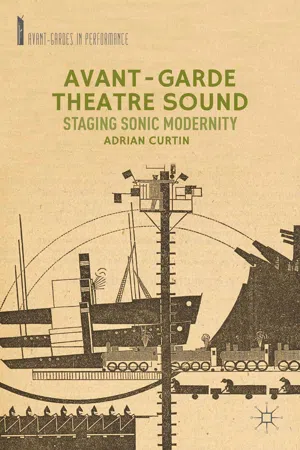
The acoustic imaginary is not just a quirk of human hearing; it is also an artistic formulation. An artwork can connote an acoustic imaginary: a conceptual framework prompted by “real” or imagined hearing. Music can suggest narrative, landscape, imagery, characters, and so forth, as evinced in the symphonic poem, a musical genre popular in the latter half of the nineteenth century and the early twentieth century, which aims to tell a story in music. Film composers capitalize on music’s illustrative and connotative powers. Who can hear John Williams’s famous two-note leitmotif from Jaws and not picture a shark in the water? (Answer: someone unfamiliar with this trope.) Poems and novels connote acoustic imaginaries through language. The reader may imaginatively hear a presented scene or image, filling in the blanks, recreating or elaborating upon an artistic construction. Visual art can also have sonic signification, as contradictory as this might seem. Looking at a painting or illustration can conjure an auditory impression of it (e.g., this book’s cover image, which depicts Avraamov’s Symphony of Sirens.). Even fine art (e.g., sculpture) might be thought to elicit aurality in construction, if not design.6 A play can have an acoustic imaginary too. This forms part of what Andrew Sofer calls theatrical “dark matter”: “the invisible dimension of theatre that usually escapes detection, even though its effects are felt everywhere.”7 The acoustic imaginary of the play-as-text and the play-as-performance may or may not align depending on the staging. One of the things a theatre sound designer can do is realize the acoustic imaginary (or an acoustic imaginary) of a play text, transforming conceptual sound into actual sound—ideally without being terribly obvious about it.
A prime example of an acoustic imaginary in drama is the hallucinated titular sound of Leopold Lewis’s melodrama The Bells (1871). In this play, imagined sound has psychological import and motivates the plot. The protagonist, Mathias (famously played by Henry Irving), is forced to confront his past action of murdering a passing Jewish merchant for his money and covering up the crime. His inner turmoil is prompted by sleigh bells worn by the Jew’s horse ringing in his ears as a reminder of the crime he has repressed. In a 1926 silent film version directed by James Young, the imagined jingling is presented through trick photography as a visual superimposition of the Jew’s hand shaking bells; Lionel Barrymore (playing Mathias) signals the abnormality by clutching the sides of his head and gaping his eyes and mouth, looking the very picture of derangement (Figure 1.1). The silent film makes the acoustic imaginary—Mathias’s idée fixe—visually explicit. As the stage melodrama unfolds, Mathias becomes increasingly distracted, complaining about the “noises” in his ears (one remarkable stage direction says he tries to “squeeze sound out of ears”).8 His auditory hallucinations precipitate a visual hallucination of the crime scene (also presented onstage), and later a dream sequence in which he is quizzed about hearing the bells (“It is nothing! Nothing! ’Tis but a jangling in my ears”) and made to confess his crime upon the summoning of a mesmerist.9 At the end of the third act, the tolling of the death bell rung at Mathias’s nightmare-court segues into the peal of marriage bells for his daughter, marking a crossover between the acoustic imaginary and sonic reality of the melodrama: a bridge between Mathias’s “inner” and “outer” worlds made at the moment of his death.
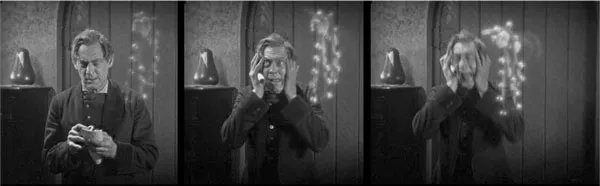
Figure 1.1 Lionel Barrymore as Mathias in James Young’s 1926 silent film The Bells.
Mathias’s imagined jangling is one of the keynote sounds of this chapter, which probes the significance of ambiguous and indeterminate sounds in modernist drama: sounds that operate in a liminal realm between reality and fantasy, a twilight zone of aural perception that shadows the interplay of sound and hearing in modernity. I argue that modern artists used sound creatively in drama and theatre to explore new, acoustically inflected modes-of-being. The acoustic imaginary, though not peculiar to modernity or modern drama, provided a means for modern artists to explore a type of subjectivity modeled on acoustic principles; sound thereby acquired new valence in dramatic design. It helped reveal conceptual domains and realms of experience that might otherwise be obscured or ignored. There is precedent for this line of thought. Elinor Fuchs suggests every dramatic world is conditioned by a “landscape imaginary,” a “deep surround suggested to the mind that extends far beyond the onstage environment reflected in the dramatic text and its scenographic representation. This spatial surround both emerges from the text and shapes its interpretation, guiding the ‘visitor’ to a reading in depth of the dramatic world’s scale and tone.”10 Fuchs notes a shift from “preconscious” to “conscious” landscape imaginaries in European dramatic texts of the late nineteenth century. She writes: “In the symbolic avalanches of Ibsen, the threatened forests of Chekhov, the ecstatically open or pathologically closed worlds of Wedekind, the trembling atmospheres of Maeterlinck, and the lehrscapes of late Strindberg one can begin to see landscape itself as an independent figure: not simply as ground to human action, but entering it in a variety of roles, for instance, as mentor, obstacle, or ironist.”11 The acoustic dimension inflected modernist drama in a similar fashion, intervening on or even constituting the action, imaginatively relocating listening subjects.
This chapter investigates some of modern drama’s most perplexing sounds, situating them in an intellectual and cultural history of sonic subjectivity (subject formation) in modernity, and identifying them as avant-garde provocations. I survey the dramatic sound worlds of Maurice Maeterlinck’s symbolist plays, highlighting his use of sonic ambiguity as a means of expressing the unknown and unknowable (key symbolist concerns); Anton Chekhov’s putative use of psychological sound as indicated in the infamous “breaking string” effect of Vishniovy Sad (The Cherry Orchard, 1903); and Wassily Kandinsky’s theory of “inner sound”—the essential nature of all things and the core principal or driving force of a work of art—in his 1912 stage composition Der Gelbe Klang (The Yellow Sound). I argue that these dream worlds of sound (nightmare worlds in some instances) were not simply escapist fantasies or forays into sensory disrepair but indirect engagement with the experiential possibilities of sonic modernity.
ACOUSTIC INTERIORITY
Modern drama’s fascination with imaginary sound—sound that seems to come from “within”—is connected to particular kinds of auditory engagement. Characters who ostensibly hear sounds in their heads, or whose principal means of knowing the world is through the sense of hearing, signal the importance of the auditory in forming modern subjectivity. Certain types of hearing, both real and imagined, helped shape what it meant to be modern in this period. One of these involved attending to sound in an isolated, subject-oriented manner. I call this “acoustic interiority.” We see examples on an everyday basis: people walking down the street, only half-engaging with the world around them, caught up in a bubble of sound because they’re listening to something on their personal devices. When we engage in headphone listening, we experience a private sound world; we turn inward, to an extent, and buffer our engagement with the outside world. (How comforting it can be to listen to a familiar piece of music on headphones while wandering through a strange city! Enclosing oneself sonically can shore up ontological security—though this means ignoring one’s actual sonic environment and possibly imperiling personal security.)
This particular form of acoustic interiority emerged in the late twentieth century; flâneurs in the fin de siècle did not have Walkmans or iPods, of course, though technology of this sort was adumbrated. It was nonetheless possible to hear sound in a mediated, immersive, and isolated fashion. Stethoscopes and telegraph machines facilitated individuated, specialized listening. In his study of sound in modernity, Jonathan Sterne outlines how “audile technique” developed throughout the “long” nineteenth century, tailoring listening to logic, analytical thought, professionalism, capitalism, and individualism.12 He shows how listening became a technical, virtuoso skill that could be developed and used toward instrumental ends, such as a doctor using a stethoscope to listen to a patient’s body for signs of health and illness or a telegraph operator listening to a machine with headphones and decoding a message with increased efficiency. As a result, focused auditory attention—the ability to discern signal from noise—acquired cachet. This encouraged ontological separation.
Audile technique did not occur in the collective, communal space of oral discourse and tradition (if such a space ever existed); it happened in a highly segmented, isolated, individuated acoustic space. Listening technologies that promoted the separation of hearing from the other senses and promoted these traits were especially useful. Stethoscopes and headphones allowed for the isolation of listeners in a “world of sounds” where they could focus on the various characteristics of the sounds to which they attended.13
Sterne argues that this listening technique, which relied on the construction of an individualized acoustic space “around” the listener, proliferated across cultural and media contexts in the second half of the nineteenth century and into the early decades of the twentieth century. Moreover, it was furthered by the growth of sound-reproduction technologies such as the telephone, the phonograph and gramophone, and later the radio (heard via headset), and functioned as a sign of social status. Audile technique was a bourgeois form of listening, Sterne writes, rooted in a practice of individuation: “listeners could own their own ac...
Table of contents
- Cover
- Title Page
- Copyright
- Contents
- List of Illustrations
- Foreword
- Acknowledgments
- Introduction: The Sound of No Hands Clapping
- 1. The Acoustic Imaginary
- 2. Theatre Sound in the Age of Mechanical Reproduction
- 3. Reinventing Language: Sense and Nonsense
- 4. Hearing Affectively: The Noise of Avant-Garde Performance
- Conclusion: A Resounding …
- Notes
- Bibliography
- Index
Trusted by 375,005 students
Access to over 1.5 million titles for a fair monthly price.
Study more efficiently using our study tools.
Frequently asked questions
Yes, you can cancel anytime from the Subscription tab in your account settings on the Perlego website. Your subscription will stay active until the end of your current billing period. Learn how to cancel your subscription
No, books cannot be downloaded as external files, such as PDFs, for use outside of Perlego. However, you can download books within the Perlego app for offline reading on mobile or tablet. Learn how to download books offline
Perlego offers two plans: Essential and Complete
- Essential is ideal for learners and professionals who enjoy exploring a wide range of subjects. Access the Essential Library with 800,000+ trusted titles and best-sellers across business, personal growth, and the humanities. Includes unlimited reading time and Standard Read Aloud voice.
- Complete: Perfect for advanced learners and researchers needing full, unrestricted access. Unlock 1.5M+ books across hundreds of subjects, including academic and specialized titles. The Complete Plan also includes advanced features like Premium Read Aloud and Research Assistant.
We are an online textbook subscription service, where you can get access to an entire online library for less than the price of a single book per month. With over 1.5 million books across 990+ topics, we’ve got you covered! Learn about our mission
Look out for the read-aloud symbol on your next book to see if you can listen to it. The read-aloud tool reads text aloud for you, highlighting the text as it is being read. You can pause it, speed it up and slow it down. Learn more about Read Aloud
Yes! You can use the Perlego app on both iOS and Android devices to read anytime, anywhere — even offline. Perfect for commutes or when you’re on the go.
Please note we cannot support devices running on iOS 13 and Android 7 or earlier. Learn more about using the app
Please note we cannot support devices running on iOS 13 and Android 7 or earlier. Learn more about using the app
Yes, you can access Avant-Garde Theatre Sound by A. Curtin in PDF and/or ePUB format, as well as other popular books in Media & Performing Arts & Art General. We have over 1.5 million books available in our catalogue for you to explore.