- English
- ePUB (mobile friendly)
- Available on iOS & Android
eBook - ePub
About this book
This book addresses the multi-facet competitiveness of firms in China from an angle of strategic management of technology and innovation. The Chinese vanguard companies have been excellent in identifying strategic position and appropriately making strategic decisions, and effectively making strategy in action.
Information
Print ISBN
9780230222465
Subtopic
Business Strategy1
Introduction
The teacher of Lao Tzu was a very old man.
“Where are my teeth?”, he asked Lao Tzu one day.
“They have gone”. Lao Tzu answered.
“And where is my tongue?”, he asked Lao Tzu again.
“It is still there”. Lao Tzu answered.
The hard cannot exist longer. However, the soft can sustain.
Rationale
The twenty-first century is an era of contending, an era of much reflection and re-thinking, and an era that calls for great wisdom and great strategy. In the last 35 years, the world has changed dramatically, especially between the West and East. The start of China’s economic reform and opening to the outside world in 1978, the collapse of the former Soviet Union in 1991, and the burst of the financial bubble on Wall Street in 2008 have all been combined with 35 years of great rejuvenation of the Chinese nation. These events changed the world and subverted people’s thinking, and made a huge impact on their judgment. The things that people believed in the past to be right have changed and so too have the things they thought to be wrong. In particular, East and West are facing different challenges. Great wisdom and strategy are required to deal with these challenges. What is the wisdom and strategy? This book argues that it is “West meets East”—an integration of Western management with Eastern philosophy.
The great philosopher Georg W.F. Hegel thought that ancient China had no philosophy in the real sense of the world, being in philosophical “prehistory”. It is a shame and regrettable that such an eminent authority made such a large error of judgment. However, Hegel was subject to the same constraints of time, space, and other objective conditions as everyone else, and as he had to rely on his knowledge of Chinese philosophy on inadequate translations, it is not difficult to imagine why he was so far off the mark (Tzu, 2007). Western management scholars again failed to predict the outstanding performance of Chinese companies. Twenty years ago, management scholars forecasted that despite the ambition and a strong desire to do so, Chinese companies would not join the ranks of the multinationals by this millennium. Personally, I left China 16 years ago as a business executive and, to be honest, the outstanding performance of Chinese firms since then is far beyond my expectation.
China’s re-rising has surprised well-known international economists. What they have learned, including their theories and models, means that they are not best positioned to interpret the trajectory of China’s economic development and growth. According to Hu Angang, an economist from Tsinghua University (personal communication), the World Bank has had to change its forecast report on China multiple times. China’s case proves that followers can not only catch up with forerunners, but also surpass them through technological leapfrogging. No doubt, strategic management of technology and innovation capacity, appropriate technology and innovation strategy, and science and technology (S&T) policy play a pivotal role. Nonetheless, China’s global economic impact presents outstanding innovation and creativity. The country’s entry into the World Trade Organization (WTO) has dramatically changed the international business landscape in an economy that the world is counting on for growth, which presents both opportunities and challenges to the global community. First, Chinese firms have competed on the basis of price; and, second, on the quality and command of local market knowledge. Many companies have made a successful transition from providing technical services to producing technical products (e.g. Geely and Lenovo). However, the WTO has changed the situation because foreign firms can enter the Chinese market and capture the same low-cost advantages. They have increasingly developed more local market knowledge (e.g. Microsoft and B&G), in particular the car manufacturers (e.g. Volkswagen and Peugeot). Therefore, how can Chinese firms continue to win? How can Chinese firms compete in the global market and the super-competitive environment? How can Chinese firms become fully-fledged global competitors?
However, I would like to present the big picture—the mind-map or the trajectory of my thinking in configuring this book, as illustrated in Figure 1.1. China’s rise and the change of economic power are shifting the international model. It is imperative to redefine competitiveness in the twenty-first century. As for China and Chinese firms, there are two important elements—“innovation in management concept and philosophy” and “innovation in technology and business management”—that secure the sustainable development of China and Chinese firms, and increase the competitiveness of both. The former has ensured a change in people’s mentality and ideology at a strategic level, while the latter has, at the operational level, secured economic development and raised people’s living standards and improved infrastructure.
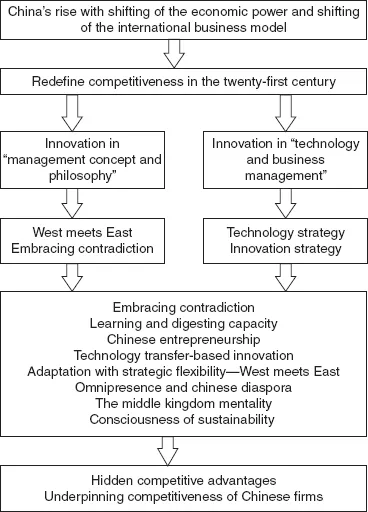
Figure 1.1 Mind map and philosophical notion of the book
Chinese Business Practice Shifts International Business Model?
At the enterprise level, for example, people believed in the twentieth century that firms should be big and strong, while twenty-first century thought is that, owing to the e-revolution and the internet business model, firms should be small and flexible (Anderlini, 2013; Wu, 2013). The concept of “Made in China”, having been replaced by “Designed in China”, continues to arouse curiosity throughout the world. The Wall Street Daily was surprised that from oil to iron mining, from chips to color television, from low carbon technology to green technology, from turbine technology to air bus technology, China has gone global and that Chinese companies are purchasing the “whole world”. The Financial Times has stated that China is a country in which high technology from the first world and cheap labor and raw material from the third world are combined together. Legend, now known as Lenovo, which was established in Shenzhen in 1984, purchased the PC department of IBM for US$1.25 billion. Securing ownership of British MG Rover, Nanjing Automobile, China’s oldest carmaker, developed research and development (R&D) and a technical facility in the UK. Haier Group, the Chinese electronics giant based in Qingdao, attempted a takeover of Maytag, the US microwave oven and vacuum cleaner conglomerate, while China National Offshore Oil Corporation was looking for Unocol’s technology and assets in the Asian region to leverage its own exploration opportunities and reinforce its own technology capacity. Geely, a private company established in 1986, dealing originally in spare refrigerator parts, successfully acquired Volvo in 2010 for US$1.7 billion (Yu and Li-Hua, 2010).
As the title implies, I will discuss the competitiveness of Chinese firms from a new perspective. I believe strongly that the competitiveness of Chinese firms is underpinned by strategic management of technology and innovation, and the integration of Western management with Eastern philosophy—how Chinese entrepreneurs understand technology and innovation strategy, and harness technology and innovation. First, my passion is to see how competitive advantage can be delivered through strategic management of technology and innovation. Thus, in early 2006, I launched the China Association for Management of Technology (CAMOT; http://www.camot.org). CAMOT, incorporated with the International Association for Management of Technology (IAMOT) and the International Forum of Technology Management (IFTM), offers its members association with professionals and academics in the field. Following the successful launch of the Journal of Technology Management in China by Emerald Insight in 2005, it has been acknowledged that there is a particularly close interaction between IAMOT, IFTM, and the founding members of CAMOT.
CAMOT is proud to be a partner of the United Nations in its Academic Impact initiative (http://www.academicimpact.un.org). CAMOT is an international organization committed to encouraging and supporting researchers and professionals who engage in research in strategic management of technology and innovation in China. It aims to establish national, regional, and international collaborative research programs in the field of technology management, technology transfer, and technology innovation, as well as knowledge transfer by engaging government agencies, funding agencies, educational institutions, state-owned enterprises (SOEs), and the private sector in China. CAMOT stresses the importance of keeping up with the fast pace of technological change and the emerging new global paradigms of the business environment. Management of technology is an important strategic instrument to improve competitiveness and create prosperity in China. CAMOT believes that there is a need for appropriate infrastructure, strategies, and mechanisms to be established in order to support the diffusion of management of technology principles throughout China, and a need to address the existing gaps in the process of technology management, which will assist in the implementation of more sustainable arrangements for successful technology transfer and innovation. The vision of CAMOT is to inspire excellence in the management of technology and to promote the appropriate diffusion of management of technology principles throughout China and beyond. In the meantime, CAMOT is committed to:
• providing a platform for researchers and professionals on which to debate how competitive advantages can be achieved through the application of successful technology management;
• provoking current and strategic thinking of how core competences can be achieved through technology management;
• providing a platform for Chinese researchers, academics, and practitioners on which to have close interaction with their counterparts in the West;
• providing a platform for researchers, academics, and practitioners in the West on which to have close interaction with their Chinese counterparts;
• advancing management of technology research in China;
• promoting management of technology education in China.
However, I am not denying the significance of other business functions, such as human resources (HR) management, financial management, project management, marketing strategy, and so on. In contrast to the bursting of the financial bubble on Wall Street in October 2008, it seems to make sense to reconsider competitiveness by emphasizing the strategic management of technology and innovation, which delivers the most sustainable competitive advantage.
Also, from a much broader perspective, I acknowledge that this book has benefited from other works on competitiveness, such as The Global Competitiveness Report 2005–2006 produced by the World Economic Forum (http://www.weforum.org/issues/global-competitiveness) and World Competitiveness Yearbook (IMD, 2006). In China, Jin Pei and his team have conducted excellent research on the competitiveness of Chinese firms. However, this work focuses on the integration of Western management with Eastern philosophy, blending technology, innovation, and sustainability, and the identification of soft capacity and evidence by addressing intangible resources, discussing knowledge creation, and tackling not only explicit knowledge, but also tacit knowledge.
Furthermore, I would like to stress that this discussion focuses on how Chinese firms created their competitiveness for sustainability through strategic management of technology and innovation. Less attention has been given to this area in the past. The Chinese vanguard companies have been successful in managing technology and innovation over 30 years since the economic reform in the late 1970s. They have been sharp in identifying their strategic position in the global market and making strategic decisions. And they have been effectively making strategy in action. These are regarded as the three pillars of strategic management. However, the lack of understanding of technology strategy with a separation between HR strategy and financial strategy has led to a number of failures in the past. Over 10 years ago, some companies discovered that, when plants were shut down, they had purchased second-hand equipment with out-of-date technology. Furthermore, the lack of knowledge on the appropriateness and effectiveness of international technology transfer prevented Chinese firms from creating competitive advantage by securing key technology.
Overview
One of the most important things in the twenty-first century is the rejuvenation of China. It is confidently predicted that China will be the largest economy in the world in five years, as expressed in terms of purchasing power parity. However, there is a totally different interpretation of its rejuvenation between the West and China. While acknowledging its dramatic economic growth is a remarkable achievement, the Western interpretation is that the Chinese economy is a bubble that is not sustainable because of widespread corruption, including that of senior officials and leaders in large SOEs. However, the Chinese interpretation is that its economic engine is driven by a marketing force with Chinese characteristics backed by the unwavering commitment of China’s collective leadership. With the new intellectual leadership in charge, the Chinese economy will become even stronger in the coming decade.
There are various criticisms of China’s economic performance. One such typical criticism is as follows: “China has enjoyed a ‘late mover’ advantage for more than three decades, relying on cheap labor, land and imported innovation and ideas. The game obviously cannot go on forever. The rising cost of labor, energy and raw materials are already undercutting the competitiveness of Chinese companies”.1 Such an observation is superficial. This book argues that the competitiveness of Chinese firms has been underpinned by China’s hard and soft capacities. Its hard capacity can be interpreted as foreign direct investment, and foreign technology and innovation, as well as some of those described above. However, China’s soft capacity is its capacity for learning and digesting—its quick adaptation and reconfiguration, technology transfer-based innovation and indigenous innovation.2 It is the integration of Western management with Chinese philosophy. To further elaborate, it is the integration of Western management theories and systems with Chinese philosophy and thinking. However, this book argues that the competitiveness of Chinese firms is underpinned by more than the traditional competitive advantages derived from strategic HR management, financial management, marketing strategy,...
Table of contents
- Cover
- Title
- Copyright
- Contents
- List of Figures and Boxes
- List of Tables
- Preface
- Acknowledgments
- About the Author
- 1 Introduction
- 2 Redefining Competitiveness
- 3 Innovation with Chinese Characteristics
- 4 China’s High-speed Rail Phenomenon
- 5 Embracing Contradiction
- 6 West Meets East
- 7 Cutting-edge Chinese Companies: Technology and Innovation and its Magic Power
- 8 The Way Ahead
- Afterword
- Index
Trusted by 375,005 students
Access to over 1.5 million titles for a fair monthly price.
Study more efficiently using our study tools.
Frequently asked questions
Yes, you can cancel anytime from the Subscription tab in your account settings on the Perlego website. Your subscription will stay active until the end of your current billing period. Learn how to cancel your subscription
No, books cannot be downloaded as external files, such as PDFs, for use outside of Perlego. However, you can download books within the Perlego app for offline reading on mobile or tablet. Learn how to download books offline
Perlego offers two plans: Essential and Complete
- Essential is ideal for learners and professionals who enjoy exploring a wide range of subjects. Access the Essential Library with 800,000+ trusted titles and best-sellers across business, personal growth, and the humanities. Includes unlimited reading time and Standard Read Aloud voice.
- Complete: Perfect for advanced learners and researchers needing full, unrestricted access. Unlock 1.5M+ books across hundreds of subjects, including academic and specialized titles. The Complete Plan also includes advanced features like Premium Read Aloud and Research Assistant.
We are an online textbook subscription service, where you can get access to an entire online library for less than the price of a single book per month. With over 1.5 million books across 990+ topics, we’ve got you covered! Learn about our mission
Look out for the read-aloud symbol on your next book to see if you can listen to it. The read-aloud tool reads text aloud for you, highlighting the text as it is being read. You can pause it, speed it up and slow it down. Learn more about Read Aloud
Yes! You can use the Perlego app on both iOS and Android devices to read anytime, anywhere — even offline. Perfect for commutes or when you’re on the go.
Please note we cannot support devices running on iOS 13 and Android 7 or earlier. Learn more about using the app
Please note we cannot support devices running on iOS 13 and Android 7 or earlier. Learn more about using the app
Yes, you can access Competitiveness of Chinese Firms by R. Li-Hua in PDF and/or ePUB format. We have over 1.5 million books available in our catalogue for you to explore.