eBook - ePub
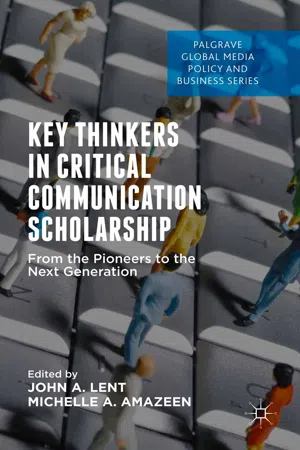
Key Thinkers in Critical Communication Scholarship
From the Pioneers to the Next Generation
- English
- ePUB (mobile friendly)
- Available on iOS & Android
eBook - ePub
Key Thinkers in Critical Communication Scholarship
From the Pioneers to the Next Generation
About this book
The personal anecdotes and candid reflections on the lives and work of these important critical scholars, and their predictions on the future of the field, make this book a valuable resource for scholars and students of communication, media studies, political economy, political science, and those interested in critical theoretical approaches.
Information
1
Noam Chomsky
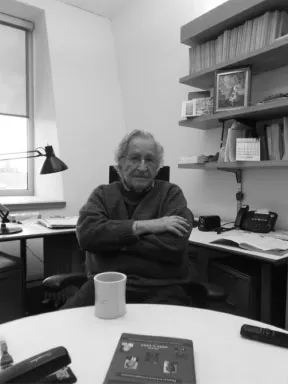
Figure 1.1 Noam Chomsky, Cambridge, Massachusetts, USA, 2013 (photo by John A. Lent)
Biographical sketch
Noam Chomsky was born on 7 December 1928, in Philadelphia, Pennsylvania. His undergraduate and graduate years were spent at the University of Pennsylvania, where he received his PhD in linguistics in 1955. From 1951 to 1955, he was a junior fellow of the Harvard University Society of Fellows. During this time he completed his doctoral dissertation, entitled “Transformational analysis.” The major theoretical viewpoints of the dissertation appeared in the monograph Syntactic Structure, which was published in 1957. This formed part of a more extensive work, The Logical Structure of Linguistic Theory, which was circulated in mimeograph in 1955 and published in 1975.
Chomsky joined the staff of the Massachusetts Institute of Technology in 1955 and in 1961 was appointed full professor in the Department of Modern Languages and Linguistics (now the Department of Linguistics and Philosophy). From 1966 to 1976 he held the Ferrari P. Ward Professorship of Modern Languages and Linguistics. In 1976 he was appointed as institute professor.
During the years 1958–1959, Chomsky was in residence at the Institute for Advanced Study at Princeton, New Jersey. In the spring of 1969 he delivered the John Locke Lectures at Oxford, UK; in January 1970 the Bertrand Russell Memorial Lecture at Cambridge University, UK; in 1972 the Nehru Memorial Lecture in New Delhi, India; and in 1977 the Huizinga Lecture in Leiden, among many others.
Chomsky has received honorary degrees from the American University of Beirut, Amherst College, Cambridge University, the Australia Asia Research and Education Foundation, Bard College, Central Connecticut State University, the University of Massachusetts, Bologna University, Columbia University, the Free University of Brussels, Georgetown University, Harvard University, the Islamic University in Gaza, Ljubljana University, Loyola University Chicago, McGill University, the National Autonomous University of Mexico (UNAM), National Tsing Hua University, Peking University, Santo Domingo Institute of Technology, the School for Advanced Studies in Treste, Scuola Normale Superiore, Pisa, the University of Western Ontario, Swarthmore College, Delhi University, Universidad de Chile, Universidad de La Frontera, Universidad Nacional De Colombia, Universidad Nacional del Comahue, Universitat Rovira i Virgili (Tarragona), the University of Athens, the University of Buenos Aires, the University of Calcutta, the University of Chicago, the University of Connecticut, the University of Cyprus, the University of Florence, the University of London, the University of Pennsylvania, the University of St. Andrews, the University of Toronto, and Uppsala University. He is a member of the American Philosophical Society, a fellow of the American Academy of Arts and Sciences, and the National Academy of Science, and a foreign member of the Serbian Academy of Sciences and Arts. In addition, he is a member of other professional and learned societies in the United States and abroad, and is a recipient of the Distinguished Scientific Contribution Award of the American Psychological Association, the Kyoto Prize in Basic Sciences, the Helmholtz Medal, the Dorothy Eldridge Peacemaker Award, the Ben Franklin Medal in Computer and Cognitive Science, the Adela Dwyer/St. Thomas of Villanova Peace Award, and others.
Chomsky has written and lectured widely on linguistics, philosophy, intellectual history, contemporary issues, international affairs, and US foreign policy. His works include Aspects of the Theory of Syntax; Cartesian Linguistics; Sound Pattern of English (with Morris Halle); Language and Mind; American Power and the New Mandarins; At War with Asia; For Reasons of State; Peace in the Middle East?; Reflections on Language; The Political Economy of Human Rights, Vol. I and II (with E. S. Herman); Rules and Representations; Lectures on Government and Binding; Towards a New Cold War; Radical Priorities; Fateful Triangle; Knowledge of Language; Turning the Tide; Pirates and Emperors; On Power and Ideology; Language and Problems of Knowledge; The Culture of Terrorism; Manufacturing Consent (with E. S. Herman); Necessary Illusions; Deterring Democracy; Year 501; Rethinking Camelot: JFK, the Vietnam War and US Political Culture; Letters from Lexington; World Orders, Old and New; The Minimalist Program; Powers and Prospects; The Common Good; Profit Over People; The New Military Humanism; New Horizons in the Study of Language and Mind; Rogue States; A New Generation Draws the Line; 9–11; Understanding Power; On Nature and Language; Pirates and Emperors, Old and New; Chomsky on Democracy and Education; Middle East Illusions; Hegemony or Survival; Imperial Ambitions; Failed States; Perilous Power; Interventions; Inside Lebanon; What We Say Goes: Conversations on U.S. Power in a Changing World; The Essential Chomsky; Hopes and Prospects; Gaza in Crisis; How the World Works; 9–11: Was There an Alternative?; The Science of Language; Making the Future; Peace with Justice: Noam Chomsky in Australia; Power Systems; and On Western Terrorism: From Hiroshima to Drone Warfare (with Andre Vltchek).
Noam Chomsky
Interview conducted by John A. Lent and Michelle A. Amazeen, 8 November 2013, Massachusetts Institute of Technology, Cambridge, Massachusetts, USA
Lent: How and why did you decide to take the route of the critical researcher in communication? What personal and professional experiences influenced you?
Chomsky: As far as communication is concerned, which is not really my life, my life gets frantic. I mean, apart from personal life, part of it is what’s around here: professional linguistics, philosophy, cognitive science. The other part is what’s happening in the world and what’s happening in the media and what we can do about it, political activism and so on. The second part of my life – it just began that way. I mean, I grew up in the Depression. Earliest childhood memories are people coming to the door trying to sell rags because they were starving, people – women being beaten up in the streets when they’re striking outside a textile office plant.
My family was mostly unemployed working class. It was the Depression, so at first the rise of fascism in Europe, which was very frightening. Doubly frightening because we happened to live in a – though my parents didn’t know it, we were the only Jewish family in a very anti-Semitic neighborhood, Irish and German Catholic. For a boy on the streets, you saw it firsthand, and that sort of combined with hearing Hitler’s speeches over the radio and seeing what was going on in Spain and Austria and so on. So I just grew up with it – and then came the world war, the war, and the British repression of Greece and all sorts of other things.
And then there’s the question of how it was being represented in the media. It was being grossly distorted. I did in fact discover that when I was a young teenager. So, for example, I happened to be particularly interested in Spain, in the Spanish Revolution and the Spanish Civil War. And I was looking up the documents from secondhand book stores in New York, which were being run by immigrants, Spanish immigrants, many of them anarchists fleeing Spain. The left-wing offices, the Freie Arbeiter Stimme, the Yiddish anarchist group had an office in Union Square, New York. I spent time there. Anyway, I had a fair amount of documentary evidence by the time I was maybe 12 or 13.
And you could see that what was reported in the press just wasn’t true. So, for example, theoretically, the United States was supposed to be neutral in the Spanish War. But in fact, the US government was permitting the Texaco Oil Company to ship oil to the fascist junta illegally, but it was permitted. And the State Department denied it, but it was true. You could see the documents; later it was conceded. And there are things like that all the time, so it just was never a question in my mind as far as the other half of my life, you know the formal profession. It was kind of accidental.
I was very bored with – I went to college when I was 16. I was excited by the catalogue. Lots of exciting courses. Every course I took was so boring, I never wanted to hear about the topic again. After about a year, I was ready to drop out when I happened to meet through political contacts a member of the faculty who turned out to be the leading linguist in the United States. And he kind of – our connections were mostly through the political activism that he suggested to me that I start taking his graduate courses. I suspect he was trying to quietly induce me to go back to college.
Anyhow, I started taking his graduate course and was interested, and then sort of other graduate courses in philosophy and mathematics, in fields that I had no background in, but I just got into, sort of accidentally. Not total accident. There was something in my background. My father was a scholar of – a Semitic scholar, mainly worked with medieval Hebrew grammar. I read his thesis when I was about 10 or something. So it was in the background anyhow.
Lent: This was in Philadelphia, right? You went to Central High School, right?
Chomsky: Yeah. Bored stiff.
I thought college would be better and was very disappointed [laughter] when it wasn’t.
Lent: The second part of that is what price have you paid, if any, for going in a different direction?
Chomsky: Well, there’s plenty of that, but I don’t take that very seriously. I mean, there are death threats, bomb threats, hysterical accusations. Look up the Internet on my name, you’ll find a list of defamations 10 miles long. And there were periods up until recently, in fact, when I had to have police protection if I was talking on the Middle East, for example. Early in the Vietnam War, we had to have police protection sometimes if we were talking about the war. And I came pretty close to a long prison sentence, but that was for things I was doing. It wasn’t a threat from the outside.
But the real cost just is it takes an enormous amount of time and energy away from things I’d like to do. Like there’s plenty of work I’d like to do in the other domain of my life, which I just don’t have time for. Linguistics, mathematical linguistics. The history of linguistics and philosophy, lots more. In the 1960s, before it really took off, I was doing work of a kind that I had to drop on mathematical theory of automata, on a history of linguistics and philosophy, on phonology, which I was working on intensively. And a number of other things which I was just going to pursue – but I had to drop them – which I would have liked to do. Because time’s finite.
Amazeen: Have you had trouble getting any of your work published?
Chomsky: Oh, yeah. For example, the book Political Economy of Human Rights. The big book that Edward Herman and I wrote, a two-volume work. The first edition of that came out five years earlier. It was much smaller. It was a small book called Counter-Revolutionary Violence, and it was published by a textbook publisher, a pretty successful textbook publisher. It was intended as kind of a text. The publisher was owned ultimately by a big conglomerate, ultimately what became Time Warner. And an executive of the top company saw the advertising for the book and didn’t like it and wanted to see the book.
When he saw it, he was outraged, and he ordered the publisher to stop releasing it, 20,000 copies that were already published. Now, they refused. He put the entire publishing house out of business, not only destroying the book but all of their stock. That’s the most extreme case I’ve seen. I actually brought that to the attention of American civil libertarians, and they didn’t see any problem with it because it’s not government censorship. It’s corporate censorship. And that’s permissible in a capitalist society.
Lent: And perhaps worse than the government.
Chomsky: It’s much worse, I think. Yep. In fact, that’s a lot of what goes on with the media. The media are not subject to government censorship, but they are subject to internal censorship, which derives in large measure from the institutional structures in which they’re embedded – corporate ownership, advertiser reliance, links to government, and just the general intellectual culture, which happens to be highly conformist.
Lent: And that’s accelerated in the last few decades, right? Or do you think it’s always been like that?
Chomsky: There’s a lot of talk about a golden age in the past, but I never saw it. I think it’s actually better now than it was 30 or 40 years ago.
Lent: What do you see different in critical studies now? How has it advanced in the last 40 years or so … or has it?
Chomsky: There are contrary tendencies. One of them is, I think, self-destructive. That’s post-structuralism, post-modernism, which I think has been a – I mean, there’s exceptions, but its general impact I think has been self-destructive. One sort of diverting energy and effort into things that are intellectually extremely thin or even worse. But also isolating critical studies from the general population. I mean, nobody can read this work. Every sentence has to have 12 polysyllabic words in it you’ve never heard of and obscure references and so on. So it kind of isolates it from the general community, and when you take it apart, I think it’s extremely hard to find anything concrete. Some of it is entirely ludicrous.
I don’t know if you ever read a book by Jean Bricmont and Alan Sokal. I think it came out in French originally, but in English I think it’s called Dangerous Delusions or something like that. They go through post-modern work, mostly Paris, on science, truth, evidence and so on, and it is just unbelievably ludicrous. You can’t believe that people are saying these things, but it’s very influential in small intellectual circles, which are isolated from the world.
Actually, the place where it’s most dangerous is in the Third World, because in the Third World, activist movements need participation of intellectuals. They can contribute something. And if they are drawn off into fantasies about how there’s no truth, there’s no reality, everything is power and so on and so forth, they’re gone. They’re just not making the contribution they should. And that happens. I’ve seen many cases. My view here is it’s mostly kind of a nuisance.
But another tendency has been towards more effective critical analysis. The 1960s opened a lot of people’s minds, and those people went on to do much more, in my view, insightful and critical scholarship and media inquiry too, investigative journalism, than had been done in the past. And some people came straight out of that movement like Seymour Hersh. But others were influenced by it, and I know a fair number. So I think in scholarship and in general intellectual culture, I think there’s a contrary tendency.
There’s also another one, and that’s towards reimposition of discipline and authority and conformity that are very strongly supported. In fact, that’s taking place all over. The reactionary tendency, it’s part of the whole neoliberal assault on the population. In some places like England, it’s becoming, I think, pretty grotesque. Actually, I think you might take a look at quite a good article that just appeared in the London Review by Stefan Collini on what the coalition government is doing to higher education. I think it’s very accurate and ...
Table of contents
- Cover
- Title Page
- Copyright
- Contents
- List of Figures
- Preface
- Background
- 1. Noam Chomsky
- 2. Christian Fuchs
- 3. EdwardS.Herman
- 4. JohnA.Lent
- 5. Robert W. McChesney
- 6. Eileen R. Meehan
- 7. Vincent Mosco
- 8. Graham Murdock
- 9. Manjunath Pendakur
- 10. Gerald Sussman
- 11. Janet Wasko
- 12. Yuezhi Zhao
- Index
Trusted by 375,005 students
Access to over 1.5 million titles for a fair monthly price.
Study more efficiently using our study tools.
Frequently asked questions
Yes, you can cancel anytime from the Subscription tab in your account settings on the Perlego website. Your subscription will stay active until the end of your current billing period. Learn how to cancel your subscription
No, books cannot be downloaded as external files, such as PDFs, for use outside of Perlego. However, you can download books within the Perlego app for offline reading on mobile or tablet. Learn how to download books offline
Perlego offers two plans: Essential and Complete
- Essential is ideal for learners and professionals who enjoy exploring a wide range of subjects. Access the Essential Library with 800,000+ trusted titles and best-sellers across business, personal growth, and the humanities. Includes unlimited reading time and Standard Read Aloud voice.
- Complete: Perfect for advanced learners and researchers needing full, unrestricted access. Unlock 1.5M+ books across hundreds of subjects, including academic and specialized titles. The Complete Plan also includes advanced features like Premium Read Aloud and Research Assistant.
We are an online textbook subscription service, where you can get access to an entire online library for less than the price of a single book per month. With over 1.5 million books across 990+ topics, we’ve got you covered! Learn about our mission
Look out for the read-aloud symbol on your next book to see if you can listen to it. The read-aloud tool reads text aloud for you, highlighting the text as it is being read. You can pause it, speed it up and slow it down. Learn more about Read Aloud
Yes! You can use the Perlego app on both iOS and Android devices to read anytime, anywhere — even offline. Perfect for commutes or when you’re on the go.
Please note we cannot support devices running on iOS 13 and Android 7 or earlier. Learn more about using the app
Please note we cannot support devices running on iOS 13 and Android 7 or earlier. Learn more about using the app
Yes, you can access Key Thinkers in Critical Communication Scholarship by John A. Lent, Michelle Amazeen, John A. Lent,Michelle Amazeen in PDF and/or ePUB format, as well as other popular books in Social Sciences & Literary Criticism. We have over 1.5 million books available in our catalogue for you to explore.