eBook - ePub
Freedom in the Anthropocene
Twentieth-Century Helplessness in the Face of Climate Change
- English
- ePUB (mobile friendly)
- Available on iOS & Android
eBook - ePub
Freedom in the Anthropocene
Twentieth-Century Helplessness in the Face of Climate Change
About this book
Freedom in the Anthropocene illuminates the Anthropocene from the perspective of critical theory. The authors contextualize our current ecological predicament by focusing on the issues of history and freedom and how they relate to our present inability to render environmental threats and degradation recognizable and surmountable.
Information
Topic
Ciencias biológicasSubtopic
Ciencia medioambiental1
Georg Lukács (1885–1971) and the Critique of Reification: On the Dialectical Genesis of the Great Acceleration
Abstract: This chapter situates Lukács’ critique of reification (1923) in relation to the emergence of the Great Acceleration. We develop Lukács’ critique through the issue of the increasing rationalization of industrial and administrative work in the early twentieth century. In doing so, we show how Lukács is able to relocate the continued relevance of Marx’s insights with respect to the deeper structure of capitalist society in his consideration of the differential manner in which proletariat and bourgeois class consciousness approach the problem of social contradictions. We then discuss how, for Lukács, the overcoming of reification (or the failure to do so) has profound implications for how society comes to regard history and the possibility of freedom. The chapter concludes with a discussion of the significance of Lukács’ critique for our understanding of the Great Acceleration.
Stoner, Alexander M. and Andony Melathopoulos. Freedom in the Anthropocene: Twentieth-Century Helplessness in the Face of Climate Change. New York: Palgrave Macmillan, 2015. DOI: 10.1057/9781137503886.0006.
1Marxism in crisis: social democracy on the eve of the Great Acceleration
Georg Lukács’ (1923) History and Class Consciousness (HCC hereafter) comes on the heels of an important split within the political currents of Marxism at the beginning of the twentieth century. This split, which had been brewing within Europe’s social democratic parties in the years leading up to WWI, marked the end of the project to unify the political interests of the working class under the aegis of the socialist parties of the Second International beginning in 1889 (Joll, 1968). This movement into mass political parties marked a distinctive transition not only in the form that working class ferment took but also in terms of the relation of these discontents with respect to the national state framework. If the activity of the working class at the beginning of the Industrial Revolution was notably antagonistic to the state—from its first identifiable amorphous form in the 1830s with the Chartist movement in England (Hobsbawm, 1962), to its central role in the pan-European revolutions of 1848 and through to the Paris Commune of 1871—its articulation within social democracy appeared to have a somewhat more ambivalent relationship.1
This transition into the period of the Second International bears significance on the question of the Anthropocene, particularly in considering the historical origins of the Great Acceleration from the crucible of the Industrial Revolution. While the emergence of liberal capitalism was remarkable to the extent that it appeared to occur at a distance and in opposition to the Absolutist states of the eighteenth century, with labor markets and the investment of capital being organized by no single authority—the so-called invisible hand in Adam Smith’s moment—by the late nineteenth century both labor markets and capital were being integrated into a distinctive state form that Karl Marx characterized as “Bonapartist.”2 For Marx, the Bonapartist state was inextricably connected with the historical development of the Industrial Revolution since Smith’s time and the manner in which the working class’s political demands for a solution to the problem of unemployment triggered a social crisis: “The proletariat, the lowest stratum of our present society, cannot stir, cannot raise itself up, without the whole superincumbent strata of official society being sprung into the air” (Marx and Engels, 1978 [1848]: 482). Bonapartism presented itself in the wake of the pan-European uprisings of 1848, in which the general demand for democratic reform was drawn into sharp crisis when combined with the demands of the proletariat. The authoritarian Bonapartist state was a means of mediating the growing social instability generated by the emerging proletarian politics.3 For Marx, the severity of Bonapartism had deeper implications, which the authoritarian state merely reflected, namely, the changed character of society as a whole. The Industrial Revolution, as evinced by Bonapartism, suggests something more profound than a mere technological shift as Anthropocene periodization presupposes (e.g., the use of coal for steam power): it marks a profound transformation within the very fabric of society.
As mentioned previously, the great mystery of the Anthropocene is how human beings, who emerged approximately 200,000 years ago, only become recognizable as a planetary force in the last 250 years. While the political expression of the proletariat may appear to represent only a narrow sectional interest within society, Marx grasps it as the key historical development through which we might recognize the deep, seemingly indiscernible social structure that took form in Industrial Revolution. For Marx, proletarian politics—if developed in the direction of consciously provoking and sustaining a crisis—would render social structure comprehensible and therefore enable individual actors to exercise agency in actively transforming history for the first time. The task of freedom in the nineteenth century—that of consciously recognizing and actively transforming social structure—was inextricably linked to the question of the political activity of the proletariat. Yet, the expression of these politics through Bonapartism revealed a second insight: the most symptomatic expression of the crisis of society—the proletariat—lacked the type of critical consciousness necessary to recognize how its activity was connected to social structure. Bonapartism, then, is an index of the inadequacy of proletarian consciousness: “it was the only form of government possible at a time when the bourgeoisie had already lost, and the working class had not yet acquired, the faculty of ruling” (Marx, 1993 [1871]: 53).
Marx sought to specify the possibility that consciousness of the deeper, crisis-laden structure of society could be developed from the most acute consciousness available to the proletariat at the time; the description of the objective laws structuring their lives outlined in the classical political economy of Adam Smith and David Ricardo (discussed in Chapter 3). To this end, Marx marshaled the insights from his critique of political economy to inform the subsequent political orientation of the proletarian movement toward the possibility that it might consciously direct a revolutionary crisis through which society could apprehend its deep contradictory structure.4 Yet, the proletarian politics of the Second International, which focused on the Social Democratic Party, fell well below Marx’s horizon. Rather than increasing consciousness of the total character of society among the proletariat, these politics were far narrower, taking aim at the numerous, discrete features of social reality (Korsch, 1970 [1923]: 57). While such an approach drew significant reforms from the state,5 it dulled any insight of the deeper and contradictory character of society and it certainly did not necessitate revolution. In fact, the exact opposite occurred as the Second International justified a narrowing political strategy that was readily integrated into the state. Consequently, by the beginning of the twentieth century the practical problem of the revolution languished within Marxist theory,6 giving way instead to a tacit evolutionary view of politics in which workers would gradually assume control of the state by expanding the scope of reforms (i.e., within the existing social structure). While the deeper social crisis continued unabated—and on a much larger scale (e.g., WWI)—it no longer appeared as a logical product of a contradictory social totality, but as a “bolt from the blue”7 (Marx, 2008 [1852]: 9); that is, as episodic, inexplicable, and irrational events that lay beyond the concerns of political program.
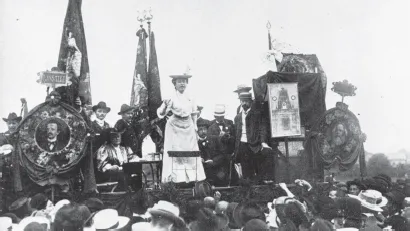
PHOTO 1.1 Rosa Luxemburg and the Second International
Source: Rosa Luxemburg during a speech at the International Socialist Congress in Stuttgart, August 1907. Significantly, the stage is not only accompanied by a portrait of Karl Marx (on the right), but the other founder of the German Socialist movement, Ferdinand Lassalle (on left). Photo: AKG-Images.
Lukács’ HCC is an attempt to regain Marx’s point of departure in and through the debates and subsequent political divisions that erupted among Marxists in the decade before WWI over the question of whether revolution remained the pivotal feature of Marxian theory and political practice (see Photo 1.1). The content of these debates is expansive, but for the purposes of contextualizing HCC, Lukács is particularly concerned with the question of whether the necessity of revolution had been superseded by the success in exacting reforms from the state (the debate over revisionism in Germany, ca. 1897–1902),8 or whether trade union militancy, or “trade union consciousness,” would simply reproduce capitalist forms if allowed to unfold on its own volition (the debates in Russia over economism, ca. 1894–1902).9 In both of these debates, Lukács, following the Second International political figures Lenin and Luxemburg, recognized the consciousness of the worker’s movement was constitutive not only of the conscious self-transformation of society—through the revolutionary overcoming of wage labor—but could also reconstitute wage labor in new social forms of domination that would become increasingly naturalized, or “reified.” Reified consciousness, not only among the bourgeoisie but within the workers movement, meant any revolutionary politics would need to understand the “gradations within the class consciousness of workers” (1971 [1923]: 78) as it relates to the “ideological problems of capitalism and its downfall” (1971 [1923]: 84).
Lukács’ critique of reification, which focuses on the intrinsic interrelations of the subject–object dimensions of the commodity form, highlights the mediation between what Marx referred to as the “inner logic” of the capitalist mode of production and the pattern of political and cultural life at a later stage of capitalist development (see Dahms, 2011: 3–44). Since this distinctive phase of capitalist development appears to anticipate the pattern of state capitalism that gave the Great Acceleration its form, Lukács’ critique of reification is particularly relevant to the last century of the Anthropocene. Significantly, Lukács’ critique does more than describe the course of history in a negative sense (i.e., to anticipate the subsequent pattern of state capitalism, or more generally, the helplessness that eventually comes to define the Anthropocene), it specifies the conditions under which society’s relationship to history could be freed from its “rigid, reified structure” (1971 [1923]: 202). Perhaps Lukács’ most profound point is to discern the possibility that social actors could make history rather than be dominated by it. In this sense, Lukács places reification at the center of the practical tasks for freedom in the Anthropocene.
This chapter develops Lukács’ critique of reification through the issue of the increasing rationalization of industrial and administrative work in the early twentieth century. We show how Lukács is able to relocate the continued relevance of Marx’s insights with respect to the central importance to any understanding of the deeper structure of capitalist society in his consideration of the differential manner in which proletariat and bourgeois class consciousness approach the problem of social contradictions. We end the section by discussing how, for Lukács, the overcoming of reification in and through increasingly class conscious proletarian praxis (or the failure to do so) has profound implications not only for how society comes to regard history, but also—more central to the issue of the helplessness that characterized the Anthropocene—the significance of such praxis for qualitatively changing history such that humans, for the first time, could develop freely. The chapter concludes with some brief remarks on the significance of Lukács’ critique for our understanding of the Great Acceleration.
2Critique of reification
The concept of reification derived from Lukács refers to a form of social life under modern capitalism in which human subjectivity is increasingly shaped in accordance with the objective commodity form. Lukács’ critique of reification is not, however, simply a critique of detached, contemplative individual forms of bourgeois subjectivity. Rather, Lukács seeks to grasp reification as a process of social mediation between consciousness and social structure, particularly as he asserts: “reification is ( . . .) the necessary, immediate reality of every person living in capitalist society” (1971 [1923]: 197).
Combining Marx’s critique of commodity fetishism10 in ways similar to, yet quite distinct from Max Weber’s theory of rationalization, Lukács emphasized how reification fragments social life, and he analyzed reification in relation to processes of increased rationalization, which emerged alongside the consolidation of large-scale industry and investment banks at the beginning of the twentieth century. Lukács viewed the concomitant rise of bureaucracy within the economy, the so-called managerial revolution, which gave rise to increasingly complex corporate and state hierarchies of organization and control, as a new form of domination in capitalist society. The managerial revolution had direct ecological implications as well, as it marked an increasing technocratic dimension to the management of ecosystems, not only in terms of preventing soil erosion on agricultural land (as discussed in the Introduction), but also in terms of sustainable harvesting of forests and fisheries (Olver et al., 1995; Straka, 2009).
Lukács redirects Weber’s analysis of rationalization, identifying it as a force working in concert with the abstraction embodied in the commodity form. Keeping with his categorial appropriation of Marx’s mature theory, Lukács is concerned not only with the objective aspects of rationalization but also with the mediation between objective processes of rationalization and its subjective effects as structured by the commodity form of social relations.11 On this basis, Lukács identifies two key (subjective and objective) changes resulting from the rationalization of work: (1) the severance of the “organic, irrational and qualitatively determined unity of the product” (Lukács, 1971 [1923]: 88), which in turn effects an (2) equally abstract fragmentation of the subject whereby the worker’s activity “becomes less and less active and more and more contemplative” (Lukács, 1971 [1923]: 89). In an attempt to discern capital’s immanent crisis in his moment, Lukács (1971 [1923]: 92) analyzes the effects of economic rationalization in terms of the dissimulating role played by the commodity form: “This rational objectification conceals above all the immediate—qualitative and material—character of things as things. When use-values appear universally as commodities they acquire a new objectivity, a new substantiality which they did not possess in an age of episodic exchange and which destroys their original and authentic substantiality.”
Lukács explains the reconfiguration of consciousness in connection to the effects of large-scale industry and related processes of increased rationalization from the perspective of the worker:
[T]he period of time necessary for work to be accomplished (which forms the basis of rational calculation) is converted, as mechanization and rationalization are intensified, from a merely empirical aver...
Table of contents
- Cover
- Title
- Prologue: Smog, Haze, Sulfur: The Elusive Clarity of the Anthropocene
- Introduction: What Is the Meaning of Freedom in the Anthropocene?
- 1 Georg Lukcs (18851971) and the Critique of Reification: On the Dialectical Genesis of the Great Acceleration
- 2 Theodor W. Adorno (19031969) and the Critique of Identity Thinking: The Great Acceleration as Historical Sedimentation
- 3 Moishe Postone (1942) and the Critique of Traditional Marxism: Helplessness and the Present Moment of the Great Acceleration
- Conclusion
- References
- Index
Trusted by 375,005 students
Access to over 1.5 million titles for a fair monthly price.
Study more efficiently using our study tools.
Frequently asked questions
Yes, you can cancel anytime from the Subscription tab in your account settings on the Perlego website. Your subscription will stay active until the end of your current billing period. Learn how to cancel your subscription
No, books cannot be downloaded as external files, such as PDFs, for use outside of Perlego. However, you can download books within the Perlego app for offline reading on mobile or tablet. Learn how to download books offline
Perlego offers two plans: Essential and Complete
- Essential is ideal for learners and professionals who enjoy exploring a wide range of subjects. Access the Essential Library with 800,000+ trusted titles and best-sellers across business, personal growth, and the humanities. Includes unlimited reading time and Standard Read Aloud voice.
- Complete: Perfect for advanced learners and researchers needing full, unrestricted access. Unlock 1.5M+ books across hundreds of subjects, including academic and specialized titles. The Complete Plan also includes advanced features like Premium Read Aloud and Research Assistant.
We are an online textbook subscription service, where you can get access to an entire online library for less than the price of a single book per month. With over 1.5 million books across 990+ topics, we’ve got you covered! Learn about our mission
Look out for the read-aloud symbol on your next book to see if you can listen to it. The read-aloud tool reads text aloud for you, highlighting the text as it is being read. You can pause it, speed it up and slow it down. Learn more about Read Aloud
Yes! You can use the Perlego app on both iOS and Android devices to read anytime, anywhere — even offline. Perfect for commutes or when you’re on the go.
Please note we cannot support devices running on iOS 13 and Android 7 or earlier. Learn more about using the app
Please note we cannot support devices running on iOS 13 and Android 7 or earlier. Learn more about using the app
Yes, you can access Freedom in the Anthropocene by A. Stoner,A. Melathopoulos in PDF and/or ePUB format, as well as other popular books in Ciencias biológicas & Ciencia medioambiental. We have over 1.5 million books available in our catalogue for you to explore.