
eBook - ePub
Architecting Enterprise
Managing Innovation, Technology, and Global Competitiveness
- English
- ePUB (mobile friendly)
- Available on iOS & Android
eBook - ePub
About this book
The discussion in this book provides an introduction to the concept of entrepreneurship and entrepreneurial business management. The author covers many elements of the entrepreneurial management discipline including choosing a business, organizing, financing, marketing, developing an offering that the market will value, and growing a business.
Information
Architecting Enterprise:
Innovation and Technology
Effects
4
Innovation Management
Most firms making efforts to gain competitive advantage build their marketing strategies on product improvements as innovations to attract consumers and wider society. A true innovation is a product or service that has unique consumer value, affordable cost, and high competitive advantage. Many companies recognize that their dispersed global operations are a treasure chest of ideas and capabilities for innovation. But most firms find it harder than expected to uncover those ideas or exploit the process of transforming ideas into innovations. Part of the problem is that companies manage global innovation in the same way as they manage traditional business projects. This chapter explains the role of managers to successfully bring innovations to an enterprise and expand them at a global scale. Arguments are illustrated with examples in reference to phases of innovations, innovation metrics, the innovation cycle, critical success factors, opportunities, threats, disruptions, and chain reactions of innovation. The chapter also addresses the concept and practice of conceiving ideas and nurturing innovation in a competitive marketplace, and suggests ways to increase effectiveness in managing innovation and corporate goals.
Innovation of new products is a complex process that needs to be carried out meticulously by firms integrating business and consumer use values in the marketplace. Firms engaged in innovating products should map consumers’ needs, the attributes of close substitutes, competitive threats, required product services, and estimated cost of marketing of the product in different markets. However, the rate of failure of innovative services is high as compared to consumer products. These products often include credit cards, insurance schemes, hire purchase schemes, investment plans and the like. The major factors that obstruct the process of innovative products development include:
- Limited creativity and paucity of customer-centric innovative ideas on products and services
- Fragmented markets and consumer segments
- Disruptive social networks for the diffusion of innovations
- Social and economic limitations of consumers
- Government policies and legal conditions
- Cost-effectiveness of the process of new product development
- Competitive marketing-mix strategies to promote innovative products and services
- Resource crisis at various levels in the process of innovative product development and inappropriate strategic decisions toward launching innovative products in the market, and
- Innovation lifecycle and sustainability of innovative products.
Most companies consider the process of innovative product development as demanding due to the cumbersome stage-gate process of manufacturing, organizational, and market-led intricacies in analyzing key indicators to launch and manage products in the competitive marketplace. However, the process of developing an innovative product can be made easier by rationally dividing the chronology into two parts – an early stage, which focuses on evaluating prospects and eliminating bad bets, and a late stage that optimizes the market potential. The pharmaceutical company Eli Lilly, following this approach, designed and piloted Chorus, an autonomous unit dedicated solely to the early stage. Chorus has significantly improved efficiency of the company’s new product development and productivity. Although the unit absorbs just one-tenth of Lilly’s investment in early stage development, it delivers a substantially greater fraction of the molecules slated for late second-phase trials at almost twice the speed and less than a third of the cost of the standard process, sometimes shaving as much as two years off the usual development time (Bonabeau et al., 2008).
Innovation modeling
Most companies play a proactive role in launching innovative products and prepare marketing strategies in reference to existing market competition and their own business goals. Often new products do not achieve their desired success owing to lack of organizational policies and teamwork. Thus it is necessary to inculcate team behavior in developing new products and popularizing them in test market segments. The results of initial test markets may be further tested in larger segments. It is essential to plan for adequate brainstorming to map the basic market (consumers’ perceptions) and
secondary market (for operational market players such as distributors, retailers, and inventory managers) for the product, listing the product attributes, and identifying the relationship of other goods and services with the new product.
The innovation value chain comprises idea generation, conversion, and diffusion as its critical activities. Innovation is a process of collecting new ideas from inside and outside the firm, screening and selecting ideas, funding them, and promoting and diffusing them companywide. Using this framework, managers get an end-to-end view of their innovation efforts. Accordingly the weakest links can be identified and innovation best practices tailored appropriately to strengthen those links. It is important for emerging firms to note that most innovations typically succumb to the above weak scenarios of an economically non-viable and technologically non-feasible idea, poor conversions between ideation stage and finished product stage in the innovation process, and feeble diffusion of innovations to end users (Hansen and Birkinshaw, 2007).
Idea generation in the process of new product development is a major exercise that calls for listing of all major attributes of the existing product and the attributes needed to improve the same product. The relationship of the new product with existing accessories also needs to be studied so that, for example, developing a new television set may be related with consumer needs of a clock, multi-channel viewing on one screen, a microphone attachment, and a built-in video game. Such relationships have to be identified by the company before launching the product. Morphological analysis calls for identifying the structural dimensions of a problem and examining the relationships between them. The need identification can be done by interacting with potential and existing customers in a focus group meeting. The product innovation and commercialization process is exhibited in Figure 4.1.
Industrial marketers can identify new product ideas working in association with the lead users of the product. New product innovations should consider the following organizational and cognitive perspectives (Osborn, 1963):
- Regard negative comments in the process as stimuli for discussion during the process
- Welcome freewheeling and wilder ideas for better steering
- Encourage the maximum number of ideas and categorize their utility, and
- Establish the interrelationship of ideas for overall synergy.
Brainstorming has a major role in the idea generation process. Contemporary methods for ranking the relative merits of ideas generated by brainstorming sessions rely on comparing average scores across members of the group. The average is a measure of the overall merit assigned to an idea, but it does not measure unanimity or the concentration of opinion across members of the group with respect to the idea
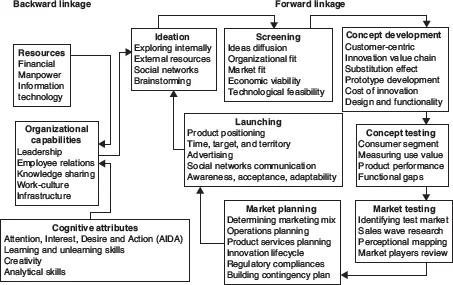
Figure 4.1 Product innovation and breakthrough process
under consideration. The ideation process in more detail encompasses the following perspectives:
- Adopt the 3Rs of record, recall, and reconstruct
- Compare the return on ideas with returns on investment with reference to time and organizational resources
- Brainstorming
- Define the problem as a question
- Select an idea link word or phrase from the list of people, places, or products
- Record a list of ideas associated with the selected idea link
- Choose the link connection and brainstorm ideas about its potential relationship to the problem defined as a question
- Repeat the above step until time runs out
- Brain-writing
- Distribute blank paper to the participants
- Write the problem as a question
- Review any divergent thinking
- Record three ideas and then exchange these with other participants
- Draw up a worksheet of ideas and list the best ideas
- Repeat these steps for 4–5 rounds until time runs out.
Companies often begin their search for new ideas either by encouraging brainstorming and outside-the-box thinking, or by conducting quantitative analysis of existing market and financial data, and from customer opinions. These approaches may produce acceptable ideas at best. The problem with the first method is that few people are very good at unstructured and abstract brainstorming, while the second approach may cause fabricated databases compiled to offer biased information, and, thirdly, customers can rarely reveal if they need or want a product they’ve never seen. Organizations that are interested in generating a wealth of good ideas need to be driven through the following steps:
- Create new boxes for people to think within to prevent their thinking process from going astray and to build a basis for offering ideas, and
- Redesign ideation processes to remove obstacles that interfere with the flow of ideas, such as the aversion of most people to speaking in groups larger than ten.
The pivotal role of creativity in organizations has been widely recognized by the academic community. Creativity is associated with that part of the innovation process that is labeled as idea generation (Coyne et al., 2007). The ideation process for new product development can be stimulated through metaphors, pictures, and experience. It is rooted in the philosophy of rationalism and empiricism, implying approaches of “the truth is out there.” It is observed that defining cognitive idea generation is based on personal experiences and beliefs driven by individual and social information. However, these forms of a cognitive-based idea-generation process are individualistic and not amenable to team contexts (Bhatt, 2000). There is typically an indirect connection between investment in research, innovation, and commercial benefit. Research is more likely to help generating ideas through already available information and public resources. More significantly, as discoveries are likely to be in the form of laws of nature, abstract ideas, and physical phenomena, they are likely to converge with end user values and market potential from the perspective of business firms (Abernathy and Utterback, 1978). New product ideas or innovation concepts should be documented on the following lines:
- Use consumer language
- Keep ideas simple, focused, and organized
- Maintain clarity – from the consumer’s point of view
- Do not over-promise or oversell
- Focus on major consumer benefits
- Differentiate the brand from the competition
- Keep all concepts that will be tested in the same format
- Use experienced professionals to prepare the concepts
- Address the right target audience
- Understand the level of errors in information acquisition, and
- Include diagnostic questions.
Ideas generated and acquired from internal and external resources need to be carefully screened in the interest of consumer satisfaction as well as company profit. In this process the company should avoid Drop and Go errors. The former attempts to dismiss good ideas while the latter attempts to allow poor ideas to move into the process of commercialization. Hence the purpose of screening ideas needs to be understood carefully. It is advised that the company should develop an idea-rating matrix on the basis of emerging ideas and their usefulness. Product ideas have to be turned into a concept, and a product concept can be turned later into a brand concept. Concept testing calls for testing of these competing concepts by an appropriate group of target consumers. The concepts can be presented physically or symbolically, the consumers’ response summarized, and the strength of the concept judged. Any need gap and product gap levels may be checked and modified thereafter. The concept testing and product development methodology applies to any product or service, while business analysis includes estimating product sales as one-time purchases, frequent purchases or regular-interval purchases (Rajagopal and Rajagopal, 2011). Estimates should also be made in relation to categories of first purchases, replacement purchases or repeat sales. Additionally, the company should also assess the marketing costs and profits from commercialization of this product by considering the following variables:
- Sales revenue
- Cost of goods
- Gross margin
- Development costs
- Marketing costs
- Allocated overheads
- Gross contribution
- Supplementary contribution
- Net contribution
- Gross contribution
- Discount contribution, and
- Cumulative discounted cash flow.
The ideas generated for new product development through an organizational process should be filtered using some kind of judgmental criteria at the initial stage. Most firms with adequate resources in the global marketplace are keen to benchmark innovation and new product development best practices. The underlying challenge in this process is identifying a practice that can efficiently deliver a new product to the market. Hence, companies invest resources to identify best practices for innovative products that will manifest the innovation values of the product and gain competitive advantage. The framework for managing innovations and new products in the firm includes critical dimensions of strategy, unique innovative proposition, commercialization, the innovation or new product development process, organizational culture, and innovation metrics or performance measurement (Barczak and Kahn, 2012). Some criteria for streamlining innovative products with marketing strategies within or outside the organization may be considered in reference to:
- Product and packaging screens
- Fit with corporate technical capabilities
- Degree of technical difficulty
- Time to market
- Competitors’ ability to follow
- Estimated product development costs
- Manufacturing screens
- Existing manufacturing capabilities
- Issues of outsourcing or developing additional facilities
- Availability of raw materials
- Estimated unit or capital costs
- Regulatory and legal screens
- Ability to forestall quick competitive response
- Regulatory approval time
- Anticipated regulatory issues.
Testing innovation-led products in markets is a scientific process. Successful test marketing leads to proper uses but also incurs serious limitations. At its best it provides a measure of sales performance and the opportunity to identify and correct any weaknesses in the product or in the marketing plan. It is, however, expensive and arduous. Managers need to weigh the cost and risk of product failure against the profit and probability of success, the difference in scale of investment between a test and a national launch, the likelihood of being copied and pre-empted by the competition, and the costs in money and reputation of a product failure (Cadbury, 1975). Test marketing should be conducted by firms to rehearse the launching of a new product in a given market. Test marketing delivers results to improve marketing productivity and reduce the chance of product failures. It should be used in conjunction with information on competing products and the competitive strategies of rival firms. Recent technological developments allow laboratory simulation of
test marketing that can reduce test marketing costs significantly (Klompmaker et al., 1976).
Best practices on innovating new products suggest recycling old ideas as the raw materials for new ideas. Developing innovative products moves around the idea-convergence cycle in the new product development process by capturing good ideas from a wide variety of sources. In this process firms should also keep acquired and screened ideas alive by analyzing them with peers and applying them on a pilot basis. Cross-pollinating ideas and innovation concepts would also make a higher impact on the innovation process by co-creating physical layouts and cognitive networks that allow people to interact with one another on the core issues and turn promising concepts into real services, products, processes, or business models. Most companies in the competitive marketplace desperately need to move ideas from one place to another to seed, synergize, and serve the market target. The most important lesson for entrepreneurs and leaders to learn in the innovation process is how to think about innovation and nurture it in the interest of the firm and market (Hargadon and Sutton, 2001). Creation of the processes required for efficient manufa...
Table of contents
- Cover
- Title
- Copyright
- Contents
- List of Figures and Tables
- Foreword by Kip Becker
- Preface
- Acknowledgments
- About the Author
- Section I Laying the Foundation of Enterprise
- Section II Architecting Enterprise: Innovation and Technology Effects
- Section III Revealing Values
- Notes
- References
- Index
Trusted by 375,005 students
Access to over 1.5 million titles for a fair monthly price.
Study more efficiently using our study tools.
Frequently asked questions
Yes, you can cancel anytime from the Subscription tab in your account settings on the Perlego website. Your subscription will stay active until the end of your current billing period. Learn how to cancel your subscription
No, books cannot be downloaded as external files, such as PDFs, for use outside of Perlego. However, you can download books within the Perlego app for offline reading on mobile or tablet. Learn how to download books offline
Perlego offers two plans: Essential and Complete
- Essential is ideal for learners and professionals who enjoy exploring a wide range of subjects. Access the Essential Library with 800,000+ trusted titles and best-sellers across business, personal growth, and the humanities. Includes unlimited reading time and Standard Read Aloud voice.
- Complete: Perfect for advanced learners and researchers needing full, unrestricted access. Unlock 1.5M+ books across hundreds of subjects, including academic and specialized titles. The Complete Plan also includes advanced features like Premium Read Aloud and Research Assistant.
We are an online textbook subscription service, where you can get access to an entire online library for less than the price of a single book per month. With over 1.5 million books across 990+ topics, we’ve got you covered! Learn about our mission
Look out for the read-aloud symbol on your next book to see if you can listen to it. The read-aloud tool reads text aloud for you, highlighting the text as it is being read. You can pause it, speed it up and slow it down. Learn more about Read Aloud
Yes! You can use the Perlego app on both iOS and Android devices to read anytime, anywhere — even offline. Perfect for commutes or when you’re on the go.
Please note we cannot support devices running on iOS 13 and Android 7 or earlier. Learn more about using the app
Please note we cannot support devices running on iOS 13 and Android 7 or earlier. Learn more about using the app
Yes, you can access Architecting Enterprise by . Rajagopal in PDF and/or ePUB format, as well as other popular books in Business & Business Strategy. We have over 1.5 million books available in our catalogue for you to explore.