eBook - ePub
The School Choice Journey
School Vouchers and the Empowerment of Urban Families
- English
- ePUB (mobile friendly)
- Available on iOS & Android
eBook - ePub
About this book
This in-depth chronicle of 110 families in Washington, DC's Opportunity Scholarship Program provides a realistic look at how urban families experience the process of using school choice vouchers and transform from government clients to consumers of education and active citizens.
Information
Topic
EducationSubtopic
Comparative Education1
What Is School Choice, and Why Did Some Parents Choose School Vouchers?
One of the potential by-products of poverty for urban families is a relationship with public agencies that deliver vital supports and services. Families that meet necessary financial eligibility requirements, which often means that household income for the prospective family is at or below the poverty level, can access public-support resources such as child-care assistance, supplemental nutrition programs, and medical services. For example, the US Department of Agriculture’s Supplemental Nutrition Assistance Program (SNAP) provides food stamps that help more than 26 million eligible Americans (of which over 89,000 live in the District of Columbia) to put meals on their tables. Another example is the Temporary Assistance for Needy Families (TANF) program, which offers a variety of situational support services to help families facing financial distress navigate the obstacles associated with maintaining a family while working. At the beginning of 2009, TANF had 3,950,357 recipients nationally, including 12,510 within the District of Columbia.1
Although social programs of this type are intended to help reduce the impact of poverty on families, a growing body of research suggests that participation in these programs may have a disempowering effect on individuals who receive their services. Based on mounting evidence, the social programs themselves are not the problem. Instead, the way in which programs are designed and delivered determines whether they produce a positive or negative effect for participants and the upward social mobility of their families.
Some of our deepest insights about the nexus between poverty and school vouchers were sparked by comments made during personal interviews with the OSP participants in the very early stages of the programs. For example, Paula explained the trade-offs low-income families must make as they explore new private school options. She is a native of Washington, DC who graduated from the public school system. She describes school as one of the best experiences of her life. She now has one child in the OSP. When asked how she would compare her parenting style to that of her parents, she explains that, like her parents, she stresses the importance and seriousness of education to her children.
In her second year in the OSP, Paula became increasingly concerned about the quality of the teachers at her child’s school. She is most concerned about the fact that perhaps her child’s private school is not equipped to handle the increased number of OSP students. Though she felt the school was not meeting her daughter’s academic needs, she kept her in the private school primarily to ensure her safety. In addition to her disappointment with the quality of the teachers at the school, Paula was surprised that the class size was no different from the public school they had left. Furthermore, she was disgruntled because she felt she was paying for services that the school had advertised, such as tutoring, but which were not being offered.
While she is considering enrolling her child in a public charter school, Paula remains very concerned about safety. Her advice to parents who are attending or are considering attending private schools through the OSP: conduct surprise or unannounced visits to make sure that the schools are really offering what they advertised. She believes the program is most beneficial if students enroll in elementary school, as opposed to middle or high school. Her greatest concern could be best addressed by establishing a monitoring or accountability system to ensure that private schools that participate in the OSP have both the qualified teachers and the core program features that they advertise to parents.
When conducting focus groups with our sample of parent participants in the OSP, the levels of satisfaction with the program they reported also caught our attention. They seemed unusually high for a social program targeting low-income families. During the final stage of our research, we used interactive polling devices to ask parents how successful they thought the OSP had been, and then we compared their responses by year of entry to the program. The respondents were divided into two cohorts based on whether they entered the program in the first year (Cohort 1) or the second year (Cohort 2). Although levels of satisfaction with the OSP were high among both cohorts, satisfaction was somewhat higher among Cohort 2 parents compared to Cohort 1 (see Figure 1.1). It is possible that the truncated implementation schedule for the first year of the OSP prevented program personnel from performing due diligence on the participating schools, thus influencing levels of satisfaction for parents in Cohort 1 such as Paula. Cohort 2 families had more time to learn about the program, apply, and search for placements in schools. Moreover, with a year of implementation behind them, the parents reported that the Washington Scholarship Fund, the entity responsible for managing the day-to-day operation of the program, was more efficient in its administration of the program.
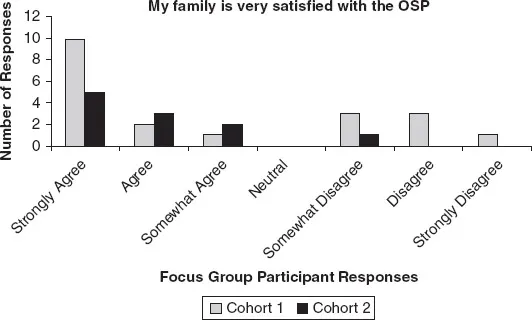
Figure 1.1 Satisfaction with the Opportunity Scholarship Program, 2009
These numbers triggered our curiosity about which aspects of the program were contributing to these high satisfaction levels. We also began to wonder whether the participants’ positive experiences with the OSP were influencing their consumer and citizenship behaviors in distinct ways. We began to examine other bodies of research that explore the nature of the relationship between low-income families and the public agencies that provide housing, health care, and other services, in an attempt to elucidate the relationships that may exist between social program participation and political attitudes and behavior.
The findings from this research challenged us to develop a framework for thinking about the OSP and public schools as social service delivery agents. It became clear from the literature that there are substantial knowledge gaps in our understanding of schools as service delivery organizations. Although previous researchers have identified the existence of links between social program participation and citizenship behavior, very few studies have explored this general topic, and virtually no previous research has examined the family effects of participation in school choice programs. We saw an opportunity, therefore, to use the data generated by our study to contribute to an understanding of how the interaction between program participants and the deliverer of social services can influence the consumer and political attitudes and behaviors of low-income families such as those in a school voucher program.
The framework that we developed is intended for use in exploring how well-designed parental school choice programs can help explain parental satisfaction with programs and can constitute powerful antipoverty tools over and beyond any immediate educational benefits they bestow upon low-income families. They do so by facilitating the development of the skills needed to become more astute consumers and active citizens. The framework can also be used to examine the impacts of other types of social programs on the recipients of their services.
The remainder of this chapter discusses our theoretical framework and uses it to present some of the main relevant findings from our own research and other studies of how social services can have transformative impacts on recipients.
Key Concepts
Three key concepts underpin our theoretical framework, all of which have been derived in large part from previous research: “clientism,” “consumerism,” and “citizenship” (see Figure 1.2). These concepts refer to different types of relationships that can exist between public agencies and social program participants. They are each associated with specific attitudes and behaviors on the part of program participants, and they reflect the nature of the relationship between service providers and end users. The arrow in the background represents the general continuum of participant empowerment that is lowest for clients and highest for citizens.
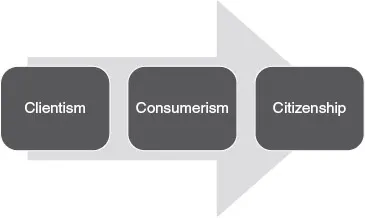
Figure 1.2 Transition from Clientism to Consumerism to Empowered Citizen
The term clientism is used to refer to a relationship where a recipient of a service is easily intimidated by the much larger amount of power, information, and expertise that a service provider appears to have. Public agencies demonstrate a client approach to engaging participants and delivering services when they place a low premium on soliciting input from program participants about their needs and preferences. These agencies often view participating individuals and families as little more than recipients of public services with no control over what they receive or how it is delivered to them. It is well documented in the literature that, for program recipients, the client relationship often involves having to endure demeaning and embarrassing comments and behaviors from service providers.2 At one extreme, this is typified by the relationships between public agencies and the most marginalized or disadvantaged groups in society, such as prison inmates, the homeless, or people struggling with substance abuse. Client relationships also dominate many welfare programs targeting low-income individuals and families, such as food stamps, housing vouchers, and Aid to Families with Dependent Children (AFDC), which was a predecessor of TANF.3
We use the term consumerism to connote a more balanced relationship between public service recipients and the agencies charged with providing those services. The conceptualization of public service users as “consumers” has been one aspect of the “New Public Management” paradigm that has become increasingly dominant over the past few decades, as the defining feature of consumerism is choice.4 The extent of choice available and the options for exercising a true consumer relationship in the context of receiving government services have often been limited. Real consumerism entails not just the provision of choices on the part of agencies or service providers but also, most importantly, the ability of the recipient to make well-informed choices. This capability generally assumes that program participants can draw upon relevant knowledge and skills, things which are often lacking among individuals who have had limited exposure to, or experience with, the services in question.5
The third key concept, and the one which is seen as most important in relation to social program participation as an antipoverty tool, is citizenship. This is the most difficult of our three concepts to define in succinct terms because the word has many different meanings.6 For the purpose of the theoretical framework we develop here, citizenship is political participation, defined by Judith Shklar in the following terms:
Good citizenship as political participation . . . applies to the people of a community who are consistently engaged in public affairs. The good democratic citizen is a political agent who takes part regularly in politics locally and nationally, not just on primary and election day. Active citizens keep informed and speak out against public measures that they regard as unjust, unwise, or just too expensive. They also openly support policies that they regard as just and prudent.7
Like consumer behavior, citizenship involves knowledge and skills that often have to be learned or come from experience. We argue, however, that the acquisition of active citizenship-related attitudes and behaviors among low-income adults and families is potentially one of the most powerful ways in which parental school choice initiatives and other social programs can help to lift low-income families out of poverty.
Key Findings of Previous Research
In a democratic society, political participation is the means by which citizens further their own interests and those of the social group or the set of interests that are most important to them. The finite resources available for public spending often mean that this takes—or appears to take—the form of a zero-sum game. As Andrea Campbell observes, “Mass participation influences policy outcomes—the politically active are more likely to achieve their policy goals, often at the expense of the politically quiescent.”8 Within most participating countries in the international Income and Current Election Participation Study, voters were found to have had higher average incomes than non-voters.9 This phenomenon has been attributed at least in part to factors such as the lack of time, money, information, and personal connections among people from low-income backgrounds compared with those of greater means. But there is growing evidence to suggest that the low levels of political participation also result from, and are reinforced by, the design of public policies and the attitudes toward recipients by service providers. As a result, rather than ameliorating poverty and social inequality, public policies and social programs often exacerbate them.
Anne Schneider and Helen Ingram explained this provider paternalism in terms of the ways that the design and delivery of social policies result in the formation of “social constructions” of target populations.10 For example, the intended recipients of such policies are often seen by policy officials and the general public as either “deserving” or “non-deserving,” and either able to take care of themselves or needing active intervention from government in order to do so. Programs such as Social Security and Medicare, which are universally available to all elderly Americans regardless of income, are targeted at people who are seen as deserving of them.11 Most Americans view means-tested government programs, such as Aid to Families with Dependent Children (AFDC) and Medicaid, as being aimed primarily at the “non-deserving,” that is, individuals who have been unable to support themselves and therefore require ...
Table of contents
- Cover
- Title
- Introduction: The School Choice Journey: School Vouchers and the Empowerment of Urban Families
- 1 What Is School Choice, and Why Did Some Parents Choose School Vouchers?
- 2 The History of Vouchers and Education Reform in Washington, DC
- 3 What Were Families Looking for in the Voucher Program?
- 4 What Major Challenges Did Families Experience Using Private School Vouchers?
- 5 How Do Families Measure Student Progress, Satisfaction, and Success?
- 6 School Vouchers and the Empowerment of Urban Families
- 7 What Lessons Were Learned That May Help Future Travelers?
- Appendix I Description of Sampling Method
- Appendix II Copy of Focus Group Guide
- Appendix III Key Stakeholder Personal Interview Guide
- Appendix IV Polling Script
- Appendix V Overview of Distinguishing Attitudes and Behaviors
- Notes
- Works Cited
- Index
Trusted by 375,005 students
Access to over 1.5 million titles for a fair monthly price.
Study more efficiently using our study tools.
Frequently asked questions
Yes, you can cancel anytime from the Subscription tab in your account settings on the Perlego website. Your subscription will stay active until the end of your current billing period. Learn how to cancel your subscription
No, books cannot be downloaded as external files, such as PDFs, for use outside of Perlego. However, you can download books within the Perlego app for offline reading on mobile or tablet. Learn how to download books offline
Perlego offers two plans: Essential and Complete
- Essential is ideal for learners and professionals who enjoy exploring a wide range of subjects. Access the Essential Library with 800,000+ trusted titles and best-sellers across business, personal growth, and the humanities. Includes unlimited reading time and Standard Read Aloud voice.
- Complete: Perfect for advanced learners and researchers needing full, unrestricted access. Unlock 1.5M+ books across hundreds of subjects, including academic and specialized titles. The Complete Plan also includes advanced features like Premium Read Aloud and Research Assistant.
We are an online textbook subscription service, where you can get access to an entire online library for less than the price of a single book per month. With over 1.5 million books across 990+ topics, we’ve got you covered! Learn about our mission
Look out for the read-aloud symbol on your next book to see if you can listen to it. The read-aloud tool reads text aloud for you, highlighting the text as it is being read. You can pause it, speed it up and slow it down. Learn more about Read Aloud
Yes! You can use the Perlego app on both iOS and Android devices to read anytime, anywhere — even offline. Perfect for commutes or when you’re on the go.
Please note we cannot support devices running on iOS 13 and Android 7 or earlier. Learn more about using the app
Please note we cannot support devices running on iOS 13 and Android 7 or earlier. Learn more about using the app
Yes, you can access The School Choice Journey by T. Stewart,P. Wolf in PDF and/or ePUB format, as well as other popular books in Education & Comparative Education. We have over 1.5 million books available in our catalogue for you to explore.