eBook - ePub
Economics, Governance, and Politics in the Wine Market
European Union Developments
- English
- ePUB (mobile friendly)
- Available on iOS & Android
eBook - ePub
Economics, Governance, and Politics in the Wine Market
European Union Developments
About this book
The global wine industry is a continually modifying market impacted by financing, culture, and politics. Economics, Governance, and Politics in the Wine Market analyzes recent developments in European Agriculture policies on wine legislation and market trend orientation between political power and market structure.
Information
1
THE POLITICAL SCENARIOS AND THE CHOICES SYSTEM
1.1 THE DECISION-MAKING PROCESS: AN ANALYSIS OF EU AGRICULTURE BODIES
The European Union’s institutional design and mechanisms for agriculture provide us with a key to understanding the evolution of the common agricultural policy (CAP). The EU scenario or troika is made up of the European Commission (EC), representing the general interests of the Union, the European Parliament (EP), which speaks on behalf of EU citizens, and the Council of the European Union, which represents the member states (MS). Together, these three institutions set policy guidelines and approve legislative acts that are subsequently applied throughout the EU. The treaties govern the powers and responsibilities of these institutions, as well as the rules and processes they follow. According to the rules and decision-making procedures laid down in the treaties, European institutions adopt the legal acts necessary for the implementation of EU policies.
When looking at the evolution of EU decision-making, one of the first and most important events to note is the entry into force of the Single European Act in 1987, which allowed the Parliament to enter into the legislative process. Not only could it express its opinion on the Commission’s text (although not in a binding fashion), the Parliament could also propose amendments to the common position formulated by the Council, after which the decision was final. Since the introduction of the codecision procedure (ordinary legislative procedure), the EP has taken on the role of codecision-maker with powers equal to those of the Council.1
The Council of the European Union, or Council of Ministers, is the EU’s principal decision-making body. It brings together ministers from all EU member states and is therefore their representative at the European level, with each country holding the presidency of the Council for a period of six months on a rotation system.
The Lisbon Treaty, which was signed in 2007 and entered into force on December 1, 2009, resulted in codecision also being introduced for legislation relating to the CAP. The Lisbon Treaty is a reformulation of the Treaty on European Union (TEU), which covers the role and composition of the Council of the EU, and the Treaty on the Functioning of the European Union (TFEU), which covers the functioning of the Council according to articles 237–243.
The codecision procedure provides for the sharing of legislative power between the Parliament and Council of Ministers and is based on the two institutions achieving agreement on a legislative document. Finally, the presidents of both the Parliament and the Council sign the new regulations. As the only EU institution, which is directly elected through universal suffrage, the Parliament is granted further competences and new instruments, which give it even greater responsibility toward European citizens.
Under codecision, the standard system for adopting decisions is by qualified majority, which relates to the number of votes needed in the Council to take a decision (in accordance with article 16 of the TEU and article 238 of the TFEU). Under ordinary legislative procedure, the Council takes decisions by qualified majority in codecision with the Parliament. Since January 1, 2007, a qualified majority has been achieved once 255 votes from a total of 345 votes have been cast by at least 14 MS. From July 1, 2013, after the accession of Croatia, a qualified majority is achieved with 260 votes from a possible total of 352 votes from 28, or 15 MS if the qualified majority represents at least 62 percent of the total EU population.
Member states’ votes do not all have the same weight. Instead, a weighted voting system is used, which assigns a number of votes to each state according to their demographic weight. From November 1, 2014, the Treaty of Lisbon will do away with the weighted voting system and will instead introduce a double majority voting system under which a resolution or law is approved once 55 percent of member states have voted in favor (minimum of 15 member states, blocking minority of at least four member states). If the text being discussed is not based on a Commission proposal, then the minimum threshold rises from 55 to 72 percent. However, there will be a transitional period running until March 31, 2017, during which time any member state may, for an individual vote, request that the weighted voting system be used.2 The Treaty of Lisbon also provides for a blocking minority composed of at least four member states representing over 35 percent of the EU population.
The Commission office responsible for agriculture is the Directorate General for Agriculture and Rural Development (DG Agri), which implements agricultural and rural development policy and is managed by its commissioner. It is split into 12 directorates covering all aspects of agricultural policy, including market measures, rural development, financial affairs, and international relations.
The European Commission (DG Agri) has the power to initiate legislation. Its role is to prepare legislative proposals, which will subsequently be discussed by the Parliament and Council for adoption (Figures 1.1 through 1.3). The Commission submits proposals to analyze the implications of these policies.
The draft legislative act is then sent to the Parliament and the Council. The president of the Parliament transfers it to the relevant parliamentary committee, which in turn appoints a rapporteur for the issue. The selected rapporteur draws up a draft report, which includes a proposed legislative resolution indicating whether the Parliament approves, rejects, or wishes to amend the Commission’s proposal. The members of the committee can then table amendments to the draft report. The relevant committee votes by a simple majority of its members on the EP negotiating mandate necessary to achieve an agreement during the negotiations with the Council. At the same time, the Council sends the proposed legislative act to a working group for discussion. Once an agreement is reached the issue is discussed by the EP Plenary, which examines the proposal based on the committee’s report. If the text is approved, it is sent to the Council and Commission.
The negotiating phase, which takes place between the adoption of the resolution in committee and its examination in plenary, aims to achieve agreement between the two institutions in order to be able to obtain final agreement at the first reading stage. Generally speaking, within the Parliament this first reading stage results in the approval of a resolution (with or without amendments), which welcomes the Commission’s proposal. After approval, the text is then considered to be the position of the Parliament, Council, and Commission.
The term “trilogue,” which is used in the legislative process, was coined to identify the three-party negotiation process that takes place in the first phase of the readings and includes the Commission, Council, and Parliament. However, meetings between the institutions can occur before the vote on the negotiating mandate as soon as the Parliament and Council positions on the most delicate issues involved become clear.
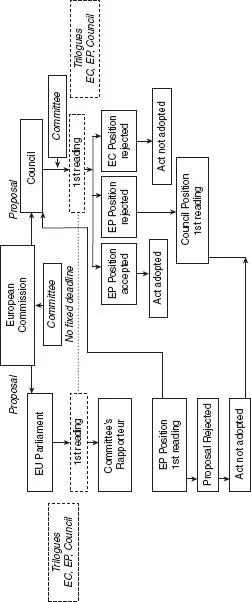
Figure 1.1 European legislative procedure under the Lisbon Treaty—first reading.
Source: Authors’ creation from “Codecision and Conciliation ( . . . )”, EUP, 2012 and Italian Ministry of Agricultural, Food and Forestry Policies, MIPAF, 2011.
At the first reading stage, the Council examines the Parliament’s position and approves or does not approve it. For an agricultural issue, this is preceded by an examination of the text by the Special Committee on Agriculture (SCA), which holds debates with its own delegates, together with the chair of the working group and officials from the relevant directorate general. The text is either approved including the wording previously adopted by the Parliament, or the Council decides not to approve the text and instead creates its own first reading position for the proposed legislative act presented by the Commission. In this case, the Council’s position then becomes the subject of the Parliament’s second reading (MIPAF, Carrubba—2011).
In contrast to the first reading, during the second reading (Figure 1.2) the Parliament has three months (extendable to four months upon request) for the plenary to give its new position. The relevant parliamentary committee may table amendments to the Council’s position with the sole aim of restoring the first reading position. Before the text goes to a vote, the tabled amendments are examined by representatives of the Council and Commission in order to help achieve a second reading agreement. Procedure requires the revised proposal to be voted on at the EP plenary session. The EP votes by a majority of all EP members. However, for approval a majority of the votes cast is sufficient. Here, no opinion counts as tacit approval.
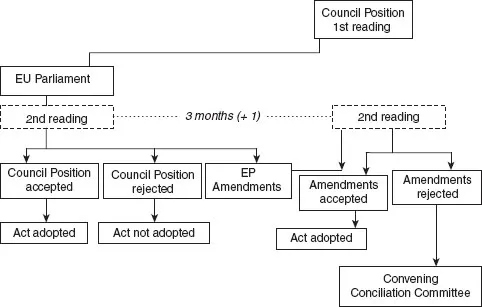
Figure 1.2 European legislative procedure under the Lisbon Treaty—second reading.
Source: Authors’ creation from “Codecision and Conciliation ( . . . )”, EUP, 2012 and Italian Ministry of Agricultural, Food and Forestry Policies, MIPAF, 2011.
Once the Council receives the amendments, it has three months (extendable to four) to approve them or not, requiring a qualified majority. The Council votes by qualified majority. However, if the Commission’s opinion runs counter to the EP’s amendments, then the vote must be unanimous. If the Council approves all the Parliament’s amendments, the legislative act is considered adopted with those changes in place.
If, however, the Council does not approve the amendments, the president of the Council in agreement with the president of the Parliament convenes the Conciliation Committee within six weeks. More specifically, the rules of procedure provide for 6(+2) weeks for convening the Conciliation Committee, 6(+2) weeks for its work, and 6(+2) weeks for the third reading, after which the Council must also have stated its position (Figure 1.3). However, the Conciliation Committee, which brings together Members of the European Parliament (MEP) and Council members, is convened when an agreement appears to have been reached by the two parties. The committee meeting is preceded by a trilogue meeting between the institutions.
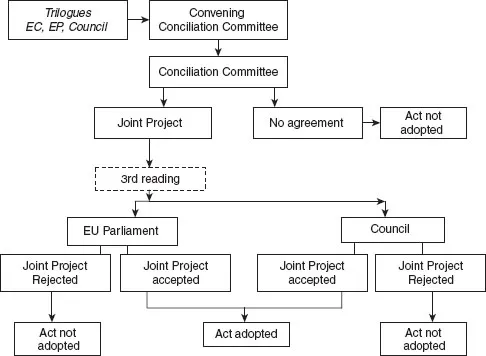
Figure 1.3 European legislative procedure under the Lisbon Treaty—third reading.
Source: Authors’ creation from “Codecision and Conciliation ( . . . ),” EUP, 2012 and Italian Ministry of Agricultural, Food and Forestry Policies, MIPAF, 2011.
The second and third readings as described above extend the timeframe for approving a regulation. Both the CAP and Multi-annual Financial Framework (MFF) 2014–2020 were approved using ordinary legislative procedure and both were agreed at first reading.
With the entry into force of the Lisbon Treaty, EU legal acts also took on a new role. The European institutions can only adopt five types of act: regulations, directives, decisions, recommendations, and opinions. The first three are all obligatory in nature, but recommendations and opinions are not legally binding. However, the most important aspects introduced with the Lisbon Treaty were delegated and implementing acts. One element of legislative power is the possibility for the legislator to delegate in a basic legislative act some of its powers to the Commission. However, this delegated power may only relate to the integration or modification of nonessential parts of the legislative act. Therefore, delegated acts adopted by the Commission will be nonlegislative acts of general application (article 290 of TFEU).
The Lisbon Treaty also established another important aspect: that a revocation or objection can only be decided by one legislator (Parliament or Council), thereby defining the voting procedure. However, in terms of the actual impact of such a measure, it could be seen simply as causing a legislative delay. In fact, the treaty does not delve into the possible repercussions.
Article 291 of TFEU refers to implementing acts and says that member states shall adopt all the national legislation needed to implement legally binding EU acts. However, where uniform implementing conditions are needed throughout the EU, the legislator may use basic acts to confer upon the Commission the power to adopt such measures. This provision formally hands to the European Executive a power that under the previous treaty establishing the European Community (TEC) had been assigned to the Council, which could decide to grant executive power to the Commission.
Looking back at the preliminary stages of the legislative procedure where the European Commission plays a key role in drafting documents, it is vital to examine the important role of the committees that work together with the Commission and Council. They participate in developing and implementing policies together with the Commission and the Council. Their role is to ensure the Commission meets its responsibilities in terms of applying Community law, while maintaining close contact with MS governments. The committees are formed consisting of national government representatives operating alongside the Commission and are chaired by a Commission representative. Management committees bring together representatives of the member states responsible for a specific sector. Upon receiving a proposal from the Commission, they express their opinion on measures relating to the management of agricultural markets. Each production sector has dedicated committees, divided into regulatory, management, and advisory committees.
The regulatory committees have a similar role to that of the management committees in terms of regulatory decision-making for regulations covering more far-reaching sectors, such as food legislation and common standards. The advisory committees bring together socio-professional representatives, appointed by the Commission on the basis of a proposal from Community-level interest groups. These committees enable the Commission to gain insight into the opinions of such groups on various agricultural policy areas. The scientific committees deal with issues of a technical nature.
Council decisions are prepared by the Committee of Permanent Representatives of the Member States (Coreper), assisted by working groups formed of officials from national administrations. Coreper considers proposals before their final adoption in Council. In some areas, such as taxation, Council decisions have to be unanimous. After having consulted the Parliament, the European Economic and Social Committee (EESC), and the Committee of the Regions (CoR), the Commission submits its proposal to the Council for a second time, including any possible changes made due to opinions expressed by the Parliament, EESC, and CoR. The proposal is then discussed within the Council by Coreper. Issues relating to agricultural policy have been exempt from this division of powers since the Council decision of May 12, 1960, and are instead discussed by the SCA, which is made up of member state permanent representatives.
The SCA is a permanent committee and was established by the 1960 decision on the acceleration of the rate of attainment of the treaty with particular reference to the CAP. The six founding members of the EEC believed that this task should be entrusted to a specialized body. The first meeting of the SCA was held on September 9, 1960, and today member states are represented on the committee by senior officials responsible for agricultural policy in their national permanent representations or capitals. As regards Council sessions, the European Commission participates in all meetings of the SCA. In addition to the SCA, Coreper also prepares the work of the agriculture council where discussions are held on financial issues, technical...
Table of contents
- Cover
- Title
- 1 The Political Scenarios and the Choices System
- 2 Toward Market Equilibrium?
- 3 Policy Bargaining: Lobby and Pressure Groups
- Notes
- Bibliography
- Index
Trusted by 375,005 students
Access to over 1.5 million titles for a fair monthly price.
Study more efficiently using our study tools.
Frequently asked questions
Yes, you can cancel anytime from the Subscription tab in your account settings on the Perlego website. Your subscription will stay active until the end of your current billing period. Learn how to cancel your subscription
No, books cannot be downloaded as external files, such as PDFs, for use outside of Perlego. However, you can download books within the Perlego app for offline reading on mobile or tablet. Learn how to download books offline
We are an online textbook subscription service, where you can get access to an entire online library for less than the price of a single book per month. With over 1.5 million books across 990+ topics, we’ve got you covered! Learn about our mission
Look out for the read-aloud symbol on your next book to see if you can listen to it. The read-aloud tool reads text aloud for you, highlighting the text as it is being read. You can pause it, speed it up and slow it down. Learn more about Read Aloud
Yes! You can use the Perlego app on both iOS and Android devices to read anytime, anywhere — even offline. Perfect for commutes or when you’re on the go.
Please note we cannot support devices running on iOS 13 and Android 7 or earlier. Learn more about using the app
Please note we cannot support devices running on iOS 13 and Android 7 or earlier. Learn more about using the app
Yes, you can access Economics, Governance, and Politics in the Wine Market by Davide Gaeta,Paola Corsinovi in PDF and/or ePUB format, as well as other popular books in Business & Business General. We have over 1.5 million books available in our catalogue for you to explore.