eBook - ePub
The Policy-Making Process and Social Learning in Russia
The Case of Housing Policy
- English
- ePUB (mobile friendly)
- Available on iOS & Android
eBook - ePub
The Policy-Making Process and Social Learning in Russia
The Case of Housing Policy
About this book
Centering its study around three explanatory variables - actors, institutions and ideas - this book argues that Russia's hybrid institutional environment reduces the competition of policy ideas, both at the stage of policy elaboration by the community of state and non-state policy experts, and also at the stage of policy adoption by parliament.
Information
Subtopic
Politica europea1
Introduction
1.1 Social learning and policy-making in Russian housing policy
This book is about policy-making and change in the sphere of housing policy in Russia. The change in this sphere over recent decades has been dramatic. The Soviet Union made a commitment to the provision of standardised housing to its citizens which it failed to meet due to the ever-increasing demand, with a near quarter of families placed on massive housing waiting lists by the end of the 1980s (Goskomstat SSSR, 1987: 519). The early post-Soviet housing reform sought to liberalise this sphere. This involved making the majority of Russian citizens owners of their homes with full responsibility for day-to-day costs of utilities and maintenance as well as the long-term renovation of multi-apartment buildings where the majority of the Russians reside.1 A state-sponsored Agency for Home Mortgage Lending (AHML) was created to kick-start and develop mortgage lending in the country. The architecture of the housing policy thus introduced was characterised by some authors as ‘American’, due to the essence of the adopted measures and the participation of policy advisers from the United States in the restructuring of the Russian housing sector during the 1990s (Zavisca, 2012). Some of these new policies, however, were delayed in implementation by economic factors (Starodubrovskaya, 2003) and by strong opposition from Russia’s low-income groups via their representatives in the national parliament (Cook, 2007). Nonetheless, with the election of the executive-controlled legislature, the liberal shape of the Russian housing sector was cast, in the new Housing Code of December 2004.
Yet, almost immediately after its adoption, the Russian government seemed to fall back on the pattern of heavy involvement in the housing sphere, a pattern familiar from the Soviet days. Not only did mortgage finance start being subsidised for certain groups of citizens (Zavisca, 2012) but the state also became involved in renovation of dilapidated housing and the provision of free land in otherwise heavy built-up urban areas for new housing development. Moreover, the talk about housing cooperatives reminiscent of the days of Leonid Brezhnev’s leadership and affordable housing rentals began to be heard from the late 2000s onwards. The latter, according to some policy documents, was to reach no less than one-third of all available accommodation in the country by 2030 (Pravitel’stvo RF, 2012). Finally, the country’s leadership have continuously used references to housing affordability to win public support.2 The policy appears to have pivoted on its axis and returned to a familiar from the Soviet past terrain, although with distinct market elements.
This book seeks to find the sources and understand the trajectory of these fundamental changes and explore the basis of the apparent cyclical development in Russian housing policy. It re-examines the origins of policy proposals used in housing reform during the 1990s and 2000s. Where did policy measures which were non-existent in Soviet housing practice come from? Why did Russian policy-makers choose specific policy options over other available ones during the 1990s? And why did policy-makers’ preferences change later on?
In order to find answers to these empirical questions, I propose to examine the ‘policy-making process’ in Russian housing as a historical dynamic to reveal historical patterns of policy development in this area. While the focus remains on housing, the greater goal is to explore the policy-making process in Russia per se in a way that is applicable to other policy domains. I also aim to make observations about the pathways of policy development within a hybrid political regime3 more generally.
In order to achieve these goals, my analysis turns to the new institutionalist and particularly historical institutionalist perspective on institutional and policy change within political science4 and applies one of the most acclaimed frameworks of this literature, the social learning model (Hall, 1993; see Governance, 2013). This framework views the policy process as a learning dynamic that unfolds in time and, following extant literature on public policy-making (e.g. Howlett et al., 2009), involves an interaction of three important explanatory variables: actors’ interests, institutions and ideas (Photo 1.1). Policy ideas represent an important element of policy-making and interact with actors’ material interests (Berman, 2013, 1998; Blyth, 2002, 2001; Hansen and King, 2001). While there are more normative-based interpretations, viewed as expert knowledge, policy and scientific advice (Berman 2013, 2001; Lindvall, 2009; Campbell, 1998), ideas lead actors to define their preferences within the policy process and to form coalitions of advocates supporting distinct policy positions (Sabatier and Weible, 2007). One of important conceptual tools provided by the social learning approach is the concept of a ‘policy paradigm’. Paradigms are viewed as a special class of ideas that define broad overarching goals of policy as well as the means by which the goals are to be attained (Beland and Cox, 2013; Campbell, 1998).
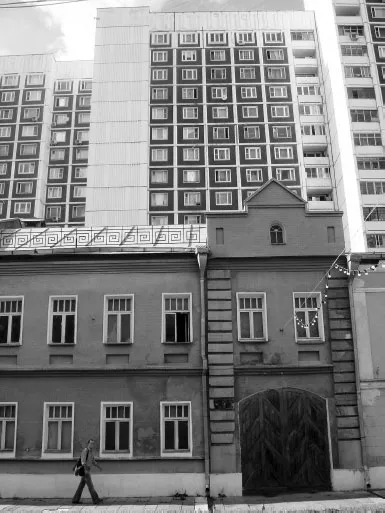
Photo 1.1 Housing, Taganka, Central Moscow, Summer 2009
In this book, I demonstrate that transformative developments in the field of Russian housing have been structured by the interplay between the policy actors’ material interests and the ideas they held in the context of Russian institutional environment. Transformations of the institutional setting during the late Soviet and the early Russian periods, the quality of Russian democratic practices and the fluctuating influence in the policy process of Russian representative institutions, prolific informal institutions – personal ties and bonds between members of the policy-making elite – and the varying over time degree of state influence in the country’s economy, all shaped the environment in which the power plays between actors supporting diverse policy ideas structured Russia’s housing policy process. The historical analysis presented in this book reveals the pattern of social learning that is characterised by frequent reiterations of the policy-making cycle. Such reiterations are associated with repeated replacements of policy paradigms that guide policy-making. Thus, policy instability, which we can term ‘paradigmatic turbulence’, has been a distinctive feature of the policy dynamic in Russian housing sphere.
The analysis begins in the late Soviet period. It finds that the first fundamental change of the policy process occurred in the final Soviet years. It was facilitated by the innovations within Soviet policy-making structures as a result of the perestroika process initiated by Mikhail Gorbachev and democratisation of the Soviet system in the late 1980s. At the same time, important for this first abrupt paradigmatic shift was also the split of the policy process during the final Soviet years into what we can call the all-Union policy stream and that of the Russian Federation, still a republic within the USSR. The interaction between radical reform ideas in housing and the interests of the new Russian leadership led to the replacement of the old Soviet paradigm of ‘socialist distribution’ of housing with a radical market alternative. Yet, while setting market development as its goal, as I will demonstrate in Chapter 2, the new paradigm was poorly defined through essential means or instruments of policy. This paradigm thus appeared as ‘hollow’. This left policy-makers of the early Soviet period with the task of filling in the hollow paradigm with instrumental substance, while also allowing them a substantial degree of freedom to choose specific policy details from those in existence in international practice.
I continue the analysis of social learning in post-Soviet Russian housing by dividing the policy process in this area into three interrelated sub-cases or issue areas. These are (1) housing property rights, (2) housing and utility services or HUS,5 and (3) housing finance.6 Process tracing of the policy dynamic in each of the sub-fields (George and Bennett, 2005) demonstrates divergent patterns of policy transformation. In the first and the third sub-cases, addressed in chapters 4 and 6, two fundamental policy shifts – albeit with a varying success in policy adoption in legislation and implementation – were observed since the early 1990s, whereas only one such fundamental change occurred in the area of housing utilities, discussed in Chapter 5. I suggest that the divergence between the sub-fields of Russian housing policy is due to the nature of ideational choices available to the policy-makers in individual issue areas – what I call ‘paradigmatic complexity’ – and the effects of the overall institutional environment on structuring relations among policy actors – carries of specific ideas.
On the whole, my argument is that the process of policy-making in Russia struggles to produce fundamental change in areas where a plurality of policy ideas is present. This is due to the effect of the political institutional context, in which the impact of informal connections among influential policy actors and the lack of social representation in the policy process substantially limit ideational competition and policy debate. As a result, policy-making within the Russian state suffers.
In the rest of this introduction, I first present the fascinating case of Russian housing and show its many elements which make this case important and suitable for the analysis of policy-making in Russia. Then in Section 1.3, I turn to scholarly analyses of housing policy in post-Soviet Russia and argue that they leave questions related to the influence of variables central for comparative public policy literature, such as ideas and interactions among their carriers, outside their explanatory frameworks. Section 1.4 offers the social learning approach as an analytic tool for studying Russian housing policy-making. In the theoretical discussion of social learning in that section, I propose ways how this model could be developed to allow it flexibility to cope, on the one hand, with different scenarios in which fundamental change can occur, that is, revolutionary and evolutionary options, and, on the other hand, with the specificity of Russian hybrid institutional environment that in important respects differs from that existing in liberal democracies, which so far provided cases for the social learning analysis. Section 1.5 elaborates the argument of the book, briefly set out above, and its implications for the study of Russian politics as well as analysis of policy-making in hybrid political regimes. These questions will be further elaborated in the book’s conclusion.
1.1.1 Housing policy in post-Soviet Russia
Housing represents an important policy area for the Russian public and the state alike. Moreover, there are economic, social, historical as well as political dimensions that render the housing sphere special significance in comparative terms. While housing only occasionally has been made a topic of analysis by the scholars of Russian politics (Gill, 2010; Cook, 2007; Colton, 1995), the multifaceted importance of housing policy makes it a fruitful domain to study the patterns of policy-making and the impact of actors, institutions and ideas on this process.
To start with, housing is significant in economic terms. For this reason, housing is important to the state, to its citizens and to the diverse economic interests that operate in this sphere.7 Housing and the related infrastructure8 comprise a large share of national assets. For instance, in modern-day Russia, national assets in housing are equal to nearly 25 per cent of the country’s capital stock (Rosstat, 2014).9 Also, housing is capital-intensive and the level of borrowing for housing investment in developed economies is substantial.10 Moreover, housing is important in social terms and concerns essentially every individual. As one housing scholar writes,
Housing is a necessity. It is precisely because it is a necessity that people will always find somewhere to live. … For some, living in a horse-drawn van or squatting may be matters of choice made around lifestyle decisions, but in general, the solutions people find will reflect the level and stability of their incomes and the cost of various alternative housing solutions.
(Doling, 1997: 7)
Comparative housing research argues that all states, even the most laissez-faire ones, require housing policy and interfere in the housing process in a myriad of ways (ibid.: 49). Housing is often regarded as an integral part of national social policy (Hill, 2003). For instance, in her insightful book on welfare state change in Eastern Europe, Linda Cook discusses housing policy as one of the constituent parts of welfare policy (2007). Social intervention in the housing sphere includes state housing provision for the poor, assistance for housing and utilities payments and other housing benefits targeted to specific categories of the population.
Yet, housing policy is much more than state provision of accommodation or subsidised utilities. Housing policy of a given state goes far beyond social provision. Through their diverse policies, states directly affect ‘the costs of various alternative housing solutions’ (as in the Doling quote above). States create regulatory frameworks which influence housing investment, construction, the provision of utilities and the organisational forms involved in housing management at the local level. Thus, housing regulation can be found among financial, fiscal and general economic as well as social legislation.11 In the two post-Soviet decades, Russia undertook massive institutional building in these directions. Therefore, when studying housing policy, we do not solely consider policy-making in the social sphere; we are dealing with the process of institutional building in the economic sphere, in the sphere of financial markets and local administration.12 In each of these policy domains, state policy affects and is affected by multiple economic, social and specialist interests.
For these reasons, housing represents a diverse and technically sophisticated policy field with multiple state and non-state agents interacting with each other. Therefore, with housing policy as a case study, we can explore different theoretical propositions about the influence of diverse state and societal actors within the policy-making process.
Housing is also a policy area with distinct frameworks or regimes of policy organisation. Such regimes are tantamount to what in the social learning model is defined as policy paradigms. The most common distinction is between housing regimes with different predominant tenure types: rented or private housing (see UNECE, 2006; Kemeny, 1995). High rates of home-ownership are found in home-owning societies of the English-speaking world or Anglo-Saxon housing systems, whereas societies with higher rates of rented accommodation tend to be in the European mainland (ibid.; Lowe, 2003: xvii). Based on these regimes for the ensuing analysis of social learning in the Russian housing sphere, the distinction can be made between the ‘private ownership housing paradigm’ and the ‘mixed ownership paradigm’.
The dimension of housing finance as noted is a large and highly important sub-area of housing policy in economic terms. In the area of housing finance, specialist literature makes a distinction between two different models of funding mortgage debt: an agency-based model and a more decentralised banks-oriented model (Lassen, 2005; Struyk, 2000). The first type involves the formation of a state-sponsored agency which provides individual banks with financial assistance to fund specific categories of mortgages. The first and most famous facilities of this kind were set up in the United States in the late 1930s. The second type of mortgage funding is more decentralised. It involves individual banks issuing mortgage-based obligations or securities which are guaranteed by banks’ own assets. This model of mortgage funding is widely used in European countries (ECBC, 2008). Here with respect to mortgage finance, these two models – the agency-based and the bank-based models of mortgage funding – are considered as two paradigmatic prototypes of housing finance. Yet, in practice, these types do not exist in pure form and ‘each country contains an amalgam of different systems’ (Doling, 1997: 126), which emerged under the influence of diverse country-specific ‘legal frameworks, economic and cultural factors’ (Scanlon and Whitehead, 2004: 7).
In addition to these comparative features of housing, the development of Russian housing policy, during the post-Soviet period briefly sketched at the beginning of this chapter, presents several important puzzles. A number of analysts note that radical market reform began in the early 1990s, earlier than any other reform in the social sphere (Yasin, 2006; Starodubrovskaya, 2003; Kosareva, 1998; Struyk, 1996). Initial reforms promoted privatisation of housing, market mechanisms for maintenance and utility provision and for housing investment. As a result of this reform effort, most of the Russian housing stock was transferred to private ownership and a vibrant housing market developed (Belkina, 2009). Yet, many policies struggled. The system for effective collective self-management of privatised apartments by their owners largely failed to form. At the end of the 2000s, multiple problems persisted in the operation of housing maintenance companies (World Bank, 2009). While the volumes of mortgage borrowing grew during the 2000s, mortgages during this period, nonetheless, remained affordable to just 10 per cent of the Russians (Gurtov, 2009). This situation was characterised by Jane Zavisca (2012) as ‘property without markets’. The reaction to this, she argues, was the increased state intervention. Its manifestation in the mid-2000s was the launch in 2006 of a National Project in Housing, ‘Affordable and comfortable housing – to the citizens of Russia’ (Dostupnoe i komfortnoe zhil’e, 2009). Zavisca concentrates her analysis on one of the initiatives of this project, called ‘maternity capital’. Ho...
Table of contents
- Cover
- Title Page
- Copyright
- Contents
- List of Figures, Photos and Tables
- Preface and Acknowledgements
- List of Abbreviations
- 1. Introduction
- 2. Development of Reform Ideas in Soviet Housing Policy (1960s–1991)
- 3. Housing Policy Sub-system: Late Soviet to Early Post-Soviet Period
- 4. Reform of Housing Property Rights in Post-Soviet Russia: From Owner-Occupation to the Diversity of Housing Tenure Forms
- 5. Reform of Russian Housing and Utility Services
- 6. Development of the New System of Housing Finance
- 7. Conclusion
- Appendixes
- List of Interviews
- Notes
- References
- Index
Trusted by 375,005 students
Access to over 1.5 million titles for a fair monthly price.
Study more efficiently using our study tools.
Frequently asked questions
Yes, you can cancel anytime from the Subscription tab in your account settings on the Perlego website. Your subscription will stay active until the end of your current billing period. Learn how to cancel your subscription
No, books cannot be downloaded as external files, such as PDFs, for use outside of Perlego. However, you can download books within the Perlego app for offline reading on mobile or tablet. Learn how to download books offline
Perlego offers two plans: Essential and Complete
- Essential is ideal for learners and professionals who enjoy exploring a wide range of subjects. Access the Essential Library with 800,000+ trusted titles and best-sellers across business, personal growth, and the humanities. Includes unlimited reading time and Standard Read Aloud voice.
- Complete: Perfect for advanced learners and researchers needing full, unrestricted access. Unlock 1.5M+ books across hundreds of subjects, including academic and specialized titles. The Complete Plan also includes advanced features like Premium Read Aloud and Research Assistant.
We are an online textbook subscription service, where you can get access to an entire online library for less than the price of a single book per month. With over 1.5 million books across 990+ topics, we’ve got you covered! Learn about our mission
Look out for the read-aloud symbol on your next book to see if you can listen to it. The read-aloud tool reads text aloud for you, highlighting the text as it is being read. You can pause it, speed it up and slow it down. Learn more about Read Aloud
Yes! You can use the Perlego app on both iOS and Android devices to read anytime, anywhere — even offline. Perfect for commutes or when you’re on the go.
Please note we cannot support devices running on iOS 13 and Android 7 or earlier. Learn more about using the app
Please note we cannot support devices running on iOS 13 and Android 7 or earlier. Learn more about using the app
Yes, you can access The Policy-Making Process and Social Learning in Russia by Marina Khmelnitskaya in PDF and/or ePUB format, as well as other popular books in Politica e relazioni internazionali & Politica europea. We have over 1.5 million books available in our catalogue for you to explore.