Sustainable Growth in Global Markets provides a comprehensive introduction to the concept of market and business management outside the domestic market. It covers complex elements of market management, analysing behavioural theories such as theory of comparative advantage, theories of macro and micro marketing economics, socio-cultural theories, and various contemporary concepts of international business management. The book puts forward a broad foundation of the subject beginning with a discussion of the concept of market dynamics and followed by an analysis of the changing behaviour of markets and its components. The core discussion focuses upon the ability to do business in international markets, putting forward critical insights on the significance of leadership, building consumer value through innovation, tracking the external environment for organizational change as well as important emerging trends towards building an innovative venture.
eBook - ePub
Sustainable Growth in Global Markets
Strategic Choices and Managerial Implications
- English
- ePUB (mobile friendly)
- Available on iOS & Android
eBook - ePub
About this book
Information
Part I
Mapping Market Scenarios
1
Understanding International Business
Globalization created new challenges for firms to survive in the competitive marketplace. Most firms are engaged in developing competitive strategies and innovative differentiations in order to stay sustainable and competitive in the global marketplace. Companies are also exploring new markets located in the mass, and bottom-of-the-pyramid consumer segments to gain competitive advantage. However, moving towards new destinations is often complex and it causes dilemmas in strategy development and implementation. This chapter discusses the overall impact of globalization on the market competitiveness and business growth of companies, and illustrates how factors of production can be analyzed to secure comparative advantages while exploring new market destinations. The drivers of globalization influencing the marketing strategies of companies doing international business are discussed in this chapter. The chapter also examines the problems and challenges companies face in selecting strategic choices to survive in the competitive marketplace.
Globalization has evolved over a long understanding of consumer behavior, needs, and matching competencies of firms to satisfy consumers, and uphold product, service, brand, and corporate values. In the twentieth century the corporate philosophies of companies tended to spin around conventional marketing maxims such as customer value, competitive advantage, and product focus. Such marketing dynamics drove firms to study the market, develop products or services that would satisfy customer needs and wants, develop an appropriate marketing mix, and meet their own objectives as well as provide customer satisfaction on a continuing basis. However, it became clear in the latter half of the twentieth century that the functional definition of marketing was narrow in its focus on market and competition. The broad philosophy of marketing firms till the 1980s was marketing to customers, which has now shifted to marketing with customers by associating them in the evolution of the firm’s business. Globalization is a continuous phenomenon involving manifold change dynamics from innovation to organizational culture, and consumer behavior to competition in the market. In the twenty-first century globalization is growing within the triangle of challenges emerging from radical consumerism, digitization, and politicization. Corporate leadership has become critical as companies tend to increasingly invest resources, adopt the mind-set of experimenters to gain consumer attention and acquaintance, and orchestrate hybrid organizational models to harness diversity for gaining competitive advantage in the global marketplace (Ferraro and Cassiman, 2014).
Globalization and business growth
The focus of marketing has shifted from knowing everything about the market for products and services to knowing the customer in the context of competition, and the broader economic, social, and political macro forces to co-create marketing strategy for the mutual benefit of consumers and firms. Such a marketing philosophy emphasizes the benefits for consumers, stakeholders, and firms. Globalization has become a functional dynamics of emerging firms in the business environment today. Most firms believe that globalization is a synonym for the business growth, and invest perennial resources in developing a strategy for going global. It has become one of the most pertinent issues for managers of growing firms around the world. Many forces drive local enterprises to globalize by expanding their brand reach and participating in foreign markets through various modes of entry. In developed countries domestic markets have matured and firms are demanding to seek international markets, while in countries like Brazil, Russia, India, and China, firms are born global. A large number of companies in the USA are nourished by the huge domestic market but they typically lag behind their European and Japanese rivals in internationalization. Born global firms maintain dynamic growth in the competitive marketplace and achieve substantial international sales from an early stage of development despite economic and technological constraints. They internationalize rapidly as the period from domestic establishment to initial foreign market entry is often three years or less. Born global firms are emerging in sizable numbers worldwide. Until recently, international business was mainly the domain of large, well-resourced multinational enterprises. The appearance of large numbers of born global firms is revolutionizing the traditional character of international business and helping to reshape the global economy (Cavusgil and Knight, 2009). Companies intending to go global exhibit two apparent objectives – to take advantage of opportunities for growth and expansion, and business survival amid growing competition. However, firms that fail to pursue global opportunities will eventually lose their domestic markets and will be pushed aside by stronger and more competitive global firms. In the process of going global, firms need to adopt an innovative marketing strategy to withstand competing firms. Most firms follow a global perspective to expand their business across destinations instead of adopting a country-by-country or region-by-region perspective in developing their marketing strategy.
Globalization has moved through several change phases from capitalistic philosophy to democratic business notions involving stakeholders in the process of business growth. Before the recent economic recession in the Western hemisphere (2007–11) going global seemed to make sense to every company in the world to expand their scope of business. However, as globalization entered a different phase following the recession the nature of globalization changed to guarded globalization, which made companies secure their global movements by observing political and economic trends in their market destinations. The scope of carrying business in emerging destinations has become more problematic due to protective regulations by governments, which allows the opening of more industries to multinational companies as the political philosophy for business development is leaning towards both pro-globalization and pro-localization. This conception has driven the Darwinian dynamics of ‘struggle for existence’ and ‘survival of the fittest’ among companies, leaving international business in a fix. They are defining economic security more broadly and perceiving more and more sectors to be of strategic importance such as energy, agri-business, media marketing, and defense products and services. The new phase of globalization has also prompted the rise of state capitalism in some of the world’s most important emerging markets and has altered the business fields for the multinational companies. Hence, most companies focus on the strategic importance of their industry to both the host and home governments in order to manage risk, and choose to establish alliances with local players, as Wal-Mart established an alliance with Bharati Enterprise in India. Multinational companies seeking global advantage in emerging markets look for several new ways to add value abroad and enter multiple sectors to carry on their business or stay at home (Bremmer, 2014).
Globalization can be described as the combined influences of trade liberalization, market integration, international finance and investment, technological change, the increasing distribution of production across national boundaries, and the emergence of new structures of global governance. However, globalization in its radical sense should be taken to mean the development of a new economic structure, and not just conjectural change towards greater international trade and investment within an existing set of economic relations (Hirst and Thompson, 1996). The globalization thought process broadly includes the following attributes:
- Global marketplace
- Wide marketing opportunities
- Social and economic welfare
- Diversity and cross-cultural focus
- Theory of comparative advantage.
The global marketplace equipped with global communications has become the focus of the global business arena, which enables world markets to remain open and involved in fair competitive practices. At the same time, anti-globalization moves in the process of development protest against the hazards of suppressive strategies of global companies that affect regional trade entities. Efficient multinational companies from the leading countries enter the secured country markets and drain out the regional players from benefit market segments (Rajagopal, 2007). Globalization not only entails the economic process and free markets in relation to trade and competitiveness but also encompasses the quality of life, ecological concerns, corporate power of multinational companies, human rights and needs, and so on. Such complexity also embraces the social, political, and cultural dimensions of doing business beyond boundaries in the globalization process. Thus, globalization embraces a spread of the complex dynamics of general cultural evolution and diffusion of consumer cognition on a global scale (Brinkman and Brinkman, 2002).
Over the twentieth century, global business players were obsessed with achieving sustainable competitive advantage and securing a position within an industry that allowed them to be business leaders for the long term. Some organizations, like General Electric Company and Unilever, have succeeded with this approach. However, in the current competitive market and politico-economic edge, most companies with tactical strategies do not last long enough to rule the global marketplace. The forces driving the global marketplace today include innovation, technology, consumer value, the digital revolution, and regional trade agreements that relax barriers to entry, such as the North American Free Trade Agreement (NAFTA) between the USA, Mexico, and Canada, in force since 1994. The global marketplace is becoming uncertain due to frequent political, economic, social, technological, and legal changes. Hence, companies need a portfolio of multiple transient advantages that can be built within resilient determinants such as customer value. Transient advantages call for a whole new scenario involving business strategies that are more customer-centric than market-oriented or industry-bound. Companies that adapt to this shift can set broad strategic themes and then let consumers experiment with them, and social media may be activated to share the experience. Companies with such a strategy focus adopt decision metrics that support entrepreneurship and develop resistance to disruptive innovations that tend to prove shifts in consumer behavior (McGrath, 2013).
Operating in the global environment requires mastered skills to penetrate in host countries, particularly when trade barriers and government protections have been removed and business policies have been restructured. The concept of the global customer is gaining in importance every day and so is the global-customer-centric organization. The theory of comparative advantage suggests that firms may choose a destination to expand their marketing operation that offers relative economic advantage in factors of production (land, labor, and capital), technology, and managerial know-how. Comparative advantage in business may be defined as the ability of a firm to produce a particular good or service at a lower marginal and opportunity cost over another. Even if one country is more efficient in the production of all goods (absolute advantage in all goods) than the other, both countries will still gain by trading with each other, as long as they have different relative efficiencies.
Going global is an easy process for firms. Firms need to simulate the impact of their business in the global market in reference to their resources, target markets, and operational efficiency. Most firms concentrate on product markets by considering customers who seek the same benefits or to be served with the same products, services, innovation and technology regardless of the geo-demographic differences and cognitive behavior. There are a number of paradoxes in communicating product-marketing strategies in global marketplace. For example, paradoxical values may emerge within and between cultures while advertising products and services in the global marketplace. It is necessary for the firms evolving to the global scale to understand that markets are people, not products. There may be global products, but there are not global people; hence firms need to adopt a consumer-centric marketing approach in the global marketplace rather than going all-out in employing strategies to outmaneuver or outperform competitors in the marketplace (Svensson, 2012). The significant reasons for globalization of business include:
- Market saturation in the home country
- Innovation and technology among products and services
- Trade deficit and long disequilibrium in the balance of trade in the home country
- Increasing foreign competition
- Emergence of new markets
- Multi-domestic products and markets
- Availability of international finance
- Globalization and free trade zones
- Opportunities via foreign aid programs.
The most important causes of globalization are emerging trade opportunities, multi-domestic production matching consumer preferences in destination markets, and availability of international finance. Most firms are motivated to go global in view of the above-mentioned marketing components leading to sustainable international market integration. The information technology revolution has made it easy for firms to develop cross-border trade and capital movements along with the political incentives to do so. However, government can still restrict the multi-nationalization of production, but most countries increasingly choose to liberalize the flow of products and services for the macroeconomic benefits. In the case of international marketing firms, the trade liberalization policies have opened up domestic markets for exports and imports, encouraging even small and medium firms to participate in international marketing operations (Garrett, 2000).
Continuous growth in innovation and technologies are the principal stimulants for companies to gain competitive differentiation and attain leadership in global markets, and high brand equity to drive consumers toward new buying preferences and explore new market segments. However, it is often hard for consumers to adopt innovations, gain confidence in deriving values appropriately, and derive competitive advantages from the innovative offerings over existing and predetermined products and services. Consumer perceptions on innovative products and technologies are largely influenced by social and informal networks. Such interconnections among consumers and companies are so strong that a new product’s adoption by one player often depends on its systematic adoption by other players. Figure 1.1 exhibits the symbiotic relationships between innovation, technology, and market competition in the global marketplace.
Traditionally companies launch innovative products by targeting unique customer segments or developing compelling value propositions. However, companies engaged in continuous innovations orchestrate a change of behavior among consumers across the market segments in order to expand its market outreach. Companies engaged in innovation and competitive gains in the marketplace should explore new market segments, develop and implement strategies that maximize the chances of getting gaining the competitive advantage, complement power players, and position the innovation as an enhancement to products or services. Innovation and technology companies tend to offer coordinated switching incentives to the players (social media, retailer, and salespeople) who add to the innovation’s benefits, the players acting as channels to adopters and early adopters to ensure the value of the products and services (Chakravorti, 2004).
Continuous growth in innovation and technology in consumer products and services drives new preferences among consumers and attracts competition in the marketplace. Figure 1.1 demonstrates that most competitors, who also emerge as new entrants, develop consumer-centric innovations and technology and offer cost-effective products to demonstrate competitive advantage. New emerging markets look for sustainable innovation and technology, extended outreach, and value-based deliverables to consumers. Additionally, public diplomacy, international organizations, and political power players also try to command the markets to some extent by regulating technology intervention in public and social life. Consumer preferences are largely governed by social and peer influence, and the utilitarian philosophy that delivers value-added benefits to consumers over competing products. E-commerce supports consumers in convenience shopping while booms and busts in technology drive market competition in global markets.
The patterns of competitive success in leading countries exhibit that companies achieve competitive advantage through innovation and technology. The dynamism of the companies to innovate is affected by four broad attributes comprising factor conditions, demand conditions, related and supporting industries, and the strategy, structure, and rivalry of the firms. Government and companies act as catalysts and challengers in managing competition (Porter, 1990). However, innovation and technology differentiation as a driver of competitiveness has appeared to be a cost-push strategy for companies and is often risk averse. Hence, price has become a critical factor to determine market competitiveness in the global marketplace. Raising prices to cover the costs of innovation and technology differentiation, and defend profit margins, has emerged as a principal strategy for most consumer products companies. Low prices attract mass markets and assure sustainable market share but most companies tend to increase prices in order to cover their costs on innovations and confine innovations to niche markets. To avoid this trap of competitive pricing, companies need to architect the value chain in the market process from the raw materials stage to end user prices by overriding the cost components (Thompson, 1984).
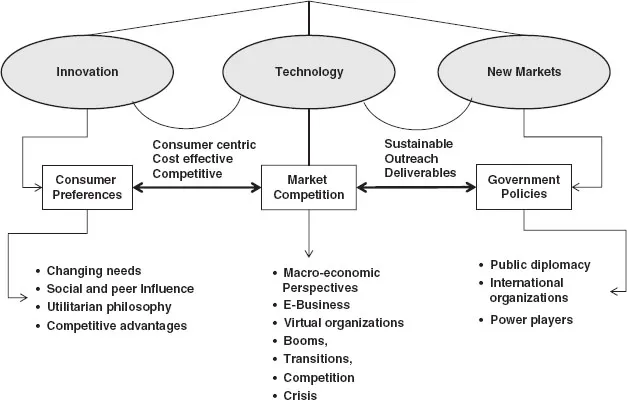
Figure 1.1 Innovation, technology, and market competitiveness
Ideological shifts and market economies
The manifold impact of globalization during the twentieth century has not only shifted market patterns but has also led to remarkable stru...
Table of contents
- Cover
- Title
- Copyright
- Contents
- List of Figures and Tables
- Foreword
- Preface
- Acknowledgments
- About the Author
- Part I Mapping Market Scenarios
- Part II Preparing Destination Markets
- Part III Developing Functional Strategies
- Notes
- References
- Index
Trusted by 375,005 students
Access to over 1.5 million titles for a fair monthly price.
Study more efficiently using our study tools.
Frequently asked questions
Yes, you can cancel anytime from the Subscription tab in your account settings on the Perlego website. Your subscription will stay active until the end of your current billing period. Learn how to cancel your subscription
No, books cannot be downloaded as external files, such as PDFs, for use outside of Perlego. However, you can download books within the Perlego app for offline reading on mobile or tablet. Learn how to download books offline
Perlego offers two plans: Essential and Complete
- Essential is ideal for learners and professionals who enjoy exploring a wide range of subjects. Access the Essential Library with 800,000+ trusted titles and best-sellers across business, personal growth, and the humanities. Includes unlimited reading time and Standard Read Aloud voice.
- Complete: Perfect for advanced learners and researchers needing full, unrestricted access. Unlock 1.5M+ books across hundreds of subjects, including academic and specialized titles. The Complete Plan also includes advanced features like Premium Read Aloud and Research Assistant.
We are an online textbook subscription service, where you can get access to an entire online library for less than the price of a single book per month. With over 1.5 million books across 990+ topics, we’ve got you covered! Learn about our mission
Look out for the read-aloud symbol on your next book to see if you can listen to it. The read-aloud tool reads text aloud for you, highlighting the text as it is being read. You can pause it, speed it up and slow it down. Learn more about Read Aloud
Yes! You can use the Perlego app on both iOS and Android devices to read anytime, anywhere — even offline. Perfect for commutes or when you’re on the go.
Please note we cannot support devices running on iOS 13 and Android 7 or earlier. Learn more about using the app
Please note we cannot support devices running on iOS 13 and Android 7 or earlier. Learn more about using the app
Yes, you can access Sustainable Growth in Global Markets by Rajagopal in PDF and/or ePUB format, as well as other popular books in Business & Business Strategy. We have over 1.5 million books available in our catalogue for you to explore.