eBook - ePub
Breaking Bad and Dignity
Unity and Fragmentation in the Serial Television Drama
- English
- ePUB (mobile friendly)
- Available on iOS & Android
eBook - ePub
About this book
An ambitious interpretation of the critically celebrated and widely popular crime drama Breaking Bad , this book argues that not only should the series be understood as a show that revolves around the dramatic stakes of dignity, but that to do so reveals - in new ways - central aspects of serial television drama as an art form.
Information
Subtopic
Art General1
Humiliation and Shame in Season One
One notable aspect of Breaking Bad’s first season is the extent to which many of its most pivotal and engaging scenes revolve around characters facing situations in which they risk humiliating or shameful exposure. The pilot episode (‘Breaking Bad’, 1.1) introduces both Walt and Jesse through vulnerable moments of possible discovery and exposure by the police: first Walt in the opening sequence in the desert, later Jesse in the second act meth lab raid. Through cumulative instances of Walt’s diminishment, the pilot’s first act positions Walt within his dissatisfying inhabitation of ordinary life, from his breakfast with family through his day teaching high school and washing cars to his surprise birthday party, at which he is set against the more confident self-command of his DEA agent brother-in-law Hank (Dean Norris). A trajectory of decline is also traced by Jesse’s shameful return to his family home in episode four (‘Cancer Man’, 1.4). Jesse’s unexpected and somewhat unwelcome visit reveals, in his promising childhood drawings, a past of diligent application; he tries to recover this quality of character in episode five (‘Gray Matter’, 1.5) through his self-guided attempts to meet Walt’s standard of cooking meth. In the same episode, the resentments of being surpassed and the humiliations of charity motivate Walt to reject free healthcare from a former colleague, and to affirm a sense of his dignified self-reliance by resuming his meth enterprise with Jesse.
The aim of this first chapter is to show how it is in the handling of humiliation and shame as dramatic material that Breaking Bad finds a solution to the problem that all first seasons of a television serial face: how to build, from a basis of character, space, and conflict, a dramatic structure that can attract viewers and also support ongoing growth and involvement.1 What the first five episodes are seen to tap for the basis of a serialised drama is how the resentments and ambitions engendered by experiences of humiliation and shame can form deep reservoirs of potential psychological energy that can be drawn on as a renewable catalyst or propellant of human action. Such an aspect of psychology is important to practitioners of serial television as an ongoing form of drama, who must look for ways of sustaining viewer interest in the fiction against the threat of crucial narrative dynamics being exhausted or becoming stale. The first five episodes of Breaking Bad address this need by handling humiliation and shame, and their attendant resentments, so that they play a catalysing role in the series’ drama that is not only suggested to be renewable, but that is also transformative of characters in terms of their identity and of their relationships to the world they inhabit.
Exposure and concealment
The opening sequence of the pilot episode provides a model for one of the central characteristics of Breaking Bad, plunging us into an extreme dramatic situation of mortal risk, handled so our involvement is above all keyed to the pressing threat of humiliating, shameful exposure, and the desperate need to be rescued from it. Walt, dressed only in underwear and a gasmask, flees along a desert road at the wheel of an RV, a man unconscious in the passenger seat beside him, and two other men sliding around in the back. (In a small but important detail, the passenger wears a gasmask, while the clearly more imperilled men in the back do not.) Walt crashes the vehicle off the road, and emerges to the sound of wailing sirens – surely the police closing in. Walt panics, but then controls himself enough to dress in a shirt and videotape a message to his family, after which he draws a pistol and strides out into the middle of the road. He aims his weapon and waits to suicidally confront the police. The scene ends, and we then witness for the first time the series’ title sequence.
There are some aspects of the opening sequence’s design that provide a crucial basis for our involvement in the drama and so are worth observing from the outset. Breaking Bad has been noted for its narrative complexity, sometimes highlighting its use of the ‘cold open’, which is inaugurated here.2 Yet what actually happens is quite straightforward. Importantly, the events are extreme in such a way that, despite the cold open narrative technique withholding an orienting story context, there is a strong sense of dramatic clarity. This is partly achieved by integrating two generic forms – the crime drama and the Western – through which the scene quickly attunes us to a familiar set of dramatic stakes: fear of capture, and death, and in the face of these fears the wish to grapple for more than mere survival, for a final poise of dignity in the ultimate standoff. Of course, part of the reason for this approach to the opening is to rapidly earn the viewer’s intense attachment to the show, an aim equally well met through the ‘hook’ of the cold open design. Throughout its five seasons, Breaking Bad will continue to experiment with the cold open sequence to different effects and with varying degrees of success. But in our first encounter with the technique here, in the form of a flashback structure, we are alerted to the series’ participation in film noir tradition. This brings with it all the thematic concerns with agency that adhere to the handling of flashbacks in that genre.3 Yet there is straightaway, at a more basic level, another implication of the cold open flashback pertinent to Breaking Bad’s status as a serial work, and that is the way in which it provides the viewer a ‘sense of an ending’ in a form predicated on the continued postponement or deferral of narrative conclusion. As one aspect of the cold open’s purpose is to earn audience involvement by dislocating us from a stable, orienting narrative context, the signalling of an end point draws us in by slightly different means. The technique reassures us that we are ‘going somewhere’, that, in Jacobs’s words on more closed narrative forms such as movies and plays, we know (or so we think) where we will be ‘coming in to land’,4 providing a strong ratchet of anticipation by which the episode tightens our bind to the fiction.
In these aspects of the opening sequence we see Vince Gilligan (the episode’s writer and director) declare and exercise his skills at television showmanship honed during his long spell as a writer and producer of The X-Files (Fox, 1993–2002), the network-based structure of which – a cold open and four acts – Gilligan would maintain in his work for AMC.5 This is all to say that the arresting qualities of Breaking Bad’s immediate beginning are explicable as a showman’s attempt to immediately secure viewer attention and commitment. Yet this fact does not represent the limit of the scene’s achievement but rather the necessary grounds for its achievement. That achievement is to tighten our sympathetic involvement in Walt’s fear of exposure so that we are somewhat blinded to or distant from more moral concerns that Walt’s actions are at odds with, while making those alternative moral perspectives available all the while, so that we might retrospectively come to see how easily we slipped from alignment with the ‘right and proper’ position we would wish to take if we were less powerfully compelled by desires such as Walt’s.
We are given a clear picture of Walt’s vulnerability to exposure through the way in which the camera captures his stumbling exit from the RV. A high, wide shot places him beside the stranded vehicle as a puny figure alone against the surrounding landscape of imposing mesas and sky. It is an image of his isolation that at the same time allows him to be potentially caught in full view from any direction, putting him on the teetering precipice between insulating privacy and all-out discovery. The cut to a closer view lets us see this situation as one that imposes on Walt a sense of helplessness while also allowing that state’s free expression in his temporary protection from being exposed to anyone but himself. Cranston at first plays Walt’s response to his situation as one of impulsive anger. But with the first distant wailing of the sirens, he slides into unselfconscious despair and back again, and we cleave to the helpless sight of a man buffeted by conflicting waves of feeling whose clashes he cannot control or absorb. Turning his back to the camera, Cranston reaches up with his arms as if in resignation, but they are seized by rage as he pumps them down. Cranston then releases the tension of his limbs and fingers, as if Walt has already spent his energy – his limbs go loose as they come up again to rest with his hands clasped behind his head in a limp pose of surrender. Each exhalation becomes a deep and pained sigh as he aimlessly turns in circles on the spot, looking up and out into the middle distance, beyond his own resources for assistance. Now Walt seems to properly hear the sirens – he catches his breath and holds it, as if in reflex withdrawal against being unexpectedly stuck with everything out in the open. The intrusion of the outside world pulls him from his surrender to helplessness, and into panic at being seen in such a state. He releases his breath as a hyperventilating mantra – ‘Oh my God, oh my God, oh my God’ – and lets his hand flop loose at the wrists, flapping, an image of slightly effeminate distress that captures his weakness and indecision in the face of a crisis demanding firm resolve. These transitions of bodily expression position Walt as a man thoroughly out of his depth in unlikely and unfamiliar waters, and completely incapable of seeing his way through them. Ordinarily, of course, we would welcome such a situation being sorted out by the arrival of the police and their arrest of this man. (After all, from our knowledge of the series gleaned through advertising promotion and word of mouth, we know from the outset that Walt is a criminal, a drug dealer – possibly even a killer.) Yet, very soon after being snagged by Walt’s moment of suspended breath, we are likely to find ourselves sharing his desire to manufacture some face-saving rescue against discovery and capture by the police, as Cranston begins to execute an extraordinary rebuilding of Walt’s pitifully shattered self-command.
Our sympathy for Walt in this opening scene – as will come to be the case elsewhere in Breaking Bad – hinges on what George Toles finds to be crucial to our investment in Alfred Hitchcock’s films. For Toles, many Hitchcock sequences work by somehow getting us to forget, for a moment or longer, our ordinary sense of moral direction and commitment, so that we might find ourselves wishing for good fortune to befall a character in his precarious attempt to kill his wife, as in Toles’s reading of a sequence in Dial M for Murder (Alfred Hitchcock, 1954).6 ‘We venture into ethical territory as moviegoers,’ writes Toles, ‘not by locating the most responsible position for appraising others’ wrongdoing, but by being drawn into a series of “wrong places” ourselves.’7 The opening sequence draws us into such a series of ‘wrong places’ through our strongly felt desire that Walt rescue himself from his state of discomposure, in which he looked all about in vain hope of finding help from somewhere ‘out there’. In comparison, what comes to impress us about Walt’s more wilful response to the sirens is the way he abandons his blind hope of deliverance in favour of turning inward, where in only a few brief moments we witness him find and shape within himself something like a mental ‘winch’, a psychological mechanism with which to pull himself out of his mess.
Walt’s first move towards controlling his appearance is to still his flapping hands by lightly pressing his fingers to his temples. This deliberate gesture gives a coherence of purpose to his previously disconnected parts of body and mind. Walt’s placement of his hands by his eyes also blinkers his gaze from the world around him, which earlier intruded in the form of the sirens and set off his panic. Turning away from the world he is able to more strongly gather and focus his attention within himself. From this stable point Walt is able to act decisively, in contrast to his fumbling indecision a moment ago. He hurriedly grabs his shirt from its hanger attached to the RV’s passenger-side rear-view mirror and begins to re-clothe himself. He covers up his nakedness while also attempting to retrieve, as a further sense of psychological cover, those aspects of his personality ‘hung up’ when he embarked on this criminal adventure. Toles reminds us that ‘[i]t is always enticing in movies to affiliate ourselves with the completion of a daunting task’.8 And here Walt sets about the task of putting himself straight amidst a situation of seemingly irrecoverable collapse. So we might well feel an ambient relief at this point that something is being done about the situation, that shiftless panic has given way to purpose. We silently encourage Walt’s actions, which, despite being hurried, speak to a much-needed measure of intent and control. Our view of Walt dressing himself is provided by a shot taken from inside the RV – we eagerly look out through the passenger-side window, focussing our concern on Walt’s fumbling efforts to thread the buttons as quickly as he can, while in the foreground is framed the passenger seat body lying still over the dashboard (Figure 1.1). Despite the flashing beacon of the figure’s bright red vest, my experience is that we are most likely to be projecting our greatest care towards Walt’s outside need to cover himself up.
The first time we watch the sequence we of course are given no indication one way or another whether this person is dead or alive, although his wearing a gasmask holds out some slither of hope for him. Yet it is a fact of serial television like Breaking Bad that it is produced so that it might last in the lives of its audience, to be revisited and watched repeatedly, and for the meaning of events to be revised in light of subsequent revelations. And so by the episode’s end, as events come full circle and we again witness Walt’s desperate flight at the wheel of the RV, we are in full possession of our knowledge that this young man is Jesse and that Walt is most certain he is still alive.9 So it becomes salient to a retrospective appreciation of the opening sequence that, in our immediately felt investment in Walt’s need to cover himself up, we have overlooked Jesse’s unconscious body that is lying right in front of us. As well, Gilligan and his editor Lynne Willingham (Kelley Dixon and Skip McDonald would edit the remainder of the series) choose to present us with this view of Jesse’s body twice in quick succession, so that a sense of his presence is suggested to be important to our view of Walt’s actions. This is all to say that if we are to properly notice and care about the situation of this other character – of Jesse – we must to some extent ‘step back’ from our investment in Walt’s sense of crisis that, more fully committed to, blinkers our view of what matters in such a way that what is at stake inside the RV fails to register against the ‘more important’ task outside.
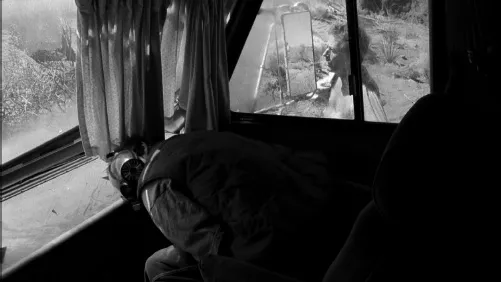
Figure 1.1 ‘Breaking Bad’: Walt dresses himself while ignoring the needs of another
In its quiet and still shots of the New Mexico landscape, the opening scene began by inviting us into a position of distanced contemplation, and then sharply shifted in focus and tone with the violent arrival of the careening RV, so that we let ourselves be plunged into close involvement in the drama as seen from Walt’s perspective. Here those two viewing positions overlap – seeing the situation one way or another is not only a matter of the camera’s selection of viewpoint but is also a matter of our own (retrospective) choice as to what we should care (or have cared) about.10 The camera’s positioning in this moment makes it available for us to discover (too late) how Walt’s desire to restore his sense of self, which we have shared in, is pursued at the cost of caring about another person’s grave need for help. In this way, Walt’s patterns of splitting and cohesion between inner and outer are reflected in our own involvement in the drama, which sees us divided between competing ways of caring about what is happening from moment to moment. What is at stake in sharing Walt’s ‘blinkered’ view is suggested when he returns inside the RV to retrieve a handgun from a dead man in the back and his wallet and video camera from the glove box in the front. Confronted with his partner’s unconscious body slumped over the dashboard, Walt doesn’t hesitate to plant his palm onto Jesse’s face and push him to the side, removing this human impediment to the objects he feels he needs.
Yet by this stage we have likely also forgotten about our momentary concern for Jesse’s situation. To plunge back into the RV, Walt – having thrown away his gasmask – must suck in and hold a deep breath. And so, watching a character with his breath held in a toxic atmosphere, we are keenly sensitive to mortal risk and we want him to hurry in his quest for the treasured objects: gun, wallet, camera. We don’t register the pushing aside of Jesse as anything more than a desperate bid for safety and self-protection. Like Walt, we are focussed on completing the urgent task at hand, and we are now given another focus for that concern in his frantic grappling with the video camera, which he turns upon himself.
Walt videotapes something like a ‘last testament’, which, within the whole flashback structure of the episode, further connects the sequence to film noir, in particular to that paradigmatic example Double Indemnity (Billy Wilder, 1944). Wilder’s movie begins with a different Walter, insurance salesman Walter Neff (Fred MacMurray), careening through the streets of Los Angeles in his car. (Also like his later namesake, Neff is concerned with covering himself up, using his coat to conceal a gunshot wound.) Neff sits down in his office and records into a Dictaphone his confession to murder, a confession addressed explicitly to his close associate and friend Barton Keyes (Edward G. Robinson). For Pippin, the confession aspect is only part of the point: ‘Walter is also desperate for Keyes to hear his side of the story, which concentrates on his sympathy for the stepdaughter and the conscience he seems to grow the more time he spends with her’.11
The resonance between the two opening testaments is instructive mainly in terms of the substantial differences between them. In his confessional mode, Neff is resolute and coherent in ownership of his actions and the intentions that lay behind them. ‘Yes, I killed him,’ Neff says. ‘I killed him for money, and a woman. I didn’t get the money, and – I didn’t get the woman.’ By contrast, Walter White pointedly refuses to frame his video as a confession. ‘To all law enforcement entities,’ he begins, ‘this is not an admission of guilt. I am speaking to my family now.’ In contrast to Neff’s voice recording, the videotape provides an opportunity for Breaking Bad’s opening to make visibly clear this ‘split’ mode of address that Walt desires. We see him engineer his image in this way when he begins to break down into tears, and so places his hand across the video camera lens to hide this display of ‘weakness’. After sobbing for a few short moments, he removes his hand to reveal himself restored to a relative calm. This bears on the way that, like Neff before him, Walt is concerned...
Table of contents
- Cover
- Title
- Copyright
- Contents
- List of Figures
- Acknowledgements
- A Note on Episode Numbering
- Introduction
- 1 Humiliation and Shame in Season One
- 2 Pursuing Success in Season Two
- 3 Taking a Stand in Season Three
- 4 Inheritance and Legacy in Season Four
- Conclusion: Facing Completion in Season Five
- Notes
- Bibliography
- Index
Trusted by 375,005 students
Access to over 1.5 million titles for a fair monthly price.
Study more efficiently using our study tools.
Frequently asked questions
Yes, you can cancel anytime from the Subscription tab in your account settings on the Perlego website. Your subscription will stay active until the end of your current billing period. Learn how to cancel your subscription
No, books cannot be downloaded as external files, such as PDFs, for use outside of Perlego. However, you can download books within the Perlego app for offline reading on mobile or tablet. Learn how to download books offline
Perlego offers two plans: Essential and Complete
- Essential is ideal for learners and professionals who enjoy exploring a wide range of subjects. Access the Essential Library with 800,000+ trusted titles and best-sellers across business, personal growth, and the humanities. Includes unlimited reading time and Standard Read Aloud voice.
- Complete: Perfect for advanced learners and researchers needing full, unrestricted access. Unlock 1.5M+ books across hundreds of subjects, including academic and specialized titles. The Complete Plan also includes advanced features like Premium Read Aloud and Research Assistant.
We are an online textbook subscription service, where you can get access to an entire online library for less than the price of a single book per month. With over 1.5 million books across 990+ topics, we’ve got you covered! Learn about our mission
Look out for the read-aloud symbol on your next book to see if you can listen to it. The read-aloud tool reads text aloud for you, highlighting the text as it is being read. You can pause it, speed it up and slow it down. Learn more about Read Aloud
Yes! You can use the Perlego app on both iOS and Android devices to read anytime, anywhere — even offline. Perfect for commutes or when you’re on the go.
Please note we cannot support devices running on iOS 13 and Android 7 or earlier. Learn more about using the app
Please note we cannot support devices running on iOS 13 and Android 7 or earlier. Learn more about using the app
Yes, you can access Breaking Bad and Dignity by Elliott Logan in PDF and/or ePUB format, as well as other popular books in Media & Performing Arts & Art General. We have over 1.5 million books available in our catalogue for you to explore.