eBook - ePub
Regional Aesthetics
Mapping UK Media Cultures
- English
- ePUB (mobile friendly)
- Available on iOS & Android
eBook - ePub
Regional Aesthetics
Mapping UK Media Cultures
About this book
This book is about forms of media that have reflected or increased consciousness of - a sense of place or a regional identity. From landscape painting in the Romantic era to newspaper coverage of devolution, the chapters explore, through contextualized case studies, the aesthetics of a wide range of local, regional and grassroots forms of media.
Information
Part I
Living on Location
1
Living on Location: Amateur Creativity and Negotiating a Sense of Place in Yorkshire
Heather Norris Nicholson
Introduction
Fenella the Tiger launched the local film night at Holmfirth Film Festival in 2013. At the outbreak of World War II, a circus family returned to the South Pennine market town from their South African tour with a tiger cub that became a household pet and familiar sight on its daily walks. Memories of Fenella sparked various collaborative creative projects, including work by an arts-reminiscence group, Sharing Memories, and a local musician, which culminated in archive footage accompanied by a children’s performance of music and songs at the film’s showing.1 An audience member later wrote, ‘What a good idea to have the children’s song in the same programme as the old films – you would be reaching their parents and ensuring the history of the area is passed on to future generations’.2 The comment highlights the value of narrative within local culture and how, ‘stories retold keep a place and its community in touch with its past’ (Clifford, 2011: 1).
As Fenella’s exotic tale – and taking part in its retelling – engages another generation, these memories become embedded fragments of shared experience and local lore that connect individual lives to a particular place. For Holmfirth – long associated with the television comedy series Last of the Summer Wine and the even-earlier production of Bamforth’s saucy postcards with their dated risky innuendos and clichéd images – local film nights open ways to reclaim other aspects of the valley’s history and character. Framed by the local film night, this chapter charts how connecting festival viewers with imagery opens fresh ways to explore and understand how a locality’s changing identity has contemporary relevance.
Apart from Fenella, the May evening programme comprised other archive discoveries sourced from a distant regional film archive, including Market Day by Wylbert Kemp (1904–1990), one of the valley’s earliest amateur film-makers, who immersed himself in capturing local life, as is discussed later. Additional, informally acquired, footage was screened, too, reflecting the festival’s wide perspective and its reliance upon imagination and individual effort. The format was well-practised: humorous and familiar scenes by cine-enthusiasts, interspersed with YouTube downloads, and the previous year’s best entries to the young filmmakers’ competition.
Such events typify the localism sustained and encouraged by small-town film festivals and seem far removed from the British Film Institute’s (BFI) wish to bring quality films and build cinema audiences in underserved areas.3 Other programmed festival events often fulfil those goals and excel in bringing international releases, little-known gems of different genres, and opportunities for large-screen watching of classics. Interspersed between ‘hands off’ local issue films that oppose corporate greed and development threats, overall film content mirrors the complexities, overlaps and messiness of the global cultural economy. It reflects how the flows and influences of mass-mediated images, ideas, values, life styles and goods intersect with our own daily lives, as discussed by Appadurai (2000) and Marijke de Valck (2007). Local film nights, in contrast, sustain their appeal via their narrower focus on sharing visual material that has significance through immediacy. However mundane and ordinary, local content’s familiarity and recognisability has value, especially when watched publicly. This is not comforting nostalgic time-travel; rather, these occasions help to bind the instabilities of change and impermanence into longer historical narratives that compensate for, and validate, the brevity of individual lives. As globalisation erodes local culture and produces more homogenised spaces and lives (Cresswell, 2006: 8), the particularities of place and individual experience offer reassurance and direction. In exploring what Lippard (1997: 6) calls the ‘lure of the local’, we discover subjectivities and attachments that are concerned with belonging, stability and identity. These affective qualities are relevant in understanding how local film nights foster regional aesthetic sensibilities through linking audiences with specific kinds of visual heritage. With detailed reference to the amateur output of Wylbert Kemp and the wider portrayal of the Holme Valley in early cinema history and Last of the Summer Wine, this chapter explores how culture, history and identity contribute to the dynamics of mediating local distinctiveness and intermesh with wider narratives of change.
Defining place
Holmfirth, a small market town in West Yorkshire, is the quintessential valley-bottom settlement of the Southern Pennines. It typifies what regional tourism promoters call Pennine Yorkshire: a riverside cluster of buildings, still predominately in the local slate and grit stone – with some later additions in brick and contemporary materials – that gives way to a vast enclosure landscape of fields, drystone walls and outlying hamlets interspersed with plunging ravines cloaked in deciduous woodland. Scattered farms dot marginal grazing lands that open to moorlands, reservoirs and communication masts. Undeniably wild at its margins, its core settlement and the intermingling of mill conversions, semi-derelict industrial sites and commuter homes along the valley floor, all point to the locality’s shift from its former woollen traditions and textile heritage. This hybrid urban/rural character is pervasive: sheepdog trials, a mountain-rescue group and beagle hunt coexist with civic, cultural, sport and other activities.
Plurality permeates administrative classification, too; in drawing up landscape-character area profiles – essentially, an assessment tool for planning and land-management decisions – Natural England, the advisory body for the government’s Department for Environment, Food and Rural Affairs, uses three designations to cover natural and cultural landscapes in the Holme Valley.4 Indicators used to assess the tranquillity of the English countryside, currently being undertaken by the Campaign to Protect Rural England, also identify the valley’s apparent contradictions: nine out of ten key qualities associated with tranquil places feature along with eight factors that detract from that sense of peace and well-being.5
Reliant mainly on visual distinctiveness, such objective exercises omit the depth and shifting nature of mediated meaning over time and disallow the coexistence of multiple perspectives. Common Ground, an environmental campaign group, encourages more intimate responses in identifying what is special about a place (Clifford, 2011: 24). Its ‘ABC approach’ reveals a locality’s unique fingerprint through an alphabetical assemblage of word associations that ‘levels and reshuffles everything’ as it juxtaposes different place attributes and personal meanings (Clifford and King, 2006, cited in Schofield et al., 2011: 24–25). Attachment, memory, emotion, history and story interplay with other sensory responses and articulate a ‘genius locii’ rooted in agency and authorship. Such subjective ‘situated knowledge’ shaped by local understanding and experience (Haraway, 1988) transcends definitions that may neutralise, sanitise or oversimplify and de-politicise place identity. Identities of places, like people, are composite, unevenly shaped by different processes; relational, dynamic and contingent. The valley, like any other locality, is simultaneously different places – real, imagined and invented; like the communities of interest groups within it, the valley is experienced, constructed, maintained, negotiated and revised endlessly. The annual kaleidoscopic representation of daily routines and familiar scenes and themes via local film nights unashamedly celebrates that particularity and rebuts standardisation. These eclectic programmes offer alternative ways of seeing. They offer a place and an occasion in which local people and visitors may claim, reappraise or simply encounter earlier – and arguably more interesting – identities.
As with many regional identities, scenery, weather, dialect, humour and food probably inform many people’s sense of Yorkshire when the region is seen from a distance. Such attributes construct a regional aesthetic and reputation that oversimplifies and stereotypes, yet remains recognisable in its mix of pride, resilience and playful self-deprecation. For over 35 years (1973–2010), the BBC comedy, Last of the Summer Wine, helped to brand an English region using landscapes and lives that focused on Holmfirth and the Holme Valley (Betton, 2005: 22, 153). Claimed to be Britain’s longest-running comedy programme, and generating its own critical and popular press, its central duo of characters, together with their relationships with other local valley ‘folk’, brought generic notions of Yorkshire identity and northernness to viewers worldwide (Jenkins and Pigram, 2004: 242; Chaplin, 1994: 128).
As the series’ audiences changed over time, it spawned other productions that were set and filmed nearby and elsewhere in Yorkshire for which popular success also relied upon the distinctive textures of scenery and clichés of local life. A media-based tourism emerged that helped to offset the valley’s economic decline during the seventies and eighties, and as production teams sought different locations, paid opportunities emerged for locals, including playing extras and offering domestic interiors or parking. Acceptance, expediency and complicity occurred, but novelty prompted local interest and brought enjoyment, too. Despite some ambivalence about receiving such attention and rebranding, the residents of Holmfirth and the surrounding villages seemed to accommodate the media presence and share ownership of an imposed identity. Places named after key settings in the series – Sid’s Cafe, Nora Batty’s House and Compo’s Fish and Chip Shop – still remain part of the local townscape, even though the sitcom-inspired tourism has lessened. Indeed, the altered geographies of media production employ more transferable notions of time and place. Tropes of windswept ruggedness in the valley’s recent uses as a film location include the BBC’s ‘visceral and authentic’ 2014 remake of Daphne du Maurier’s Cornish tale, Jamaica Inn (1936) as well as the 2014 mini-series, Remember Me.6
Holmfirth, not Hollywood?
Comic characters, broad Yorkshire dialects and tall tales are deep-rooted elements of the valley’s identity. While the rapid expansion of popular print media during the nineteenth century is often associated with the nationalisation of English culture, its promotion of regional distinctiveness – via newspapers, almanacs, regional writing and printed ephemera – reinforced notions of local pride and self-promotion (Marshall, 2011). The exceptionalism and self-perpetuation of Yorkshireness found its county equivalents in other places (as discussed elsewhere in this volume). Since Holmfirth was at the forefront of pioneering visual media activity during the formative years between about 1895 and 1908, it is not surprising to find that notions of local character also foregrounded in early cinematic activity. Established tropes of local humour and identity combined with new media novelty in two brief intense periods of locally focused film production.
James Bamforth (1842–1911) started his photographic portrait studio in Holmfirth ca.1870 and expanded into lucrative lantern-slide production during the next decade, then into postcard design. In the late 1890s, Bamforth and Company made an experimental shift into film (Brown, 2005: 256). Established skills in set design, camera work, and using ‘life models’ were transferred, first from making magic-lantern slides, to making scenic romantic postcards with accompanying verses of popular sentimental songs.7
Bamforth’s move into producing short comic melodramas on film with musical accompaniment was a key development within the music-hall tradition of northern slapstick comedy (Toulmin et al., 2004). The company offered an employment alternative to the valley’s mills, and local people already familiar with work as models found fresh opportunities to feature in Bamforth’s earliest films, shot using local places and landscapes.8
Seeing the familiar, and the visibility of the working class, were part of early cinema’s novelty (Gunning, 2004: 53). Recognising Holmfirth’s neighbours and locations and playing extras were variants of the ‘see yourself’ audience appeal of the urban factory-gate, park and crowded street scenes being made by Mitchell and Kenyon and other contemporaries (Toulmin and Loiperdinger, 2005: 7).
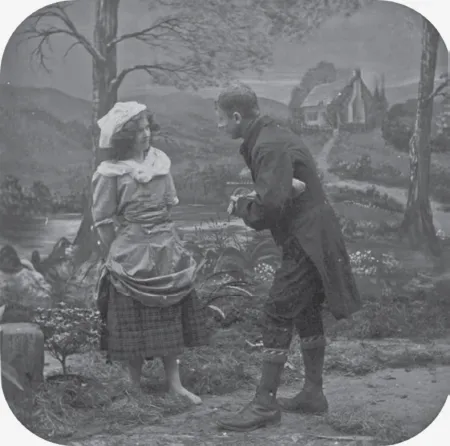
Figure 1 ‘My Irish Molly! O!’ No. 2, from the 1905–1906 season series of illustrated ‘life model’ postcards based on popular pantomime songs, produced by Bamforth and Co., Holmfirth
Source: Reproduced from The Caxton Magazine/The British Stationer, January 1906, p. 11. Courtesy of Kirklees Museums and Galleries.
According to Doel (2008: 91) some early commentators on film lamented the absence of landscape. Bamforth’s sense of place is evident even where action focuses on a park bench, a fence or a train; background fields and stone walls feature in Catching the Milk Thief (1899) and Boys Sliding (1900).9
The company’s later film production phase (1913–1918) coincided with the opening of Holmfirth’s first purpose-built cinema building in 1913 (Riley, 2006: 19), and local people increasingly worked with diverse professional performers.10 Film locations included parks and local beauty spots now submerged by the creation of reservoirs. A long-time resident recalled how, at Hope Bank Pleasure Grounds and Gardens (now an informal community arts venue), Freddie Bullock and Shiner, two local stars, had to stand up in a boat and have a fight. The boat rocked dangerously, and Freddie called out: ‘Howd on Shiner, yo’ gret fooil. Thar’re going to have me in t’watter’.11
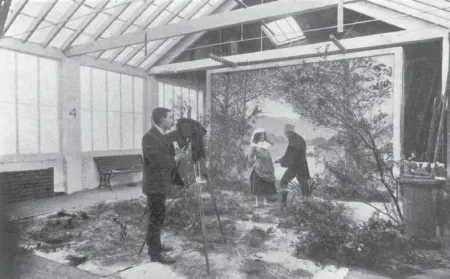
Figure 2 ‘How the “life models” are taken...
Table of contents
- Cover
- Title
- Introduction
- Part I Living on Location
- Part II Urban Subcultures and Structures of Feeling
- Part III Broadcasting and Belonging
- Part IV Borders, Devolution and Contested Histories
- Index
Trusted by 375,005 students
Access to over 1.5 million titles for a fair monthly price.
Study more efficiently using our study tools.
Frequently asked questions
Yes, you can cancel anytime from the Subscription tab in your account settings on the Perlego website. Your subscription will stay active until the end of your current billing period. Learn how to cancel your subscription
No, books cannot be downloaded as external files, such as PDFs, for use outside of Perlego. However, you can download books within the Perlego app for offline reading on mobile or tablet. Learn how to download books offline
Perlego offers two plans: Essential and Complete
- Essential is ideal for learners and professionals who enjoy exploring a wide range of subjects. Access the Essential Library with 800,000+ trusted titles and best-sellers across business, personal growth, and the humanities. Includes unlimited reading time and Standard Read Aloud voice.
- Complete: Perfect for advanced learners and researchers needing full, unrestricted access. Unlock 1.5M+ books across hundreds of subjects, including academic and specialized titles. The Complete Plan also includes advanced features like Premium Read Aloud and Research Assistant.
We are an online textbook subscription service, where you can get access to an entire online library for less than the price of a single book per month. With over 1.5 million books across 990+ topics, we’ve got you covered! Learn about our mission
Look out for the read-aloud symbol on your next book to see if you can listen to it. The read-aloud tool reads text aloud for you, highlighting the text as it is being read. You can pause it, speed it up and slow it down. Learn more about Read Aloud
Yes! You can use the Perlego app on both iOS and Android devices to read anytime, anywhere — even offline. Perfect for commutes or when you’re on the go.
Please note we cannot support devices running on iOS 13 and Android 7 or earlier. Learn more about using the app
Please note we cannot support devices running on iOS 13 and Android 7 or earlier. Learn more about using the app
Yes, you can access Regional Aesthetics by Hugh Chignell, Ieuan Franklin, Kristin Skoog, Hugh Chignell,Ieuan Franklin,Kristin Skoog in PDF and/or ePUB format, as well as other popular books in Social Sciences & Literary Criticism. We have over 1.5 million books available in our catalogue for you to explore.